
Define distinct zones for dining, lounging, cooking, and activities to guide guest flow, with the dining area near the kitchen for easy hot-food transfer. Create a cohesive outdoor kitchen and bar with durable surfaces, a sink, weatherproof storage, and modular seating that can reconfigure. Layer lighting for prep, ambience, and accents, and add shade with pergolas or umbrellas. Use weather-ready textiles and built-in storage to keep cushions tidy, and streamline service with zones; see soon.
Defining Functional Zones for Social Dining

Where will your guests mingle and meals unfold most smoothly? Start by defining distinct zones for dining, lounging, cooking, and activities to guide guest flow and create coherent social interactions. Place the dining area near the kitchen or grill to streamline service and keep access easy for servers and guests. Use separate prep and cooking, serving, and cleaning areas to optimize workflow and minimize cross-traffic during gatherings. Anchor each zone with a focal point, like a living wall, fire feature, or statement sculpture, to visually differentiate spaces. Use outdoor rugs and modular furniture to clearly delineate zones while still allowing flexible reconfiguration for party sizes. This approach keeps circulation smooth and conversations flowing, reducing congestion and creating inviting, usable outdoor rooms for every gathering.
Planning a Cohesive Outdoor Kitchen and Bar
How can you design an outdoor kitchen and bar that keep service smooth and conversations lively?
Position the kitchen near the dining area but ensure proper ventilation and smoke dispersion for comfortable cooking and dining flow. Use a built-in grill with durable surfaces, plus weather-resistant storage and a sink to support prep, cleanup, and bar service. Include a dedicated outdoor bar or beverage station with weatherproof refrigeration and counter space to facilitate seamless service and social interaction.
Plan efficient zones: separate prep, cooking, serving, and cleaning areas, with ample counter space and integrated storage to minimize movement. Choose durable, weather-resistant materials (teak, stainless steel, stone) and modular, movable furniture to adapt for different group sizes and activities. Keep the layout flexible with movable seating and shade options so guests can mingle while you cook. This approach supports flow and timing.
Designing Comfortable, Weather-Resistant Seating
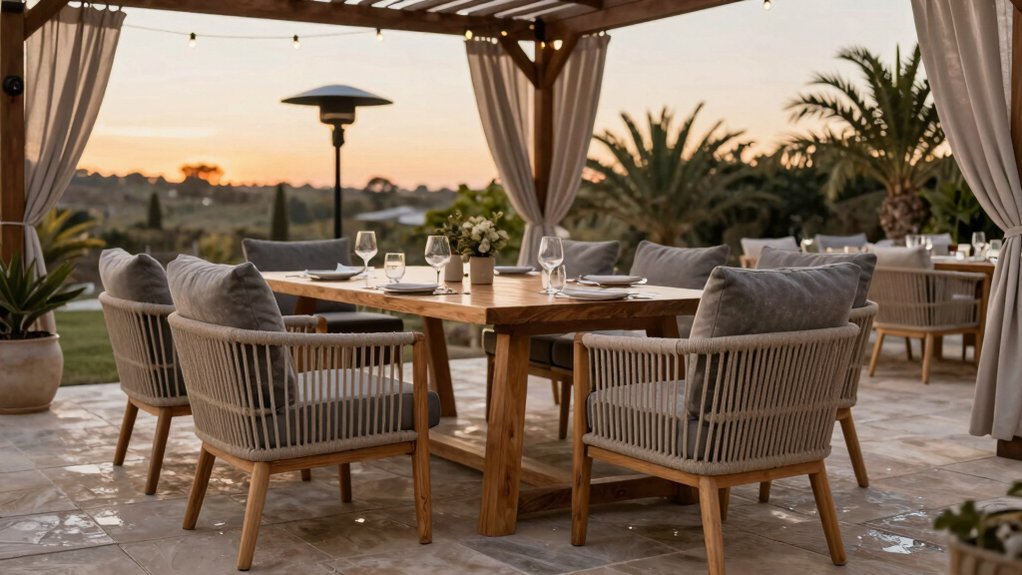
You’ll select durable seating options like teak, aluminum, or synthetic wicker to weather the outdoors with confidence.
You’ll pair deep-seated sofas and modular pieces with weatherproof fabrics and cushions that resist fading, moisture, and sun.
You’ll mix dining chairs, loungers, and built-ins at varying heights, and add weatherproof throws and shading to keep the seating comfortable year-round.
Durable Seating Choices
Why settle for fragile outdoor chairs when you can choose weather-resistant options that stand up to sun, rain, and humidity? Choose seating in teak, aluminum, or synthetic wicker to maximize durability while keeping a refined look. Pair these frames with cushions that have fade-resistant, water-repellent fabrics to preserve color and comfort season after season. Favor modular arrangements—sectionals or modular sofas—that adapt quickly to different group sizes and layouts. Include built-in benches or multi-functional pieces to maximize space without sacrificing comfort. Finally, mix dining chairs, lounge chairs, and bench seating to support conversations, meals, and lounging, so every gathering feels natural and inviting, regardless of weather or time of day. These choices endure with proper care, blending style and practicality for years of outdoor entertaining.
Weatherproof Fabric Options
Ever wondered how to keep outdoor seating comfy and fresh rain or shine? You choose weatherproof fabrics that are fade-resistant and water-repellent for cushions and pillows, so color and comfort last after rain or sun. Opt for high-performance materials like solution-dyed acrylics or performance polyester blends to resist UV degradation and extend colorfastness. Pick quick-drying fabrics with tight weaves and sealed stitching to cut down mold and mildew between uses. Seek cushions with washable covers and UV-protected zippers to simplify cleaning and extend fabric life. Pair fabrics with protective covers or storage benches to shield seating during storms and off season months. This setup keeps colors vibrant, reduces maintenance time, and makes hosting easy, rain or shine. Your spaces stay inviting year-round for guests.
Integrating Shade, Shelter, and Weather Protection
How you combine shade, shelter, and weather protection can extend outdoor dining hours and boost revenue by creating comfortable, defined spaces.
Pergolas with retractable canopies, gazebos, and custom shades define seating zones while offering flexible coverage for dining and lounging.
Umbrellas provide movable shade that adapts to sun angles and guest arrangements, keeping guests comfortable without committing to a fixed footprint.
For weather, choose durable, weatherproof furniture and secure fixtures to withstand wind and rain, so you can keep service flowing during less-than-ideal conditions.
Shade can increase seating capacity and turnout, while temperature control—outdoor heaters for cool evenings and fans for hot days—keeps patios usable year-round.
Pair shade with reliable weather protection to protect investments and protect guest experience, for your operation and guests.
Elevating Ambience With Lighting Layers
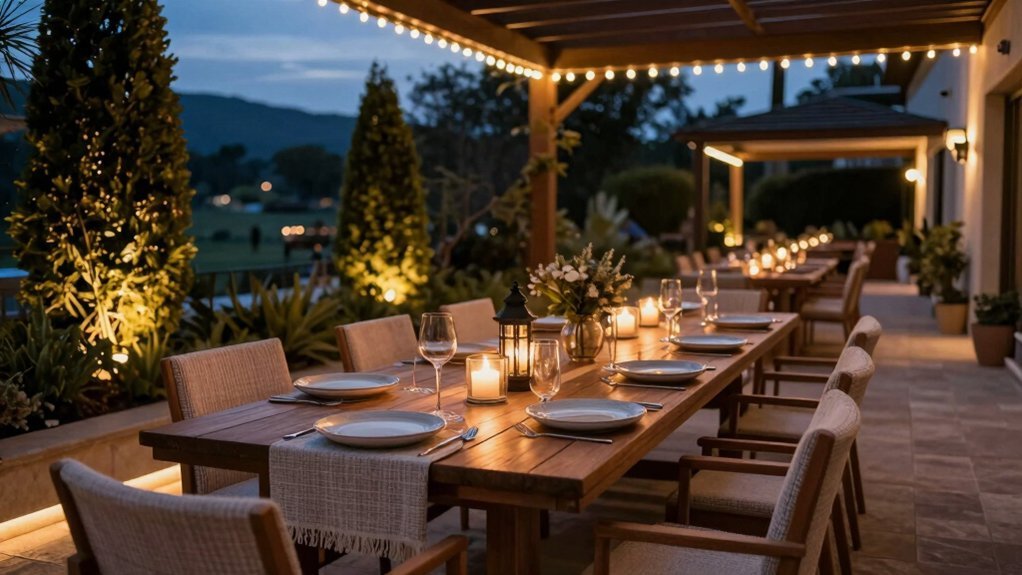
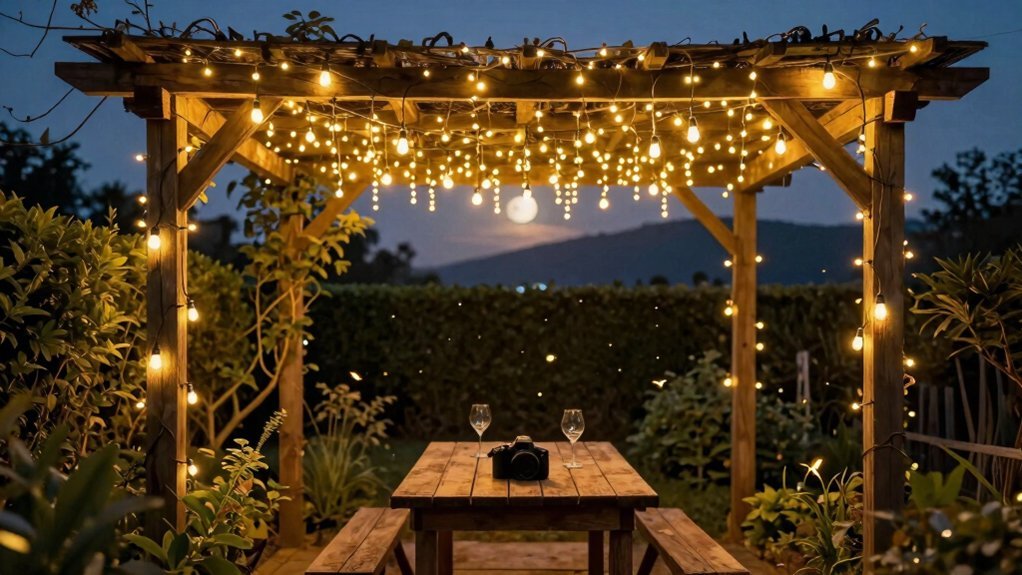
Layered lighting extends the shade and shelter you’ve set up by shaping mood as well as visibility, so guests can dine comfortably from dusk onward. You combine task lighting for food prep with ambient glow and accent points to set a welcoming tone, using string lights over seating and low-voltage path lighting to guide guests. To add warmth, place decorative lanterns and sconces near seating and dining zones, so color and texture read warmly after dark.
Use uplighting to give depth and drama by highlighting architectural features or landscape focal points like trees, avoiding clutter with too-bright repeats. Balance bright, practical light for food prep with softer, atmospheric lighting to foster conversation, plus smart controls that adjust brightness and color temperature automatically for occasions.
Adding Focal Elements: Living Walls and Water Features
Why settle for a flat backdrop when you can anchor outdoor seating with living walls and soothe the scene with a water feature? Living walls provide a lush vertical backdrop that anchors seating areas and elevates color variety and texture. Pair them with water features like small fountains to add a soothing auditory layer and visual interest, boosting guest relaxation and overall ambiance. The combination helps balance acoustics by dampening ambient noise, creating a peaceful sensory environment. When you integrate these focal elements, coordinate plant textures and greenery with your home’s palette and outdoor textiles for cohesive design. Ensure weatherproof installation and provide proper maintenance access to sustain long‑term performance and safety. Regular checks keep systems resilient through seasons and evolving landscapes for you.
Color Schemes and Materials That Tie to Home Interior

Building on the outdoor focal elements, align color schemes and materials with your home’s interior to create a unified vibe across spaces. Tie outdoor accents to the interior palette by using cohesive hues on textiles, lanterns, and planters, ensuring a seamless look. Use durable materials that echo indoor finishes—teak or weather-resistant wicker for furniture, and granite or concrete countertops—to reinforce continuity. Implement a consistent material language by repeating textures like stone, wood, and metal in the outdoor kitchen, dining area, and living zones. Choose fade-resistant fabrics that reflect the indoor vibe, so color and pattern resonate throughout for harmony.
| Idea | Example |
|---|---|
| Color linkage | Blues from interior palette |
| Material pairing | Teak with indoor finishes |
| Textiles | Fade-resistant cushions |
| Texture repetition | Stone, wood, metal |
| Lighting accents | Coordinated lantern tones |
Creating Seasonal Comfort: Heating, Fans, and Textiles
You’ll balance heating, fans, and textiles to keep outdoor dining comfy across seasons.
Choose patio heaters or fireplaces for cooler nights, use outdoor fans on warm days, and layer fade‑proof textiles like throws and cushions for added warmth and texture.
Pair these with weather-ready fabrics and a simple temperature-control plan so you can adapt quickly as the weather shifts.
Seasonal Heating & Fans
Want to stretch outdoor evenings into cooler months? You can extend usable time by pairing infrared heaters or outdoor fireplaces with smart layout decisions. Infrared heat keeps guests comfortable without blasting the whole space, while a fire pit or outdoor fireplace creates ambiance and warmth that can carry conversations into the night.
When the temperature climbs, ceiling or freestanding outdoor fans boost airflow and reduce perceived heat, helping guests stay comfortable without cranking the thermostat. Shade helps regulate the air, and breathable textiles and lightweight throws add seasonal comfort without bulk.
Plan for seasonal pest activity and humidity, adjusting drainage and layout to preserve comfort year round. Keep zones clearly defined for heating and cooling, so traffic routes stay unobstructed and intimate chats flourish.
Textile Comfort Layers
How do textile comfort layers transform outdoor evenings across the seasons? You use fade-resistant, water-repellent outdoor fabrics for cushions and throws so color stays bright even with sun and occasional rain. Layer textiles with outdoor rugs, pillows, and blankets in a cohesive color palette that echoes your home’s interior, boosting the outdoor living room feel. Choose weather-resistant materials like quick-dry fabrics and olefin or solution-dyed acrylics to resist mold, fading, and mildew in humid conditions. Incorporate seasonally adaptable textiles, such as lighter linen-like covers for summer and heavier fleece or faux fur throws for cool evenings. When not in use, store textiles in breathable, weatherproof benches or deck boxes to extend lifespan and reduce maintenance. Your seating stays inviting, ready for spontaneous gatherings tonight.
Storage Solutions and Multi-Functional Furniture
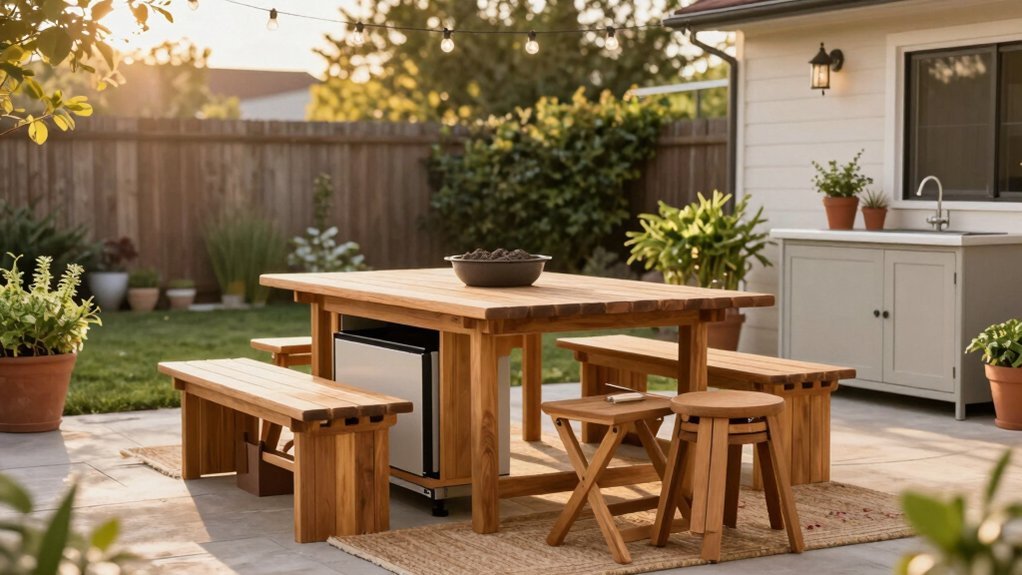
Why settle for separate pieces when you can combine seating, surface area, and hidden storage in one unit? Choose multi-functional pieces like storage benches or tables with built-in coolers to maximize function without clutter. Opt for weather-resistant, durable materials such as teak, aluminum, or synthetic wicker to ensure longevity in outdoor storage and frequent use. Use modular furniture that can be reconfigured easily for different dining layouts, gatherings, or entertainment zones. Integrate built-in storage for utensils, cushions, and cushion covers to speed setup and keep essentials close at hand. Select cushions and fabrics with fade-resistant, water-repellent finishes to maintain color and comfort through sun and rain. This approach minimizes trips to storage, simplifies cleanup, and leaves more time for enjoying gatherings under open skies.
Skillful Traffic Flow and Service Zones
You design distinct service zones—prepping, cooking, serving, and cleaning—to optimize workflow and curb cross-traffic during outdoor dining events.
Position the dining area near the kitchen or grill to enable easy hot food transfer and efficient refreshment service for guests.
> Place dining close to the kitchen for seamless hot-food transfer and swift guest refreshment.
Use clear sightlines and intentional transitions, such as pathways and low-profile lighting, to guide guests naturally between dining, lounging, and activity spaces.
Employ modular, weatherproof seating and mobile serving stations to adapt traffic flow for different party sizes without obstructing key walkways.
Integrate shaded, sheltered zones and weather-resistant furniture to maintain smooth service flow even in varying conditions and prevent bottlenecks.
Anticipate peak times, rehearse routes, and monitor signals from guests and staff to continuously refine the zones, so your outdoor service remains seamless everywhere.
Frequently Asked Questions
How to Measure ROI of Outdoor Dining Landscape Investments?
You measure ROI by comparing incremental revenue and cost savings against your investment. Track foot traffic, check size, occupancy, seasonality, and maintenance costs; assign value to lift and guest referrals; you’ll recalculate over 12–18 months.
Which Permits Regulate Fire Pits and Open Flames Outdoors?
Yes, you need a permit from your fire marshal or building department for outdoor fire pits and open flames. You’ll also face inspections, setback rules, and possibly a burn permit; contact officials to confirm requirements.
How to Source Sustainable, Local Decor on a Budget?
Source sustainable, local decor on a budget by buying from local makers, upcycling what you have, thrifting, bartering, and swapping with friends; seek certified reclaimed materials and seasonal sales to stretch every dollar for impact.
What Staff Training Enhances Outdoor Service During Peak Winds or Rain?
Train staff to monitor wind and weather, secure loose items, and respond quickly to rain with service stations. Practice shutdowns, safety checks, and communication so you’ll maintain calm and safety, and smooth service during storms.
How Do Seasonal Events Impact Landscape Maintenance Scheduling?
Seasonal events shift your maintenance calendar; you’re adjusting mowing, pruning, irrigation, and cleanup to match setup and crowd flow, prioritize high traffic zones, coordinate with vendors, and plan prep time around weather windows and contingencies.