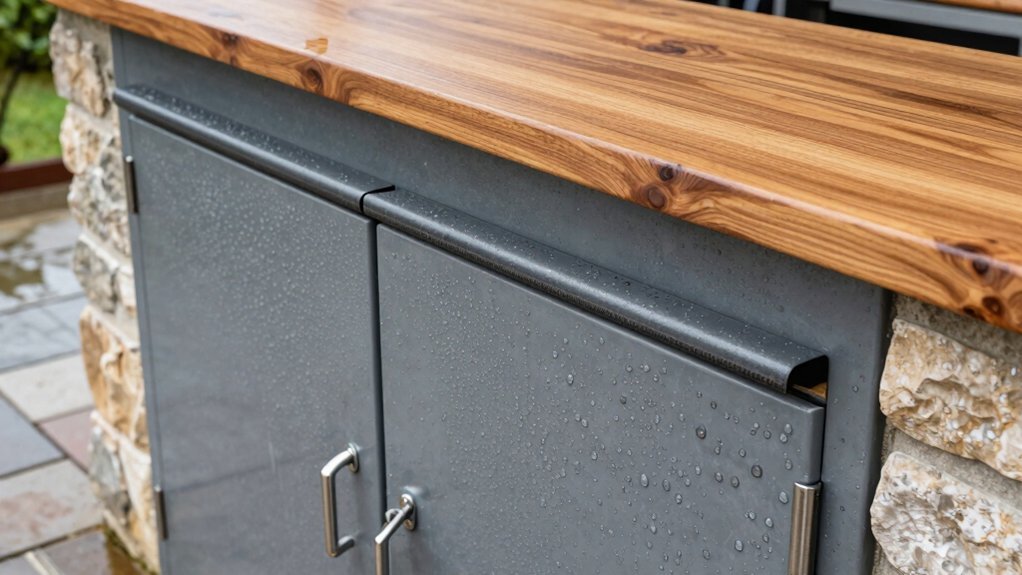
Outdoor bar cabinets stay weatherproof when you combine non-porous HDPE with marine-grade hardware, so moisture and salt spray can’t soak in. Sealed doors with UV-stable gaskets keep rain out, while weep holes and sloped bottoms drain meltwater. Choose corrosion-resistant stainless steel or powder-coated aluminum for frames, and rely on venting to prevent condensation. Regular maintenance and protective finishes seal the deal. Stick with these basics and you’ll uncover even more ways to protect your gear.
Materials and Moisture Resistance That Stand up to the Weather
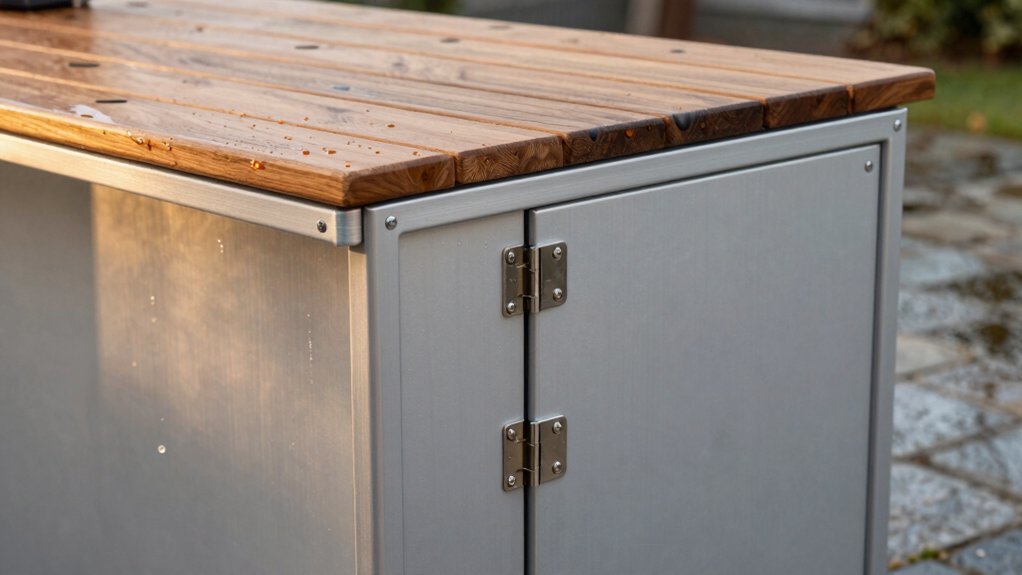
HDPE cabinets resist moisture and warping, so they stay durable in wet and sun-drenched environments. You’ll notice the non-porous surface, which blocks absorption that leads to swelling, mildew, and warping outdoors. With moisture resistance, you won’t fight frequent replacements. The surfaces resist dents, scratches, and stains while keeping UV stability, so the finish stays true in sunny spots.
Weep holes vent water and melt, reducing standing moisture and ice buildup at the base. For coastal use, marine-grade materials like stainless steel 304/316 and HDPE designed for salt spray give you additional corrosion resistance. Weatherproofing features, including rain gaskets and magnetic closures, shield interiors from wind-driven moisture, maintaining cabinet contents and performance. This combination helps you weather rain, heat, and humidity with confidence every day.
Sealed Doors and Gaskets: Keeping Water Out
You’ll prioritize gasket integrity checks and proper sealing door techniques to keep water out.
Regularly inspect gaskets for cracks, compression loss, or UV degradation, and replace as needed to maintain a tight seal.
Pair sealed doors with weather-resistant hinges and magnetic closures to ensure a lasting, water-resistant seal even after temperature swings.
Gasket Integrity Checks
How do you keep water from sneaking in through sealed doors? You inspect gaskets for compression, replace damaged seals, and verify that weatherproof materials stay UV resistant and corrosion-proof in sunlit coastal environments. Regular checks prevent leaks at joints and drawers, ensuring a tight seal even during heavy rain. Gasket integrity matters most when you look for compression set and replace worn pieces before they fail.
- Check gasket compression and replace if set or deformed.
- Inspect for tears, cracks, or deformation in EPDM or silicone gaskets.
- Confirm weep holes drain condensation without water ingress.
- Replace worn gaskets promptly to maintain long-term protection.
Sealing Door Techniques
Sealed doors use gasketed edges and magnetic closures to create tight, water-blocking seals during rain and humidity. You’ll want weatherproof gaskets that are UV-resistant and properly compressed to maintain a moisture-tight seal over time without sagging. Include 1/4 inch diameter weep holes every 12-18 inches at the base cabinets to drain condensation and meltwater, preventing interior corrosion. Stainless steel hinges and marine-grade screws pair with durable weatherstripping to stop rust and keep door alignment, even in coastal environments. Don’t forget that door seals must accommodate expansion and contraction from temperature swings, so choose flexible materials and fastenings that close gaps without stressing the frame. Regular checks ensure ongoing protection against water ingress. This approach preserves longevity and keeps your setup looking and performing reliably.
UV-Stable Finishes for Color That Lasts
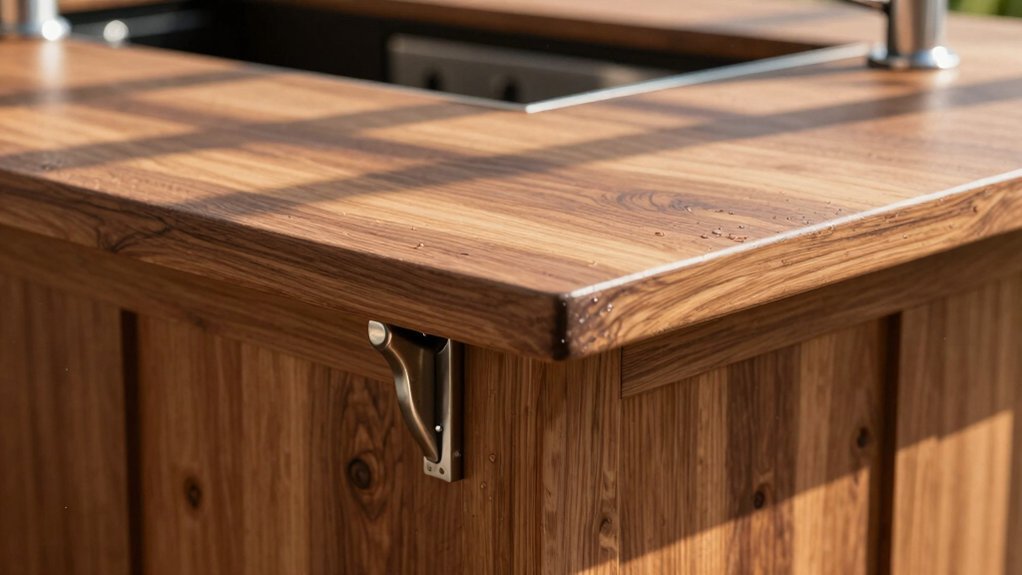
Why do UV-stable finishes matter for color that lasts on outdoor bar cabinets? They block chalking and color loss, so your cabinets keep their hue year after year. UV inhibitors and durable coatings slow fading, even under full sun. HDPE and polymer cabinetry often include additives that preserve colorfast performance in coastal and desert climates. Marine-grade paints or powder finishes resist fading from prolonged exposure, reducing refinishing needs.
UV-stable finishes block chalking and fading, preserving color on outdoor cabinets year after year.
- Block chalking and color fade with UV stabilizers
- Pair UV protection with durable base materials like HDPE or stainless steel
- Use marine-grade paints or powders for lasting color
- Minimize surface degradation from sun-induced heating cycles
This combination helps you avoid frequent replacements and keeps the bar appealing.
Drainage and Slope: Preventing Standing Water
To prevent standing water, design and install your outdoor bar cabinets to promote fast drainage and airflow. Install 1/4 inch diameter weep holes every 12–18 inches at the base to drain water and melt, preventing puddling in low-clearance areas. Ensure cabinet bottoms are slightly sloped toward the weep holes to promote gravity-driven drainage and minimize standing water. Use weatherproof gaskets and sealed joints around doors and panels to keep interior moisture out during drainage events. Position cabinets on a slightly elevated, level substrate with a proper crawl space or ventilation to avoid water collection beneath the base. Choose materials with proven water management performance, like HDPE with non-porous surfaces and durable hardware. This setup maintains drainage effectiveness year after year with minimal maintenance consistently.
Corrosion-Resistant Hardware for Coastal Climates
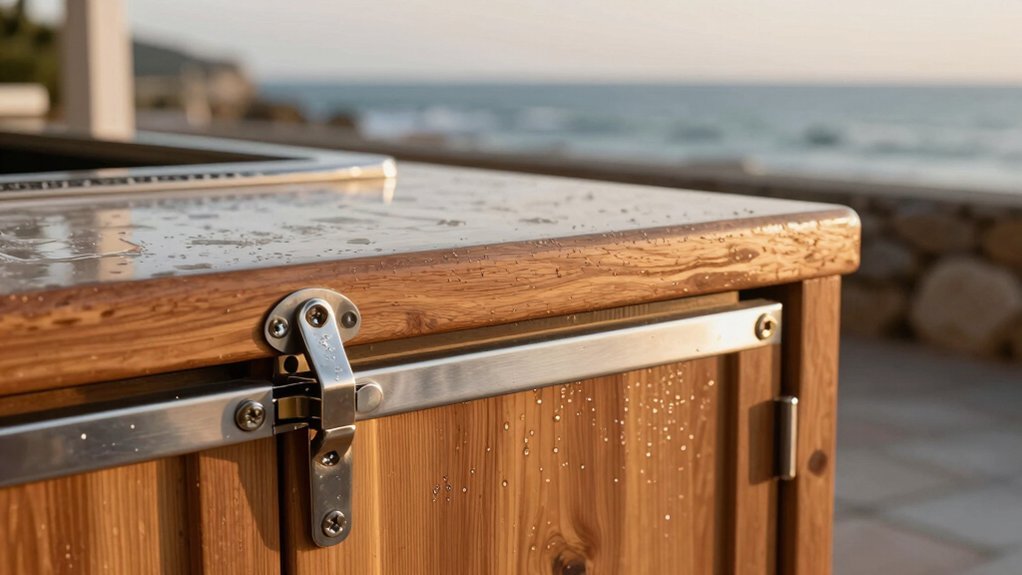
Choose salt-air resistant metals for hinges, handles, and other hardware that face constant coastal exposure. Marine-grade hardware options and corrosion-resistant fasteners minimize pitting and rust, keeping your outdoor bar cabinet reliable year after year. Pair them with proper seals and coatings to protect against moisture and salt spray.
Salt-Air Resistant Metals
Coastal climates demand metals with superior corrosion resistance, so you’ll want options like marine-grade stainless steel (304/316) and powder-coated aluminum to stand up to salt spray and humidity. Marine-grade stainless steel offers better resistance to pitting and crevice corrosion, making it ideal for exposed bar cabinets near the coast. To maximize durability, combine metal hardware with HDPE or polymer components to reduce corrosion risk while preserving weatherproofing. For coastal hardware, prioritize:
- marine-grade stainless or corrosion-resistant coatings on hinges
- stainless fasteners and handles
- powder-coated aluminum accents
- regular salt-air maintenance like seals and lubrication
Regular maintenance in salt-air environments helps counter salt buildup and keep operation smooth. Consistency protects finishes, extends cabinet life, and reduces costly repairs in coastal settings over time. Trust the proven approach.
Marine-Grade Hardware Options
Why settle for ordinary hardware when marine-grade options resist salt spray and humidity? 316 stainless steel offers superior pitting and crevice corrosion resistance for motors, hinges, and fasteners near the ocean, while powder-coated aluminum provides a lighter, non-rusting option that still holds up under UV exposure and humidity. In coastal setups, scan for 316 where corrosion risk is highest and reserve powder-coated aluminum for lighter components, pairing them with UV-stable seals and gaskets. These choices reduce corrosion, cut replacement costs, and keep your coastal kitchen ready for season after season year.
| Option | Benefit |
|---|---|
| 316 Stainless | Superior pitting and crevice resistance |
| Powder-coated Aluminum | Lighter, non-rusting, UV-hardy |
| UV-stable Seals | Resist salt deposits and stay tight |
Regular maintenance—rinse with fresh water and lubricate moving parts—to extend life.
Corrosion-Resistant Fasteners
Do your outdoor bar cabinets stand up to salt spray and humidity? In coastal climates, you need corrosion-resistant fasteners, such as marine-grade stainless steel hinges and handles or powder-coated aluminum hardware, to resist salt and prevent rust over time. Stainless 316 alloys outperform 304 in humid air, so choose those for longevity. Pair HDPE cabinetry with corrosion-resistant hardware to stay durable when moisture sits on surfaces. Proper sealing and gasketed joints matter too, keeping water out and preserving weatherproofing. Regular inspection and timely replacement extend life in salty environments.
- Marine-grade stainless steel or powder-coated aluminum fasteners
- 316 stainless over 304 for coastal humidity
- HDPE with corrosion-resistant hardware
- Sealed joints and periodic maintenance
This approach minimizes rust, leaks, and costly replacements
Integrated Venting Systems to Minimize Humidity Build-Up
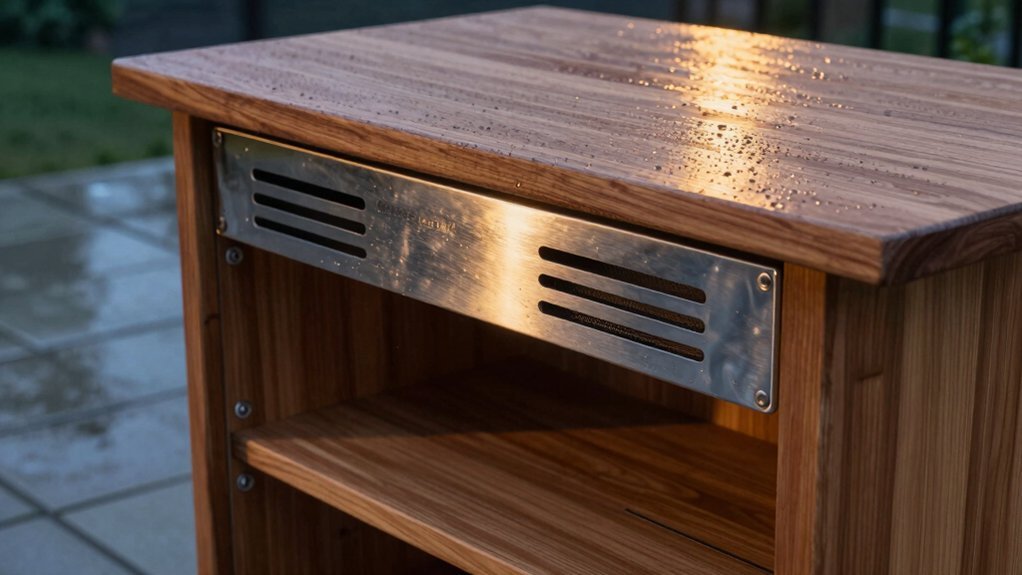
Ever wonder how outdoor bar cabinets stay dry inside even when humidity runs high outside? Integrated venting systems promote air flow to equalize humidity and reduce condensation on interior surfaces. Ventilation panels and strategically placed vents prevent moisture buildup that can cause mold, mildew, and warping of cabinet components.
Proper venting supports longer hardware life by minimizing corrosion and rust in exposed hardware due to outdoor moisture. Sealed gaskets paired with ventilation ensure interior dryness while allowing evaporated moisture to escape, preserving stored beverages and tools. Placement of vents should consider weather exposure and cabinet orientation to maximize airflow without inviting rain ingress. When planned with airflow direction in mind, you reduce heat buildup and maintain a consistently dry, ready-to-use interior for all seasons.
Hinges and Handles: Marine-Grade vs. Powder-Coated Options
When you choose hinges and handles, consider marine-grade hardware for lasting durability in salt spray and humidity. Powder-coated options give a broad color range and good protection, but thin coatings can chip in harsh marine air.
For best weatherproof performance, pair marine-grade hinges with powder-coated aluminum or stainless-steel components.
Marine-Grade Durability
Why settle for less when hinges and handles are built to resist salt spray and humid coastal air? Marine-grade hardware uses corrosion-resistant alloys and protective finishes, like marine-grade stainless steel, designed to outperform standard options in coastal environments. You’ll notice superior salt-spray resistance and higher operating durability, reducing rust and binding in outdoor bar cabinets. For longevity, pair marine-grade hinges and pulls with weatherproof gaskets to boost sealing and curb moisture intrusion. That durability translates to fewer repairs, longer cabinet life, and dependable performance when you entertain outdoors, even in extreme weather.
- Choose marine-grade stainless steel
- Ensure protective finishes
- Pair with weatherproof gaskets
- Maintain with periodic lubrication
Regular maintenance matters too; periodic inspection and lubrication keep operation smooth for years.
Powder-Coated Protection
Powder-coated protection builds on marine-grade durability by adding a durable, uniform layer that resists the elements. You get corrosion resistance from marine-grade hardware, and powder coating keeps chipping and peeling at bay, even in sun, rain, and temperature swings. Pair marine-grade bases with UV-stable powder coatings to maximize longevity, while regular maintenance guards against scratches that expose metal. Choose hinges and handles designed for outdoor kitchens and factor in corrosion protection with a powder layer. The following table contrasts marine-grade with powder-coated options for quick reference.
| Option | Benefit | Considerations |
|---|---|---|
| Marine-grade hardware | Strong corrosion resistance | Higher cost; best for harsh environments |
| Powder-coated hinges/handles | Uniform finish; protects against chipping | Needs UV-stable coating; check for scratches |
| Marine-grade + powder-coated pairing | Max longevity in harsh outdoor kitchens | Ensure compatible finishes |
Regular checks preserve the finish and prevent rust over time.
Non-Porous Surfaces: Fighting Warping and Mildew
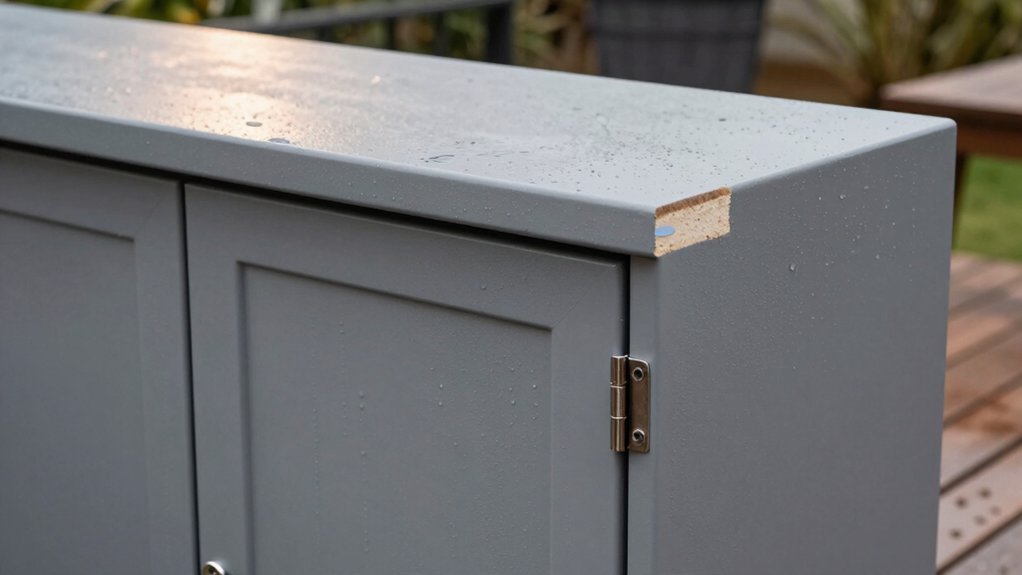
How do non-porous surfaces fight warping and mildew in outdoor bar cabinets? You enjoy a simpler maintenance routine because materials like HDPE don’t absorb moisture, so swelling and warping are minimized. Liquids sit on top and wipe away quickly instead of seeping into pores, keeping cabinet bodies stable. With no organic grain or hollow cavities, mold and mildew struggle to take hold in damp interiors. UV resistance helps finish integrity stay intact, so coatings and paints last longer against sun and humidity. Maintenance stays fast and predictable, not invasive.
- Non-porous blocks moisture uptake, reducing swelling and warp risk.
- Surfaces wipe clean without deep soaking.
- No grain, no hiding spots for mildew.
- UV-stable finishes extend overall durability.
Keep it simple, reliable.
Drainage Trays and Spill Management for Easy Cleanup
With 1/4 inch diameter weep holes every 12–18 inches, drainage trays channel melted ice and rainwater away from cabinet bases. You’ll want these trays sloped slightly to encourage flow and prevent pooling, while ventilation panels help moisture escape before it causes corrosion. Choose moisture‑resistant materials and seal around drawers and doors to stop overflow from reaching the wood or framing. Position drainage outlets to lead outside or into a contained drain, so water won’t seep into adjacent cabinets or the subfloor. Regular maintenance matters: empty and rinse trays, inspect for blockages, and ensure the weep holes stay clear for consistent drainage. Document any changes, and replace seals promptly to maintain the cabinet’s weatherproof performance over seasons. Keep spill decks clean and ready for use.
Supported by Elevated, Stable Installations
Elevated, stable installations matter because they keep cabinets from shifting and forming gaps that invite water intrusion. When you build on solid supports, weight is evenly distributed, and doors stay aligned, preventing warping and mis-seals. Use corrosion-resistant fasteners and ensure level mounting so gaskets stay effective and seals stay watertight.
1) Raised platforms, such as concrete pads or raised decks
2) Corrosion-resistant fasteners used with proper torque
3) Level mounting to maintain gasket compression
4) Vacuum-tight joints and plinths around the base
Elevated platforms with sealed, weatherproof flooring finish the setup, channeling drainage away from the base and preventing moisture wicking. When installations are truly elevated and stable, you create a lasting barrier against water and debris. That reliability pays off season after season.
Dry-Fit Interiors: Sealants and Gasketed Panels
Dry-fit interiors rely on rain gaskets and magnetic closures to create airtight, moisture-resistant seals between cabinet doors and frames. When you’re sizing and fitting the gaskets correctly, you’re stopping wind-driven rain from entering and protecting contents, lowering mold risk. Sealed joints and properly sized gaskets play a critical role, while weep holes drain water at the base to melt condensation and keep the interior dry. The gasketed panels minimize air infiltration, helping you maintain interior temperature and reducing unexpected condensation inside.
Exterior finishes and gasket materials are chosen for UV resistance and salt spray durability, ensuring long-term performance in coastal climates. This approach also supports energy efficiency, as stable interior conditions limit heat exchange and keep your beverages evenly cooled during heavy use seasons.
Weatherproofing Across Frame Materials: HDPE, Stainless, and Aluminum
How do HDPE, stainless steel, and aluminum frame options stack up for outdoor bar cabinets? You’ll find three clear strengths. HDPE resists moisture, warping, swelling, and mildew, with UV inhibitors that keep color steady under full sun. Stainless steel offers high heat tolerance and rust protection, and marine-grade variants are ideal near coastal salt spray. Aluminum remains lightweight and corrosion-resistant, often paired with powder-coated finishes for extra weather durability. Consider the following frame traits:
- HDPE frames stay true in sun and humidity, reducing maintenance needs.
- Stainless frames resist corrosion and heat, with coastal options fine-tuned for salt exposure.
- Aluminum frames shed weight without sacrificing strength, especially with protective coatings.
- Finishes and gaskets complete the seal, complementing each material’s best weather performance for long-term reliability.
Maintenance Routines to Preserve Weatherproofing Over Time
Regular maintenance keeps weatherproofing intact and your cabinets performing year-round. Wipe stainless steel cabinets with soapy water and avoid harsh abrasives to prevent micro-scratches that can harbor corrosion. For polymer (HDPE) cabinets, hose-cleaning works as routine maintenance, since they resist moisture and don’t absorb water.
Sealing and periodic inspection of gaskets, hinges, and weather seals are essential to maintain tight interior protection against wind and humidity. Seasonal deep cleans should involve emptying contents, checking for moisture or pests, and reassembling to preserve weatherproof integrity. Protective coatings or finishes (UV-resistant coatings or marine-grade paints) should be applied as needed to maintain surface durability against sun exposure and salt spray. Schedule checks seasonally and after heavy use for continuous protection. Keep hardware lubricated and hinges aligned.
Frequently Asked Questions
How to Make an Outdoor Cabinet Waterproof?
Seal seams and gaskets, use corrosion‑resistant hardware, pick low‑moisture materials, and ensure airtight doors with proper clearance. Add weep holes, drainage, and ventilation, then install with correct sealant and protective finishes for durability and longevity.
What Is the Best Material to Use for Outdoor Cabinets?
HDPE polymer cabinets are choice for your outdoor cabinets, because you’ll get moisture resistance and you won’t absorb water; pair with marine-grade stainless grills for heat, or use a hybrid approach for durability and cost.
How Do I Waterproof My Cabinet?
Seal it with weatherproof gaskets and magnetic closures, pick HDPE or marine-grade steel, install 1/4 inch weep holes every 12-18 inches, apply UV-resistant finish, and ensure sloped shelves with ventilation to prevent moisture buildup inside.
What Is the Best Material for Outdoor Storage Cabinets?
HDPE is your best bet for most outdoor storage, because it’s non-porous and moisture-resistant. Use marine-grade stainless steel (316) for high-heat or coastal areas, and seal with rain gaskets and weep holes to weatherproof confidently.