
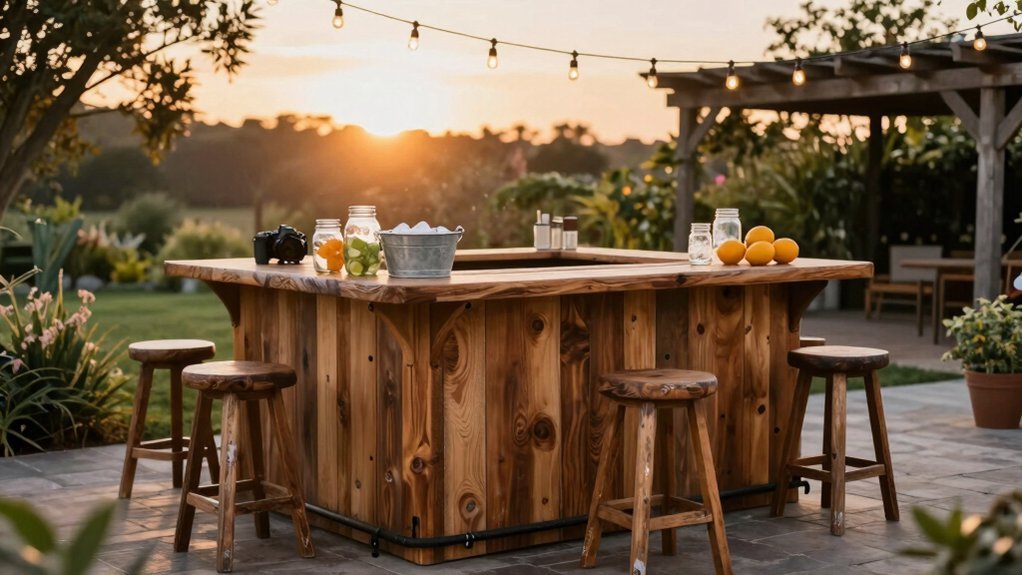
Choosing rustic wooden outdoor bar plans gives you durable, weatherproof performance with authentic charm. You’ll enjoy reclaimed timbers that resist warping and age beautifully, plus treated woods that stand up to sun and rain. The look ties your space together with cohesive tones, textures, and hardware, while built-in storage and a compact layout keep guests gathered and the flow smooth. You’ll learn more about making smart material choices and maintenance as you move forward today.
Choosing the Right Wood for Outdoor Bars
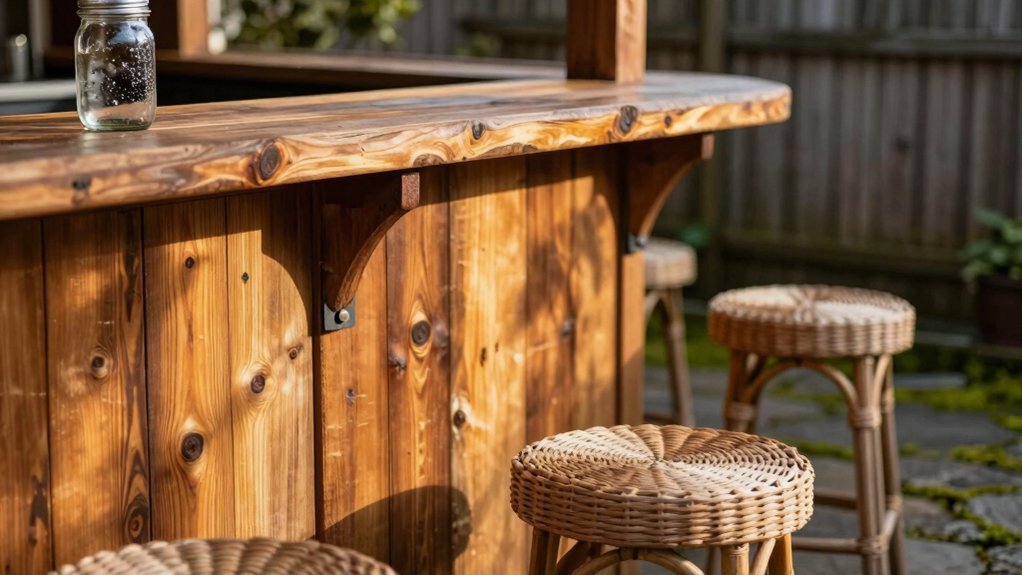
Which wood should you choose for outdoor bars? You have options that balance cost, look, and longevity. Teak offers high water and rot resistance thanks to natural oils, making it a durable mainstay. Cedar resists rot and insects and carries a pleasant aroma, while redwood brings durability with a warm color shift that many builders like. Pine, when pressure-treated, stays affordable but needs ongoing moisture and insect protection to stay sound. Acacia adds natural elemental resistance, and performs well outdoors. In general, successful rustic bars start with treated wood that can withstand rain and sun, paired with a finish that preserves appearance over time. That balance helps you achieve lasting appeal without overcomplicating construction, or maintaining it constantly. Choose wisely, and your bar lasts.
Durability and Weatherproofing
Choose weatherproof outdoor wood and apply moisture-resistant build techniques to curb water penetration. Reclaimed timber and durable species like teak, cedar, or redwood give you strength that resists warping across seasons. Seal, stain, and maintain regularly to protect the bar from sun and moisture while preserving its look.
Weatherproof Outdoor Wood
How well will your outdoor bar hold up under sun, rain, and humidity? You’ll want weatherproof wood that resists water, rot, and insects, and you’ll find it in teak and cedar thanks to natural oils. Reclaimed wood adds density and older grain, reducing warping in moist environments. Regular sealing or staining shields against moisture and UV damage, keeping color and performance longer. Remember that wood expands and contracts with temperature and humidity, so plan proper framing and movement allowances to avoid long-term cracking. With treated or naturally weatherproof options, you’ll enjoy durable, low-maintenance performance across seasons.
| Wood Type | Benefit |
|---|---|
| Teak / Cedar | Water, rot, and insect resistance; natural oils |
| Reclaimed Wood | Denser grains; reduced warping; stronger in moisture |
| Treated/Weatherproof Woods | Sustained performance; minimal maintenance across seasons |
Durable Timber Strength
Durable timber strength builds on the weatherproofing you’ve already noted, especially when you work with reclaimed timber. You’ll notice denser, tighter grain and natural oils from older trees that resist water and rot, boosting outdoor longevity. Reclaimed wood is less prone to warping from moisture and, with proper sealing and maintenance, supports year-round use. Its history of exposure adds resilience, helping it endure seasonal changes without failing.
- Denser grain enhances overall strength
- Natural oils improve moisture resistance
- Lower warp risk under humidity shifts
- Long-term stability with proper sealing
- Sustained outdoor performance with regular maintenance
With the right finish, reclaimed timber keeps its strength and charm year after year. Choose proven sealants and periodic maintenance for lasting performance. Your outdoor bar will endure every season.
Moisture-Resistant Build Techniques
Ever wonder how moisture-resistant techniques keep an outdoor wooden bar sturdy season after season? You’ll prioritize dense, aging timbers that resist warping in humidity better than new stock. Natural oils and weathering boost water resistance and rot delay, especially with teak, cedar, or redwood. Regular sealing or staining keeps the finish stable as wood expands and contracts. Treated wood adds moisture and insect defense for frames and blocks. Use these options side by side to plan your build. The table highlights materials, benefits, and practical notes you can reference during selection and sealing. Choose combinations that match your climate and budget.
| Material | Benefit | Note |
|---|---|---|
| Reclaimed wood | Dense grain reduces warping | Suits moisture-rich environments |
| Natural oils/aging | Improves water resistance | Choose teak/cedar/redwood |
| Treated wood | Insect and moisture defense | Seal regularly to maintain weatherproofing for long-lasting performance |
Pair options with proper sealing yearly maintenance.
Design Styles for Rustic Charm
What gives rustic charm its enduring pull across outdoor bars? Design styles for rustic charm draw energy from reclaimed wood beams, live-edge surfaces, and weathered textures that carry authentic patina and natural color variation. You’ll notice how live-edge slabs preserve trees’ outlines, giving each bar a singular character. Mixing materials—wood with stone, metal accents, or whitewashed finishes—creates cohesive contrasts that highlight warmth. Matching reclaimed elements with cohesive hardware and lighting reinforces a unified rustic aesthetic.
- Reclaimed beams, live-edge surfaces, and weathered patina and texture
- Earthy tones that emphasize organic grain patterns
- Mixed materials like stone, metal, and whitewashed finishes
- Cohesive hardware and lighting for a unified vibe
- Design styles range from industrial chic to farmhouse
Together, these elements create a timeless rustic outdoor bar.
Space Planning and Layout
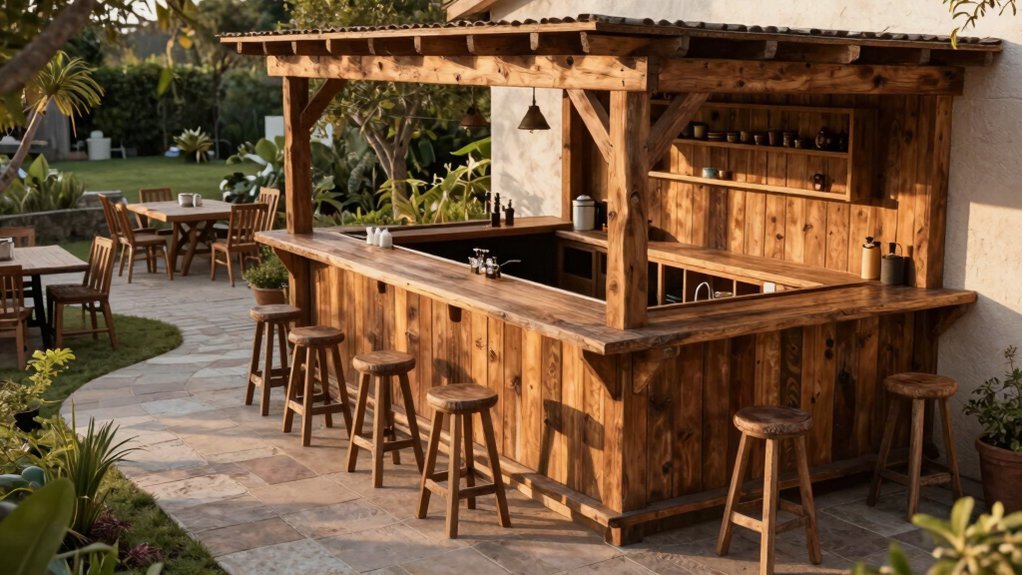
Position your bar to favor easy flow from the house and kitchen, with clear paths for guests and a wind-protected wall backdrop. Plan shelving and appliance layout to fit a ~24-inch-wide, 42-inch-high unit, leaving a mini-fridge nook and prep space while considering sun and shade throughout the day. Make sure the design matches its primary use and complies with local codes and space limits so you can entertain confidently.
Bar Positioning and Flow
Where you place the outdoor bar matters for guest flow and service ease. Keep it easily accessible from the house and kitchen to minimize trips, and position it near a wall to define space and shield from wind. Allow ample room around the bar for movement, and plan with sun/shade patterns so guests and staff stay comfortable.
- Use corner or L-shaped configurations to maximize serving space.
- Place the bar against a wall to define zones.
- Ensure clear sightlines for staff and guests.
- Provide wind protection while preserving easy access.
- Leave open, uncluttered flow paths around the core.
Balancing proximity to the house, weather considerations, and room to mingle helps you deliver quick service and a relaxed, rustic vibe. Your setup supports smooth party flow.
Shelving and Appliance Layout
With your bar layout in mind, you’ll map shelving and appliances to support smooth service and clear work zones. Built-in shelves behind the counter, like in the Montego set, store bottles and glasses while keeping the front visually uncluttered. Pair two stools with a generously shelved bar table to optimize back-of-house organization. Place shelves at varying heights on live-edge or panel designs to maximize storage without crowding prep space. A mini-fridge nook within storage improves beverage cooling and keeps counters clean. Plan proximity to the kitchen so access stays easy and guest flow remains open and safe.
| Shelf Location | Appliance | Purpose |
|---|---|---|
| Back wall | Shelves | Storage |
| Sides | Mini-fridge nook | Cooling |
| Under counter | None | Clear counter |
| Overhead | Mounted rack | Quick access |
That layout keeps service smooth.
Storage Solutions and Accessories
How can you keep glassware, tools, and snacks within reach without crowding the serving area? Built-in shelves, cabinets, and a mini-fridge nook keep items organized and accessible, helping guests move freely around the bar. Storage features boost practicality without crowding the workspace, so conversations stay smooth and relaxed.
This approach keeps essentials organized and ready, helping you host with ease. In weather-resistant finishes and sealed countertops, storage pairs to resist moisture while keeping a cohesive look. Shelves and cabinets can be customized to match reclaimed wood tones, improving visual harmony with your décor. Integrated storage reduces trips indoors, letting guests stay gathered around the bar longer, enhancing outdoor entertaining.
- Close-at-hand glassware and tools
- Snack-prep compartments
- Moisture-resistant finishes partner
- Customizable reclaimed-wood tones
- Easy-access mini-fridge nook
Maintenance and Longevity
Ever wonder how long your rustic outdoor bar will hold up with proper care? Reclaimed wood bars use timber from centuries-old structures, whose denser grain enhances strength and reduces warping in moisture-prone environments. Natural oils and weathering improve resistance to water damage and rot over time, contributing to longer-lasting outdoor bars. Regular sealing or staining protects wood from sun and rain, helping maintain appearance and structural integrity. Treated woods like teak, cedar, and redwood offer built-in durability against moisture, insects, and decay for outdoor use. Proper maintenance, including simple cleaning with a damp cloth and periodic resealing, sustains performance and aesthetic appeal of rustic wooden outdoor bars. With these steps, your bar resists wear season after season, preserving value and enjoyment for years ahead.
Frequently Asked Questions
What Material Is Best for an Outdoor Bar?
Teak is best for an outdoor bar because its natural oils resist water, rot, and insects. If you need a lighter or budget option, cedar or acacia offer durability with easier maintenance and lower cost.
What Kind of Wood for an Outdoor Bar?
Use teak for long-lasting, water- and insect-resistant surfaces; cedar offers lightness and aroma; redwood delivers decay resistance; pine (pressure-treated) fits budgets with protection; acacia provides durability, though sealing extends longevity. Choose depending on climate conditions.
What Type of Wood Is Best for Outdoor Use?
Teak is best for outdoor use because it’s highly resistant to water, rot, and insects. If you can’t get teak, cedar or redwood are great backups, and you’ll want proper sealing and regular maintenance too.
Is It Cheaper to Build a Bar or Buy One?
It can be cheaper for you to build, if you source reclaimed wood, DIY plans, and handle installation yourself. But hiring professionals for weatherproofing or wiring can erase those savings, while buying may be cheaper.

Leave a Reply