Plan your bar lighting layout by mapping zones like the bar, seating, walkways, and features, then layer ambient, task, and accent lighting. Choose weatherproof fixtures and mix heights for depth, with dimmable options. Prioritize safety by using IP65+ gear, sealed connections, and GFCI protection. Optimize color temperature with warm ambient 2700–3000K and cooler 4000–5000K task lighting, with glare minimization. Finally, set controls, schedules, and maintenance reminders so you stay efficient—and you’ll uncover tips later.
Plan the Lighting Layout Carefully
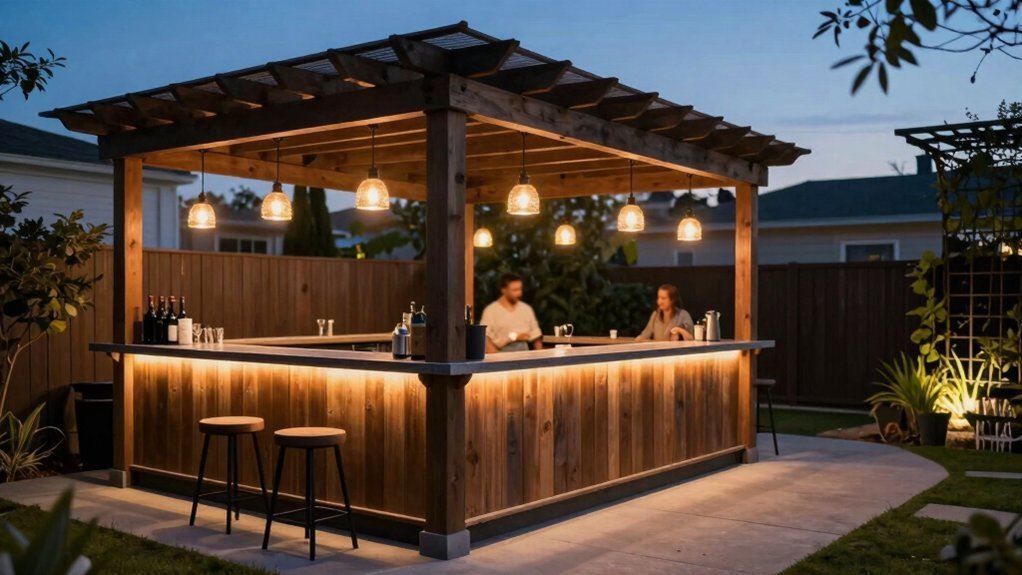
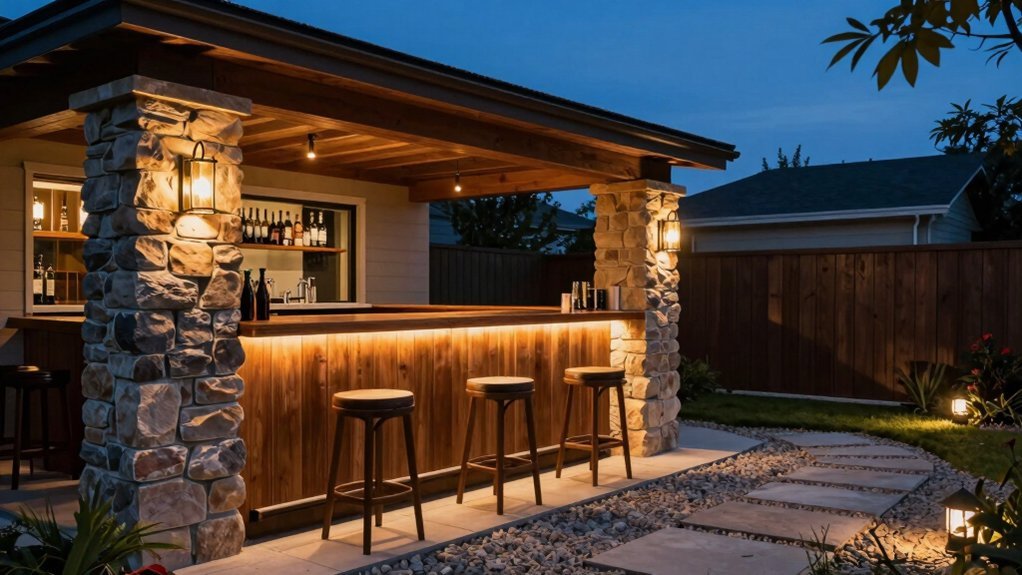
Plan the lighting layout by mapping the outdoor bar into key zones—bar counter, seating, walkways, and decorative features—to determine where ambient, task, and accent lighting will work best. You map each area with safety and atmosphere in mind, prioritizing pathways and steps with sufficient illumination (10–20 lux for general walkways; 300+ lux for bar counters) to keep guests comfortable and menus readable. Choose weatherproof, outdoor-rated fixtures with IP65 or higher, and match materials (stainless steel, aluminum) to withstand rain, wind, and humidity. Plan for layering: use overhead ambient lighting, add targeted task lighting under the bar, and place accent lighting to highlight architectural features and textures. Add controls—dimmers, scenes, automation—to adjust brightness and color temperature without rewiring. This sets the stage for evening operation.
Choose Layered Lighting: Ambient, Task, and Accent
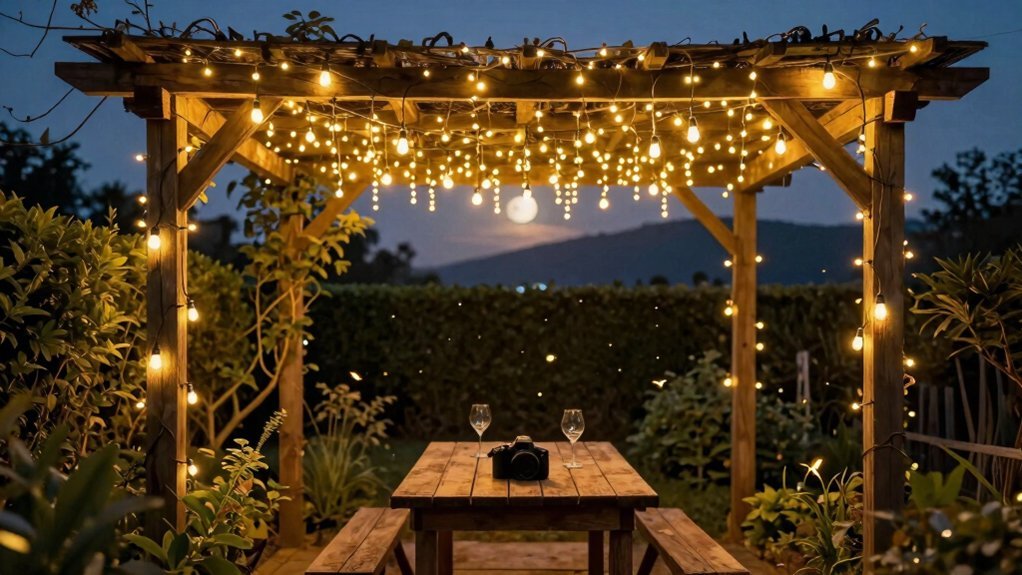
Have you nailed a balanced layered approach that blends ambience, clarity, and emphasis for your outdoor bar? Start with ambient lighting to cast a soft glow that sets the mood without glare, using string lights or wall-mounted fixtures.
Add task lighting under the bar counter or along edges with brighter, directional fixtures to improve bartender visibility and menu readability. Then bring in accent lighting to highlight architectural features, greenery, or focal points like a bar back panel or water features, with adjustable beam angles to fine-tune focus.
Implement a layering strategy by combining several heights—pendants, wall sconces, and ground-level uplights—to add depth. Make sure every layer is outdoor-rated and dimmable for smooth transitions into atmosphere. Test at dusk, then adjust spacing, color temperature, and beam spreads until the trio feels cohesive, practical, and inviting for guests, throughout the evening and season.
Prioritize Weatherproofing and Safety

After crafting layered lighting, you shift to weatherproofing and safety to protect both guests and your system. Use exterior-rated, weatherproof fixtures (IP65 or higher) to withstand rain, humidity, and temperature changes typical of outdoor bar areas. Seal all exposed electrical connections with moisture-resistant enclosures and gaskets to prevent water ingress. Install ground-mounted or wall-mounted fixtures with corrosion-resistant materials, such as stainless steel or aluminum, suitable for outdoor use. Ensure proper drainage and avoid mounting fixtures where water can pool, reducing short-circuits and corrosion risk. Hire a licensed electrician for all wiring, implement weatherproof cords and conduits, and use outdoor-rated power sources and GFCI protection for safety. Check seals after storms, test GFCI function monthly, and document installation dates for future maintenance and inspections too.
Optimize Color Temperature and Glare Control
How do you optimize color temperature and control glare without sacrificing atmosphere or readability? Start with dimmable LEDs set to a warm 2700K–3000K for ambient evenings, then layer in cooler 4000K–5000K task lighting near the bar for visibility. This layering maintains depth while keeping comfort intact. Use dimmables to shift from cozy ambience to brighter service periods without changing fixtures. Balance warmth with cooler task lighting to prevent menus and drinks from washing out. Minimize glare with diffusers, shrouds, or downward‑facing fixtures, ensuring even illumination across surfaces. Aim for a cohesive mix: warm ambient, cooler accents, and thoughtful placement, so guests feel welcome and staff can read menus clearly. Pair lighting with energy efficiency and plan for seasonal shifts in activity levels each night.
Implement Controls and Maintenance Plan
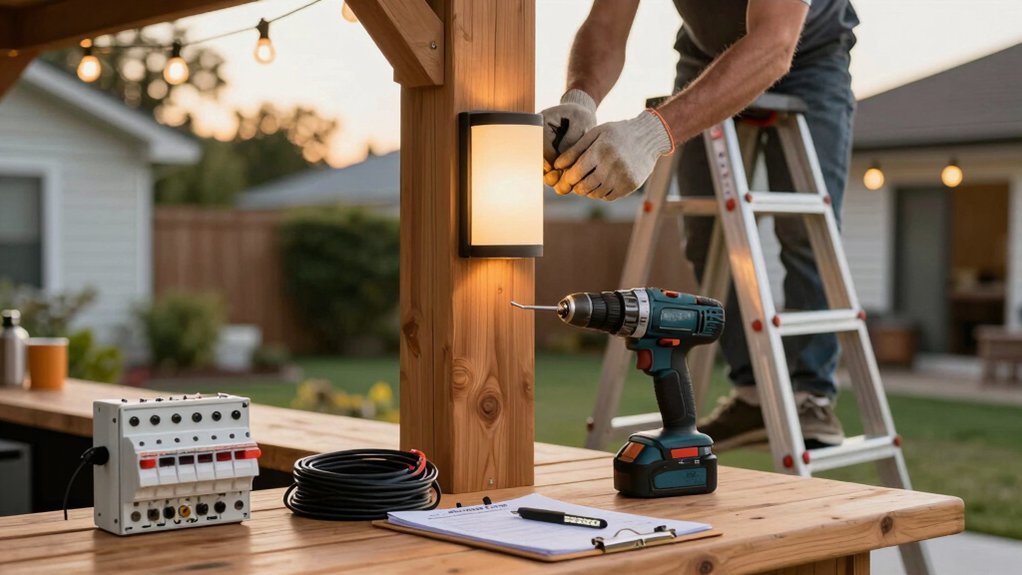
Where should you start when implementing a controls and maintenance plan for your outdoor bar lighting?
Begin by establishing a lighting control plan with dimmers or scene selectors so you can adjust brightness and color temperature for different times and events.
Start with a lighting control plan using dimmers or scene selectors to tailor brightness and color temperature for different times and events.
Choose weatherproof, outdoor-rated fixtures (IP65 or higher) and ensure all connections are sealed and protected by weatherproof conduits and junction boxes.
Implement automation with time-based schedules or event triggers, and consider motion sensors for pathways to boost safety and energy efficiency.
Layer your lighting by combining ambient string lights, task lighting under the bar, and accent lighting for architectural features to create depth.
Schedule regular maintenance checks for corrosion, loose connections, bulb replacement, and cleaning per manufacturer guidelines to ensure long-term performance consistently.
Frequently Asked Questions
What Budget Range Suits Residential Outdoor Bar Lighting Projects?
Typically, you’ll spend around $1,500 to $4,000 for a complete outdoor bar lighting setup, depending on fixtures and wiring. You’ll save if you DIY basic string lights and solar options, but plan for additional controls.
How Does CRI Affect Food Appearance Under Lighting?
CRI tells you how true colors look under light; with higher CRI, foods appear closer to their hues, it’s vibrant. With low CRI, reds dull, greens fade, and textures look flat, dull, and less appetizing.
What Mounting Heights Optimize Visibility Without Glare?
Mount at about 66–72 inches above the floor, aligning with your eye level and tilting slightly to cut glare. For shelves, use 60–66 inches and angle downward to keep visibility without reflections in all lighting.
Should Lanterns Use Solar or Wired Power in Outdoor Bars?
Solar lanterns work well for ambient lighting, especially where wiring is impractical; wired options offer steadier brightness and reliable control. Choose solar for flexible placement, or wired if you need consistent, long-lasting illumination and longevity.
How Often Should Bulbs Be Replaced for Efficiency?
You should replace bulbs every 3 to 5 years for LEDs, and more often for incandescent or halogen. Check manufacturer guidelines, watch for dimming, color shift, or flicker, and schedule routine maintenance to maintain efficiency.