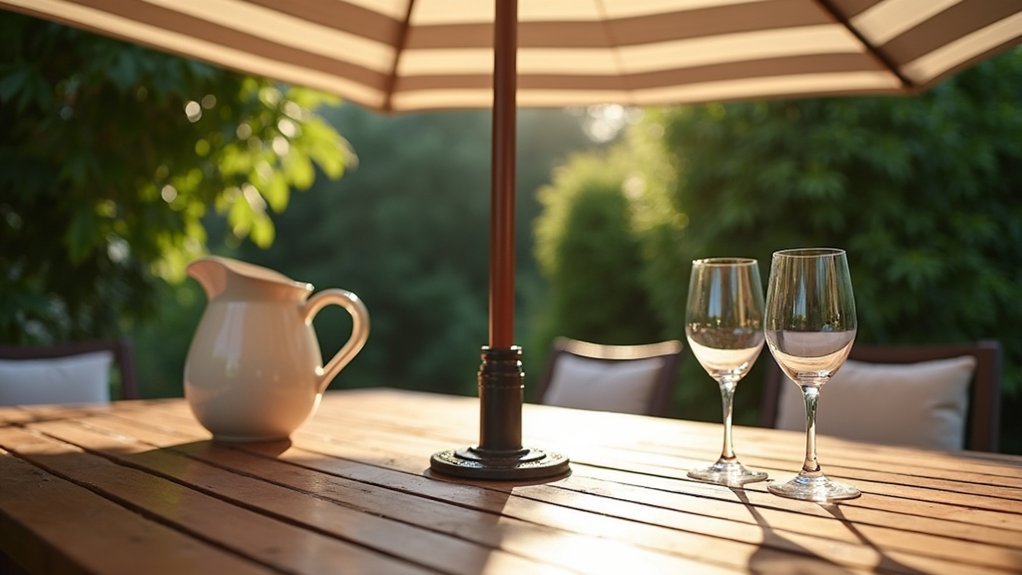
Dining tables need umbrella bases because the table hole alone doesn’t provide lateral stability against wind. Without a proper weighted base, your umbrella can become a dangerous projectile during gusts, potentially causing injuries or property damage. The base anchors the umbrella system, distributing pressure evenly and preventing tipping when guests move around. Manufacturers often require bases in their warranty terms. Discover how different base types offer varying levels of protection for your specific outdoor setup.
The Core Function of Umbrella Bases for Dining Tables
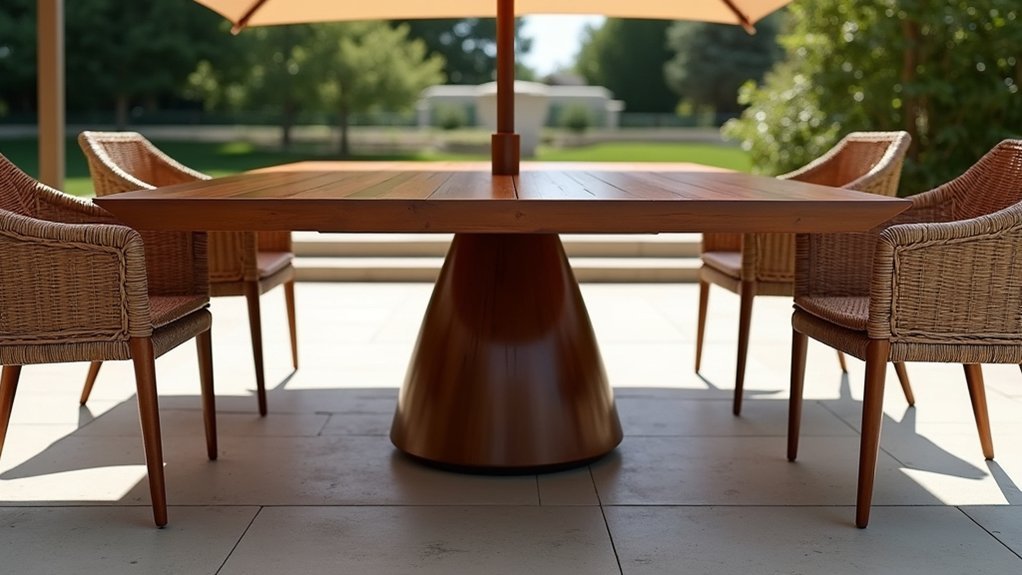
The humble umbrella base serves as the unsung hero of outdoor dining setups. While your table may have a center hole for umbrella placement, this aperture alone isn’t enough to keep everything secure when winds pick up or guests shift around your table.
Your umbrella base provides critical anchoring weight beneath the table, preventing the entire setup from tipping over during unexpected gusts or accidental bumps. It creates a stable pedestal system that distributes pressure evenly, protecting both your table structure and the umbrella pole from stress failure.
Without a proper base, you’re risking potential damage to your furniture and possible injury to guests. The base works silently beneath your table, counteracting movement when people sit, stand, or lean near the shaded area, ensuring your outdoor dining remains safe and enjoyable.
Wind Protection: Why Tables Alone Aren’t Enough
Why do outdoor umbrellas topple over even when secured through a table’s center hole? The answer lies in physics. Tables only provide vertical support for your umbrella pole but lack the counterbalance needed to resist lateral wind forces.
When a gust hits your umbrella, it creates significant sideways pressure. Without a proper weighted base, this force can easily tip your entire setup or even lift the tabletop. Your umbrella becomes unstable, shifting position and potentially striking nearby furniture or guests.
Manufacturers understand this vulnerability—many explicitly require a dedicated base in their warranty terms. Adding a proper umbrella base introduces crucial mass and stability to your outdoor setup, securing the umbrella against wind from all directions and ensuring your shaded oasis remains exactly where you want it.
Safety Concerns With Unsecured Patio Umbrellas
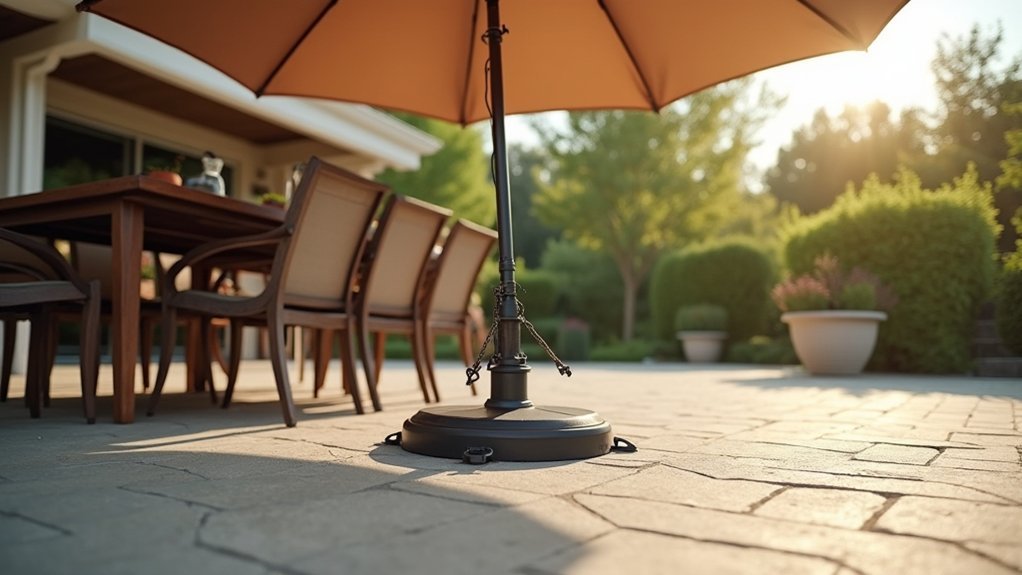
Wind can transform your patio umbrella into a dangerous projectile when it’s not properly secured with a dedicated base. Your outdoor table alone won’t provide sufficient stability during gusts, creating a precarious situation where the umbrella might suddenly topple. You’ll protect your family and guests from potential injuries by investing in a proper weighted base that prevents umbrella accidents and keeps everyone safe during your outdoor gatherings.
Wind Creates Hazards
Have you ever watched an unsecured patio umbrella transform into a dangerous projectile during a sudden gust? This common scenario demonstrates why proper umbrella bases are essential for your outdoor dining setup.
When wind catches your umbrella, even at a slight angle, it transfers powerful force directly to your table. Without a weighted base, this force can easily lift or destabilize your furniture. The table’s hole alone provides insufficient resistance against unexpected wind loads.
A proper umbrella base redistributes these forces away from the table pole, preventing the umbrella from tipping over and potentially injuring people nearby. It’s not just about keeping your furniture in place—it’s about protecting your guests and property from harm.
Don’t rely on table stability alone. Secure your umbrella properly to avoid dangerous, wind-driven accidents.
Table Support Insufficient
Many homeowners mistakenly believe that a dining table’s umbrella hole provides adequate support for their patio umbrella. This misconception can lead to dangerous situations, as tables simply aren’t designed to bear this responsibility alone.
| Table Support Issues | Safety Risks | Solution |
|---|---|---|
| No under-table locks | Umbrella shifts/collapses | Dedicated base system |
| Lateral force stress | Table damage/scratching | Weight distribution |
| Insufficient resistance | Wind vulnerability | Proper anchoring |
Without a proper base, your umbrella pole exerts continuous pressure against the table’s hole edges. When wind gusts occur, this pressure intensifies, potentially damaging both your table and umbrella. The table itself may even tip over completely if it’s lightweight. Remember that table holes are designed primarily for placement convenience—not as structural support elements. You’ll need a compatible weighted base to create a safe, stable outdoor dining environment.
Prevents Toppling Accidents
A toppling patio umbrella becomes a dangerous projectile that can cause serious injuries to you, your family, or guests. Without a proper base, even a slight gust of wind can catch the canopy and send your umbrella crashing down onto people, furniture, or delicate flooring surfaces.
An umbrella base creates a stable foundation by providing essential counterweight and lowering the center of gravity. This directly counters the tipping forces generated when wind pushes against the umbrella canopy. While your table’s built-in hole offers some support, it’s inadequate alone—the umbrella can still lift and shift within it.
The base’s weight, width, and secure pole attachment work together to maintain stability during extended outdoor use, ensuring your patio remains a safe environment for relaxation and entertainment.
Types of Umbrella Bases for Different Table Designs
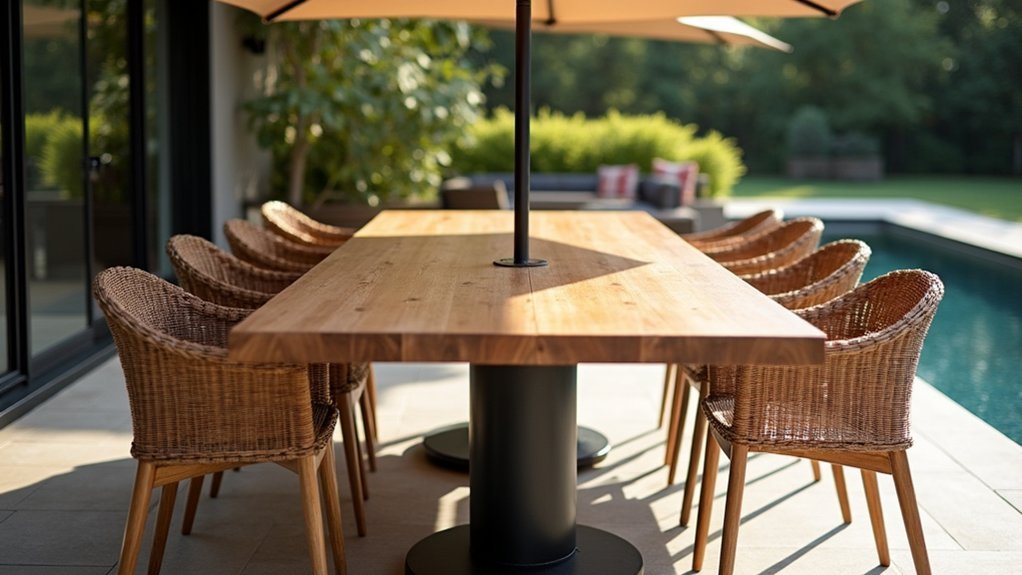
When selecting an umbrella base for your dining table, you’ll need to consider both the table design and umbrella style to ensure proper stability.
Palermo bases work well with outdoor tables between 24″–36″ or rectangular 30″x48″ designs, offering rust-resistant powder-coated finishes.
For optimal support with various table configurations, consider these options:
- In-table bases – Compact and space-saving but dependent on table stability
- Fillable bases – Provide adjustable weight and greater stability when filled
- Freestanding heavy bases – Essential for cantilever umbrellas and larger tables
- Combination systems – Pair a Palermo base with a dedicated stand under larger tables for distributed weight support
Always verify your umbrella pole diameter matches the base opening and ensure sufficient clearance beneath your table.
Weight Requirements Based on Umbrella Size
Selecting the right base weight for your umbrella isn’t merely aesthetic—it’s a critical safety consideration. The physics are straightforward: larger umbrellas catch more wind and require heavier bases to maintain stability.
For standard 6-8 foot patio umbrellas, you’ll need bases weighing 40-60 pounds. If you’re using larger 9-11 foot models, increase to 60-90+ pounds to prevent tipping. Cantilever or offset designs demand even heavier counterbalanced bases due to their off-center load distribution.
Many manufacturers provide specific guidelines—typically recommending 40-60 pounds for 7-9 foot umbrellas and 60-90 pounds for 10-foot models. Consider fillable bases if you want flexibility; these can be adjusted with sand or water to match your umbrella’s size and your area’s typical wind conditions.
Material Options for Dining Table Umbrella Bases
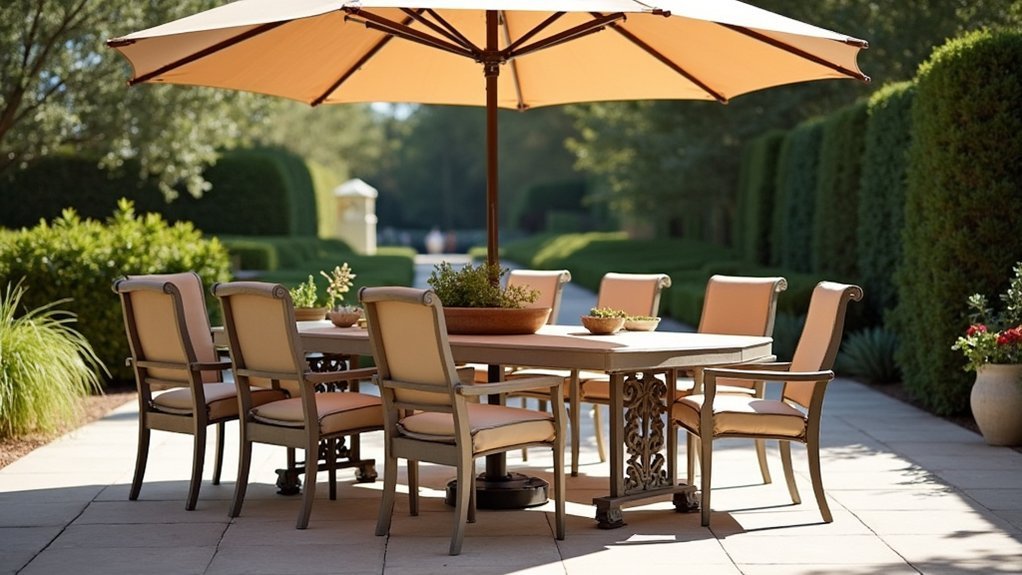
Palermo bases offer an excellent metal option with their rust-resistant combination of steel and aluminum, available in black or silver powder-coated finishes.
You’ll find these durable bases provide reliable support for various table sizes, including round tables and rectangular designs measuring up to 30″ x 48″.
For larger tables, you’ll need to consider supplementing with an additional umbrella stand or exploring fillable weighted materials that distribute support more effectively.
Metal Base Options
Why settle for an unstable umbrella when a quality metal base can provide the perfect foundation for your outdoor dining setup? Metal bases come in two primary materials: steel and aluminum, both typically featuring powder-coated finishes to resist the elements.
You’ll find these options offer distinct advantages:
- Steel bases provide superior stability with weights ranging from 20-60 pounds, perfect for standard umbrellas in most weather conditions.
- Aluminum bases deliver a lighter alternative that resists rust naturally while making repositioning easier.
- Integrated securing mechanisms like knobs or bolts prevent annoying wobble during use, keeping your umbrella properly positioned.
- Specialized bases are available for cantilever designs or particularly windy locations where additional weight and stability are necessary.
Fillable Weighted Materials
Versatility stands as the primary advantage of fillable umbrella bases for your dining table setup. These innovative bases arrive lightweight and ready for you to customize their stability by adding your choice of weighting materials.
You’ll typically have two filling options: water or sand. Water-filled bases feature sealed containers or bags within plastic or resin housings that you can easily fill to your desired weight. Sand offers greater density, providing more stability in smaller volumes, but requires proper sealing to prevent leakage.
The beauty of fillable designs is how you can adjust weight according to your specific needs. You’ll appreciate the ability to increase stability during windy conditions or when using larger umbrellas, then reduce weight for storage or relocation. This adaptability makes fillable bases practical solutions for varying outdoor dining environments.
Stability Testing: Ensuring Your Base Is Adequate
Testing your umbrella base’s stability before the first strong breeze arrives can save you from disaster. Even with center-hole mounting, most dining tables lack sufficient weight or locking mechanisms to secure umbrellas properly. You’ll need to verify your setup can withstand typical wind conditions without tipping.
To conduct an effective stability test:
- Check that the combined center of gravity between table, umbrella, and base is properly balanced
- Simulate moderate wind gusts by gently pushing the umbrella from different directions
- Confirm the umbrella remains upright without shifting the table’s position
- Verify no stress is being placed on table legs that could cause damage
Remember that cantilever and freestanding bases provide superior stability for larger umbrellas, while smaller setups still require appropriately weighted bases to resist unexpected gusts.
Aesthetic Considerations When Choosing an Umbrella Base
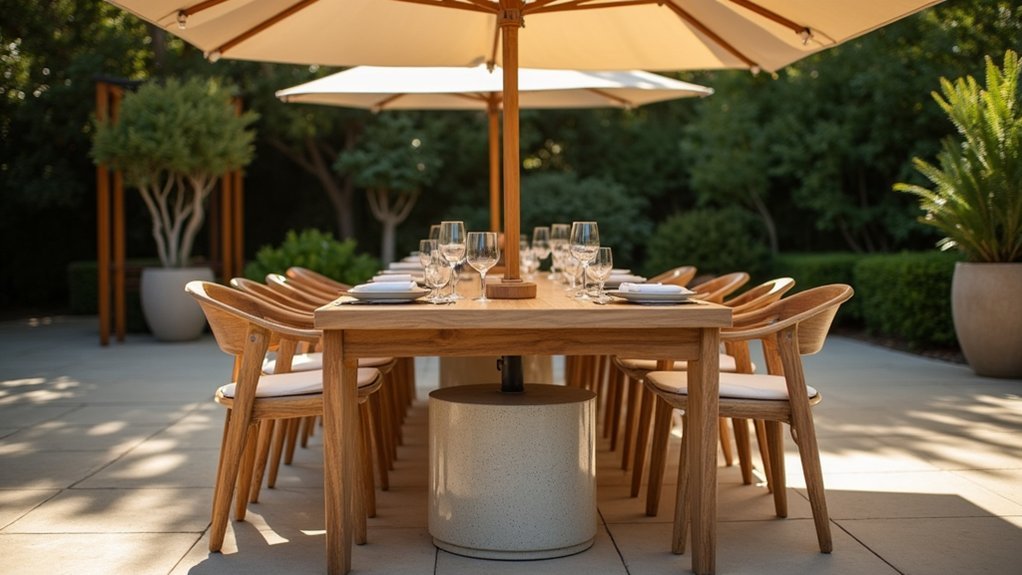
Your umbrella base isn’t just functional—it’s a visible part of your outdoor dining aesthetic that should complement your table’s design language.
When selecting a base, you’ll want to match materials and finishes to your table while considering how the shape and profile affect the overall visual balance of your dining area.
The right color coordination between your umbrella base and table can reinforce your outdoor theme, creating a purposeful look that elevates your entire patio space.
Matching Styles Matter
Why settle for a mismatched umbrella base when harmony creates a more sophisticated outdoor dining space? Your umbrella base isn’t just functional—it’s a design element that should complement your dining table in finish, color, and material.
When selecting a base that matches your table’s aesthetic, consider these four key benefits:
- Visual coherence – A coordinated base (like black Palermo with steel tables) creates a unified look
- Proportional balance – Matching styles prevent either element from visually dominating the space
- Structural alignment – Compatible designs ensure the umbrella pole integrates seamlessly with your table
- Perceived quality – Consistent styling across elements elevates the entire dining area’s appearance
The right pairing transforms your outdoor dining from merely functional to intentionally curated, enhancing your entire patio experience.
Color Coordination Tips
How well does your umbrella base harmonize with your outdoor dining ensemble? For a cohesive look, choose base colors that complement your table and furniture finishes. Black or silver Palermo bases pair beautifully with dark or neutral outdoor setups.
Opt for matte, powder-coated finishes instead of glossy ones—they resist weathering and conceal dirt better while blending seamlessly with your furniture. If your table features chrome, brushed nickel, or stainless accents, select a base with matching metallic tones.
Create visual anchoring with a darker base (charcoal or bronze) when you have light-colored tables or wicker furniture. Don’t overlook the opportunity to coordinate with your cushions and decor accents. The best umbrella bases integrate with your overall design rather than appearing as disconnected afterthoughts.
Material Selection Impact
Beyond color alone, the material of your umbrella base considerably shapes its aesthetic contribution to your outdoor dining space. Each material offers distinct visual qualities that should harmonize with your table design and overall décor.
- Metal bases deliver a sophisticated appearance with powder-coated finishes that can match table hardware, creating a cohesive look between functional elements.
- Concrete options provide a substantial, grounded aesthetic that works beautifully with contemporary or industrial-style outdoor furniture.
- Plastic/resin bases offer versatility through various molded designs while their fillable nature provides practical weight adjustment for different conditions.
- Finish coordination matters regardless of material—your base should complement not just your table but surrounding elements in your outdoor space for a thoughtfully designed environment.
Choose materials that balance visual appeal with the practical stability your specific dining arrangement requires.
Freestanding vs. Table-Mounted Umbrella Systems
When selecting an outdoor umbrella system, you’ll need to decide between freestanding or table-mounted options. Each has distinct advantages and requirements for stability.
Freestanding umbrellas rely completely on heavy bases to counter wind forces and remain stable, offering versatile placement anywhere in your outdoor space. While they require more substantial bases and additional space, they can be positioned independently of your table.
Table-mounted umbrellas work with your dining table for partial support, but still need proper bases for safety and stability, especially in windy conditions. Though more integrated with your dining setup, they’re limited by your table’s hole size and weight.
Regardless of which system you choose, selecting the appropriate base weight and design is crucial for safety, warranty compliance, and optimal shade coverage.
Space Planning for Umbrella Bases Under Dining Tables
After selecting your umbrella system, you’ll need to carefully consider the space requirements for your base. Proper planning ensures your umbrella remains stable while maintaining comfortable seating around your table.
When measuring available space, account for these critical factors:
- Base footprint – Heavy or fillable bases require sufficient room under or beside your table without crowding the area
- Chair clearance – Ensure the base doesn’t interfere with chair movement or guest legroom when seated
- Table structure – Consider how the base will interact with your table’s undercarriage and support system
- Pole placement – Tables with central holes still need a proper base for stability, as the hole alone won’t prevent tipping in wind
Don’t underestimate the importance of this planning step—proper base placement prevents accidents and ensures dining comfort.
Seasonal Storage and Maintenance of Umbrella Bases
Proper off-season care extends your umbrella base’s lifespan substantially while preventing costly damage. Before storing, clean your base thoroughly and ensure it’s completely dry to prevent rust and deterioration.
Empty water or sand-filled bases during winter months to prevent cracking when temperatures fluctuate. Remove bases from outdoor exposure during extreme weather conditions to protect their finish, especially powder-coated varieties which can corrode.
Store your umbrella base either upright or flat, depending on the manufacturer’s recommendation, to prevent warping. Choose a storage location that’s free from moisture and pests.
When spring arrives, conduct a maintenance check before reinstalling. Inspect all fasteners, bolts, and fillable cavities for damage. This simple inspection ensures your base will provide stable support throughout the upcoming season.
Cost Comparison: Basic vs. Premium Umbrella Bases
Why spend extra on a premium umbrella base when basic models cost so much less? The answer lies in the value equation of stability, durability, and long-term performance.
Your investment choices break down to:
- Basic bases ($20-50): Typically plastic or resin construction with minimal weight, suitable only for small umbrellas in calm conditions
- Mid-range bases ($50-100): Heavier materials or fillable options providing moderate stability for medium-sized umbrellas
- Premium weighted bases ($100-200): Solid metal or concrete construction offering superior wind resistance for larger dining setups
- Specialty cantilever bases ($200-400+): Heavy-duty counterbalance systems necessary for offset umbrellas providing extended shade coverage
While basic models might seem economical initially, premium bases deliver essential stability during unexpected gusts—protecting both your umbrella investment and dining experience.
Compatibility Factors Between Tables, Umbrellas, and Bases
Beyond cost considerations, selecting the right umbrella base depends heavily on how well it matches your specific dining setup. You’ll need to align several elements to ensure stability and function.
| Factor | Compatibility Consideration |
|---|---|
| Table Size | Larger tables (36″+ diameter) require heavier bases |
| Pole Diameter | Base opening must match umbrella pole exactly |
| Table Height | Bar-height tables need taller umbrella poles |
| Weight Distribution | Cantilever designs need counterbalanced bases |
| Aesthetic Coordination | Base should complement table materials and design |
Remember that your table’s center hole provides minimal support alone. Most dining tables need a properly weighted base that won’t interfere with seating comfort or leg placement. When selecting your base, also consider whether you’ll need a fillable option for adjustable weight or a permanent weighted solution.
Frequently Asked Questions
Do I Need an Umbrella Base With a Table?
Yes, you’ll need an umbrella base with your table for proper stability. Even with a center hole, your umbrella remains vulnerable to wind without a weighted base, ensuring safety and preventing damage.
What to Use Instead of an Umbrella Base?
You can use weighted stands, sandbags, concrete blocks, DIY water weights, or ground stakes. If your table is sturdy, secure the umbrella tightly through the table hole and add non-slip pads for extra stability.
How Heavy Should an Umbrella Base Be With a Table?
Your umbrella base should weigh 50-75 pounds for standard patio tables. If you’re dealing with larger umbrellas or windy conditions, opt for 80-120 pounds. The table provides some stability but doesn’t eliminate the need for proper weighting.
Can You Use an Umbrella Without a Base?
No, you shouldn’t use an umbrella without a base. Your table alone won’t provide adequate stability, especially in wind. Without proper weighted support, you’re risking dangerous tipping that could damage property or cause injuries.