To maintain your patio dining table, always clean with material-specific methods: mild soap for aluminum, detergent-water mix for teak. Tighten hardware seasonally and inspect for rust or cracks. Apply protective finishes like oil for wood or wax for metal surfaces. Cover with breathable, waterproof covers when not in use. Elevate tables slightly to prevent moisture damage. Store cushions indoors during off-seasons. These simple habits will dramatically extend your outdoor furniture’s lifespan and appearance.
Know Your Table Material: Care Techniques for Different Types
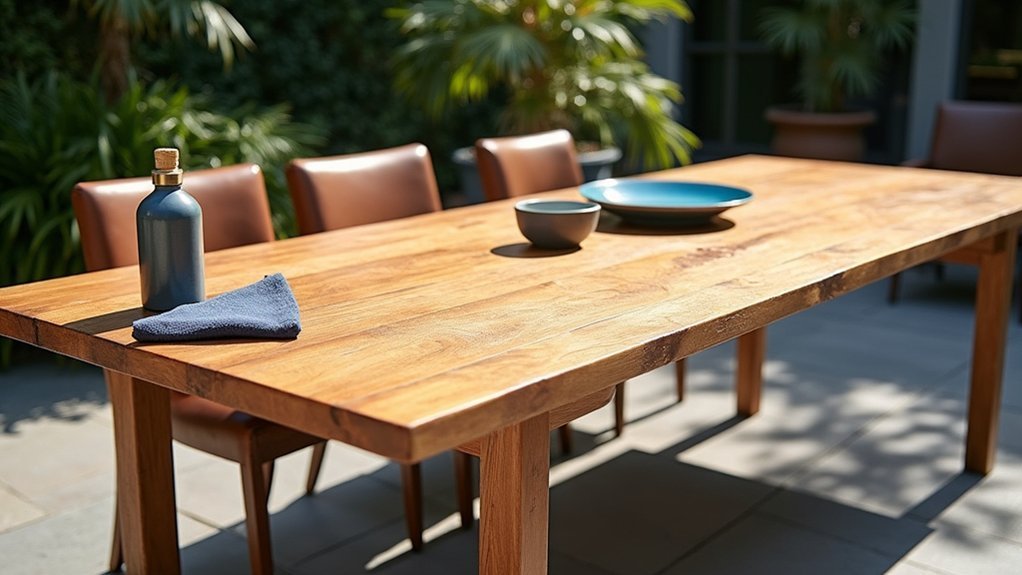
Why does proper care matter so much for your patio dining table? Outdoor furniture faces harsh elements that can drastically shorten its lifespan without proper maintenance.
For aluminum tables, clean with mild soap, avoid harsh chemicals on anodized finishes, and drain trapped water. Apply car wax or silicone protectant to maintain shine.
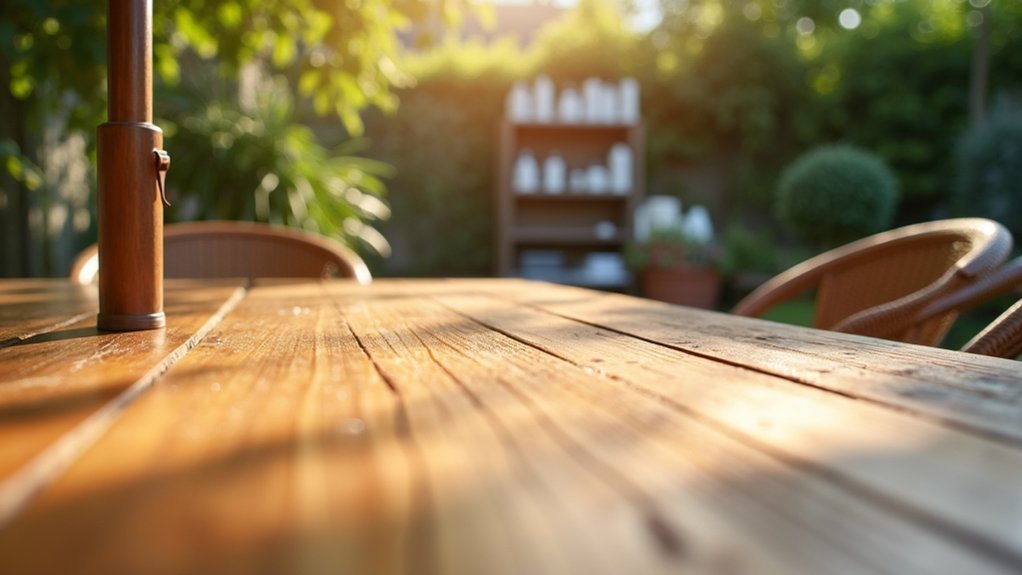
Teak requires a 50/50 mix of warm water with laundry detergent or vinegar. Scrub along the grain, rinse thoroughly, and oil 1-2 times yearly.
Other wood tables (cedar, oak, acacia) need gentle cleaning with dish soap followed by complete drying before applying protective sealant.
Synthetic wicker tolerates light scrubbing with mild soap, while natural wicker should stay dry and stored indoors during inclement weather.
Don’t forget regular inspections for loose bolts and protective covers when not in use.
Essential Seasonal Cleaning Protocols
When should you perform thorough maintenance on your patio dining table? The beginning of each season is ideal, especially before summer use and prior to winter storage.
- Start with a complete cleaning using mild soap, a soft brush, and thorough rinsing—allowing your table to dry completely before storage or continued use.
- Perform hardware inspections seasonally, tightening loose bolts and checking for rust or structural issues that could worsen over time.
- Apply material-specific treatments, such as oiling teak and hardwood tables 1-2 times yearly to maintain their natural protective properties.
- Cover your table with a breathable, waterproof cover when not in use, and always store indoors during harsh weather conditions to prevent unnecessary damage from the elements.
Protecting Your Table From Weather Extremes
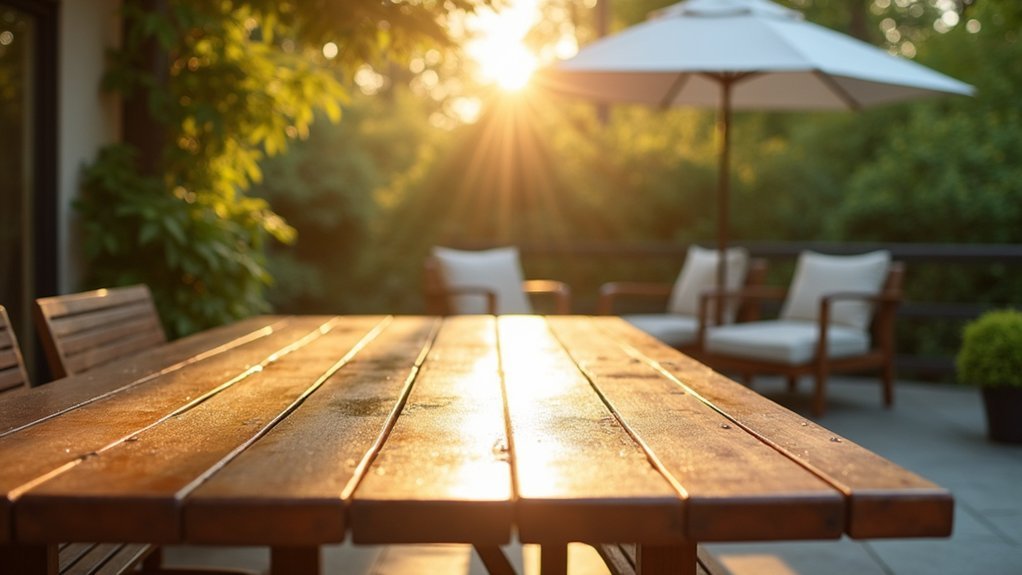
How can your patio dining table survive the harsh elements year-round? Start by investing in high-quality covers that are breathable, waterproof, and UV-resistant. These shields protect against rain, sunlight, and temperature fluctuations when your table isn’t in use.
Don’t leave wooden tables directly on the ground—elevate them slightly with coasters to prevent moisture absorption. When severe weather threatens or during off-seasons, move your table indoors or to a covered area if possible.
Always perform regular inspections for rust, loose connections, or developing cracks. Tighten hardware promptly and address damage before it worsens. Before covering or storing, thoroughly clean and dry your table to prevent mold and mildew growth.
These preventative measures will significantly extend your patio table’s lifespan against weather extremes.
Hardware Maintenance and Structural Integrity Checks
Regular checks of your patio table’s hardware can prevent structural failure before it happens. You’ll need to tighten loose screws and bolts seasonally, inspect metal components for rust that requires immediate treatment, and verify that all joints remain firmly connected. These simple maintenance steps ensure your outdoor dining table remains safe, sturdy, and ready for entertaining throughout its lifespan.
Tighten Loose Connections
Loose hardware can transform your sturdy patio table into a wobbly hazard faster than you might expect. Regular maintenance prevents structural damage and ensures your dining set remains safe for years to come.
- Inspect all bolts, screws, and fittings quarterly, making seasonal checks part of your routine maintenance schedule
- Pay special attention to connection points after moving the table or following heavy use—these are when fasteners are most likely to loosen
- Apply the proper torque when tightening—firm enough to secure the connection but not so tight you strip the threads or damage joints
- For metal-framed tables, don’t overlook welds and connectors where hairline cracks or corrosion might develop, as these require immediate attention
Early detection of loose connections prevents costly repairs and extends your patio furniture’s lifespan.
Rust Prevention Methods
While many homeowners focus on cleaning table surfaces, rust prevention demands equal attention to maintain both appearance and structural integrity.
Inspect your patio furniture for signs of rust or corrosion during seasonal checks and address these issues immediately with rust-inhibiting primer or outdoor-safe paint.
For aluminum frames showing oxidation, create a solution of equal parts white vinegar and water or apply metal polishing paste to remove corrosion.
Don’t forget to remove foot caps periodically to drain accumulated water from inside the frame—this simple step significantly reduces rust and corrosion risks.
Whenever possible, choose powder-coated aluminum furniture, as it offers inherent resistance to rust and corrosion while requiring less maintenance.
This proactive approach to rust prevention will extend your patio dining table’s lifespan and keep it looking attractive for years.
Joint Integrity Inspections
Beyond rust prevention, a thorough joint integrity inspection serves as your furniture’s structural safeguard. Regular checks ensure your patio dining table remains stable and safe for years to come.
- Examine all bolts, screws, and connectors quarterly, tightening any loose hardware to prevent wobbling that can lead to structural failure during use.
- Monitor connection points for gaps or movement, especially after seasonal temperature changes that can cause materials to expand and contract.
- Inspect joints for corrosion-induced cracking, treating affected areas immediately with appropriate rust inhibitors or outdoor-grade paints.
- Use only manufacturer-recommended hardware for replacements, avoiding mismatched fasteners that compromise structural integrity.
Keep a simple maintenance log to track wear patterns and recurring issues, helping you identify when more comprehensive repairs might be needed.
Preventing and Removing Stains, Mold and Mildew
Why let stains and mold ruin your beautiful patio dining table when prevention is so simple? Regularly wipe surfaces with mild soap solution to eliminate dust, pollen, and grime that contribute to mold formation.
For stubborn stains, use a soft brush with mild detergent or oxygen bleach, and rinse thoroughly to avoid residue buildup. Always dry surfaces completely, preferably in sunlight, and keep furniture elevated from wet ground.
Wood tables benefit from a 1:1 vinegar-water solution or specialized wood cleaner that inhibits mold while protecting the finish. When your table isn’t in use, cover it with a breathable, water-repellent material and store in a dry location to prevent mildew development.
These simple practices will extend your table’s lifespan and maintain its appearance year-round.
Proper Refinishing and Resealing Techniques
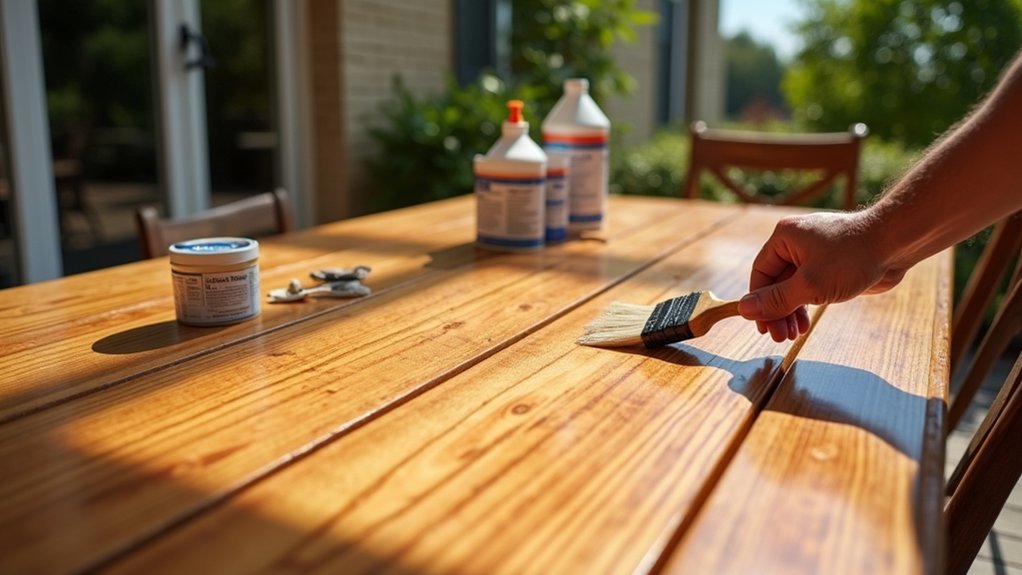
How often have you noticed your once-gleaming patio table looking weathered and dull? Wooden outdoor tables need regular refinishing to prevent cracking and extend their lifespan.
To properly refinish your patio table:
- Clean thoroughly first—wet the surface, apply teak cleaner with a soft cloth along the grain, let it sit for 3 minutes, then brush and rinse completely
- For teak tables, avoid regular paint and instead use tung or linseed oil after cleaning and drying
- Apply appropriate sealants that preserve color while providing protection, reapplying every few months for that new look
- Allow the table to dry completely before use, and plan to recoat based on your local weather conditions and table usage
Remember to reseal every few years or sooner if you notice significant weathering.
Storage Solutions for Extended Table Lifespan
While refinishing protects your patio table during active use, proper storage represents the next layer of defense against premature aging. Always keep your dining table indoors or under shelter during harsh weather and off-seasons to minimize deterioration.
When the table remains outdoors, cover it with breathable, waterproof, UV-resistant covers that prevent sun damage and moisture buildup. Elevate your table slightly using coasters or furniture feet to prevent ground moisture absorption.
Don’t forget to remove cushions and accessories, storing them in a cool, dry indoor location to prevent mold growth and color fading. Before storing for extended periods, thoroughly clean and dry the table, then inspect it for potential issues like rust spots, loose bolts, or developing cracks. Addressing these problems early prevents costly repairs later.
Frequently Asked Questions
Is It Better to Oil or Varnish Outdoor Wood?
For outdoor wood, your choice depends on your priorities. Oil maintains a natural look with easier reapplication but requires more frequent maintenance. Varnish offers superior protection but can crack and is harder to repair.
How to Keep a Patio Table Clean?
Wipe your patio table regularly with a damp cloth and mild soap. For tougher stains, scrub with a soft brush in the grain’s direction. Rinse thoroughly, dry completely, and inspect for damage seasonally.
How to Seal a Dining Table for Outdoor Use?
Clean your table thoroughly and let it dry completely. Apply oil-based sealant like tung or linseed oil with even strokes. You’ll need to reapply every few years to maintain protection against outdoor elements.
How to Keep a Patio Table From Rusting?
Regularly clean your table with mild soap and water, dry it thoroughly, apply protective wax or silicone coating, ensure proper drainage, elevate it slightly off the ground, and tighten loose hardware seasonally to prevent moisture intrusion.