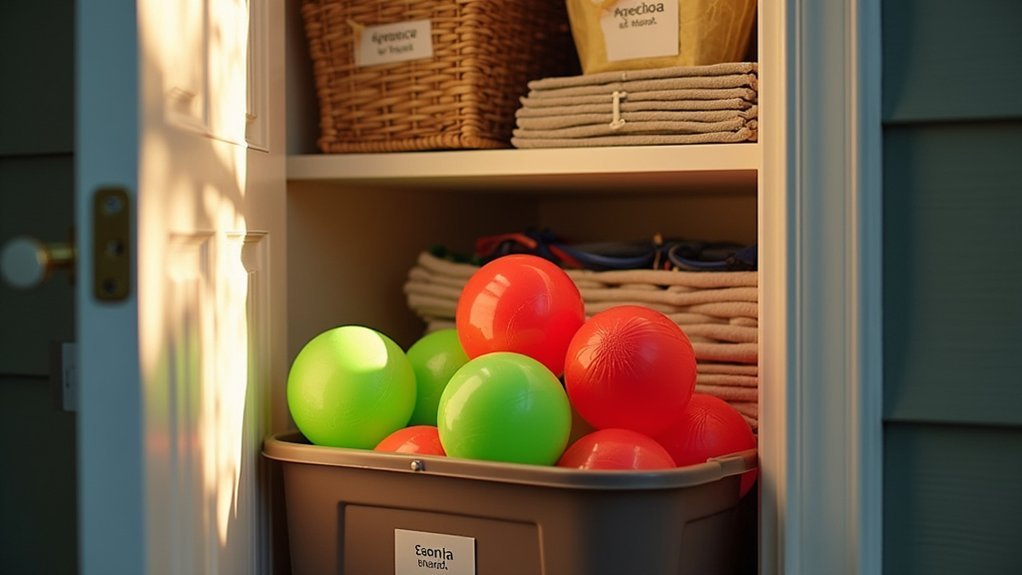
To organize yard games in closets, zone your space by game type, using clear bins with bold labels at eye level. Install vertical storage like pegboards and door organizers for smaller items. Group games by size and frequency of use, keeping favorites in quick-grab baskets near the front. Implement a simple sign-out system for borrowed items and rotate seasonal equipment to top shelves when not in use. These practical strategies will transform your cluttered closet into an efficient game center.
Zone Your Closet Space for Different Game Categories
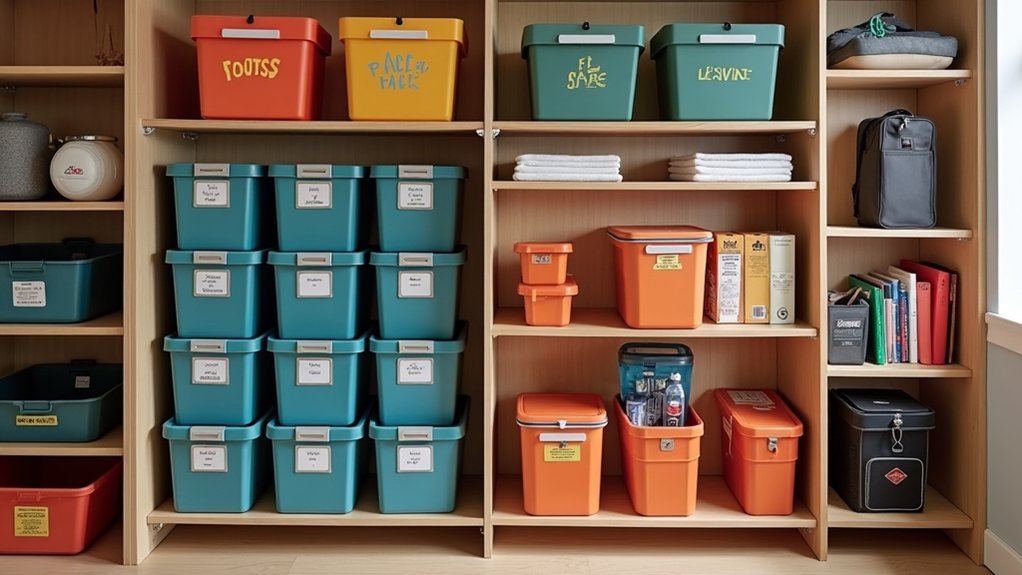
When organizing your yard games, creating distinct zones transforms a chaotic closet into an efficient system. Group similar items together—bowling-style games in one area, ball sports in another, and table-top activities in their own section. This prevents cross-mixing and allows you to grab exactly what you need.
Utilize vertical space with tall, narrow shelving or labeled bins for each category. Keep frequently used games at eye level and near the front for quick access, reducing the need to dig through stacked items when it’s time to play.
Assign dedicated storage for accessories like nets, bats, and frisbees—either on hooks or in category-specific bins. Finish by adding durable, visible labels to each zone and maintain a simple inventory list to make restocking and organization maintenance effortless.
Maximize Vertical Storage With Wall-Mounted Solutions
When organizing yard games in your closet, you’ll gain tremendous space by installing vertical storage systems like hanging equipment racks that keep balls, rackets, and mallets off the floor.
Door-mounted mesh organizers transform otherwise unused surfaces into perfect homes for lightweight items such as frisbees, paddle ball sets, and game instruction booklets.
Consider adding a pegboard system with color-coded hooks to create a visible, adjustable display that makes it easy to grab exactly what you need for impromptu backyard fun.
Hanging Equipment Rack Systems
The vertical wall space in your garage or storage closet offers untapped potential for organizing bulky yard games and sports equipment. Installing systems like MonkeyBars allows you to hang basketballs, bat bags, and baseball bats while keeping floor space clear for movement.
| Equipment Type | Best Hanging Method | Height Placement |
|---|---|---|
| Basketballs | Wall-mounted hooks | Adult eye level |
| Baseball bats | Horizontal rack | Mid-wall height |
| Kids’ bikes | Heavy-duty hooks | Lower placement |
| Paddles/rackets | Pegboard system | Within reach |
| Nerf guns/toys | Dedicated rack | Child-accessible |
Consider lightweight bins with water-drip slits for small accessories. For flexibility, pegboard and slat-wall systems let you reconfigure your storage as needs change. Position frequently used equipment at easy-to-reach heights, empowering older children to access their own gear without creating floor clutter.
Door-Mounted Mesh Organizers
Why waste valuable closet floor space when your doors offer perfect storage real estate? Door-mounted mesh organizers create instant vertical storage without sacrificing a single inch of floor area. These breathable pocket systems keep your yard game accessories—balls, darts, paddles, and sand toys—visible and accessible.
Simply hang these organizers over your door using the built-in hooks or adhesive strips. No tools required, making them perfect for renters. The mesh construction prevents moisture buildup while letting you see everything at a glance.
Label each pocket alphabetically or by game type for quick retrieval. With smaller items stored in door pockets, you’ll free up valuable shelf space for larger equipment and bins. When your collection changes, these flexible organizers can be easily relocated or reconfigured to accommodate new items.
Pegboard Storage Solutions
Transform your cluttered closet walls into efficient yard game organizers with a versatile pegboard system. This solution keeps all your outdoor entertainment visible and within reach while freeing valuable floor space for larger items.
Consider painting stripes or using color-coded hooks to categorize equipment—nets in one section, bats in another, and balls in a third. This visual system makes finding what you need during gameplay quick and stress-free.
Install your pegboard at heights accessible to both children and adults, encouraging everyone to participate in maintaining order. Mix hooks with small bins to accommodate various-sized items, from tiny darts to bulkier paddles.
As your collection grows or changes seasonally, you’ll appreciate how easily pegboard configurations can be adjusted, promoting consistent put-away habits and lasting organization.
Use Clear Bins With Visual Labels for Easy Identification
How often have you frantically searched through opaque containers trying to find badminton rackets or bocce balls? Clear bins eliminate this frustration by letting you see contents at a glance.
Choose large transparent containers that reveal what’s inside without opening them. Add bold, readable labels categorizing items (footballs, bats, nets) to ensure everything returns to its proper home. Place these labels on both the bin and lid for identification from any angle.
Position your bins in accessible locations, grouped by activity type for logical organization. This system empowers family members to grab what they need and clean up independently. For space-saving efficiency, select stackable containers that maximize vertical storage while maintaining visibility.
With clear bins and smart labeling, you’ll spend less time searching and more time enjoying your yard games.
Create a Seasonal Rotation System for Game Access
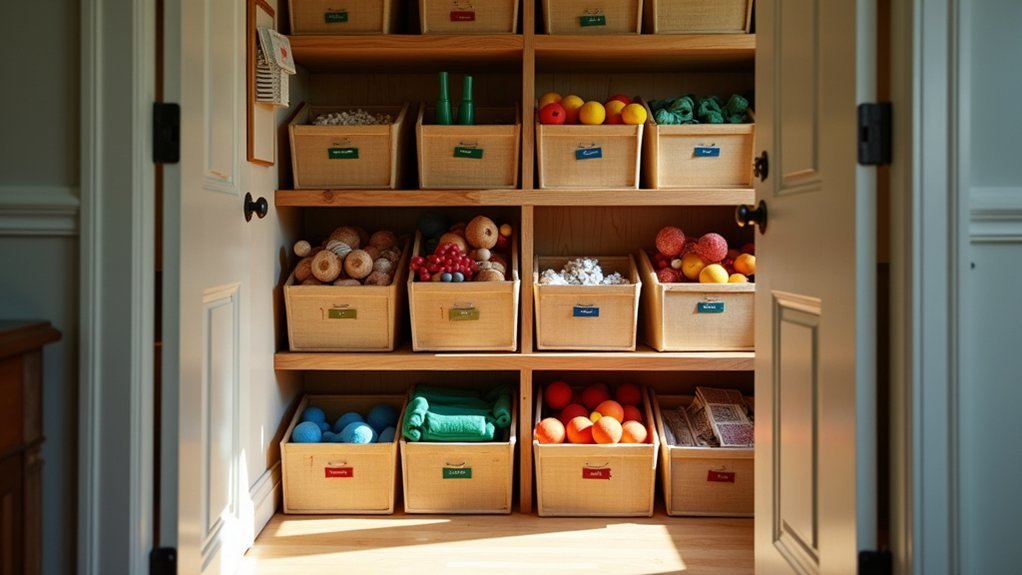
While clear bins keep games visible, even the most organized closet can become cluttered when you’re storing every yard game year-round. Establish a rotation by categorizing games by season and storing off-season items in labeled bins on high shelves.
Color-code your bins for quick identification—blue for summer, orange for fall—and swap items monthly using a checklist. Move just two to four games at a time to maintain accessibility without overcrowding.
Keep your current season’s favorites at the front of your closet for grab-and-go convenience, with less-used items tucked behind. Track which games actually get played and adjust your rotation quarterly, relegating rarely-used items to off-season storage to free up valuable space.
Install Door Organizers for Smaller Game Components
Where do all those tiny game pieces disappear to when you need them most? The solution hangs right on your closet door. A clear shoe organizer transforms wasted door space into visible storage for yard game essentials without consuming valuable shelf real estate.
Choose a sturdy organizer that fits standard closet doors, with pockets strong enough to hold sand toys, bats, and plastic pieces. Label each pocket using 3.5 x 5 inch Avery labels, arranging items alphabetically or by game type for quick access during play.
Keep card games, dice, and small components in separate compartments to prevent mixing and simplify cleanup. Don’t forget to inspect your organizer regularly for loose seams or water damage, replacing compromised pockets to prevent small items from creating clutter.
Design a Check-Out System for Borrowed Games
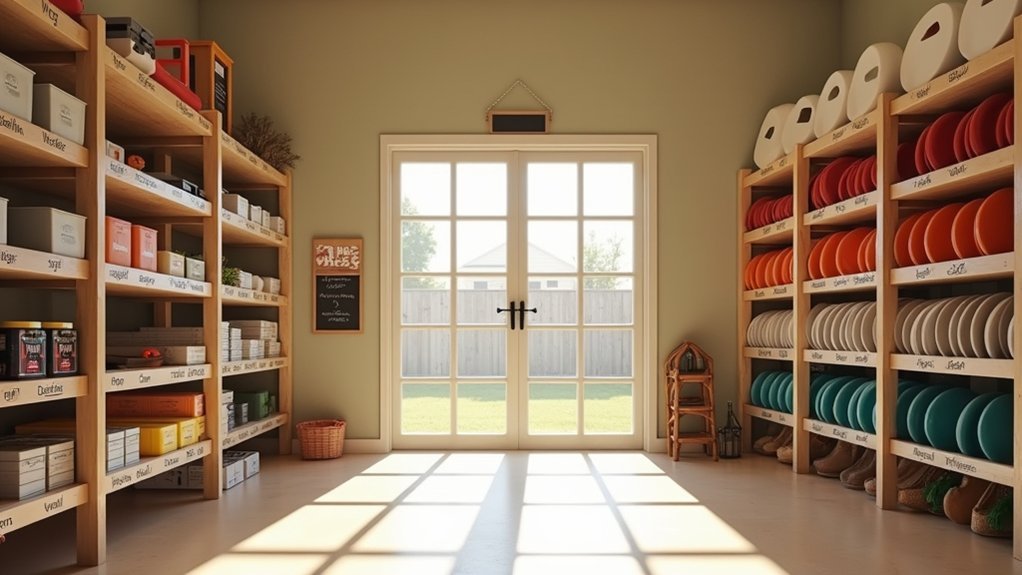
When friends frequently borrow your yard games, you’ll need a reliable system to track them. Consider using a simple sign-out board with labeled pockets that record borrower information, or try a digital check-out app on your phone that sends automatic reminders for returns. Implementing clear tracking methods for borrowed items, complete with return deadlines and designated return locations, will ensure significantly reduce lost equipment and ensure your collection stays intact.
Simple Sign-Out Board
One frustrating aspect of lending yard games is tracking who’s what and when they borrowed it. Create an easy solution by attaching a laminated master list to your closet door with columns for game name, quantity, borrower name, and date borrowed.
Use dry-erase markers to update the board and provide matching name tags for borrowers to streamline the check-out process. Include a due-back date (such as “2 days”) to encourage timely returns and prevent items from disappearing.
Designate a specific “out” bin or hook system where borrowed games can be placed, making it simple for users to find and return items to their proper location. Implement a quick 5-10 minute weekly audit to reconcile your sign-out sheet with actual inventory and maintain accuracy.
Tracking Borrowed Items
How efficiently can you track your yard games without creating an administrative nightmare? Create a simple check-out log with fields for borrower name, dates, item details, and condition notes. This works whether you prefer a physical clipboard or digital form.
Assign dedicated labels to borrowed games using color-coded bins or pockets on an organizer to quickly identify what’s available. Implement a “before sunset” return policy, documenting condition changes in your log.
For popular items like Kan Jam or badminton sets, add a “reserved” status on a whiteboard near your closet to prevent double-booking disappointments. Perform weekly inventory checks to reconcile your physical collection with your log, addressing overdue returns and adjusting storage as needed.
Digital Check-Out App
Taking yard game tracking to the next level means leveraging technology for effortless inventory management. Create a digital system that assigns unique IDs to each yard game, recording borrower details, checkout dates, and return status.
Incorporate QR codes on game containers for quick scanning, reducing manual entry errors and linking physical items to digital records. Set up status categories (Available, Checked Out, Overdue) with automated email reminders for approaching due dates.
Store your inventory data in a shared spreadsheet or lightweight database with different access levels for household members. Include audit trails to track item history and allow borrowers to request extensions or report damages through the system.
This digital approach maintains complete visibility of your yard game collection while streamlining the lending process for everyone involved.
Protect Delicate Equipment With Custom Storage Dividers
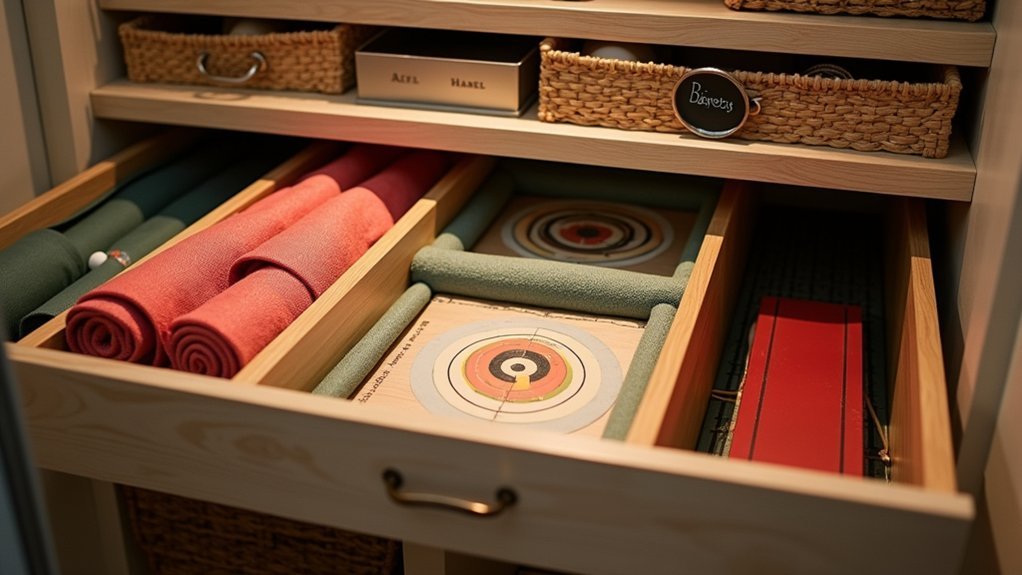
Why let your delicate yard game equipment suffer unnecessary damage when custom storage dividers offer an elegant solution? Install moisture-resistant dividers with labeled pockets to separate games by type—keeping balls, bats, and nets in dedicated sections prevents cross-contamination and potential damage.
Choose color-coded dividers with varying pocket sizes: larger compartments for bulky items like soccer balls and slimmer sections for small pieces like game cards and darts. For especially fragile items such as glass-cased accessories or foam darts, pair dividers with clear, lidded bins for added protection against impacts and moisture.
Don’t forget to regularly inspect your dividers for wear. Replace any with frayed edges or torn seams to maintain that essential protective separation your outdoor games deserve.
Group Games by Size and Player Count
Three key factors—size, player count, and weight—create the perfect organizational system for your yard game collection. Start by arranging larger games like cornhole and badminton sets together on shelves, grouping tall items to maximize vertical space efficiency.
Implement a player-count system using dedicated bins: one for 2-4 players, another for 5-6 players, and a separate bin for games accommodating 7+ participants. Use clear, labeled containers to categorize by game type (ball, racket, or toss games) for quick identification when hosting gatherings.
For proper weight distribution and accessibility, place heavier, bulkier games at the bottom of your closet and lighter handheld sets on top. Don’t forget to add a rotating reminder system that encourages everyone to return games to their designated player-count categories after use.
Utilize Adjustable Shelving for Changing Collections
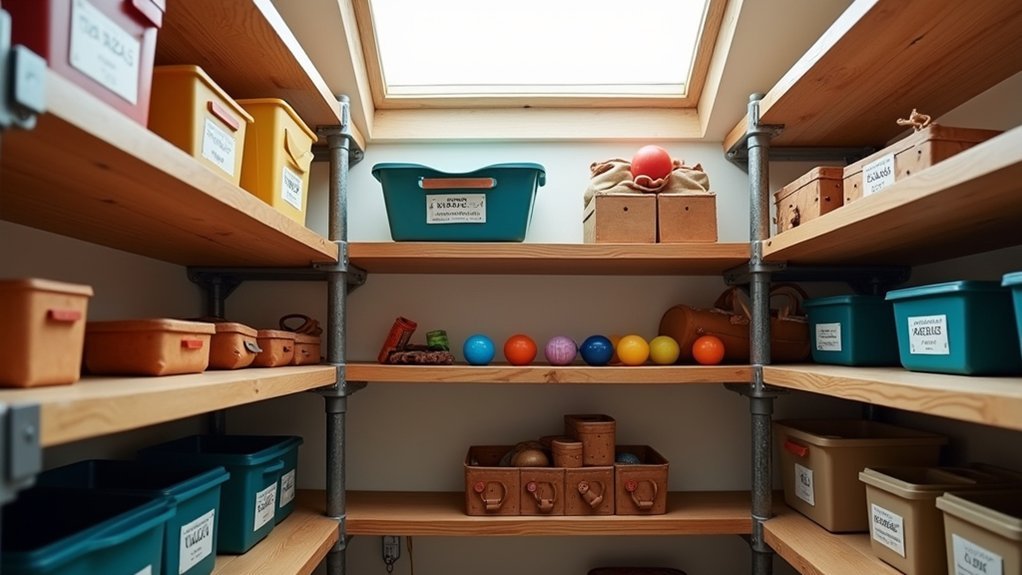
Adjustable shelving systems let you reconfigure your yard game storage as seasons change and collections grow.
You’ll maximize flexibility by installing modular shelves with removable dividers that can expand or contract compartment sizes without requiring tools.
Position varying shelf depths strategically, with frequently used items at kid-friendly heights and bulkier seasonal equipment stored on deeper shelves for efficient space management.
Maximize Seasonal Flexibility
When your yard game collection shifts with the seasons, having adaptable storage becomes essential. Pair adjustable shelves with clear, labeled bins to easily reorganize categories as you transition from pool toys to sports gear throughout the year.
Install shelves at variable heights to keep age-appropriate games accessible to kids, adjusting as their interests and abilities evolve. Use removable shelf dividers to create instant zones for different equipment types without installing entirely new storage units.
Maintain a seasonal checklist for repositioning shelves and reorganizing your collection. This proactive approach ensures you won’t need a complete closet overhaul when summer games give way to fall activities. The beauty of adjustable shelving is that it grows with your collection, accommodating everything from folded nets to bulky equipment bins with minimal effort.
Accommodate Growth Efficiently
As your yard game collection expands with new seasonal acquisitions, the true value of adjustable shelving becomes clear. Reconfigurable shelving prevents wasted vertical space while adapting to your evolving inventory of outdoor entertainment.
Install movable shelf supports to create customized compartments—taller spaces for bulky items like Kan Jam and shorter tiers for compact pieces such as darts and balls. Pair these flexible shelves with labeled bins to expand capacity without overhauling your entire organization system.
Plan for periodic adjustments as you add new games or equipment. The beauty of this approach is that you can raise or lower shelves to maintain visibility and accessibility. For maximum versatility, combine adjustable shelving with modular rack attachments like pegboard or slat wall systems at varying heights to keep everything organized and within reach.
Implement Quick-Grab Baskets for Frequently Used Games
Ever struggled with fishing through a jumbled closet for that one yard game everyone wants to play? Quick-grab baskets positioned near your closet door solve this common frustration. Place these containers at kid-friendly heights so everyone can access—and return—games independently.
Size each basket appropriately for its contents and label them clearly. Clear bins offer the added benefit of visual identification without opening.
| Game Type | Recommended Basket |
|---|---|
| Small Items | Medium basket for darts, cups |
| Throwing Games | Large bin for Kan Jam, Frisbees |
| Ball Games | Deep basket for bocce, kickballs |
| Racket Sets | Long container for badminton, paddles |
| Seasonal | Rotating bin for current favorites |
Implement a simple rotation system, swapping contents seasonally to keep the most-played games accessible while storing off-season activities elsewhere.
Frequently Asked Questions
What’s the Konmari Method for Closets?
Konmari for closets means removing everything, keeping only what sparks joy, organizing by category, folding vertically, and storing similar items together. You’ll maintain visibility and easy access while creating a clutter-free space.
What Is the Best Layout for a Closet Organizer?
The best closet layout uses accessible zones with labeled bins at eye level for frequent items. Install wall storage for hanging items and keep seasonal gear near the door with a reference guide inside.
How to Use Dead Space in a Closet?
Utilize door backs with hanging organizers, install hooks under shelves, add stackable bins in corners, and mount pegboards on unused wall space. Don’t forget those high upper corners for seasonal items you’ll rarely access.
How to Organize a Closet for ADHD?
Use clear, color-coded bins with visible contents. Place frequently-used items at eye level. Label bins with text and icons. Maintain a consistent return spot for everything. Don’t overstack—stick with 3-4 transparent bins to reduce cognitive load.