
Setting up a pop-up tent for your backyard BBQ is straightforward. Choose a flat spot away from trees and power lines. With a partner, unfold the frame, drape the canopy over it, extend the legs, and lock everything in place. Secure each corner with stakes at a 45° angle or use weight bags on hard surfaces. Add sidewalls for wind protection if needed. The perfect setup creates a comfortable, weather-protected space for all your guests to enjoy.
Selecting the Perfect Pop Up Tent for Your BBQ Space
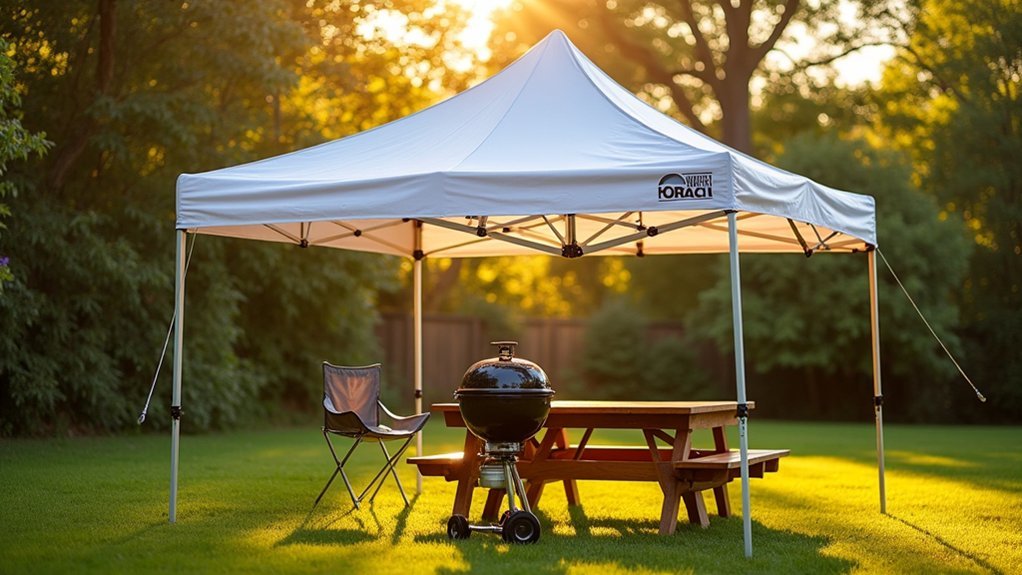
Why struggle with makeshift shade when the right pop-up tent can transform your backyard BBQ experience? Start by choosing a 10×10 or 12×12 foot canopy to ensure adequate space for cooking equipment and guest movement. Scout a flat, clear area away from overhanging branches and power lines.
Look for heavy-duty frames with quick-setup mechanisms and locking joints that won’t collapse during your event. Adjustable legs are essential for setting up on uneven backyard terrain. For protection against unexpected weather, prioritize waterproof materials with taped seams and a bathtub-style floor.
Consider wind conditions in your yard by selecting models that accommodate weight bags or sandbags. If you host regular gatherings, invest in durable polyester or polyethylene canopies with fiberglass poles that will serve you for seasons to come.
Step-by-Step Setup Guide for Quick Assembly
When does setting up a pop-up tent become frustrating? When you’re unprepared or rushing the process. Follow these simple steps for a hassle-free setup every time.
Start by finding a flat area away from trees and power lines. Unpack and inspect all parts before beginning. With a partner, gently unfold the frame, checking hinges for smooth operation. Next, drape the canopy over your partially opened frame, aligning corners and securing all Velcro attachments evenly.
Now fully extend the frame until you hear it lock into position. Adjust each leg to ensure your tent sits level on your yard’s surface. Finally, anchor your tent using stakes driven at an angle or weights if you’re on a deck or patio. Test stability before arranging your BBQ setup beneath.
Positioning Your Tent for Optimal Weather Protection
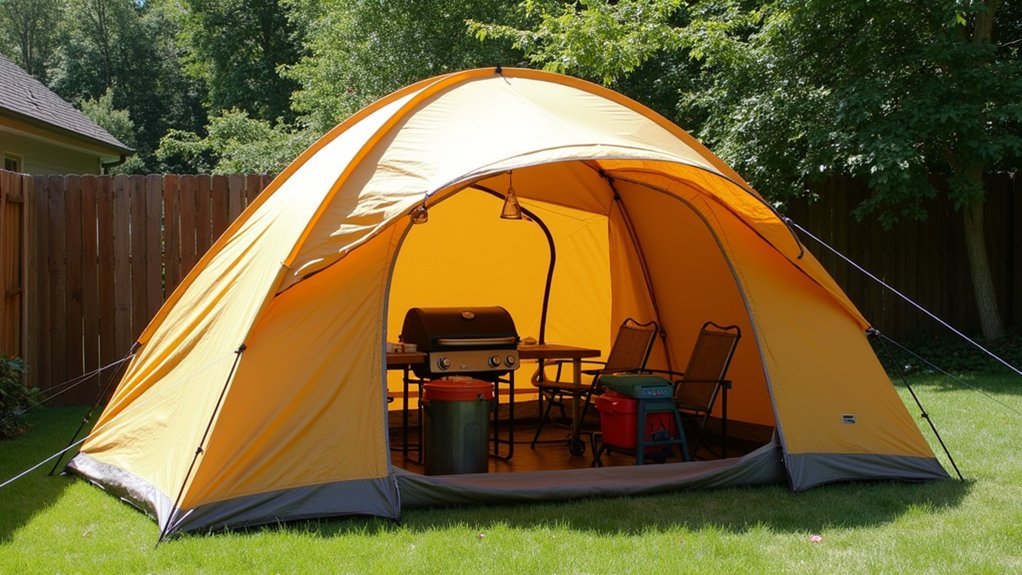
Where you place your pop-up tent can make the difference between a pleasant BBQ experience and a frustrating battle against the elements. Select level ground with natural windbreaks like buildings or trees to minimize gusts while ensuring there are no overhead obstacles that could damage your canopy.
Position your tent at a slight angle to prevailing winds rather than directly facing them. This strategic placement helps stabilize the structure instead of creating resistance. Allow sufficient clearance around all sides for:
- Proper staking and weighting of all legs
- Adequate airflow to prevent condensation buildup
- Easy access for your guests to enter and exit
Don’t forget to add weights or sandbags to each leg, especially on softer ground, to maintain stability when those unexpected breezes arrive.
Securing Your Canopy Against Wind and Rain
How often has a perfect backyard BBQ been ruined by a sudden gust sending your canopy airborne? Proper anchoring is essential for a worry-free gathering.
Stake your canopy at a 30-45 degree angle for maximum hold in various soil conditions. This angled approach creates stronger resistance against lifting forces. For additional stability, attach weight bags or plates to all legs—especially critical on softer ground.
If you’re setting up on concrete or other solid surfaces, skip the stakes and use sandbags or weight plates secured directly to the legs. Don’t forget to add guy lines to anchor points around the tent perimeter for increased wind resistance.
Before your guests arrive, test your setup with a quick stability check by applying light pressure from different sides to ensure everything remains firmly in place.
Enhancing Your BBQ Tent Setup With Practical Accessories
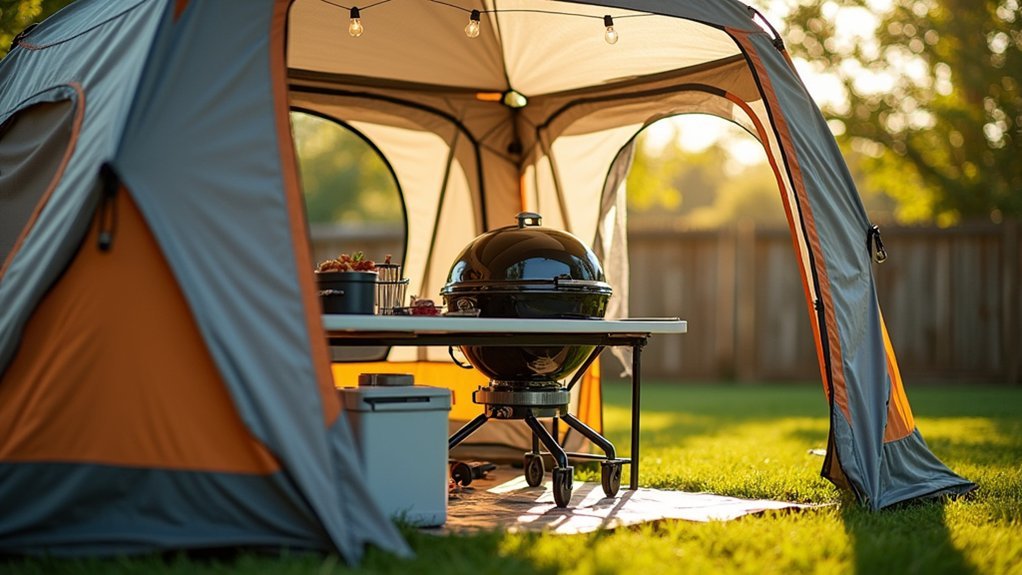
Your perfectly functional canopy serves as just the beginning of a truly exceptional BBQ setup. Consider adding sidewalls to create wind protection and privacy, especially on breezy days when napkins and paper plates might otherwise go flying.
For maximum stability on soft ground, invest in weight bags or sand-filled weights for each leg. They’ll keep your structure secure without the need for intrusive stakes that can damage your lawn.
For a professional touch, explore these branding opportunities:
- Custom tents with your family name or logo
- Branded sidewalls in your preferred colors
- Shade tent accessories that coordinate with your overall theme
Don’t forget practical transport accessories like a compatible carry bag and quick-release stakes to make teardown as effortless as setup.
Frequently Asked Questions
Can You Barbecue Under a Pop-Up Tent?
Yes, you can barbecue under a pop-up tent if you use a stable frame, maintain proper clearance, and position your grill safely. Always keep fire safety equipment nearby when cooking.
How Do You Set up a Pop-Up Tent?
Choose a flat area, unfold the frame with a partner, drape the canopy on top, secure with attachments, fully expand until locked, adjust legs, and anchor it down securely.
What Are the Downsides of Pop-Up Tents?
Pop-up tents can’t withstand strong winds without proper anchoring, they’re bulkier to transport, may leak in heavy rain, wear out faster at joints, and often provide poor ventilation on warm nights.
How to Keep a Pop-Up Tent From Blowing Away on the Beach?
Secure your pop-up tent with stakes angled at 45 degrees, add sandbags to each leg, lower the canopy height, and avoid setup during winds exceeding 20 mph.