
When selecting patio umbrellas for group dining, match the size to your table dimensions—use 6-7 ft umbrellas for 2-3 people, 9 ft for 4-6 guests, and 11+ ft for larger tables. Extend the canopy about 2 feet beyond table edges for proper coverage. Choose weather-resistant materials like Sunbrella fabric and marine-grade aluminum frames. Consider cantilever styles for flexibility with multiple tables or traditional pole umbrellas for center-hole tables. The right base weight ensures stability during your outdoor gatherings.
Sizing Umbrellas for Different Party Capacities
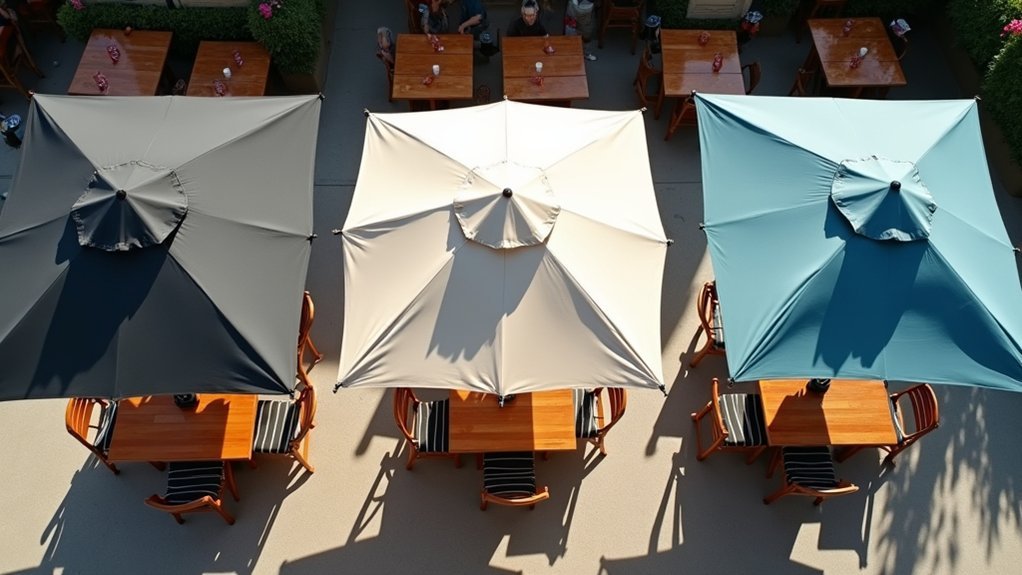
How well your patio umbrella serves your guests depends largely on choosing the right size for your dining arrangement. Match your umbrella to both table dimensions and the number of people you’ll typically host.
The perfect umbrella size transforms outdoor dining from an afterthought into a comfortable, welcoming experience for all your guests.
For intimate settings with 2-3 people, a 6-7 ft umbrella works perfectly with 30-36 inch tables.
When entertaining 4-6 guests, opt for a 9 ft umbrella paired with a 38-48 inch table.
Larger gatherings around 54-60 inch tables require at least an 11 ft canopy.
Remember to extend your umbrella about 2 feet beyond the table edges on all sides, ensuring everyone stays comfortably shaded.
Consider your seating layout too—traditional pole umbrellas work best with center-hole tables, while cantilever designs offer flexibility for multiple tables or setups without central poles.
Weather-Resistant Materials for Outdoor Dining
For outdoor dining success, you’ll want umbrellas with fade-resistant acrylic fabrics like Sunbrella that maintain vibrant colors despite constant sun exposure. Marine-grade aluminum frames offer superior corrosion resistance and durability compared to standard options, withstanding coastal air and seasonal storms. Special mildew-fighting treatments on canopies prevent unsightly growth and extend your umbrella’s lifespan, particularly in humid climates where moisture can accumulate.
Fade-Resistant Fabric Options
When selecting patio umbrellas for group dining, the fabric quality can make or break your outdoor experience. Choose all-weather, UV-resistant materials that can withstand constant sun exposure and moisture. These specialized fabrics prevent fading while inhibiting mold and mildew growth, essential for long-term use.
Acrylic fabrics stand out as an excellent choice, offering superior UV protection, fade resistance, and faster drying times than alternatives. Sunbrella, a premium brand in this category, is widely recognized for its exceptional durability and color retention properties.
For maximum guest comfort, look for breathable fabric designs that reduce heat buildup and improve airflow beneath the canopy. Quality indicators to verify include UV protection ratings, weather resistance certifications, and mold-resistant properties that maintain appearance even after repeated rain exposure.
Marine-Grade Aluminum Frames
While quality fabrics protect your guests from above, the frame supporting that canopy requires equal attention. Marine-grade aluminum frames offer exceptional performance for commercial outdoor dining settings, particularly in coastal areas where salt air can quickly degrade lesser materials.
| Feature | Benefit |
|---|---|
| Corrosion Resistance | Withstands salt air and humidity without rusting |
| Lightweight | Easy repositioning for staff during service hours |
| Anodized Finishing | Enhanced protection with aesthetic appeal |
| Low Maintenance | No rust, pitting or seized mechanisms |
You’ll find these frames maintain their structural integrity through changing seasons, supporting larger canopies needed for group dining arrangements. Their combination of durability and maneuverability makes them ideal for busy restaurant patios where both longevity and flexibility matter.
Mildew-Fighting Canopy Treatments
How quickly can a beautiful patio umbrella transform into an eyesore covered in mildew and mold? Preventing this unsightly transformation requires selecting fabrics with built-in protection against the elements.
Your best defense against mildew comes from:
- Choosing all-weather, UV-resistant fabrics like Sunbrella that resist fading and deterioration
- Selecting double-vented canopy designs that promote airflow and reduce moisture buildup
- Opting for quick-drying materials that minimize the opportunity for mold to establish itself
- Implementing regular maintenance including allowing your umbrella to dry completely after rainfall
Look for canopy fabrics labeled as breathable and mold-resistant. These treatments aren’t just marketing—they’re essential protections that significantly extend your umbrella’s lifespan while keeping your outdoor dining space looking fresh through multiple seasons.
Placement Strategies for Maximum Comfort
Strategic positioning of your patio umbrellas can transform an ordinary outdoor dining experience into a comfortable gathering space for all your guests. Extend each canopy about 2 feet beyond table edges to ensure complete shade coverage. For 30-36 inch tables, select 6-8 foot umbrellas, while 38-48 inch tables need 9-11 foot options to properly shade all seated diners.
Position center poles away from aisles and chair clearance areas, particularly crucial in group dining arrangements. In windy locations, opt for cantilever models or market umbrellas with 50-70+ pound bases for stability.
When arranging multiple umbrellas for group tables, coordinate their placement to avoid overlap while eliminating shade gaps between tables. This thoughtful arrangement ensures comfortable temperatures for everyone while maintaining clear pathways for both guests and servers.
Base Types and Stability Requirements
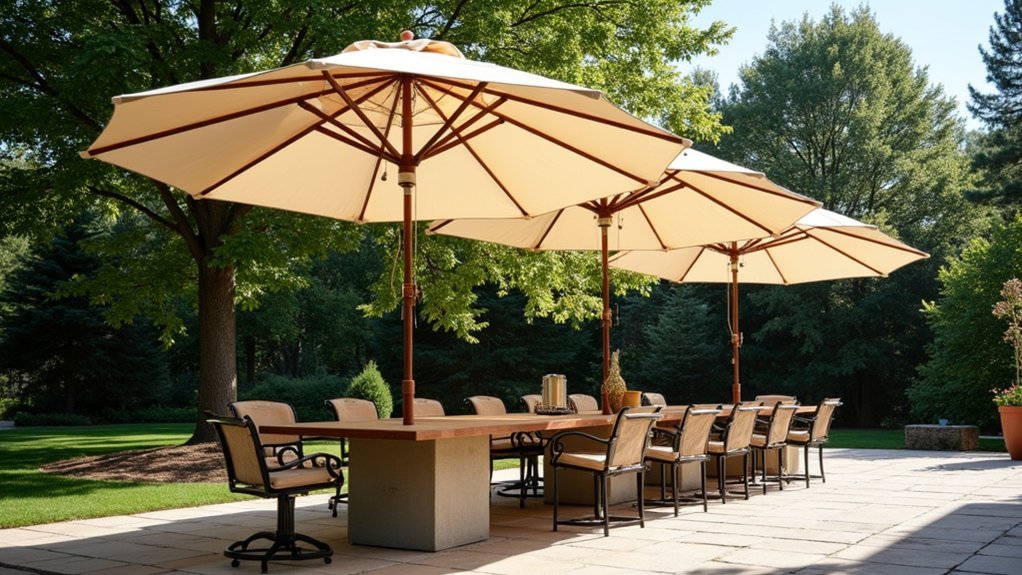
Proper base selection forms the foundation of a safe and enjoyable group dining experience under patio umbrellas. When choosing bases, match the weight to your umbrella size and setup location to prevent dangerous tipping or movement during meals.
- For table-mounted umbrellas, start with 20 lb bases for small tables, while freestanding umbrellas require heavier options: 40 lb for 4.5 ft umbrellas and at least 70 lb for 11 ft versions.
- Consider fillable bases when portability is needed—they’re lightweight until filled with sand or water.
- Match your base opening to within 0.25 inches of your umbrella pole diameter for maximum stability.
- Cantilever or offset umbrellas demand extra-sturdy bases, particularly in windy locations where guests are dining.
Umbrella Styles for Various Table Arrangements
When arranging shade for communal dining, you’ll need to match umbrella styles to your specific table configuration.
For rectangular communal tables, consider using multiple center-post umbrellas or one larger cantilever model that provides coverage without obstructing conversation.
Your sectional seating arrangements will benefit most from strategically placed offset umbrellas that can rotate to adapt as the sun moves throughout the day.
Communal Table Shade Solutions
How do you effectively shade a group dining experience without compromising comfort or conversation? Cantilever and offset market umbrellas provide ideal solutions for communal tables, eliminating obstructive center poles while maximizing coverage. When selecting umbrellas for your gathering space, consider both table layout and guest comfort.
- Choose umbrellas that extend 2–3 feet beyond your seating area to ensure all guests enjoy consistent shade.
- For square or rectangular tables with center supports, traditional table-mounted options work well.
- Select 9–11 foot canopies for standard 6–8 person tables, and 11+ foot options for larger groups.
- Invest in adjustable cantilevers with 360-degree rotation and tilt functionality to adapt to changing sun angles throughout your meal.
Sectional Coverage Strategies
Designing the perfect shade configuration for multiple table arrangements requires strategic umbrella placement and style selection. When grouping tables together, extend your umbrella coverage about 2 feet beyond table edges to ensure all diners remain comfortably shaded.
For unobstructed seating, cantilever umbrellas excel at covering multiple tables without the interference of center poles. Match your umbrella shape to your table configuration—round umbrellas for circular arrangements and square models for rectangular setups—to eliminate coverage gaps.
Size matters significantly: choose 9-11 foot umbrellas for larger gatherings and 6-8 foot options for intimate clusters. If using traditional table umbrellas, select center-hole models for through-table mounting, or opt for free-standing designs when tables can’t accommodate central poles.
Multi-Umbrella Layout Options
Creating effective multi-umbrella layouts transforms group dining spaces into comfortable havens, regardless of shifting sun patterns or table configurations. When arranging multiple tables, you’ll need different shade solutions than standard single-table setups.
- Cantilever umbrellas work best for rectangular or square table clusters, offering 360-degree rotation without obstructing central spaces – ideal when you’re hosting larger gatherings.
- Traditional table umbrellas fit perfectly through standard 1.75-inch table holes when you’re using individual tables with centered support.
- Offset or market umbrella combinations provide flexible coverage for adjacent tables without requiring a centered pole at each table.
- Wind-resistant models with double-vented canopies and heavy bases (60-70+ pounds) ensure your dining experience remains pleasant even in breezy conditions when using multiple umbrellas.
Seasonal Considerations for Year-Round Entertainment
When planning your outdoor dining space, the changing seasons present unique challenges for patio umbrella selection. For year-round use, invest in all-weather fabrics like Sunbrella or acrylic canopies paired with weatherproof aluminum frames that resist UV damage and temperature fluctuations.
During hot months, ensure your canopies extend about 2 feet beyond table edges to provide consistent shade as the sun moves. For winter and windier seasons, choose double-vented canopies with heavy bases (50-70 lbs minimum) or stable cantilever designs.
Consider seasonal sun angles when selecting colors that minimize heat absorption while maintaining your brand identity. A modular approach works best for year-round entertainment—mixing center-post and cantilever umbrellas lets you adapt your layout as seating configurations change with the seasons.
Frequently Asked Questions
How to Determine Umbrella Size for Patio Table?
Choose an umbrella 2 feet wider than your table on all sides. For 30-36″ tables, use 6-8′ umbrellas; 38-48″ tables need 9-11′ umbrellas; 54-60″ tables require 11’+ umbrellas.
How to Choose a Patio Umbrella?
Select an umbrella that’s 2 feet wider than your table, with matching pole and base diameters. Choose durable fabrics like Sunbrella and opt for cantilever styles with heavy bases for windy conditions.
Is It Better to Have a Light or Dark Color Patio Umbrella?
Light colors keep you cooler but show stains more easily, while dark colors hide dirt better but absorb heat. Your choice depends on your climate and maintenance preferences.
What Size Umbrella for an 8 Person Table?
You’ll need an 11-foot diameter umbrella for your 8-person table. This size provides about 2 feet of shade beyond the table edges, ensuring all your guests stay comfortably protected.