Weather-resistant canopy fabrics protect your investment and ensure reliable performance in various conditions. Materials like 600D polyester with PU coating offer durability and branding potential, while PVC-coated vinyl provides superior waterproofing. Solution-dyed acrylics like Sunbrella deliver exceptional UV resistance and color retention. Your choice depends on your specific needs—frequency of use, weather conditions, and budget. Discover how the right fabric can transform your outdoor experience.
Understanding Canopy Fabric Types for Outdoor Protection
When selecting a canopy for outdoor events or shelter, the fabric you choose can make all the difference between frustration and reliable protection. Each material offers distinct advantages for specific conditions.
Polyester (600D) delivers an excellent balance of durability, weight, and print quality, with PU coatings adding waterproofing. For maximum weather protection, PVC-coated vinyl stands out, though it sacrifices portability.
When extreme protection matters more than portability, PVC-coated vinyl outperforms all materials for weather resistance.
If sun exposure is your primary concern, solution-dyed acrylic (Sunbrella) resists UV damage and maintains vibrant colors longer. Need airflow? HDPE shade cloth allows breeze penetration while still blocking sun, but won’t stop rain.
Remember to check water column ratings and seam construction—these factors determine actual waterproof performance regardless of the base material.
The Science Behind Weather-Resistant Canopy Materials
How exactly do canopy fabrics defend against nature’s harshest elements? It’s all in the specialized coatings and manufacturing processes. PU coatings provide light waterproofing for everyday use, while heavier PVC coatings offer superior protection at the cost of added weight. The water column rating tells you precisely what level of rain your canopy can withstand—look for 1,500-2,000 mm for reliable protection in moderate to heavy rainfall.
Solution-dyed fabrics like Sunbrella incorporate UV resistance directly into the material, preventing sun damage at a molecular level. For branded canopies, 600D polyester with PU coating delivers an optimal balance of durability and print quality. When you’re selecting fabric, dye sublimation printing technology ensures your canopy won’t just resist water but will maintain its color integrity through repeated sun exposure.
Polyester vs. PVC: Comparing Popular Canopy Fabric Options
Why do event planners and outdoor vendors face such a critical choice when selecting between polyester and PVC canopy fabrics? The decision impacts everything from durability to brand presentation and portability.
600D polyester stands out as the versatile standard, offering an excellent balance of strength and weight. With PU coating, it provides reasonable water resistance while maintaining excellent printability for your branding through dye sublimation. You’ll appreciate its lightweight nature for frequent setup and takedown.
PVC-coated vinyl, however, delivers superior waterproofing and durability for challenging weather conditions. This ruggedness comes at the cost of added weight and thickness, making it less portable. While it’s harder to transport, you’ll benefit from its unmatched protection in harsh environments.
Your choice ultimately depends on whether you prioritize easy transport or maximum weather protection.
UV Protection Properties in Modern Canopy Fabrics
Where exactly does UV protection rank in the hierarchy of canopy fabric features? It’s actually fundamental to performance and longevity.
Modern canopies employ two primary UV defense strategies: solution-dyed fabrics like Sunbrella with UV resistance built directly into the fiber, and protective coatings applied to standard materials.
You’ll find UV performance measured through colorfastness ratings, with solution-dyed options significantly outperforming standard dyed or printed polyesters.
While PU and PVC coatings contribute to UV stability, the dye method remains the critical factor in color retention.
For branded canopies, dye sublimation printing creates UV-resistant graphics that won’t crack or fade quickly.
Beyond protecting the fabric itself, quality UV-resistant materials also shield interior furnishings and reduce heat buildup—delivering comprehensive protection for your outdoor space.
Waterproofing Technologies for All-Weather Canopy Use
Waterproofing capabilities stand alongside UV protection as a defining feature of quality canopy fabrics. You’ll find two primary coating technologies: lightweight PU coatings on polyester for basic water resistance, and heavier PVC coatings on vinyl-backed fabrics for superior durability.
When selecting your canopy, consider water column ratings that match your needs—800-1,200mm for light rain protection, 1,500-2,000mm for moderate conditions, and 2,000mm+ for commercial-grade waterproofing. Remember that true waterproofing isn’t just about the fabric; seam construction is crucial, with welded or sealed seams providing complete protection.
If you’re concerned about heat buildup, breathable options like HDPE or mesh fabrics offer ventilation while still shedding rain when properly angled, though they won’t provide complete waterproofing during heavy downpours.
Durability Factors: What Makes a Canopy Last Through Seasons
How long your canopy withstands seasonal challenges depends on several critical durability factors that extend far beyond basic material selection.
Proper tensioning is essential, as a minimum 25% slope prevents damaging water pooling and optimizes rain runoff.
The fabric’s coating significantly impacts longevity—PU-treated polyester offers lightweight water resistance, while heavier PVC-coated vinyl provides superior waterproofing at the cost of portability.
Solution-dyed acrylics like Sunbrella deliver exceptional UV protection and fade resistance compared to standard polyesters, which deteriorate faster under sustained sun exposure.
For commercial settings, look for fabrics with water column ratings exceeding 2,000mm, while 800-1,200mm suffices for occasional use.
Choose polyester 600D when you need balance between durability, weight, and branding capabilities—but remember that untreated versions will fade quickly without additional UV protection treatments.
Color Retention and Fade Resistance in Outdoor Fabrics
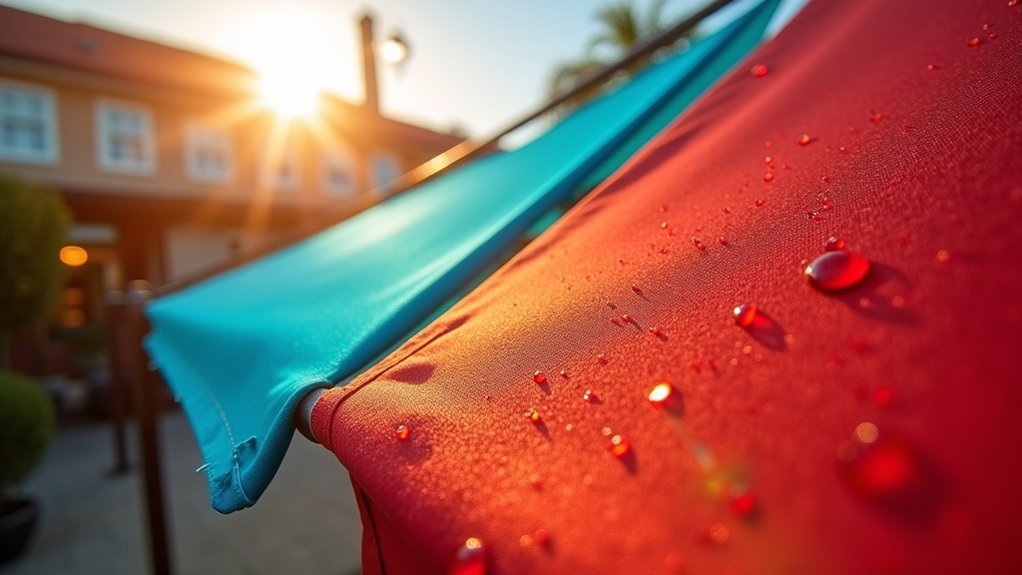
When selecting your canopy fabric, you’ll want fabrics with built-in UV protection like solution-dyed Sunbrella that maintains vibrant colors even after years in direct sunlight. Your fabric’s colorfast rating indicates resistance to fading, with properly treated polyesters and solution-dyed fibers offering superior performance compared to untreated alternatives.
Dye sublimation printing provides another effective option for canopies requiring sharp branding, as this technique bonds ink deeply into treated polyester to prevent cracking and fading.
UV Protection Techniques
UV protection techniques play a critical role in preserving the appearance and longevity of outdoor canopy fabrics. Solution-dyed fabrics like Sunbrella offer superior performance with built-in UV resistance, ensuring your canopy maintains its vibrant colors despite constant sun exposure.
For branded canopies, dye sublimation printing bonds ink directly into the fabric, preventing your logos from cracking or fading under harsh sunlight. Look for fabrics with specific UPF ratings—30+ or 50+ designations indicate the level of sun protection engineered into the material, which helps prevent interior fading as well.
While PU-coated and PVC-backed polyester provide excellent rain resistance, their UV protection varies by coating type. Treated 600D polyester strikes a good balance between branding potential and fade resistance, though untreated options may deteriorate faster with prolonged sun exposure.
Solution-Dyeing Benefits
Why do solution-dyed fabrics maintain their vibrant appearance for years while conventional dyed materials quickly fade? The answer lies in their manufacturing process. Unlike traditional methods that apply color after weaving, solution-dyeing embeds pigments directly into the fibers before they’re woven, creating inherent fade resistance.
| Feature | Solution-Dyed | Conventional Dyed |
|---|---|---|
| Color Depth | Throughout fiber | Surface only |
| UV Resistance | High inherent protection | Minimal protection |
| Fade Timeline | Years of vibrant color | Months before fading |
| Branding Longevity | Maintains logo fidelity | Logos crack and fade |
You’ll find exceptional performance in brands like Sunbrella and canopies using dye sublimation printing on treated 600D polyester. These techniques bond color permanently to the fabric, preventing cracking and ensuring your branding stays crisp despite constant sun exposure.
Colorfast Rating Systems
How can you accurately determine which canopy fabrics will resist fading over time? Look for standardized colorfast ratings that measure a fabric’s ability to maintain color when exposed to sunlight, washing, and environmental factors.
The most fade-resistant options feature solution-dyed fibers, where color is added during manufacturing rather than applied to the surface afterward. These fabrics typically achieve superior colorfast ratings compared to conventionally dyed materials. For printed designs, dye sublimation creates a molecular bond with the fabric, substantially reducing cracking and fading under UV exposure.
When evaluating options, check for both colorfast ratings and UV protection factors (UPF 30+ or 50+). Treated 600D polyester with appropriate coatings and sublimation printing offers an excellent balance of durability and color retention for branded outdoor canopies.
Commercial-Grade vs. Residential Canopy Materials
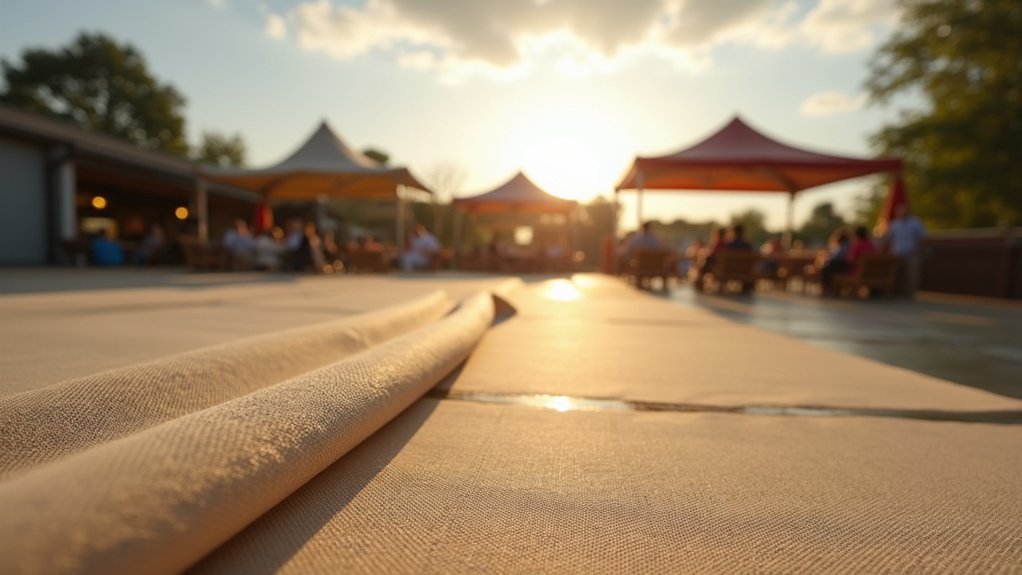
Commercial-grade canopies use thicker PVC-vinyl or 600D polyester with higher water column ratings (1,500-2,000+ mm) than residential options, withstanding frequent setups and harsh weather conditions you’ll encounter at events.
You’ll pay more upfront for commercial materials, but their extended lifespan and enhanced durability provide better long-term value when used weekly rather than occasionally.
Your commercial canopy’s performance depends significantly on reinforced seams, proper coatings, and printability factors that residential materials don’t typically prioritize.
Durability Differences
When choosing between canopy materials, understanding the durability differences becomes essential for your investment. Commercial-grade canopies featuring PVC-coated vinyl offer superior waterproofing and UV protection but sacrifice portability due to added weight. This makes them ideal for permanent installations rather than frequent transport.
Solution-dyed acrylic fabrics like Sunbrella excel in maintaining vibrant branding through exceptional colorfastness, though they’re less suitable for repeated setup and takedown. For a balance between durability and convenience, 600D polyester with PU coating provides impressive tear resistance while remaining lightweight enough for regular transport.
Commercial options typically come with extended warranties and enhanced mold resistance, justifying their higher price point for high-traffic venues. You’ll find these materials offer significantly longer lifespans in year-round outdoor conditions compared to residential alternatives.
Cost-Value Comparisons
Evaluating the true cost-value proposition between commercial and residential canopy materials reveals significant differences beyond the initial price tag. You’ll find that residential-grade 300D polyester offers budget-friendly solutions for occasional use, while commercial-grade fabrics deliver superior longevity.
| Material Type | Cost Level | Best Value For |
|---|---|---|
| 300D Polyester | $ | Light, occasional use |
| 600D Polyester | $$ | Regular use with branding needs |
| PU-Coated Polyester | $$ | Balanced waterproofing/portability |
| Solution-Dyed Acrylic | $$$ | Long-term brand visibility |
| PVC-Coated Vinyl | $$$$ | Semi-permanent installations |
Your usage frequency should guide your investment—600D polyester offers the sweet spot for most businesses needing regular transport while maintaining strong branding potential. For semi-permanent installations, the higher cost of commercial-grade PVC-coated materials pays dividends through extended durability.
Material Performance Factors
How considerably do material choices affect your canopy’s performance in challenging conditions? The difference between commercial and residential materials is substantial when facing harsh weather. Commercial-grade canopies utilize superior materials designed for frequent use and demanding environments.
- Water resistance comes primarily from coatings rather than fabric weight – PVC-coated vinyl provides heavy-duty protection while polyester uses PU coatings for lighter waterproofing
- UV stability is superior in solution-dyed acrylics like Sunbrella, preserving brand visibility and color integrity over time
- Durability-to-weight ratio is optimized in 600D polyester, balancing strength with transportability for commercial applications
- Mildew resistance is significantly higher in vinyl/PVC-backed fabrics, though they trade portability for this protection compared to residential-grade materials
Environmental Considerations When Selecting Canopy Fabrics
Why should environmental impact factor into your canopy fabric selection? Beyond protecting you from weather, your choice affects our planet throughout the fabric’s lifecycle—from production to disposal.
Consider Purishade® polypropylene, which ranks favorably in HIGG assessments for its minimal environmental footprint. Standard polypropylene also outperforms heavy PVC-backed options sustainability-wise. When evaluating materials, look beyond initial performance to maintenance requirements and longevity.
Untreated polyester that quickly fades requires replacement sooner, generating more waste. In contrast, breathable fabrics like HDPE and Meshnet® resist mold growth, reducing the need for chemical cleaners. Solution-dyed acrylics offer excellent durability without requiring additional treatments.
Match your fabric to your climate—UV-stable materials in sunny regions and appropriate water-resistance in rainy areas—to ensure optimal performance and maximum lifespan.
Maintaining Your Weather-Resistant Canopy for Longevity
Your canopy’s lifespan depends greatly on regular maintenance that includes proper cleaning with mild soap and complete drying before storage. You’ll want to establish a cleaning schedule based on your usage frequency and local weather conditions, while avoiding harsh chemicals that can degrade protective coatings. When not in use, store your canopy in a dry location or use a weather-resistant cover, particularly during extreme weather seasons, to prevent premature deterioration of the fabric.
Proper Cleaning Techniques
Maintaining the pristine condition of weather-resistant canopy fabrics requires consistent and appropriate cleaning methods. With proper care, your canopy will maintain its protective qualities and aesthetic appeal for years to come.
- Clean regularly with mild soap and water, avoiding harsh chemicals that can break down protective coatings and affect colorfastness
- Never use pressure washers on your canopy fabric, as the intense force can damage PU/PVC coatings and compromise seam integrity
- Always allow your canopy to completely air dry before storage to prevent mold and mildew growth that can permanently stain and weaken the material
- For stubborn stains or mold, use only manufacturer-recommended bleach solutions, followed by thorough rinsing and complete drying
During extreme weather conditions, store or cover your canopy to extend its useful life.
Storage Best Practices
Proper storage of your weather-resistant canopy complements regular cleaning and dramatically extends its useful life. Always ensure your canopy fabric is completely dry before storing to prevent mold, mildew, and unpleasant odors from developing.
Store your fabric indoors or in a covered, dry area away from direct sunlight. Use breathable storage bags or containers that allow airflow while protecting against dust and pests. For heavier materials like PVC-coated vinyl, roll rather than fold the fabric to minimize stress on seams and prevent permanent creases that can weaken over time.
Create a simple inventory system by labeling each piece with the fabric type and specifications. This organization will save you time when planning maintenance or ordering replacements. With these storage practices, you’ll maximize your canopy’s durability and weather resistance.
Cost-Benefit Analysis of Premium Canopy Materials
Nearly every purchasing decision for commercial canopy materials involves balancing initial investment against long-term value. When evaluating your options, consider both immediate costs and long-term returns.
- Premium materials like Sunbrella offer 10-15 year lifespans with superior UV resistance, justifying their higher upfront cost through extended replacement intervals.
- Mid-range 600D polyester strikes an effective balance—offering good weather resistance and branding capabilities without breaking your budget.
- PVC-coated vinyl provides unmatched waterproofing but requires considering additional transport costs due to increased weight.
- Budget-friendly options (300D polyester) minimize initial expenses but typically require more frequent replacement, potentially costing more over time while delivering less consistent brand representation.
Your choice ultimately depends on usage frequency, event conditions, and how you value brand presentation versus initial savings.
Seasonal Considerations for Canopy Fabric Selection
When planning your outdoor event strategy, selecting the right canopy fabric for each season can dramatically impact both functionality and durability. For spring and fall events, choose lighter 600D polyester with PU coating for balanced weather resistance and portability. This versatile material works year-round when properly maintained.
Summer demands solution-dyed acrylic like Sunbrella that won’t fade under intense UV exposure, though it’s heavier to transport. For heat management, consider breathable HDPE shade cloth in sunny, low-rainfall periods.
Winter and rainy seasons call for PVC-coated vinyl’s superior waterproofing and durability. Regardless of fabric choice, remember to remove or properly tension your canopy during severe weather—angle waterproof sails to prevent water pooling and minimize hail damage.
Frequently Asked Questions
What Kind of Fabric to Use for an Outdoor Canopy?
For your outdoor canopy, use 600D polyester with PU coating for balanced durability and portability. If you’ll face extreme weather, consider PVC-coated vinyl. For UV protection, you can’t beat Sunbrella fabric.
What Are the Disadvantages of Sunbrella Fabric?
Sunbrella’s disadvantages include higher cost, heavier weight, less durability for frequent handling, limited waterproofing without additional treatments, and potential fading in extreme sun exposure. You’ll need proper tensioning to avoid premature wear.
What Does Weather Resistant Fabric Mean?
Weather-resistant fabric withstands rain, sun, and temperature variations without quickly deteriorating. You’ll notice it has protective coatings like PU or PVC that repel water and UV-resistant treatments that prevent fading.
What Is the Best Waterproof Fabric for Tents?
For tents, you’ll find 600D polyester with PU coating offers the best balance of waterproofing, durability, and portability. PVC-coated vinyl provides superior protection but adds weight to your setup.