
Professional tent lighting systems provide weather-resistant illumination that withstands outdoor conditions while creating stunning ambiance through strategic placement. You’ll benefit from proper power management, GFCI protection, and layered lighting that guides guests and highlights key areas. Unlike DIY attempts that risk safety hazards and hidden costs, professional installations deliver consistent quality with setup and breakdown services included. Discover how the right lighting transforms your event from ordinary to extraordinary.
Weather-Resistant Illumination for Outdoor Tent Environments
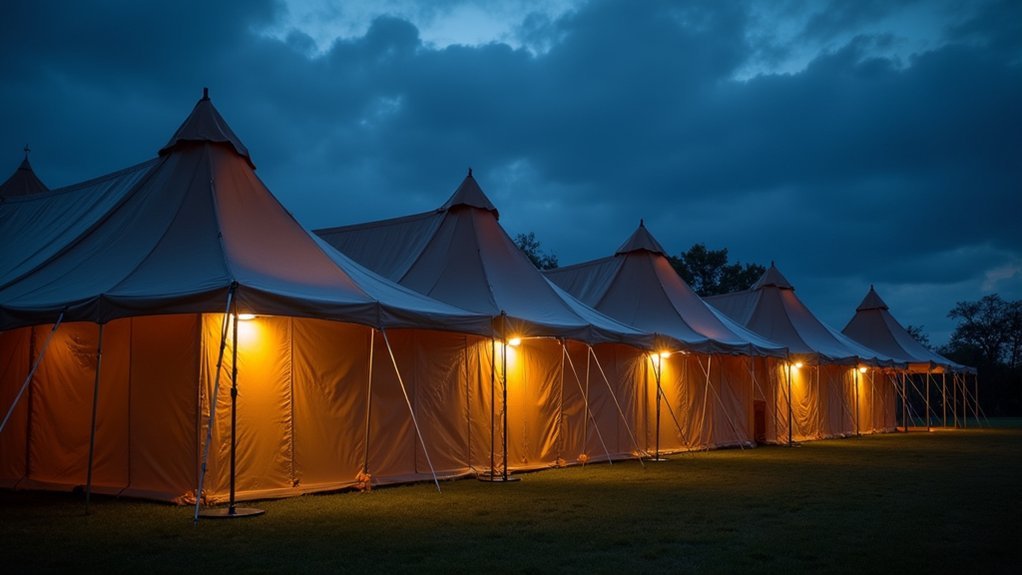
Why risk electrical failures when your outdoor event could face unpredictable weather conditions? Professional tent lighting systems incorporate weatherproof fixtures and sealed connections specifically designed to withstand moisture and rain exposure.
You’ll need protective covers or housings for sensitive electronics to shield your equipment from wind-driven dust and precipitation. Proper drainage installation around electrical components prevents water pooling that could lead to dangerous short circuits.
In wind-prone areas, secure fastening of lighting elements is essential, while flame-resistant materials significantly reduce fire hazards. For optimal performance, choose LED fixtures with appropriate IP ratings (IP65 or higher) – they’re built for both indoor and outdoor use, produce less heat, and deliver reliable illumination regardless of weather challenges. Your event deserves lighting that performs flawlessly in all conditions.
Creating Ambiance Through Strategic Light Placement
How effectively you position your lighting can transform an ordinary tent into an extraordinary event space. By varying brightness levels throughout your tent, you’ll create distinct zones for dining, dancing, and lounging without physical barriers.
Consider uplighting at tent bases to add perceived height and drama, while strategically placed spotlights direct attention to stages, bars, or special displays. Don’t overlook pathways and entrances—install low-level, weatherproof fixtures to guide guests safely without overwhelming your carefully crafted ambiance.
The secret to professional-looking tent lighting lies in layering. Combine ambient lighting for overall illumination, task lighting for functional areas, and accent lighting to highlight architectural elements like drapery or centerpieces. Always coordinate fixture placement with your tent’s shape and activity flow to optimize sightlines, minimize glare, and enhance the guest experience.
Power Management and Safety Considerations for Tent Setups
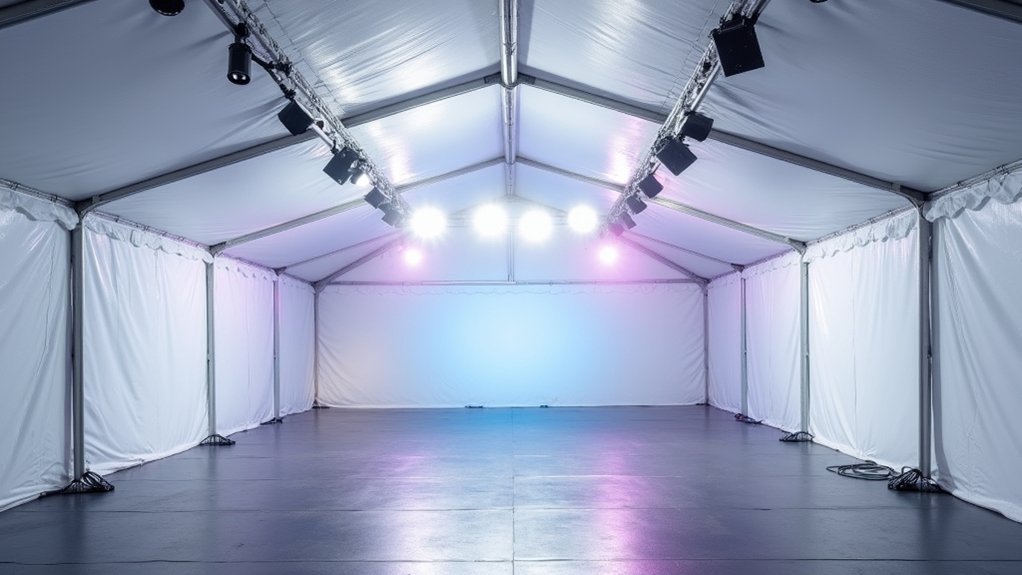
While creating the perfect lighting ambiance captivates your guests visually, behind the scenes lies an equally important component: proper electrical planning. Ensuring safe power management isn’t just about avoiding outages—it’s essential for preventing hazards in your tent installation.
- Calculate your total fixture wattage before selecting a generator, staying within 80% of rated capacity for continuous operation safety.
- Use weatherproof connections and GFCIs for all outdoor installations to protect against moisture-related hazards.
- Implement professional cable management with ramps and protective coverings to prevent trips and secure installations during wind.
- Create a backup power plan with appropriately sized generators and spare fuel to maintain lighting continuity during unexpected conditions.
Consider heat generation from fixtures by choosing LEDs when possible—they’ll reduce heat buildup while extending fixture life in enclosed tent environments.
Enhancing Guest Experience With Layered Lighting Solutions
Imagine walking into a tent venue where every area feels perfectly illuminated—that’s the magic of layered lighting design. By combining ambient, task, accent, and decorative elements, you’ll create depth while guiding guest flow throughout your event space.
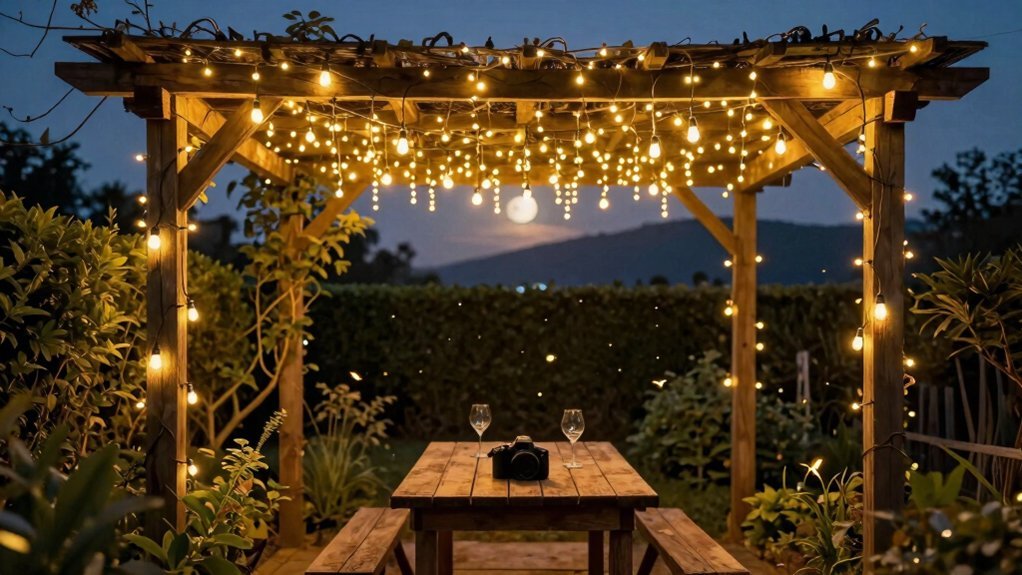
You’ll transform your tent from ordinary to extraordinary when you layer string lights for overall ambiance with strategic uplighting that showcases architectural elements. Add spotlights to highlight focal points like stages and bars. The result? A dynamic atmosphere that remains functional and navigable.
With professional systems, you’ll enjoy dimming capabilities and color-tuned LEDs to adjust the mood in real-time as your event transitions from dinner to dancing. This thoughtful approach eliminates harsh shadows, improves navigation, and seamlessly integrates with your decor theme—elevating both guest comfort and their perception of your venue’s quality.
Integrating Lighting With Other Tent Features and Decorations
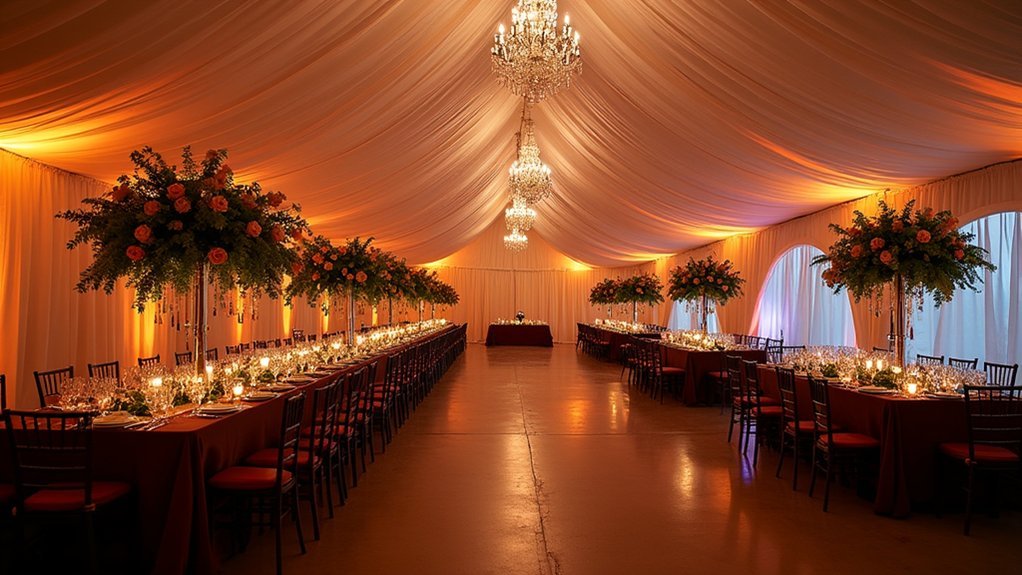
The true power of professional tent lighting emerges when you seamlessly blend illumination with existing structural elements and decorative accents. By coordinating string lights along tent poles or incorporating chandeliers into fabric draping, you’ll create visual cohesion that transforms your entire space.
- Align gobo projections with table arrangements to reinforce your event theme across walls and ceilings
- Combine fabric draping with warm LEDs for a soft, inviting glow that complements your décor theme
- Plan hidden power distribution routes that maintain both aesthetics and guest safety
- Balance your layered lighting with centerpieces and florals to ensure focal points remain visually prominent without over-illumination
When you thoughtfully integrate lighting with other tent features, you’re not just illuminating a space—you’re crafting a complete sensory experience that guests will remember.
Cost-Effective Professional Lighting vs. DIY Alternatives
When comparing professional tent lighting to DIY options, you’ll need proper budget analysis methods that account for hidden costs beyond initial purchases.
Professional equipment offers distinct advantages including energy efficiency, design expertise, and comprehensive services that eliminate logistical headaches.
The apparent savings of DIY solutions often disappear when you factor in equipment quality issues, installation time, safety concerns, and the lack of scalability that professionals provide.
Budget Analysis Methods
How can you determine whether professional tent lighting delivers better value than DIY options? When analyzing your budget for tent lighting, you’ll need to consider both immediate and long-term factors that impact total costs.
- Compare total investment – Calculate rental fees (including setup/breakdown) versus purchase costs plus your time value and storage needs
- Assess power requirements – Factor in generators or additional electrical services needed for DIY setups compared to optimized professional systems
- Evaluate energy efficiency – Consider LED fixtures’ lower operating costs against traditional lighting options
- Request itemized estimates – Ensure professional quotes detail all fixtures, labor, power requirements, and weather protection to avoid surprise expenses
Remember that New England wedding lighting typically ranges from $200-$2,500 depending on venue size and complexity, making professional setups increasingly cost-effective as your event grows larger.
Pro Equipment Advantages
Professional lighting systems deliver substantial value advantages over DIY solutions, particularly for events requiring consistent quality across multiple areas. When you factor in labor, reliability, and performance consistency, rental packages often prove more economical than cobbling together consumer-grade alternatives.
| Feature | Pro Equipment | DIY Alternative |
|---|---|---|
| Setup Time | 2-3 hours (professional crew) | 6-8 hours (self-install) |
| Weather Resistance | IP65+ rated enclosures | Limited/variable protection |
| Power Management | Load-balanced distribution | Risk of circuit overload |
| Brightness Control | Precise dimming systems | Limited/no adjustment |
| Technical Support | On-site technicians | None/limited |
You’ll avoid repeated purchases of equipment you rarely use while gaining access to certified technicians who ensure proper rigging and code compliance. The result is professional-grade consistency in brightness, color temperature, and overall visual impact across your entire venue.
DIY Pitfalls Revealed
Many event planners initially gravitate toward DIY lighting solutions, seduced by apparent upfront savings that often dissolve into unexpected expenses. What you’ll save initially can quickly evaporate when faced with the realities of amateur lighting installation.
- Hidden Costs – Failed setups lead to emergency rentals, damaged fixtures require replacement, and repeated attempts drain your budget faster than professional installation.
- Safety Hazards – Without proper electrical knowledge, you risk overloaded circuits, improper wiring, and potential fire hazards.
- Quality Compromises – DIY rarely achieves the symmetry, proper dimming, and venue-appropriate ambiance that professionals deliver.
- Time Consumption – You’ll spend valuable hours on installation and troubleshooting instead of focusing on other critical event details, while professionals include setup, breakdown, and on-site support.
Frequently Asked Questions
What Are the Benefits of Lighting Control Systems?
You’ll save 40-60% energy with precise dimming and scene control. You can pre-program transitions, integrate timers, centralize adjustments, and access analytics to reduce long-term costs and staff workload.
What Are the Four Objectives of Lighting?
The four objectives of lighting are: visibility for safe navigation, defining spaces within your tent, guiding movement through pathways, and creating mood or atmosphere to enhance your event experience.
How Many Lights for a 20X30 Tent?
For a 20×30 tent, you’ll need 6-12 high-CRI LED fixtures evenly spaced across the ceiling, or 20-40 smaller lights if using can lights or string lighting systems.
What Is the Objective of Outdoor Lighting?
Your outdoor lighting’s objective is to enhance safety, create ambiance matching your event theme, define functional zones, guide guest movement, guarantee weather reliability, and provide security during emergencies.