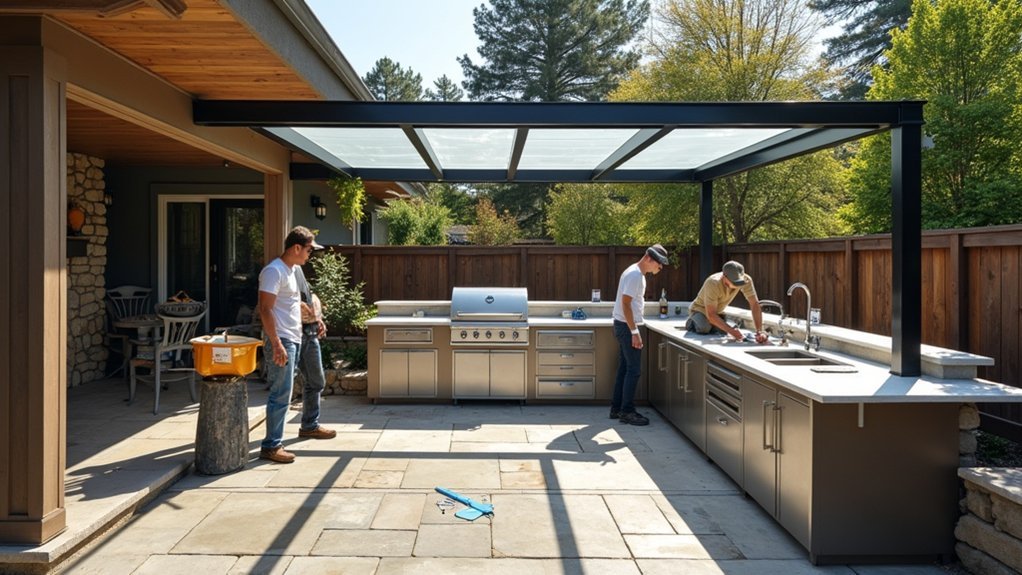
To properly protect your outdoor kitchen, install a permanent overhead structure with concrete footings below the frost line. Add retractable awnings with a 15-degree slope to direct rainwater away. Choose UV-resistant, waterproof materials like solution-dyed acrylic or marine-grade polyester. Install GFCI outlets in weatherproof boxes and ensure proper drainage with a 2% slope away from cooking areas. Your strategic weather protection plan will keep your investment safe through all seasons.
Assessing Your Climate and Weather Needs
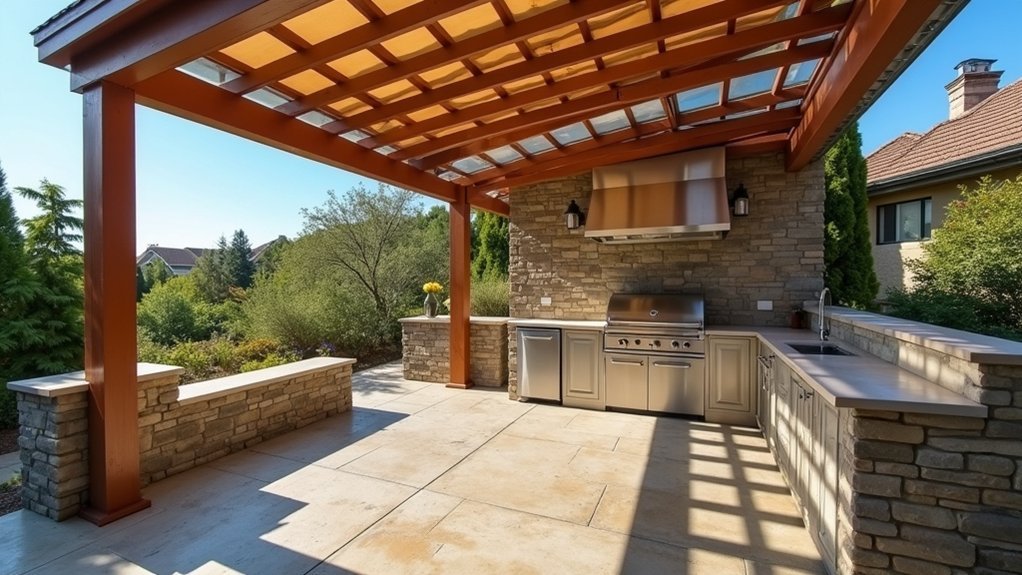
When designing your outdoor kitchen, how well do you understand your local climate’s impact on its longevity? Start by categorizing your region as hot and dry, humid, coastal, or cold. Each climate presents unique challenges—humidity accelerates wood rot, coastal air corrodes metals, and freezing temperatures can crack stone surfaces.
Next, identify seasonal weather patterns that might damage your installation. Map out when to expect heavy rainfall, snow, or extreme heat, then plan protective measures before these seasons arrive. Schedule post-storm inspections to catch problems early.
Your climate should directly influence material selection. Choose moisture-resistant cabinets for humid areas and marine-grade stainless steel near oceans. Plan proper drainage with a 2% slope away from structures, and install appropriate overhead protection like pergolas or canopies suited to your specific weather conditions.
Selecting the Right Canopy Materials for Durability
When selecting canopy materials for your outdoor kitchen, you’ll need to compare fabric options against manufacturer weather performance ratings to ensure long-term protection. Look for materials with UV inhibitors and a UPF rating of 50+ that won’t deteriorate or fade after prolonged sun exposure.
Marine-grade polyester with PTFE coating provides excellent resistance to moisture and heat, outperforming standard acrylic options in high-humidity coastal environments.
Canopy Material Comparison
Choosing the right materials for your outdoor kitchen canopy ultimately determines how well it withstands the elements year after year. When comparing options, marine-grade vinyl offers excellent waterproofing but may lack the breathability of acrylic-coated fabrics, which provide superior fade resistance while maintaining airflow.
- Powder-coated aluminum frames weigh less than galvanized steel alternatives while offering comparable rust resistance and typically longer warranties
- High UPF-rated fabrics (50+) prevent 98% of UV penetration, extending canopy life by up to 3-4 years compared to standard materials
- Reinforced double-stitched seams withstand 30% more wind stress than single-stitched alternatives
- Retractable systems with marine-grade pulley mechanisms allow quick adjustments during sudden weather changes, preventing damage while maintaining protection
UV Resistance Factors
Ultraviolet radiation poses one of the greatest threats to outdoor kitchen canopies, silently degrading materials over time through constant exposure. When selecting your canopy materials, prioritize solution-dyed acrylic or polyester fabrics specifically rated for UV resistance to maintain colorfastness in bright sunlight.
For structural components, HDPE and marine-grade polymers outperform wood and untreated metals, retaining their color and integrity for years while minimizing cracking and fading. If you’re incorporating metal elements, choose stainless steel with UV-stable powder coatings to protect against sun-related degradation.
Even countertop materials matter—natural stone and concrete are inherently UV-stable, but ensure any pigments and sealants are UV-rated to prevent discoloration. By selecting materials designed to withstand ultraviolet assault, you’ll significantly extend your outdoor kitchen’s lifespan and appearance.
Weather Performance Ratings
Beyond aesthetics, the weather performance ratings of your canopy materials will determine how well your outdoor kitchen stands up to the elements. When selecting materials, prioritize those with specific weather performance designations appropriate for your local climate conditions.
- HDPE and vinyl-coated fabrics – These offer superior resistance to fading and moisture compared to standard textiles, making them ideal for areas with frequent rain or intense sunlight.
- UPF 50+ rated materials – These block at least 98% of UV radiation, protecting both your kitchen equipment and the structural integrity of the canopy itself.
- PVC-coated polyester – Provides exceptional water repellency while preventing mold and mildew growth during humid conditions.
- Powder-coated aluminum frames – Deliver the optimal balance of strength-to-weight ratio with built-in corrosion resistance for long-term reliability.
Installing Pergolas and Permanent Overhead Structures
When installing pergolas or permanent overhead structures for your outdoor kitchen, start with robust concrete footings that extend below the frost line to prevent shifting during freeze-thaw cycles.
Choose weather-resistant roofing materials like cedar shakes, powder-coated aluminum panels, or polycarbonate sheets that can withstand UV exposure while complementing your home’s aesthetic.
You’ll need to integrate proper drainage channels and waterproof flashing where the structure meets your home to prevent moisture damage to both your outdoor kitchen and primary residence.
Anchoring and Foundations
Proper anchoring forms the bedrock of any successful pergola or overhead structure installation for your outdoor kitchen. Without secure foundations, your weather protection system won’t withstand seasonal storms or provide the stability needed for long-term durability.
- Dig foundation holes at least 1/3 the height of your posts (minimum 24″ deep in most regions) and pour concrete footings that extend above ground level to prevent water pooling around wooden posts.
- Use galvanized post anchors and heavy-duty hardware rated for outdoor use to connect your structure to the foundation.
- Ensure all vertical supports are perfectly plumb using a level before securing them—even slight misalignments can compromise the entire structure.
- Install diagonal bracing between posts and beams to resist lateral forces from high winds and prevent swaying.
Weather-Resistant Roofing Materials
Selecting the right weather-resistant roofing materials for your outdoor kitchen can transform a basic cooking space into a year-round entertainment zone. When installing overhead protection, choose between pergolas with waterproof canopies or permanent solid roofs depending on your climate needs.
For maximum weather resistance, opt for aluminum, steel, or properly sealed treated timber that can withstand UV exposure, corrosion, and freeze-thaw cycles. Permanent roofs offer superior protection while allowing integration of lighting and heating elements.
Design your structure with adequate height clearance to prevent water pooling and incorporate drainage channels and gutters. If you choose a gazebo, add ventilation features to manage humidity and maintain airflow. For pergolas, consider adding retractable covers that provide flexibility during changing weather conditions.
Mounting Retractable Awnings for Flexible Protection
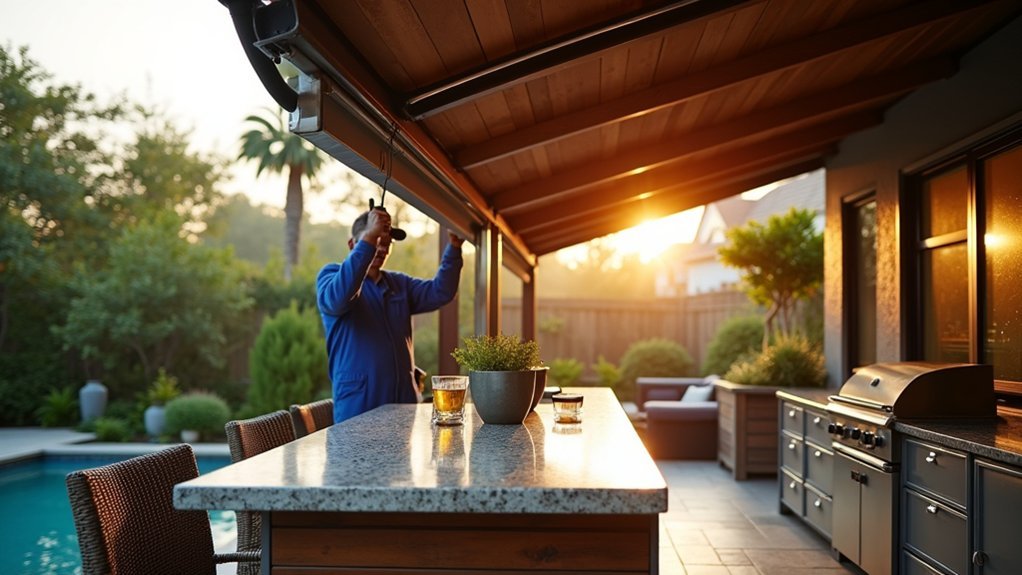
Why settle for a static overhead structure when retractable awnings offer the perfect blend of protection and flexibility for your outdoor kitchen? These versatile coverings extend over your cooking and dining areas when needed, then retract to let you enjoy open-air experiences when the weather’s perfect.
Enjoy sun or shade on demand with retractable awnings — the smart solution for outdoor kitchen versatility.
- Choose your mounting method (wall, ceiling, or freestanding) based on your home’s structural support and the sun’s path throughout the day
- Install with a proper slope (at least 15 degrees) to direct rainwater away from cooking surfaces
- Position the awning to provide maximum coverage over critical areas like grills and countertops
- Mount wind sensors that automatically retract your awning during strong gusts to prevent damage
Regular inspection of motorized components and fabric seams will ensure your flexible protection lasts for years.
Weatherproofing Electrical Components and Lighting
You’ll need to install waterproof outlets with GFCI protection in weatherproof boxes to prevent dangerous moisture infiltration in your outdoor kitchen’s electrical system. Select weather-resistant lighting fixtures with appropriate IP ratings that can withstand rain, humidity, and temperature fluctuations without compromising performance. Protect all wiring with outdoor-rated conduits installed above potential water paths and include drip loops at connections to ensure your electrical components remain safe and functional year-round.
Waterproof Outlet Installation
When designing your outdoor kitchen, proper electrical installation becomes a critical safety consideration that’s often overlooked. Protecting your outlets from moisture is essential for both safety and functionality in all weather conditions.
- Install GFCI outlets in weatherproof electrical boxes with IP-rated enclosures at least 12 inches above the ground to prevent water damage during heavy rain or cleaning.
- Position all outlets under protective canopies or rain covers, using UV-resistant materials like stainless steel or weatherproof polycarbonate that won’t degrade in sunlight.
- Seal all junction boxes and conduits with outdoor-rated sealants and gaskets to create a moisture-proof barrier that prevents corrosion.
- Ensure proper drainage around outlet locations to prevent standing water, and always hire a licensed electrician to verify your installation meets local electrical codes.
Weather-Resistant Fixture Selection
How effectively can your outdoor kitchen endure harsh weather conditions without properly weatherproofed fixtures? Not very well. Select components specifically rated for wet locations to ensure longevity in your outdoor cooking space.
Choose stainless steel or powder-coated aluminum fixtures with corrosion resistance and UV stability. These materials withstand sun exposure, rain, and humidity without deteriorating. Look for IP-rated enclosures that provide adequate moisture protection based on your climate conditions.
For lighting and electrical components, ensure they’re sealed with gaskets and moisture-resistant seals. Outdoor-rated conduit should house all wiring, keeping cables elevated and away from ground moisture. Don’t forget to install breathable, UV-blocking covers on outlets and provide proper drainage around fixtures to prevent water accumulation. These precautions will protect your investment and ensure safety year-round.
Proper Wiring Protection
Proper wiring protection forms the backbone of a safe, durable outdoor kitchen electrical system. Weatherproofing your electrical components requires attention to detail and adherence to safety codes to prevent shock hazards and equipment failure from moisture exposure.
- Install GFCI-protected outlets in weatherproof boxes rated for wet locations, ensuring all connections remain protected even during heavy rainfall
- Run electrical conduit or outdoor-rated cable with proper strain relief, sealing all entry points to prevent water infiltration and subsequent corrosion
- Mount all electrical components at least six inches off the ground, incorporating drip loops in wiring to direct water away from connections
- Create a maintenance schedule to inspect weatherproof seals and gaskets regularly, replacing damaged covers immediately after storms or seasonal changes
Creating Proper Drainage Systems Around Cooking Areas
A well-designed drainage system forms the backbone of any durable outdoor kitchen installation. You’ll want to implement a gentle 2% slope that naturally guides water away from your cooking areas toward designated drainage points. This prevents pooling that can damage countertops and appliances while reducing long-term maintenance.
| Drainage Solution | Benefits | Best Location | Installation Complexity | Maintenance Level |
|---|---|---|---|---|
| French Drains | Subsurface dispersal | Perimeter areas | Moderate | Low |
| Channel Drains | High capacity flow | Counter edges | Simple | Medium |
| Grading | Natural water flow | Entire surface | Complex | Minimal |
| Perforated Pipes | Targeted collection | Under fixtures | Moderate | Medium |
| Dry Wells | Water storage | Remote corners | High | Quarterly |
Position your drainage systems strategically around the perimeter or beneath critical areas to maximize effectiveness and protect your outdoor kitchen investment from water damage.
Securing Canopies Against Wind and Storm Damage
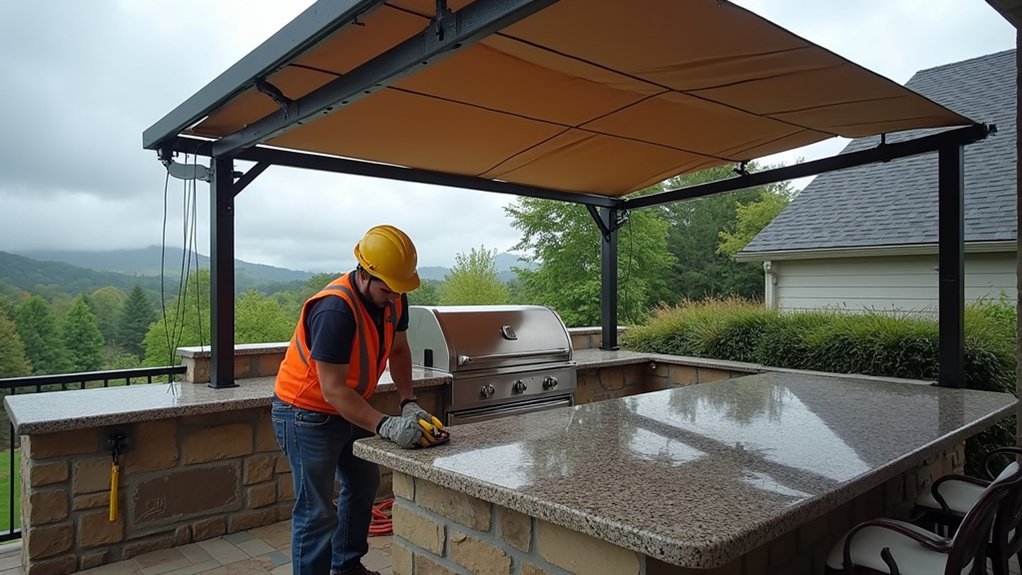
When violent winds threaten your outdoor dining space, securing your canopy becomes essential for protecting both your kitchen investment and your family’s safety. Choose high-denier nylon or polyester fabrics with UV inhibitors that won’t tear in gusts common to your region.
Safety isn’t optional when fierce winds target your outdoor oasis. Quality materials become your first line of defense.
- Install a comprehensive anchoring system using stakes or weights rated for your canopy’s size and local wind conditions
- Opt for sloped or retractable designs that shed wind rather than capture it like a sail
- Add strategic guy lines at 45-degree angles from each corner to prevent lateral movement
- Inspect all hardware connections monthly, replacing worn straps and reinforcing hems before storm season
Remember to evaluate your canopy after each weather event, as minor damage can quickly become catastrophic during the next storm.
Waterproofing Countertops and Work Surfaces
The foundation of a durable outdoor kitchen lies in properly waterproofed work surfaces that can withstand everything from morning dew to driving rainstorms. Choose materials like granite, quartz, or stainless steel that naturally resist water infiltration when properly sealed.
Non-porous surfaces like quartz or well-sealed granite provide excellent protection against moisture penetration and minimize mold growth in your outdoor kitchen. Don’t skimp on sealing—apply fresh sealant regularly, especially after extended wet periods.
If you’ve installed more porous countertops, increase your sealing frequency and consider applying protective coatings to extend their lifespan. Avoid using unsealed or low-quality materials altogether, as their porosity makes them vulnerable to warping and water damage that can compromise your entire outdoor kitchen setup.
Protecting Appliances With Custom Covers and Enclosures
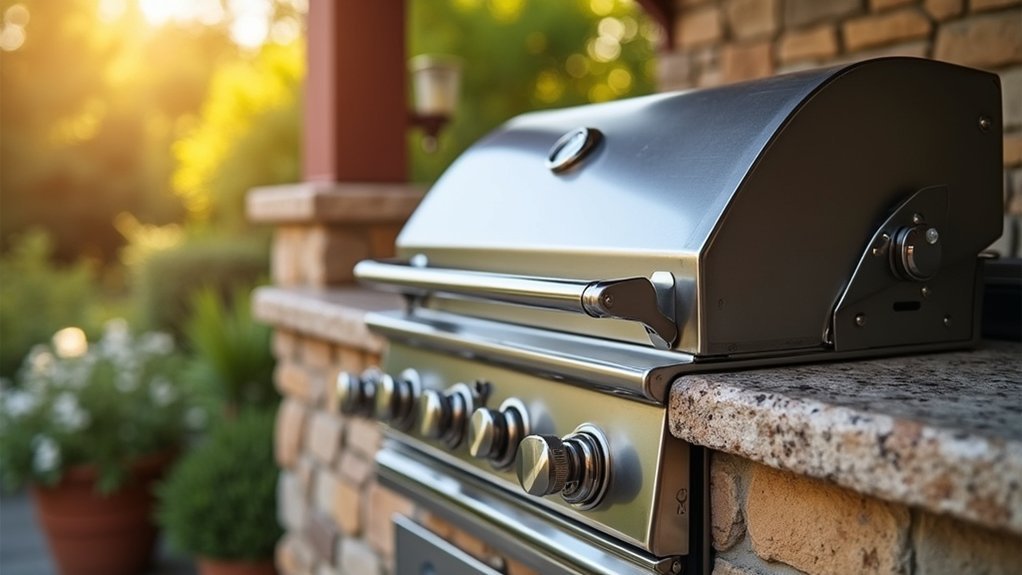
Properly protecting your expensive outdoor kitchen appliances represents one of the most essential investments you’ll make after installation. Choose breathable, custom-fitted covers that shield your equipment from rain, UV damage, and debris while allowing proper ventilation to prevent moisture buildup underneath.
For maximum protection:
- Select weather-resistant covers with ventilation flaps specifically designed for your grill, refrigerator, and sink dimensions
- Install covers that allow air circulation to prevent mold, mildew, and rust formation on exterior surfaces
- Remove covers regularly to clean appliances, eliminating grease and moisture that cause long-term damage
- Move portable appliances indoors during extreme weather events or off-seasons when they won’t be used frequently
Remember that proper protection extends the life of your appliances significantly, saving you thousands in replacement costs.
Adding Side Panels and Weather Screens for Complete Shelter
Why settle for partial protection when complete shelter can transform your outdoor kitchen into a year-round cooking haven? Install marine-grade aluminum or HDPE panels to shield your space from driving rain and wind while resisting rust and UV damage.
Create a water-tight environment by positioning overlapping joints with gasketed seals at all panel connections and doorways. When mounting screens, ensure they direct precipitation away from countertops and appliances while maintaining proper ventilation.
For maximum versatility, incorporate removable or sliding panels that you can adjust with changing seasons. This adaptability not only accommodates weather shifts but also simplifies cleaning and maintenance. The strategic placement of these barriers creates a microclimate within your outdoor kitchen space, extending your cooking season regardless of weather conditions.
Seasonal Maintenance for Weather Protection Systems
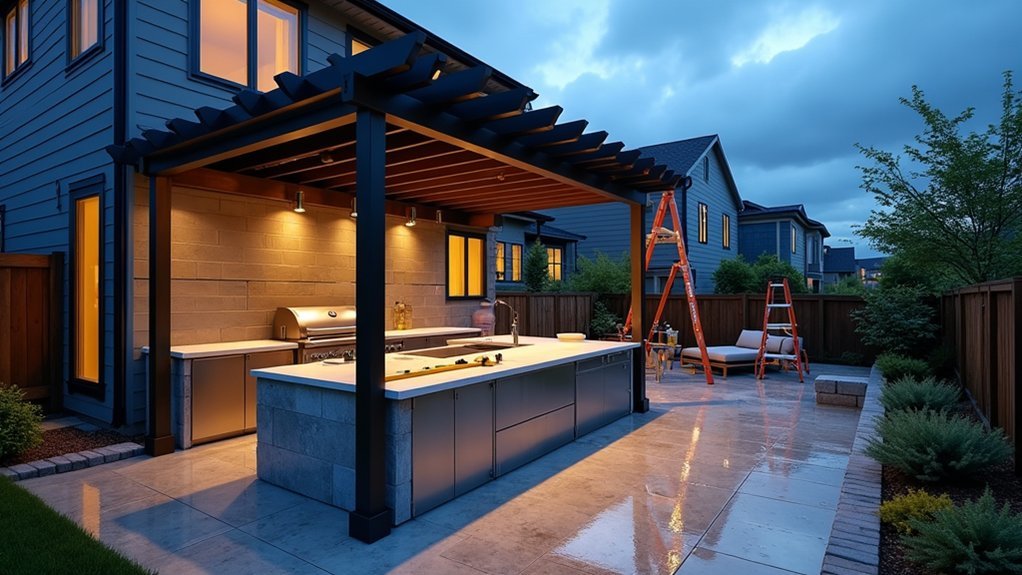
While your weatherproofing system creates a protective sanctuary for your outdoor kitchen, its effectiveness depends entirely on consistent upkeep throughout the year. Schedule quarterly maintenance checks to ensure your protection measures continue performing optimally through changing seasons.
- Before winter – Drain all outdoor water lines, shut off valves to sinks and beverage centers, and store removable items indoors before the first hard freeze hits
- Pre-summer inspection – Clean countertops thoroughly, check for wear on covers, reapply sealants where needed, and verify all appliances function properly
- Year-round gutter maintenance – Keep gutters and downspouts clear to prevent water pooling near your kitchen that could undermine your foundation
- Proper covering technique – Use only breathable, weatherproof covers that allow air circulation instead of plastic, which traps moisture
Integrating Heating Elements for Year-Round Comfort
An outdoor kitchen doesn’t need to hibernate when temperatures drop. Install infrared patio heaters overhead or on walls to provide direct warmth while you cook and entertain.
For ambiance and central heating, consider adding a gas fireplace or fire pit that creates both comfort and atmosphere during cooler seasons.
Radiant heated flooring offers practical protection by keeping walking surfaces warm and preventing dangerous ice buildup, especially important for winter access.
Maximize efficiency by pairing these heating solutions with windbreaks or partial enclosures that contain warmth.
Before installation, check that your heating choices align with your climate needs and comply with local building codes for proper ventilation and power requirements.
With strategic heating integration, you’ll transform your outdoor kitchen from a seasonal space into a year-round entertainment hub.
Frequently Asked Questions
How to Protect an Outdoor Kitchen From Weather?
Install proper drainage with a 2% slope, use slip-resistant surfaces, apply outdoor sealants, choose weatherproof materials like HDPE, and add overhead protection like pergolas or retractable coverings.
How to Weatherproof Outdoor Cabinets?
Choose HDPE polymer or marine-grade stainless steel cabinets. Apply water-repellent finishes, install proper drainage, and use weatherproof seals. You’ll need regular maintenance—clean surfaces, tighten hardware, and inspect seals frequently.
How Do You Winterize an Outdoor Kitchen?
Drain water lines, deep-clean appliances, cover them with breathable materials, and store accessories indoors. Don’t forget to shut off valves before the first freeze hits your area.
Are Outdoor Kitchens Weather Proof?
No, outdoor kitchens aren’t fully weatherproof. You’ll need to incorporate protective coverings, proper drainage, and use weather-resistant materials to prevent rain damage and extend your kitchen’s lifespan.