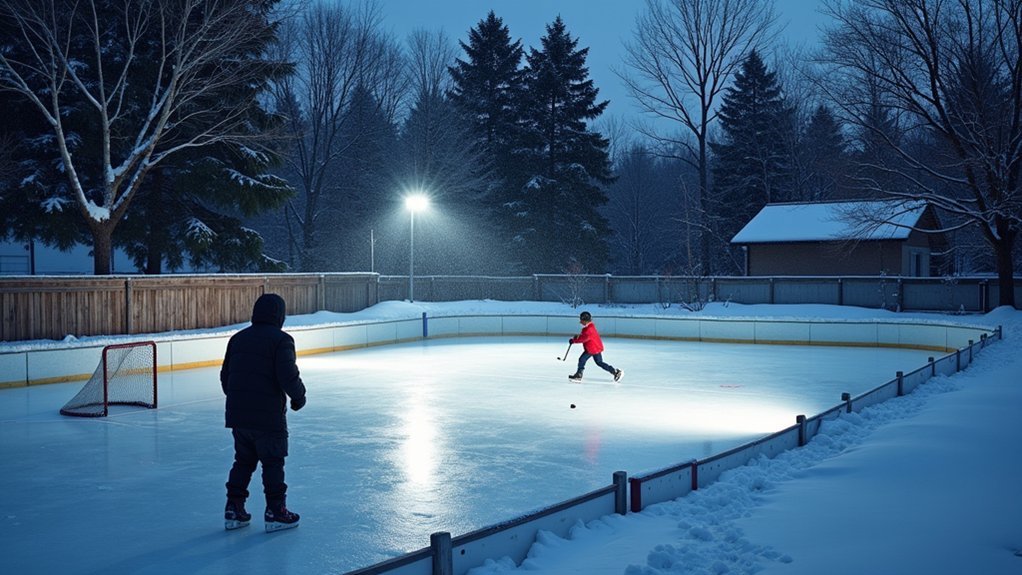
Building your own backyard hockey rink offers countless benefits beyond winter fun. You’ll create a dedicated space for skill development with personalized practice zones and training features. Your family gains a central gathering spot that promotes physical activity, bonding, and screen-free entertainment. Kids develop confidence on ice without the pressure of public rinks, and you’ll save money compared to paid ice time. The journey from construction to countless skating hours delivers rewards throughout every season.
Site Selection and Preparation
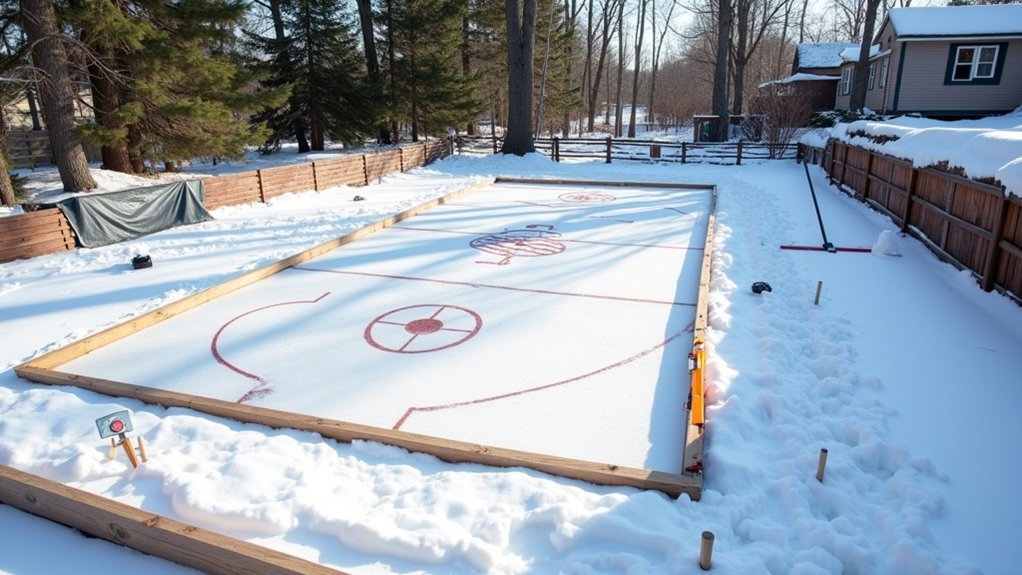
When planning your backyard hockey rink, selecting the right site lays the foundation for success.
Look for a level area that offers some shade and wind protection to maintain ice quality throughout the season.
Sheltered, level terrain is your rink’s best friend for maintaining pristine ice all winter long.
Flat terrain simplifies your setup process and ensures even ice thickness across the entire rink.
Choose a location that’s easily accessible for maintenance—you’ll need to flood the ice regularly.
If possible, include some overhead shelter to protect your ice from sun exposure and minimize melting.
Proximity to a water source is essential for flooding, and proper drainage prevents water from damaging surrounding areas during maintenance or thaws.
With these considerations addressed, you’ll create an optimal setting for endless hours of winter fun for the whole family.
Essential Materials and Equipment
Building your backyard hockey rink requires essential materials including boards (commercial rink boards or DIY plywood frames 8-12 inches tall) paired with a reinforced liner that prevents water leakage. You’ll need proper ice maintenance tools like scrapers and squeegees to keep your skating surface smooth and safe between play sessions. Complete your setup with training equipment such as shooting tarps, training pucks, and safety gear to maximize skill development while protecting players from injury.
Boards and Liner Options
What separates a successful backyard rink from a flooded mess? Two critical components: quality boards and a reliable liner.
Your boards create the structure that holds everything together. Opt for sturdy rink boards or build a plywood frame 8–12 inches tall to contain the ice and define your playing surface. Ensure they’re secured firmly to prevent bulging when filled with water.
For liners, invest in reinforced material designed to withstand winter pressure and resist punctures. Proper installation is non-negotiable—smooth out wrinkles and secure edges properly to prevent leaks and create an even ice surface.
Remember to prep your site with flat, level ground before installing either component. By prioritizing durability in both your boards and liner, you’ll minimize maintenance headaches and extend your rink’s lifespan significantly.
Ice Maintenance Tools
Maintaining a flawless backyard rink requires more than just cold weather and good intentions—you’ll need the right tools for the job. A quality flooding system using either hoses or pumps forms your foundation, while scrapers and scoops become essential for removing ice shavings before resurfacing. Don’t underestimate the importance of regular flood cycles, applying thin layers at temperatures around 20°F or colder for optimal results.
- A blade or resurfacer to smooth the ice surface, paired with a pool heater or de-icer to prevent troublesome edge refreezing
- 60-inch on-ice models and training pucks that simulate authentic skating and stick handling drills
- Cones, agility markers, and balance trainers that facilitate footwork improvement and edge control through off-ice-to-ice transfer exercises
Training and Safety Gear
Your backyard hockey rink transforms from a smooth skating surface into a complete training facility with the right gear and safety equipment. Invest in a 60-inch on-ice training model that simulates real passing and rebounds, alongside a pro shooting tarp with target zones for precision practice.
| Essential Gear | Training Purpose | Skill Development |
|---|---|---|
| Varied Pucks | Grip strength | Stickhandling |
| Cones/Markers | Direction change | Spatial awareness |
| Balance Trainers | Core stability | Edge control |
Don’t overlook the benefits of diverse training pucks in different weights and colors for advanced skill development. While synthetic surfaces have their place, real ice provides authentic feedback for balance and edge development. Your backyard setup enables focused, measurable improvements that transfer directly to game situations.
Step-by-Step Construction Process
How do you transform your backyard into a winter wonderland of hockey fun? Start by selecting a level, shaded area and flatten the ground completely. Remove all debris, then build a frame using 8-12 inch boards or plywood to contain your rink. Install a reinforced liner to prevent water leakage and punctures.
Wait for temperatures to consistently stay below 20°F before flooding. Apply water in thin, even layers, allowing each to freeze completely before adding the next. This patient approach creates a smooth, durable skating surface.
- Clear the area thoroughly—rocks and debris will create bumpy ice and potentially damage your liner
- Build a sturdy frame that can withstand water pressure and temperature changes
- Flood in stages rather than all at once for professional-quality ice formation
Ice Maintenance Tips for Perfect Skating

What makes the difference between a choppy backyard rink and pristine ice that rivals indoor arenas? It’s all in the maintenance routine you establish.
| Maintenance Task | Timing | Benefits |
|---|---|---|
| Thin layer flooding | When temp is below 20°F | Creates stronger, smoother surface |
| Debris removal | Before liner placement | Prevents pitting and bumpy ice |
| Weather monitoring | Throughout season | Ensures proper freezing conditions |
Always flood in thin, consistent layers rather than dumping large amounts of water at once. Your liner needs to be reinforced and joints properly sealed to maintain even thickness throughout. You’ll want to balance protection with exposure—provide some shade to reduce melting while maintaining your regular flood schedule. This disciplined approach will keep your rink in perfect skating condition all season.
Training Features to Enhance Player Skills
Once your ice surface is in peak condition, it’s time to transform your backyard rink into a professional training ground. The 60-inch surface gives you realistic space for passing drills and rebound practice that directly translate to game situations. You’ll notice immediate improvements in stickhandling and timing when you practice consistently in your own space.
- Install pro shooting tarps with marked target zones to develop pinpoint accuracy and power through focused repetition
- Use varying weights and colored training pucks to improve control across different skating speeds and edge work conditions
- Set up cones and agility markers for dynamic drills that build coordination and spatial awareness in a controlled environment
The authentic ice feedback from your outdoor rink provides real balance and edge feel that synthetic alternatives simply can’t match.
Creating a Family-Friendly Rink Environment
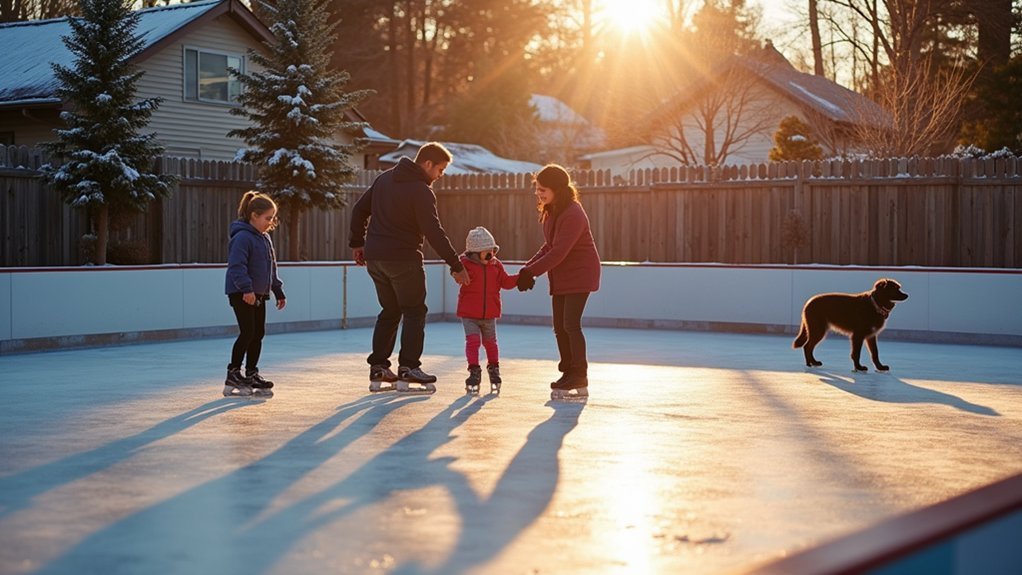
Your backyard hockey rink transforms into a family hub with comfortable seating areas where spectators can cheer on players while staying warm and engaged.
You’ll want to designate kid-safe zones with proper padding and scaled equipment that allows younger skaters to develop skills at their own pace without disrupting more competitive play.
Consider adding a simple warm-up shelter nearby where family members can take breaks, warm up between sessions, and store extra gear for maximum comfort during longer outdoor skating days.
Seating for Spectators
Building a comfortable spectator area transforms your backyard hockey rink from a simple practice space into a family gathering spot. Place weatherproof benches or freeze-resistant furniture close to the boards so parents can supervise while staying engaged in every pass and shot. A raised platform or tiered seating improves sightlines, ensuring nobody misses key plays.
- Simple recycled plastic benches positioned safely behind the boards create a designated viewing zone without crowding the ice
- Foam-padded chairs provide comfort during longer practice sessions, even in cold conditions
- A small deck adjacent to the rink serves as both a viewing area and social space where family members can chat while watching the action
Kid-Safe Rink Zones
Safety becomes the highest priority when creating a backyard rink for the whole family. Start with a flat, level foundation featuring stable boards and reinforced liner installation to eliminate gaps and sharp edges that could cause injuries.
Establish clear boundaries around your rink with designated zones that maintain open sightlines, allowing you to supervise young skaters continuously. Install soft, cushioned padding or low-profile boards to minimize impact injuries during inevitable collisions.
Your ice maintenance routine matters too—gentle flooding cycles and smooth finishing techniques create stable surfaces that help children maintain balance while learning to stop and turn effectively.
Consider creating dedicated practice areas like shooting corners and passing lanes to prevent crowding and keep your youngest players safely separated from high-traffic zones where faster skaters might be practicing.
Warm-Up Shelter Options
Setting up a warm-up shelter transforms your backyard rink experience from merely enduring the cold to truly enjoying extended family skating time.
Your shelter doesn’t need to be elaborate—just a simple structure with framing, a tarp cover, and side walls to block wind and protect the ice from direct sunlight.
For maximum comfort and functionality, include:
- Benches where skaters can rest and change into skates without sitting in snow
- A dry-erase board for drawing up drills or keeping score during friendly competitions
- A portable heater or heat lamp to warm cold fingers and toes between sessions
Choose weather-resistant materials with proper ventilation to prevent condensation and mold while maintaining ice quality. Your family will practice longer, improving skills without the distraction of bitter cold.
Year-Round Benefits of Your Backyard Rink
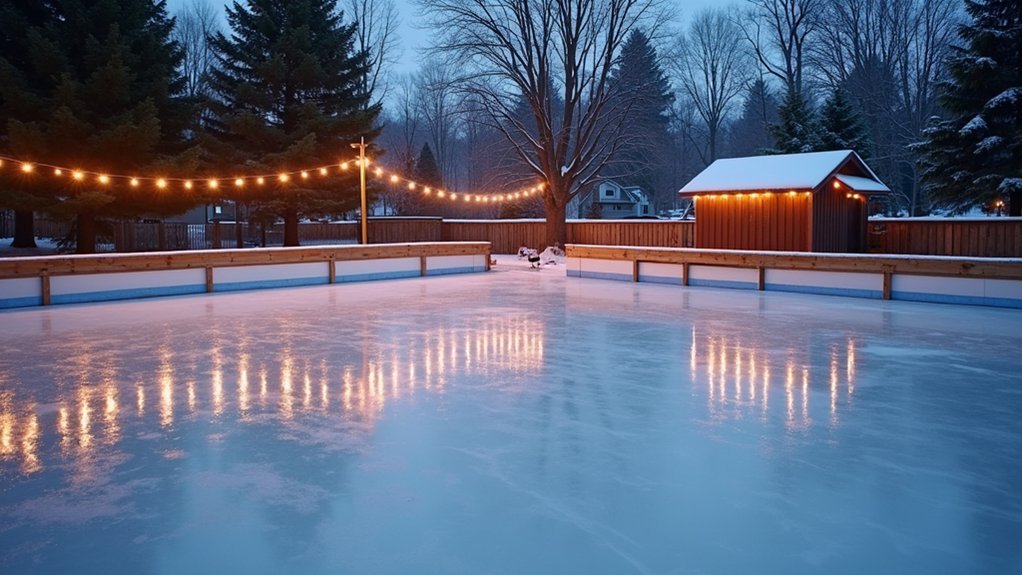
Why limit your hockey enthusiasm to just the winter months when a backyard rink can provide benefits throughout the entire year? Your private ice space offers continuous fitness advantages while strengthening family bonds in ways public rinks simply can’t match.
| Season | Physical Benefits | Family Benefits |
|---|---|---|
| Winter | Daily cardiovascular workouts | Unscheduled family skating time |
| Spring | Lawn hydration from melting ice | Early planning for next season |
| Summer | Rink area serves as workout space | Maintenance activities involve kids |
| Fall | Early flooding builds better ice | Setting up becomes a family tradition |
With consistent maintenance, you’ll develop habits that improve ice quality year after year. Your environmentally friendly setup reduces waste with liner-free designs and long-lasting boards, making your backyard rink a sustainable investment in both fitness and family connection.
Cost-Effective Solutions for Every Budget
Creating your backyard hockey rink doesn’t have to break the bank. Start small with basic boards and triangle supports, gradually expanding as your budget allows. Timing your purchases during off-peak seasons (mid-summer through spring) can yield significant savings on materials and equipment.
- Look for used materials on Craigslist or community sales—repurposed lumber and supplies often deliver value exceeding their purchase price
- Invest in durable boards that resist damage from pucks and skates, reducing long-term replacement costs
- Learn DIY maintenance techniques for ice preparation and simple repairs, avoiding expensive service calls
Frequently Asked Questions
How Much Does It Cost to Build an Ice Rink in Your Backyard?
You’ll spend $1,000-$3,000 for a basic DIY backyard ice rink, but costs can exceed $20,000 for professional installations. Save money by using secondhand materials and shopping during off-seasons.
Do Backyard Ice Rinks Ruin Grass?
No, your backyard ice rink won’t ruin grass if you use proper drainage, a reinforced liner, and remove excess water promptly during spring melt. The moisture can actually benefit your lawn.
What Size Rink Is Best for Backyard Hockey?
A 30×60 foot rink is ideal for most backyards. You’ll have enough space for casual play while keeping installation manageable. For beginners, you can start with 20×40 feet.
When to Build a Backyard Rink?
You’ll want to build your backyard rink when temperatures consistently stay below freezing (around 20°F), typically during the off-peak season from late summer to early spring.