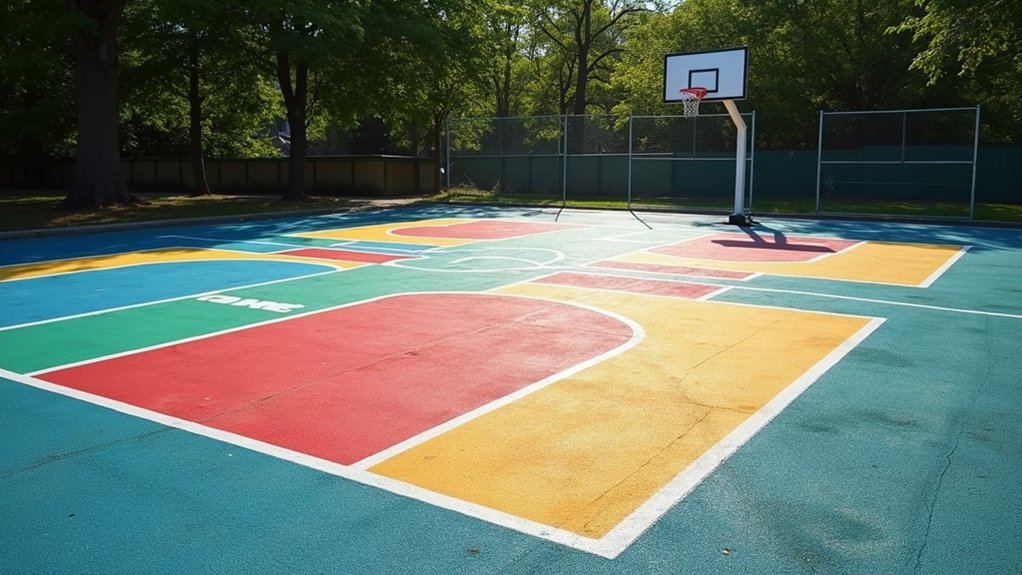
For four square courts, you’ll get the best results with waterborne acrylic traffic marking paint like Sherwin-Williams Pro-Park®. This durable formula adheres well to both asphalt and concrete surfaces, withstanding heavy foot traffic and weather exposure. Apply with rollers for large areas and use spray paint only for details. Clean and patch surfaces thoroughly before painting, then allow 24+ hours of curing time. The right preparation techniques make all the difference in your court’s longevity.
Understanding Four Square Court Paint Requirements
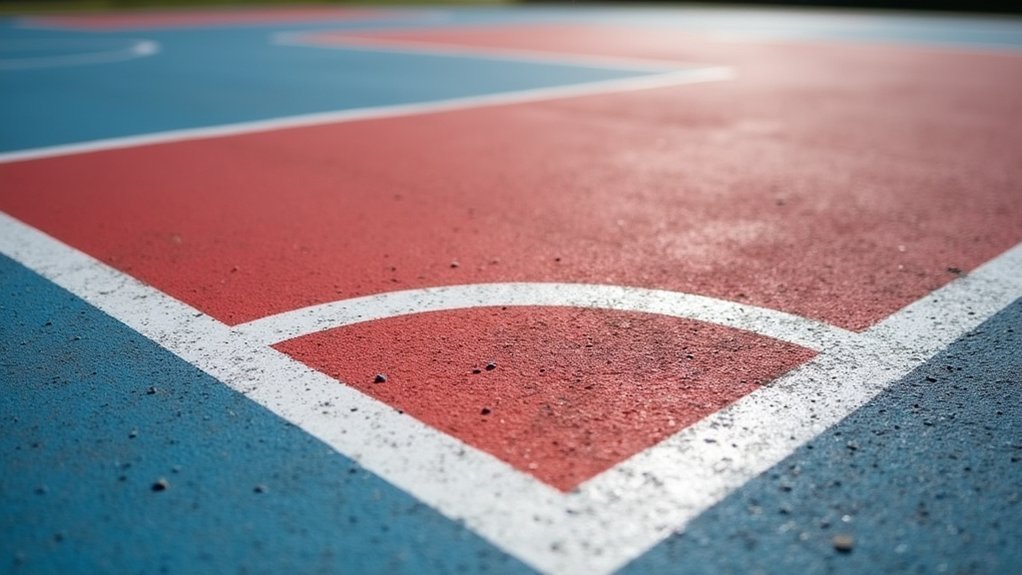
Why does paint selection matter so much for four square courts? These playing surfaces endure constant foot traffic, bouncing balls, and often outdoor weather conditions. You’ll need a durable solution that withstands this punishment while maintaining visible lines.
Pro-Park® Traffic Marking Paint is ideal for four square courts. This waterborne acrylic formula adheres well to both asphalt and concrete surfaces, offering superior wear resistance under foot traffic. For concrete courts where you want color blocks, consider pairing Pro-Park for your boundary lines with H&C® Water-Based Concrete Stain for the squares.
Don’t mix products across lines—plan your design so stains and paints complement rather than overlay each other. Remember to factor in proper curing time, usually 24+ hours, before allowing gameplay to ensure maximum durability.
Top Paint Types for Asphalt and Concrete Courts
Now that you understand the requirements, let’s look at specific paint options for your four square court. Liquid acrylic or latex water-based paints are your best bet for both asphalt and concrete surfaces, offering exceptional durability outdoors.
For professional-grade results, consider Sherwin-Williams Pro-Park traffic marking paint. This waterborne acrylic is specifically designed to withstand heavy foot traffic and provides strong adhesion to both surfaces.
If you’re working with concrete and want expanded color options, H&C Water-Based Concrete Stain pairs well with Pro-Park for enhanced longevity.
For application, rollers are more economical and provide more consistent coverage than spray paints, which should be reserved for details or smaller areas.
Color Selection and Visibility Factors

You’ll need to prioritize color contrast when selecting paints for your four square court, as white boundary lines must remain visible against your chosen play zone colors. Strong visual differentiation between the kitchen, playing area, and surrounding space helps players quickly determine ball status and court position during fast-paced games. Remember that weather exposure will affect color vibrancy over time, so choose UV-resistant paints that maintain their distinction and contrast through seasonal changes.
Color Contrast Matters
When designing a four-square court, how well players see the lines directly impacts gameplay quality. White boundary lines provide maximum contrast against most colored playing surfaces, making them the standard choice for court demarcation.
You’ll want to implement a four-color system to clearly distinguish different court zones. Pair white lines with a darker playing surface to ensure visibility from across the court. The kitchen area should contrast with the outer playing zone to prevent confusion during fast-paced games.
Choose colors that maintain their distinctiveness in various lighting conditions. For long-lasting visibility, select paints that resist fading from UV exposure and withstand regular foot traffic. Your color combinations should create intuitive visual boundaries that players can easily recognize without slowing down the action.
Weather Impact Considerations
Weather conditions substantially affect your court’s visibility and performance over time. In bright sunshine, high-contrast white boundary lines remain most visible against dark surfaces, helping players track balls and maintain proper positioning. When planning your four square court, consider how different weather scenarios will impact visibility.
| Condition | Color Recommendation | Drying Consideration |
|---|---|---|
| Sunny/Hot | White lines on dark asphalt | Quick drying, UV protection needed |
| Overcast/Dusk | Mid-to-dark color accents | Standard drying time |
| Humid/Rainy | Fast-curing, water-based paint | Extended drying, sealant required |
For courts exposed to morning dew or occasional light rain, choose water-resistant formulations with sealants to maintain line sharpness. Temperature and humidity will affect drying times—cooler, damper conditions require additional curing time to prevent smudging and ensure color separation.
Surface Preparation for Maximum Paint Adhesion
Proper surface preparation will make or break your four square court’s durability.
You’ll need to thoroughly clean the area of all dirt, oil, and debris before filling any cracks or holes with appropriate patching compound.
Once repairs are completely dry, sweep again to ensure no loose particles remain that could interfere with paint adhesion.
Surface Cleaning Basics
How well your four square court paint adheres depends almost entirely on your surface preparation. Start by thoroughly sweeping the surface to remove all dust and loose debris. For oily spots, apply a concrete/asphalt cleaner that’s compatible with water-based paints, then rinse completely.
Ensure the surface dries completely before painting—moisture trapped underneath will cause premature peeling. For smoother surfaces, consider light mechanical profiling with a stiff brush or gentle power washing to create texture for better paint grip.
Before priming, inspect for cracks, potholes, or loose aggregate and address these issues first. Filling imperfections prevents paint from seeping into gaps, extending the life of your court markings and creating a more professional appearance.
Filling Cracks First
Why do professional court painters always address cracks before touching a paintbrush? Because these imperfections will sabotage even the highest quality paint job, causing premature peeling and an uneven playing surface.
To properly fill cracks in your four square court:
- Select a flexible filler specifically designed for your surface type (concrete or asphalt) that can accommodate natural substrate movement
- Clean the surface thoroughly and ensure it’s completely dry before applying any filler
- Apply the appropriate crack sealant, pressing firmly into gaps to eliminate air pockets
- Allow the filler to cure fully according to manufacturer specifications, then sand any raised edges smooth
This preparation creates a uniform base that maximizes paint adhesion and extends the life of your court’s finish.
Application Methods: Spraying vs. Rolling Techniques
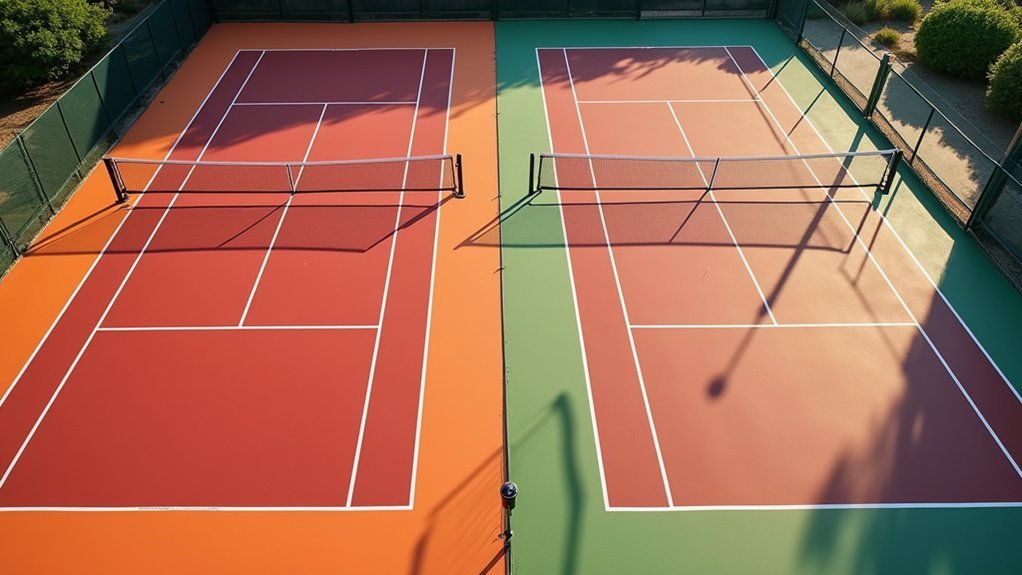
When choosing how to apply paint to your four square court, the decision between spraying and rolling can substantially impact both your efficiency and the final results. Spraying works well for stencils and smaller areas, offering quick application, but typically provides shorter longevity and requires more frequent touch-ups on asphalt surfaces.
For large courts, rolling with liquid pavement-grade paint delivers better cost-efficiency, more consistent coverage, and greater durability. If you do opt for spray application, hold the nozzle 6-8 inches from the surface and apply in light bursts to prevent drips and overspray.
Remember to maintain consistency in your product selection—don’t mix paints from different manufacturers like Pro-Park with H&C, as this can compromise adhesion and longevity of your court’s finish.
Weather Considerations for Optimal Paint Curing
Weather conditions play a crucial role in the success of your four square court painting project, especially when it comes to proper curing. To ensure your court lines last and look their best:
- Temperature matters – Aim for 50-85°F (10-29°C) during application for best adhesion and cure times, particularly for pavement-grade paints.
- Plan around humidity – High moisture levels extend drying times and may create hazy finishes on concrete or asphalt surfaces.
- Consider sun exposure – Schedule application during shaded periods if possible, as direct UV can fade spray paints faster than liquid pavement options.
- Watch the wind – Breezy conditions increase overspray risk with spray paints; use barriers and allow extra time before use to prevent transfer.
Extending Your Court’s Lifespan With Proper Sealants
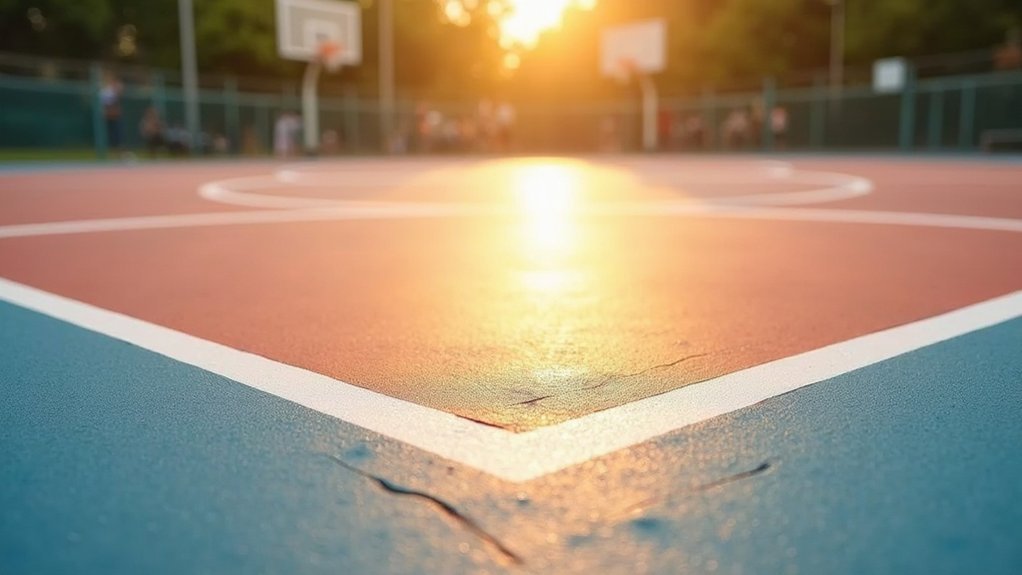
Investing in quality sealants after painting your four square court can dramatically extend its lifespan and protect your investment from premature wear. After applying Sherwin-Williams Pro-Park on asphalt or H&C Water-Based Concrete Stain on concrete surfaces, you’ll need compatible sealants to lock in your design.
Always allow your paint to fully cure—typically 24+ hours for water-based products—before applying sealant. Don’t mix across product lines; stick with sealants designed for your specific paint to maintain consistent texture and appearance.
For high-traffic areas, consider adding anti-slip additives to your sealant. This safety feature prevents accidents while extending durability, especially important for larger courts. Remember, proper sealing isn’t just about appearance—it’s what stands between your vibrant court and the elements.
Budget-Friendly Paint Options for DIY Projects
Looking for budget-friendly four square court paint options that won’t break the bank? Liquid acrylic/latex paint offers durability and coverage for asphalt and concrete surfaces, making it ideal for DIY court projects.
- Water-based latex paints – Durable on both asphalt and concrete, providing good longevity for regular use
- Roller-applied liquid paints – More cost-effective for large areas than spray cans, with more consistent coverage
- Pavement-grade options like Sherwin-Williams Pro-Park – Withstand heavy foot traffic better than basic alternatives
- Spray paints – Budget-friendly for small details and touch-ups, though they won’t last as long as liquid options
When choosing colors, stick with the same product line and finish type to ensure proper adhesion and consistent durability across your court.
Professional-Grade Paints for High-Traffic Areas
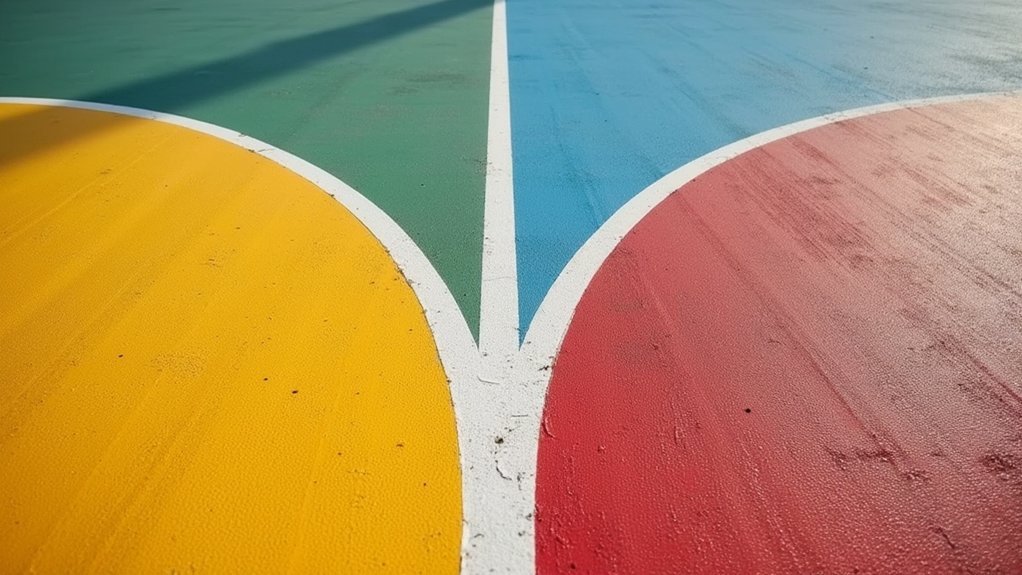
Four square courts in high-traffic areas require professional-grade paints that can withstand constant foot traffic, weather exposure, and frequent use. Sherwin-Williams’ Pro-Park® Traffic Marking Paint delivers exceptional durability as a waterborne acrylic specifically designed for roadways and parking lots.
While marketed primarily for asphalt, Pro-Park performs excellently on concrete surfaces too. For maximum longevity on concrete courts, consider pairing it with H&C® Water-Based Concrete Stain, but avoid mixing across product lines.
Even with high-quality water-based options, you’ll need to respect cure times to prevent premature wear. Proper surface preparation is crucial, along with considering anti-slip additives for safety. Test your application method—whether roller or spray—in a small area first to ensure optimal coverage and durability in your high-traffic court.
Maintenance Tips for Long-Lasting Four Square Courts
Even the best four square court paints require proper maintenance to maximize their lifespan. After applying Sherwin-Williams Pro-Park or H&C Water-Based Concrete Stain, follow these essential care practices to extend the durability of your court:
- Respect cure time – Allow the full 24+ hours for water-based paints to cure before permitting play, and block off the area completely during this period.
- Clean regularly – Remove debris, dirt, and leaves that can scratch the surface when players move across the court.
- Touch up promptly – Address small wear spots immediately before they expand into larger damaged areas.
- Reapply anti-slip additives – For safety, refresh anti-skid features annually or whenever you notice decreased traction on the playing surface.
Frequently Asked Questions
What Kind of Paint Is Used for Basketball Courts?
You’ll want to use high-quality pavement-grade liquid paints like water-based acrylics designed specifically for asphalt and concrete. Sherwin-Williams Pro-Park works well for its durability under heavy basketball traffic.
What Kind of Paint Do You Use on a Playground?
You’ll want high-quality liquid acrylic/latex paint for durability on playgrounds. Pro-Park waterborne acrylic works excellently for both asphalt and concrete surfaces under heavy foot traffic from children.
What Paint Is Best for Concrete Blocks?
For concrete blocks, you’ll want masonry paint or elastomeric coating that’s moisture-resistant. Look for acrylic-based formulations specifically labeled for concrete that offer weatherproofing and UV protection.
What Kind of Paint Do You Use on a Tennis Court?
You’ll want acrylic tennis court paint specifically formulated for sports surfaces. It’s UV-resistant, offers excellent adhesion, and provides the right texture for proper ball bounce and player traction.