
A structured garden party ensures your guests naturally flow between conversation zones while preventing food station bottlenecks. You’ll need strategically positioned seating clusters, weather contingency plans, and clear pathways that guide movement. Thoughtful layout transforms your space into purposeful zones that enhance social interaction, from arrival through dining and activities. Proper structure even simplifies post-event cleanup with designated waste stations and team roles. Discover how a little planning creates an effortlessly elegant outdoor experience.
Establishing the Perfect Layout and Traffic Flow
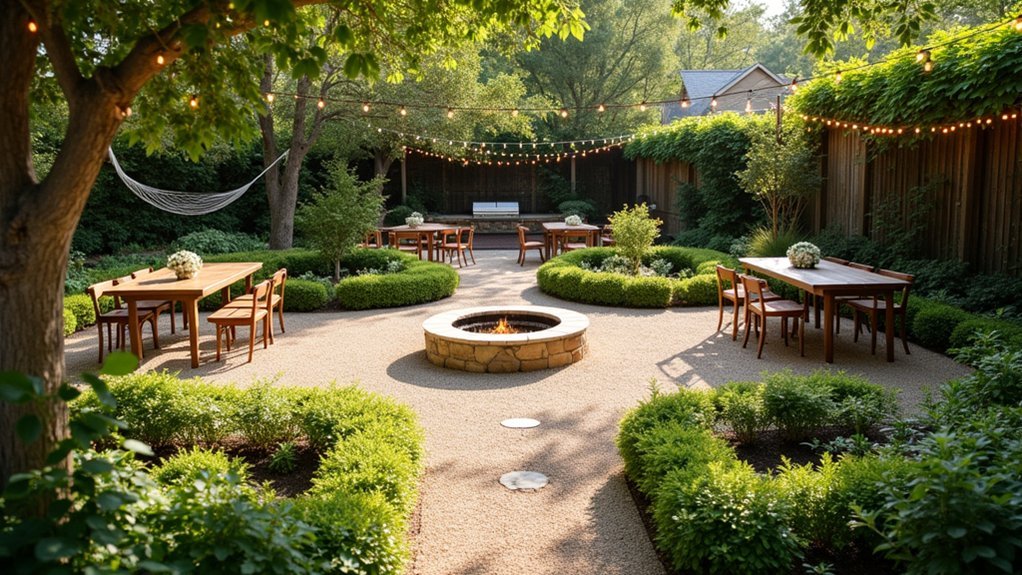
How you arrange your backyard space can make or break your garden party experience. Create cozy clusters of seating with chairs, benches, and blankets to encourage conversation while ensuring guests can easily move between areas. This varied seating accommodates different comfort needs and group sizes.
Position food and drink stations where guests can serve themselves without creating bottlenecks. Keep high-traffic elements like grills and dessert tables away from main walkways to maintain clear circulation paths.
Don’t forget about nighttime navigation—strategic lighting and simple signage guide guests from arrival to dining and activity areas after sunset. Your thoughtful layout will transform random outdoor space into purposeful zones that naturally direct movement and enhance social interaction.
Weather Contingency Plans: Being Prepared for Anything
When planning your backyard garden party, Mother Nature doesn’t always cooperate with your carefully laid plans. That’s why you’ll need solid backup options ready to deploy. Secure indoor spaces, tents, or canopies that can withstand wind, and ensure they’re properly anchored.
Weather waits for no party planner—prepare backup shelter options and secure all structures before your guests arrive.
For sunny days, create shade with umbrellas or awnings, and consider sidewalls for temperature control. Keep your layout flexible enough to pivot quickly when weather shifts, prioritizing guest comfort and safety.
Don’t forget practical safety elements like fire extinguishers near grilling areas and securing all outdoor structures against unexpected gusts.
Finally, communicate your weather plans to guests beforehand. Let them know how timing, seating, and activities might change, so everyone arrives prepared for whatever the forecast brings.
Thoughtful Seating Arrangements for Meaningful Conversations
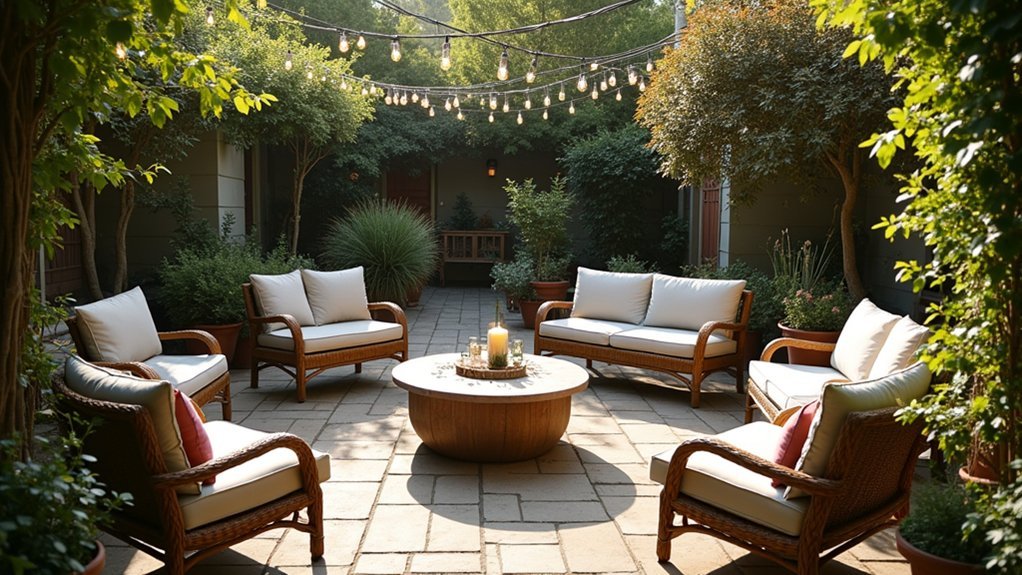
The secret to a truly memorable garden party lies not just in the food or decorations, but in creating spaces where genuine connections flourish.
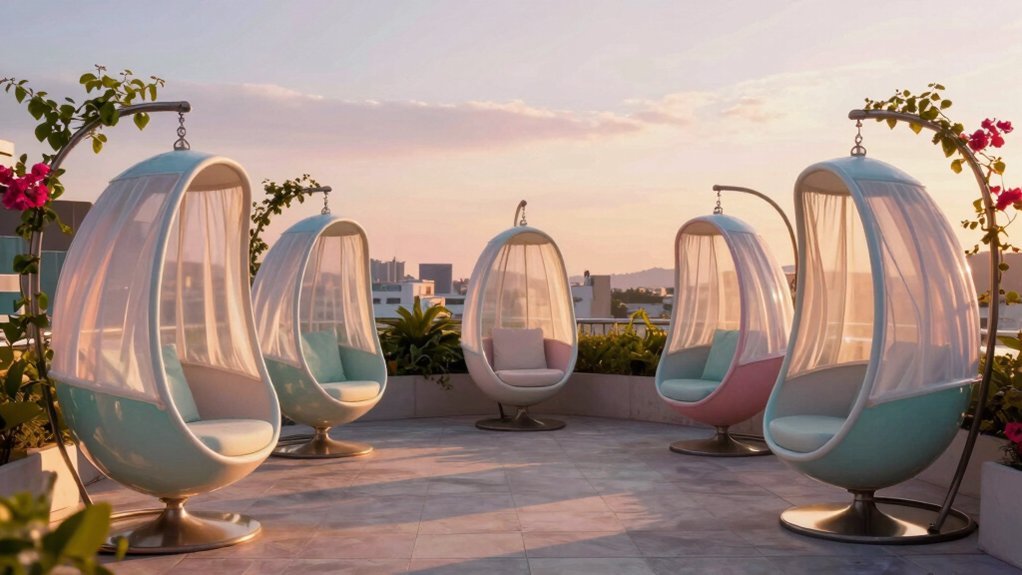
Mix your seating options—chairs, benches, and blankets—in cozy clusters that naturally encourage small-group conversations. Consider semi-circular or U-shaped arrangements around focal points like dessert or beverage stations to promote face-to-face interaction.
You’ll want to keep the seating flexible, allowing guests to move easily between groups. This open approach reduces formal barriers and sparks spontaneous chats. Position these conversation zones near shaded areas with soft lighting for comfort as evening falls.
Don’t overlook the personal touches—handwritten place cards and simple centerpieces add warmth without overwhelming the space or distracting from what matters most: the meaningful conversations happening around you.
Strategic Food and Beverage Stations
While meaningful conversations flourish in thoughtfully arranged seating areas, your party’s culinary landscape deserves equally strategic planning. Design self-serve stations that prevent bottlenecks, allowing guests to graze freely throughout your event.
Create versatile grazing tables that combine light bites with pastries and desserts for diverse options in one location. Anchor your bar area with a signature cocktail or mocktail, complemented by outdoor-friendly options like champagne and light wines.
Incorporate interactive elements such as DIY strawberry shortcake or ice cream sundae stations—these engagement points naturally draw guests together. Choose a menu featuring lighter fare: salads, chilled soups, and simple sandwiches that won’t weigh down the garden party atmosphere. For a final touch, garnish stations with edible flowers that double as both decoration and delicious accents.
Lighting Design for Day-to-Night Transitions
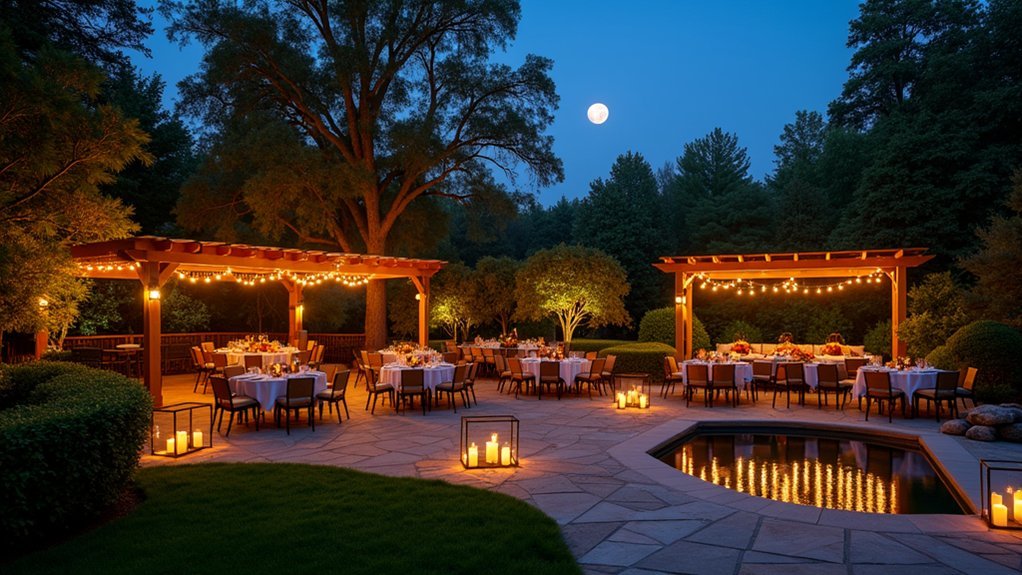
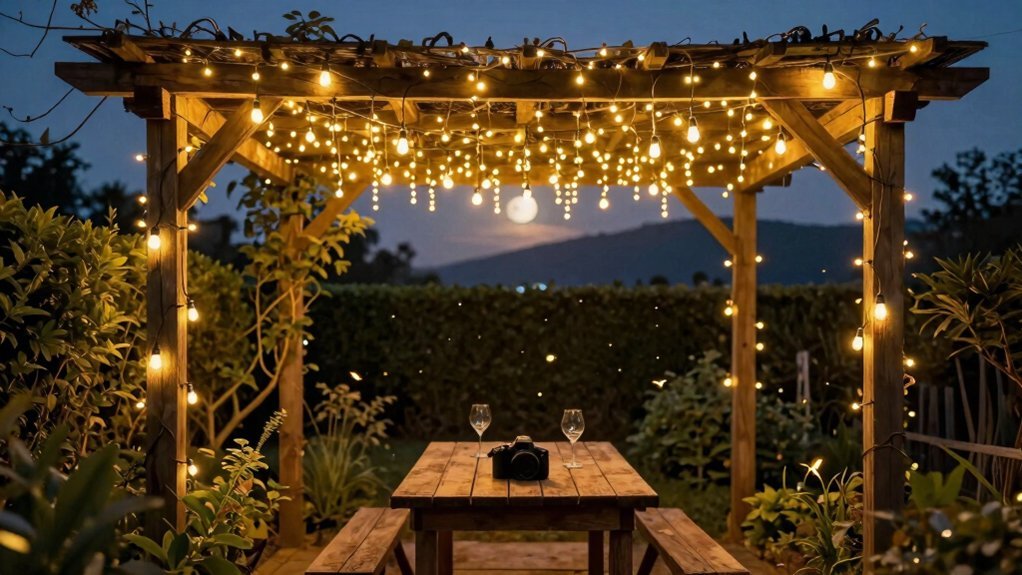
Strategically layer your lighting with string lights on fences and trees while placing DIY lanterns at table centers to create depth and warmth as daylight fades.
Enhance the mood throughout your garden party by programming a lighting sequence that transitions from bright and lively during guest arrival to soft and intimate during dinner conversations.
Your lighting plan should always prioritize safety with illuminated pathways while simultaneously contributing to the aesthetic appeal of your outdoor space.
Strategic Light Layering
How masterfully you transition lighting from day to evening can transform your garden party from pleasant to magical. Create distinct zones by layering string lights for ambient glow, lanterns for task lighting, and candles at seating areas to soften the atmosphere as daylight fades.
Position lights strategically along structures and pathways, ensuring guests can safely navigate to focal points like the bar and lounge areas. DIY jar lanterns create warmth while maintaining safety—always use outdoor-rated fixtures and avoid placing heat sources near fabrics.
Design your lighting to mirror your event’s flow: brighter during arrivals and mingling, then softer for dinner conversations. This thoughtful progression eliminates constant manual adjustments while maintaining both mood and functionality as your celebration transitions from sunshine to starlight.
Mood-Enhancing Light Techniques
When does your garden truly come alive? Often, it’s when thoughtful lighting transforms your space from day to evening. Create a layered plan that transitions from natural daylight to a warm ambient glow using string lights along fences, DIY lanterns from painted glass jars, and subtle uplighting for statement plants.
Time your lighting to match party moments—brighter for arrivals, softer for dining, and a gradual enhancement as sunset approaches. This intentional progression maintains atmosphere while accommodating different activities.
Don’t forget discreet path lighting using low-voltage or solar options that prevent accidents without disrupting aesthetics. For maximum impact, pair your lighting with complementary textures like wildflowers and gauzy table runners, allowing natural beauty to shine as darkness falls.
Creating a Post-Party Cleanup Strategy
Setting up labeled bins for trash and recycling before your garden party begins will streamline waste management and prevent post-event chaos.
You’ll save time by dividing specific cleanup tasks among friends or family members, creating an efficient system where everyone knows their role.
Keep your cleanup kit stocked with essentials like a small broom and soda water for quick stain removal, making the entire process smoother and less intimidating.
Prep With Labeled Bins
Planning for cleanup before your garden party begins will save you hours of post-celebration stress. Labeled bins are your secret weapon for effortless party breakdown. Create a system that guides guests and helpers toward proper disposal with minimal confusion.
- Label each bin clearly by purpose (recyclables, compost, trash, food, supplies)
- Use color-coded lids or stickers that visually match bin types to contents
- Include laminated lists inside bin lids detailing what belongs where
- Pre-assemble cleaning kits near bins with gloves, bags, and disinfectant
- Schedule your post-event bin pickup or disposal plan before the party starts
This preparation transforms cleanup from chaotic to systematic. When everyone knows where things go, your garden returns to its pristine state quickly, leaving you to enjoy memories rather than face a mountain of mixed waste.
Smart Waste Management
A thoughtful waste management strategy forms the backbone of any successful garden party cleanup. Start by packing a comprehensive kit with essentials: small broom, dustpan, scrub brush, soda water for stains, and designated bags for trash and recycling.
Set up clearly labeled waste stations throughout your space—one each for compostables, recyclables, and general trash. Position these near exit paths so guests can help dispose of items as they circulate.
Prepare for inevitable spills by keeping stain-removing wipes and damp cloths accessible. This quick response prevents permanent damage to your grass and surfaces.
Calculate your anticipated waste volume based on guest count and menu type. Grazing tables create more packaging waste, while beverage-heavy events require additional bottle disposal options.
Finally, schedule a brief 15-20 minute post-party cleanup with assigned tasks for your team.
Divide Cleanup Tasks
With waste management systems in place, your attention can now shift to effectively dividing cleanup responsibilities.
Create a structured approach by establishing roles before your garden party begins, ensuring everyone knows their post-celebration duties.
- Assemble a dedicated cleanup kit with brooms, dustpans, scrub brushes, and soda water for quick stain response
- Predefine specific roles—assign one person to handle trash, another for tableware, and someone for spill management
- Schedule a brief wind-down period to collect reusable items and securely store leftovers
- Develop a staged system for clearing food and drink stations to prevent cleanup bottlenecks
- Keep portable totes handy for transporting fragile décor and outdoor lighting to storage, minimizing damage risk
This division of labor transforms what could be an overwhelming cleanup into manageable tasks that can be completed efficiently.
Frequently Asked Questions
What Makes a Great Backyard Party?
You’ll host a great backyard party with careful planning, comfortable seating, weather contingencies, cohesive décor, and interactive activities that keep guests mingling throughout your event.
How to Create a Structure in a Garden?
Create garden structure by defining zones with furniture groupings, adding archways or trellises, using potted plants to mark pathways, and installing lighting that highlights specific areas you’ve designed.
How to Host the Perfect Garden Party?
Set a clear date with a weather backup, create distinct zones for food and seating, assure safety with proper lighting, maintain a cohesive theme, and keep layouts flexible for guest comfort.
What Is the Main Message of the Garden Party?
Your garden party’s main message is to create a beautiful, welcoming gathering that values comfort and connection over perfection, blending practical planning with intentional design for memorable experiences.