
For a perfect garden party menu, balance seasonal ingredients with make-ahead components like overnight marinated vegetables or chilled soups to showcase freshness without day-of stress. Create a thoughtful progression from light appetizers to satisfying mains, allowing guests time to socialize between courses. Design for inclusive dining with clearly labeled options and customizable serving stations that accommodate dietary needs while simplifying service. These strategies ensure you’ll enjoy your own celebration instead of being trapped in kitchen duty.
Balance Seasonal Ingredients With Make-Ahead Options
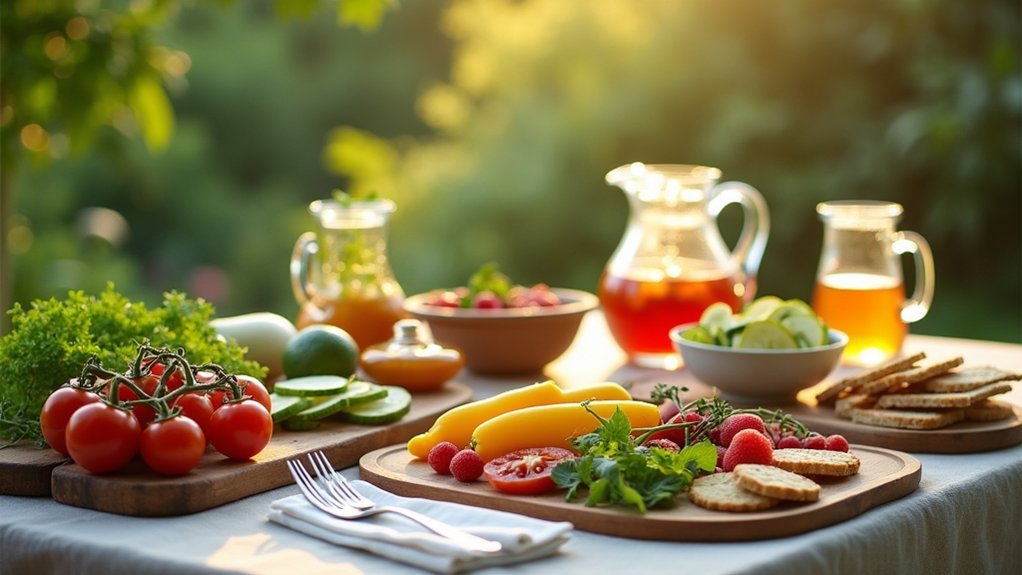
How often does the perfect garden party menu elude even the most experienced host? The secret lies in balancing freshly harvested ingredients with strategic prep work. Your garden’s bounty—ripe tomatoes, crisp cucumbers, and fragrant herbs—should take center stage while make-ahead components minimize day-of stress.
Consider chilled soups prepared the night before, allowing flavors to meld beautifully overnight. Marinate vegetables in advance, transforming them into vibrant sides that won’t wilt under summer sun. Herb-infused dips can rest in your refrigerator, improving with time while awaiting garden-fresh dippers.
This approach isn’t just practical—it’s culinary wisdom. By pairing time-intensive elements with quick-assembly components, you’ll create a menu that celebrates seasonality without keeping you from enjoying your own fête champêtre.
Create a Flow From Light Bites to Satisfying Mains
Beyond ingredient selection lies the artful orchestration of your menu’s progression. Your garden party’s success depends on thoughtful pacing that maintains guests’ energy and interest throughout the event.
- Start with light, refreshing appetizers featuring garden herbs to welcome guests and stimulate appetites without overwhelming them
- Transition to more substantial mains that satisfy hunger while complementing the outdoor setting—think colorful salads followed by grilled proteins
- Allow adequate time between courses, especially for longer gatherings, so guests can socialize and appreciate each offering
- Finish with a memorable dessert paired with a palate-cleansing option like citrus sorbet, bringing closure to the meal
Remember to adjust portions as you progress—smaller bites early on leave room for the main attractions while maintaining your menu’s cohesive garden-to-table narrative.
Design for Dietary Needs and Easy Serving
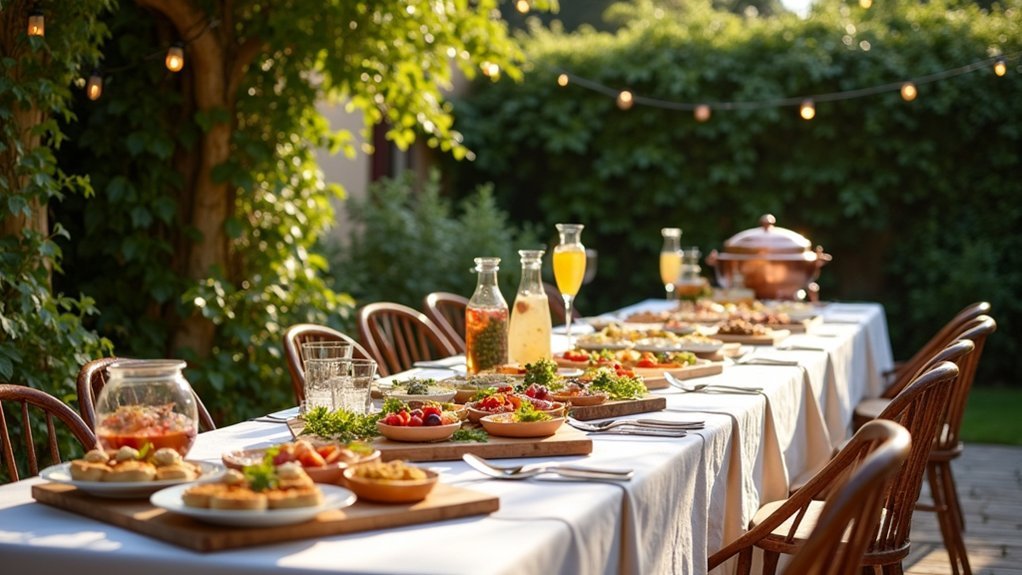
When planning your garden party menu, gracious hospitality means ensuring every guest can fully participate regardless of dietary restrictions. Create stations with clearly labeled options for common needs—vegetarian, vegan, gluten-free, and nut-free—using small tent cards to identify each dish’s ingredients.
Consider deconstructed serving styles that allow guests to customize their plates. A DIY bruschetta bar with herb-garden toppings, a build-your-own salad station with separate protein options, or a taco spread with various fillings works beautifully for accommodating preferences while maintaining your menu’s integrity.
Opt for easily managed finger foods and bite-sized portions that don’t require complicated cutting or balancing acts. Pre-portion desserts into individual servings, and offer both alcoholic and creative non-alcoholic options at your beverage station.
Frequently Asked Questions
How Do I Calculate Food Quantities for Different Party Sizes?
Calculate 1.5 servings per person for main dishes, 2-3 appetizers per guest, and 1-2 dessert portions each. You’ll need more food for longer events or hungry crowds.
What’s the Ideal Timing for Serving Each Course?
Space courses 20-30 minutes apart. Start with appetizers during arrival, serve the main course 45 minutes later, and offer dessert after a brief rest. You’ll maintain perfect flow throughout.
How Can I Prevent Insects From Bothering the Food?
Cover dishes with mesh food tents, use citronella candles, serve food in enclosed spaces, and try cucumber peels around serving stations. You’ll find most insects stay away from mint-garnished dishes too.
Which Foods Hold up Best in Hot Weather?
Choose fresh fruits, cheese boards, grilled meats, sturdy salads, and chilled desserts. You’ll find that foods with vinegar-based dressings don’t spoil as quickly as mayo-based options in heat.
Should I Hire Servers or Arrange Self-Service Stations?
Consider hiring servers for larger, formal events while self-service stations work well for casual gatherings. You’ll need one server per 10-15 guests if you’re serving plated meals or complex drinks.