To store backyard beverages properly, maintain specific temperature zones: beer at 35-40°F, white wine at 45°F, and red wine at 55°F. Create dedicated areas in your outdoor fridge to prevent flavor transfer and use the first-in, first-out rotation system. Keep light-sensitive drinks in opaque containers or shaded locations, and organize spirits between 40-55°F. With weatherproof storage solutions and proper organization, your outdoor drinks will maintain optimal quality for every gathering.
The Science Behind Proper Beverage Storage Temperatures
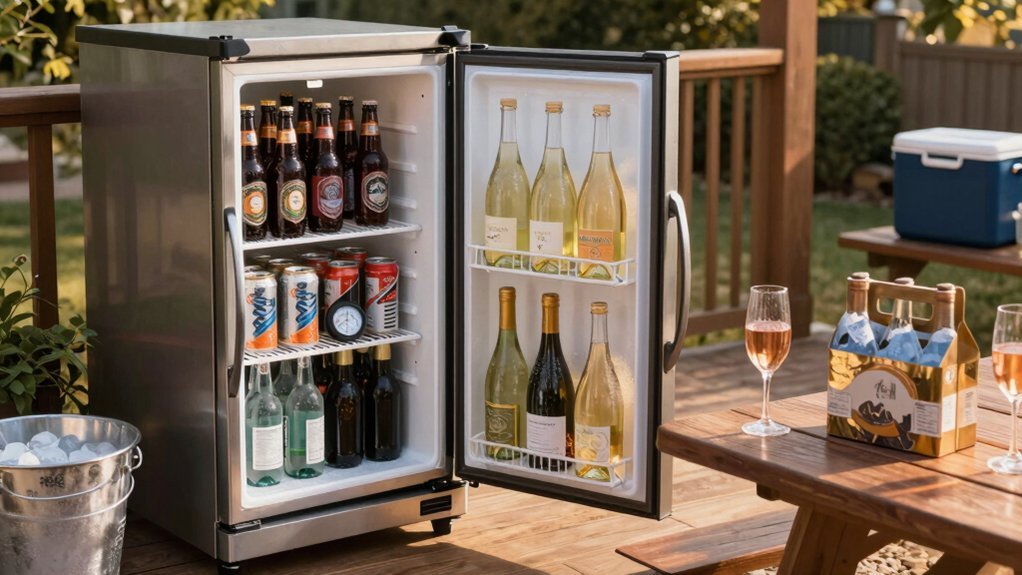
Why do experts obsess over temperature when it comes to storing drinks? It’s because temperature directly impacts flavor stability. Rather than chasing exact degree targets, you’ll want consistent temperature ranges that preserve each beverage’s intended profile.
Different drinks thrive at specific temperatures: beer stays crisp at 35-40°F, white wine maintains its delicate notes at 45°F, red wine develops proper complexity at 55°F, and spirits/mixers remain balanced between 40-55°F.
For your backyard setup, invest in a dedicated climate-controlled fridge with adjustable zones. This prevents the common problems of flavor drift and unwanted aroma transfer between beverages. Unlike your kitchen’s fluctuating conditions, a specialized unit creates stable environments where multiple beverage categories can coexist without cross-contamination.
Creating a Dedicated Outdoor Beverage Station
Setting up your outdoor beverage station requires thoughtful organization by drink type, with upright storage for spirits and horizontal racks for wines.
You’ll want to create clearly labeled zones for beer, white wine, red wine, and mixers, making self-service effortless for guests during backyard gatherings.
Consider adding adjustable shelving that can accommodate different bottle heights while maintaining the ideal 50-60°F temperature range for optimal beverage quality.
Cold Storage Solutions
A well-designed outdoor beverage station transforms backyard entertaining by providing temperature-controlled storage right where you need it. Invest in a weatherproof beverage refrigerator with adjustable temperature zones to properly store different drinks: beer and white wine at 45-50°F, red wine at 50-60°F, and spirits between 40-55°F.
Arrange your refrigerator strategically with horizontal racks for wine bottles to keep corks moist and prevent leaks, while using upright shelving for other beverages. Include reserve drawers for garnishes and mixers that need quick access.
For unopened bottles, create a cool, dark, dry storage space nearby. After opening, reseal bottles promptly and refrigerate them to maintain freshness. Implement a first-in, first-out rotation system with clear labels, and separate aromatic beverages to prevent flavor transfer.
Organizing Drink Categories
The key to a successful backyard beverage setup extends beyond temperature control to thoughtful organization by drink category. Create distinct zones for beer, wine, and spirits to prevent flavor cross-contamination while enhancing accessibility.
Arrange your beverage fridge with adjustable shelves to maintain optimal temperatures: beer at 35-40°F, white wine at 45°F, red wine at 55°F, and spirits between 40-55°F. For wine storage, utilize vertical racks or horizontal shelving that protects corks and prevents leaks.
Store unopened bottles upright at stable temperatures, and dedicate reserve drawers for garnishes, syrups, and mixers. Implement a clear labeling system and follow the First In, First Out rotation method to maintain freshness. This organized approach not only preserves beverage quality but also streamlines service, allowing you and your guests to enjoy backyard gatherings without interruption.
Wine Storage Solutions for Backyard Gatherings
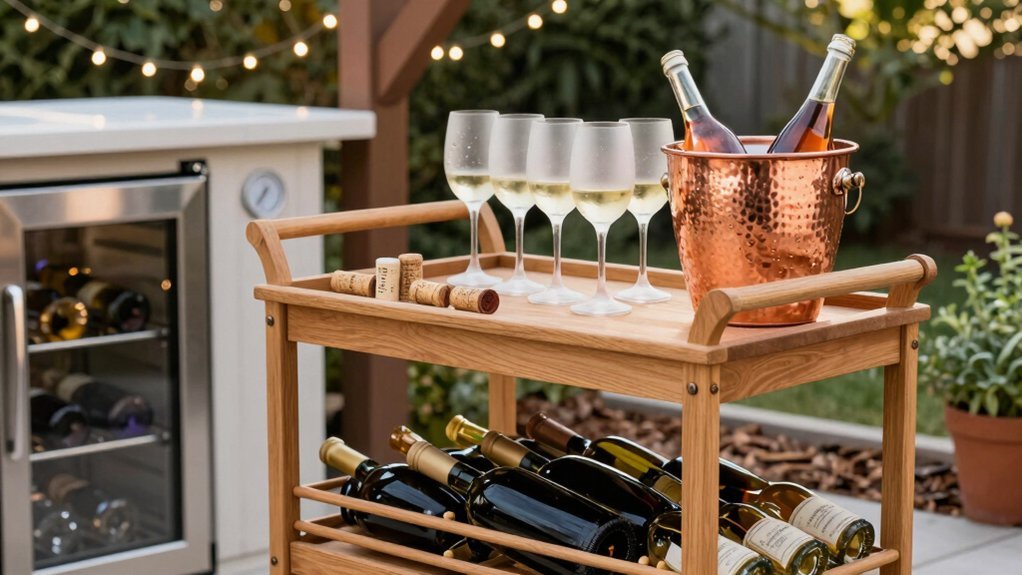
When hosting outdoor gatherings, proper wine storage can make the difference between serving a perfectly preserved vintage and disappointing your guests with spoiled flavors. Store bottles on their side at 50–59°F (10–15°C) to keep corks moist and preserve aroma and flavor.
Shield your wine from direct sunlight by using shaded areas or a dedicated dark storage spot to prevent degradation. For red wines, aim for the higher end of the temperature range (55–59°F) with moderate humidity to maintain cork integrity.
Consider using a climate-controlled beverage fridge or a cool, shaded cabinet to ensure stable temperatures. Don’t forget to label and rotate bottles using the first-in, first-out method so they’re consumed at their peak freshness throughout your celebration.
Keeping Craft Beers Fresh in Outdoor Settings
Why do craft beers lose their vibrant flavors during outdoor gatherings? Temperature fluctuations, sunlight exposure, and improper storage position are the main culprits that compromise your brew’s quality.
To preserve those complex flavors, store your craft beers at 50–55°F in a dedicated outdoor beverage cooler away from direct sunlight. Always position bottles and cans upright to minimize oxidation and maintain cap integrity. This simple step prevents unwanted air contact that degrades flavor.
Organize your collection by type—separating craft options from lagers and ales—and implement a first-in, first-out rotation system. Keep all beer away from heat sources like grills and sunny patio areas. Your outdoor beer station should offer shade and stable temperatures to prevent the rapid heating that ruins those carefully crafted flavors.
Protecting Spirits and Mixers From the Elements
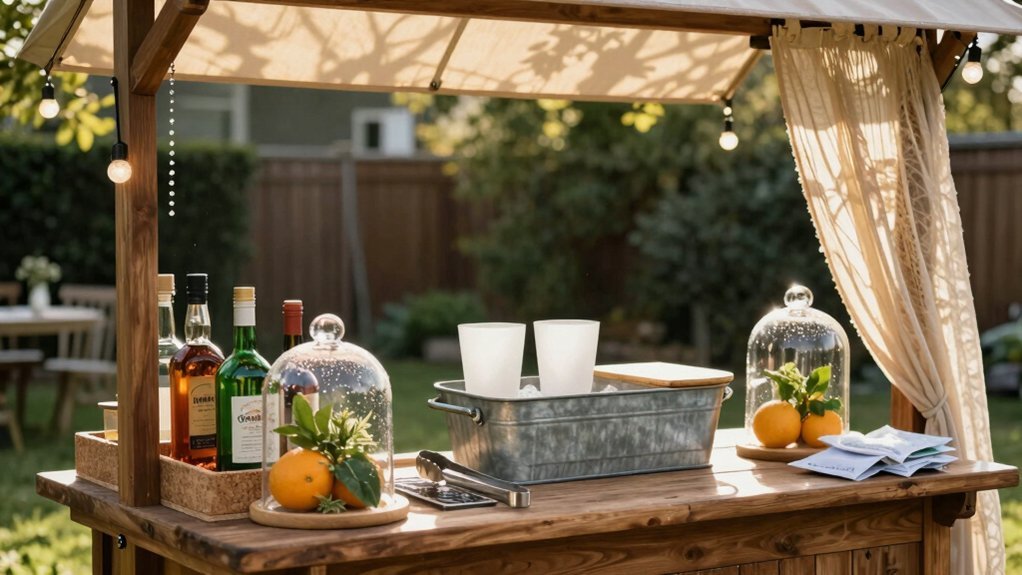
Unlike beer, your premium spirits and cocktail mixers face distinct challenges when stored outdoors. Always keep bottles away from direct sunlight and heat sources, which can rapidly degrade quality. Instead, find a dark, cool, and dry area for storage.
Maintain a consistent temperature around 55–60°F for your collection. While vodka can handle cooler temperatures, not all spirits benefit from freezer storage. Always store unopened bottles upright to protect corks and preserve quality.
For outdoor entertaining, consider a dedicated, climate-controlled cabinet rather than using kitchens or garages where temperatures fluctuate. When you’re done serving, reseal bottles tightly to minimize oxidation. Remember to rotate your stock regularly, following the first-in, first-out principle, and consume opened bottles within 1–2 years for optimal flavor.
Organizing Non-Alcoholic Options for All Guests
Create fresh drink stations with clearly labeled non-alcoholic beverages organized by type (juices, mocktails, kombucha, and teas) to make selection effortless for your guests. Store perishable options like fresh juices and kombucha at the proper temperature, keeping them refrigerated until serving time to maintain optimal flavor and quality. You’ll want to position water and flavored water options centrally at your gathering to ensure everyone stays hydrated, regardless of their beverage preferences.
Fresh Drink Stations
How often do you remember to fully accommodate non-drinking guests at your backyard gatherings? Creating a dedicated non-alcoholic station ensures everyone enjoys refreshing options without searching through coolers of alcohol.
Set up your drink station for maximum freshness and appeal:
- Position in a shaded, cool location away from direct sunlight and heat sources to preserve flavors and prevent spoilage
- Store perishable items like dairy-based drinks and fresh juices in a separate cooling tray or small cooler
- Use airtight bottles or pitchers instead of open containers to prevent contamination and reduce evaporation
- Label all beverages clearly and implement a first-in, first-out rotation system to maintain freshness
Your non-alcoholic options deserve the same care as alcoholic ones—water, juices, mocktails, and teas will be appreciated by many guests.
Temperature-Appropriate Storage
Once your non-alcoholic drink station is established, proper temperature management becomes the foundation of beverage quality. Store perishable options like juices and dairy drinks at 35-40°F, while keeping ready-to-serve beverages around 45-50°F. Sodas and bottled water can remain in cool, dry areas for convenience.
| Beverage Type | Optimal Temperature | Storage Tip |
|---|---|---|
| Fruit Juices | 35-40°F | Keep refrigerated, away from light |
| Dairy-Based | 35-38°F | Store in coldest part of fridge |
| Iced Teas | 38-45°F | Label with preparation date |
| Sparkling Waters | 45-50°F | Store upright to preserve carbonation |
| Kombucha | 36-40°F | Use opaque containers to protect probiotics |
Organize drinks in dedicated zones to prevent flavor transfer, and implement a first-in, first-out rotation system. For light-sensitive beverages like kombucha, choose dark locations or opaque containers to maintain freshness.
Essential Tools for Maintaining Beverage Quality Outside
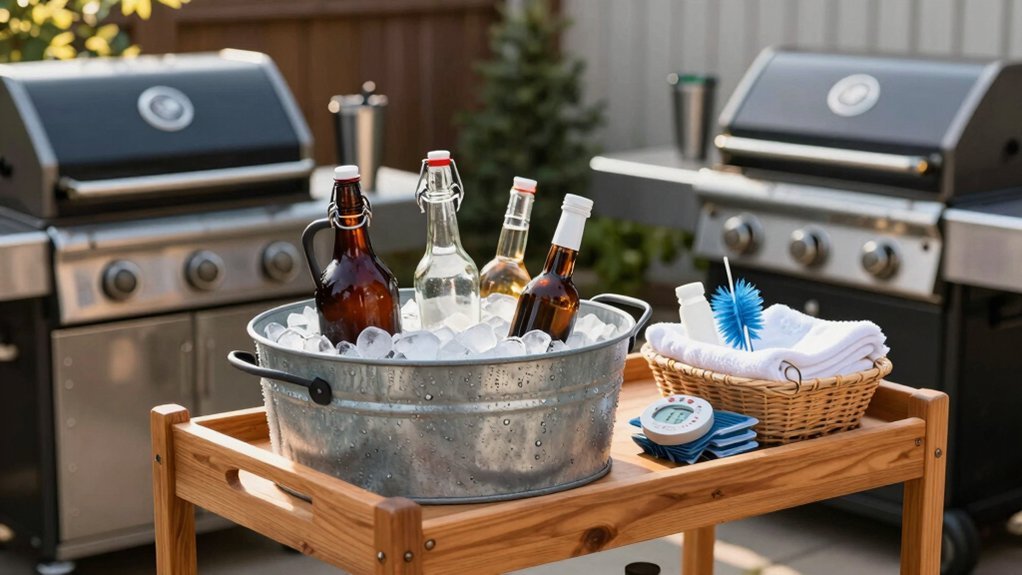
When entertaining outdoors, the right tools make all the difference between perfectly served drinks and a disorganized mess. Equip your outdoor bar with essential items that preserve flavor, temperature, and presentation while making service efficient.
- Stock fundamental tools like shakers, jiggers, bar spoons, muddlers, and bottle openers to mix and serve drinks properly without disrupting your storage setup
- Choose appropriate outdoor glassware such as highballs, rocks glasses, and champagne flutes that maintain drink temperature while looking sophisticated
- Invest in insulated containers and coolers that combine ice and water for superior cooling performance during extended outdoor gatherings
- Create a designated shaded serving area away from direct sunlight and heat sources to protect beverages from rapid temperature changes
Seasonal Considerations for Backyard Drink Storage
Seasons dramatically alter how you’ll need to store and serve backyard beverages throughout the year. In summer, focus on creating shaded areas with good ventilation to prevent heat buildup. Your coolers will work harder, so use plenty of water with ice for that temperature-stabilizing slush effect.
During spring and fall, temperature swings can be problematic. An outdoor-rated beverage fridge set between 35–55°F provides consistency that improves drink quality. Position it away from direct sunlight to prevent UV damage, especially for wines and clear spirits.
Winter brings its own challenges—keep wines stored on their side to maintain moist corks, while beers should remain upright to minimize oxidation. Remember that freezing temperatures can damage beverages, so ensure your storage solutions offer appropriate insulation when temperatures drop.
Frequently Asked Questions
What Is the Best Way to Store Beverages?
Store wine on its side at 50-59°F, beer upright at 45-55°F, and spirits at 55-60°F. You’ll need dark, climate-controlled storage away from kitchens and garages for best results.
What Is the 2 1 1 Rule for Cocktails?
The 2-1-1 rule means you’ll use 2 parts spirit, 1 part cordial or liqueur, and 1 part citrus or mixer. It’s your foundation for balanced cocktails that can be adjusted to taste.
How to Keep Drinks Cold at an Outdoor Party?
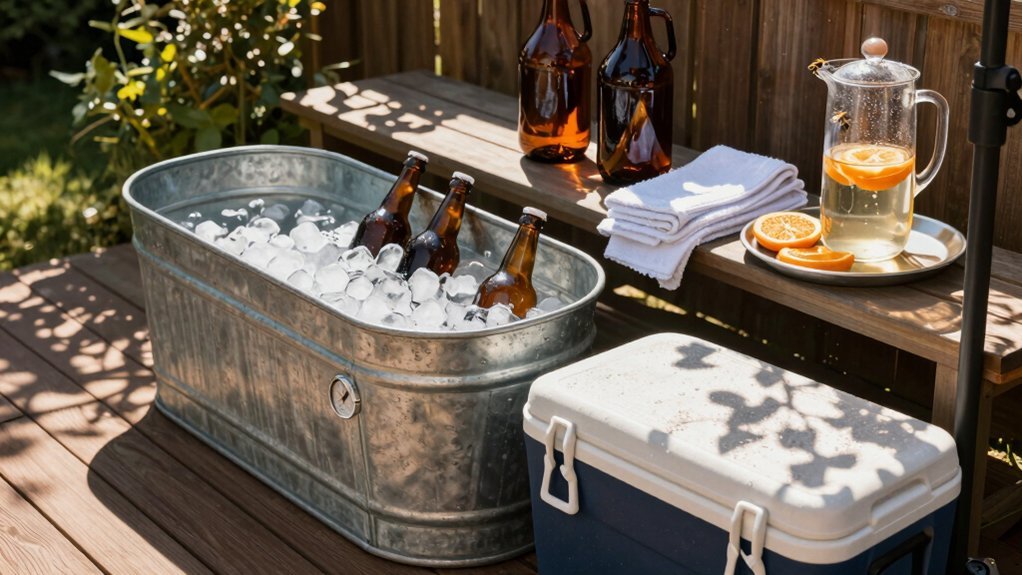
Use dedicated beverage coolers for different drink types, place them in shaded areas, and rotate stock regularly. You can also use ice-filled troughs and ice bricks for passive cooling.
How to Naturally Preserve Drinks?
You’ll preserve drinks naturally by adding honey, citrus juice or vinegar as preservatives. Store them in sterilized containers, refrigerate promptly, and use herbs like mint or rosemary for flavor and preservation.