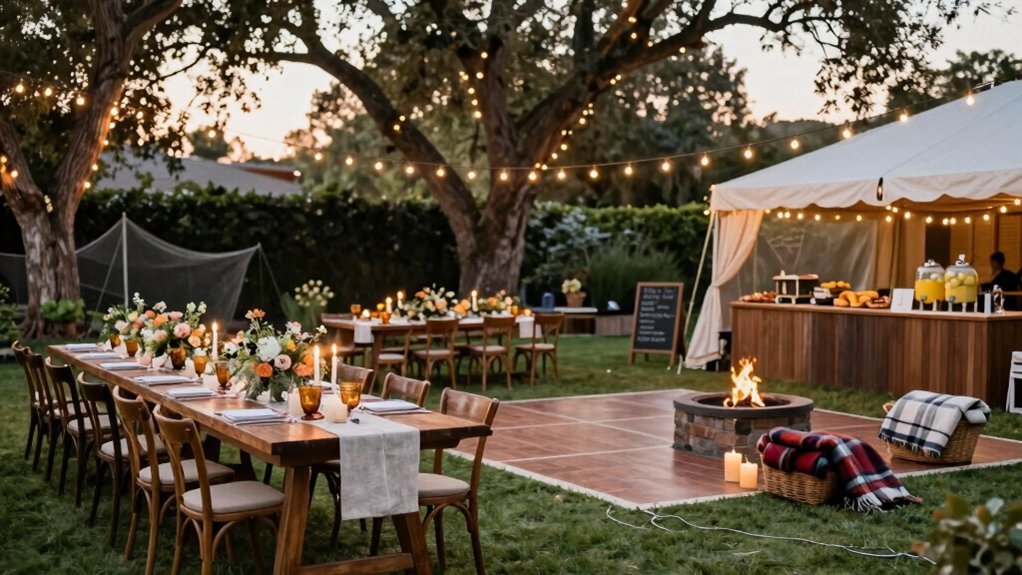
To create a successful backyard wedding reception, start by mapping a clear layout with designated zones for dining, dancing, and relaxing. Secure weather contingencies like tents with optional sides. Ensure level surfaces for tables and stable dance floors. Design lighting that evolves from dinner to dancing. Coordinate with caterers for proper food safety. Keep sound levels neighbor-friendly and incorporate natural elements into your décor. Delegate day-of tasks and create a smart parking plan. These thoughtful details will transform your yard into the perfect celebration space.
Map Your Yard’s Layout & Flow for Guest Comfort
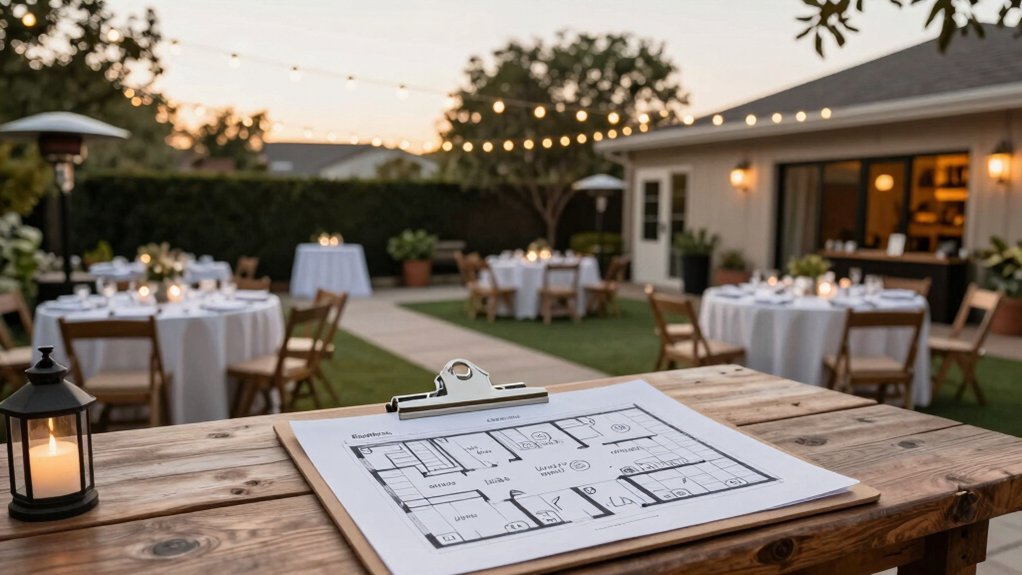
How well your backyard reception flows can make or break your celebration. Start by creating a comprehensive yard layout that clearly designates your ceremony area, reception space, and essential pathways. Ensure the ground is level where you’ll place tables and chairs to prevent wobbling, and properly secure tent foundations if you’re using canopies.
Create distinct functional zones for seating, dancing, photos, and food service to prevent bottlenecks and optimize guest movement. Position clear signage and provide a simple overhead map to guide attendees to restrooms, bars, and key areas.
Don’t forget utilities! Map out your power needs for lighting, sound equipment, and catering stations. Strategically position tents and lighting to avoid casting shadows during important photo moments and speeches.
Weather-Proof Your Celebration With Contingency Plans
When planning your dream backyard reception, will Mother Nature cooperate? Don’t leave it to chance. Secure a concrete backup plan before your event—either a reserved indoor space or a fully enclosed tent with sides installed before guests arrive.
Invest in a weather-ready tent with optional side panels or clear walls to shield against rain and wind while maintaining that outdoor feel. For temperature control, arrange portable fans or misting systems for hot days, and propane heaters for cool evenings.
Create a flexible timeline that can shift activities indoors or under cover if conditions change. Communicate this plan to your vendors and key participants. Finally, prepare backup essentials like extra seating, generators, and alternate locations for activities or décor if weather turns unfavorable.
Create Distinct Zones for Dining, Dancing & Relaxing
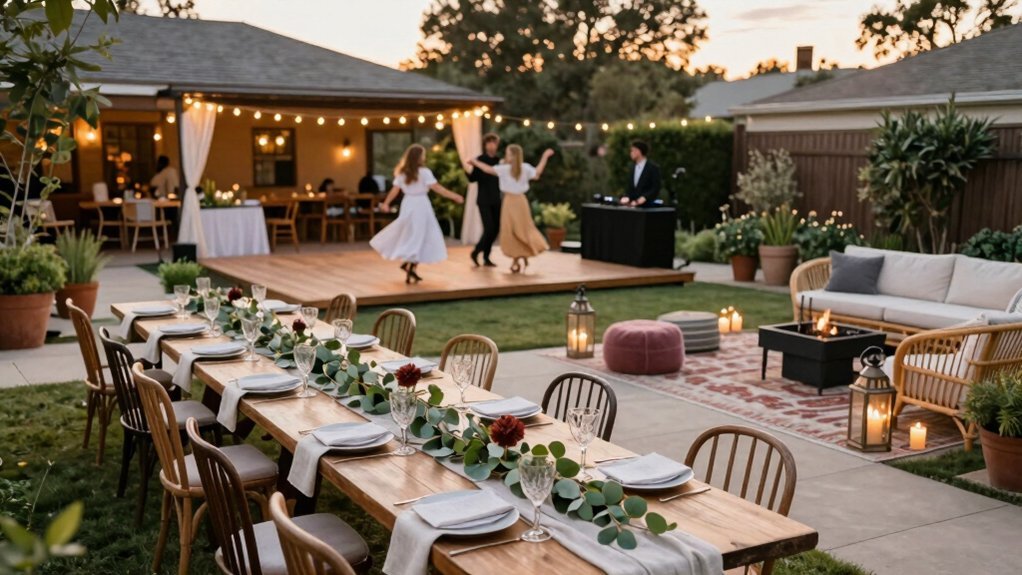
Creating distinct zones in your backyard reception will transform a simple space into a thoughtfully designed celebration venue. You’ll want to establish separate areas for dining, dancing, and relaxing, each with clear visual cues like furniture groupings or different flooring materials to guide guests naturally. Strategic placement ensures better traffic flow and prevents the dance floor’s energy from disrupting quieter conversation areas, making everyone’s experience more enjoyable.
Space Division Matters
Why do the most memorable backyard receptions feel so effortlessly organized? It’s because they’ve mastered the art of space division. By creating distinct zones for dining, dancing, and relaxing, you’ll improve flow and guest comfort while preventing bottlenecks.
Visually separate each area through strategic furniture placement—formal tables for dining, comfortable couches for lounging, and open space for dancing. Guide guests between zones with subtle lighting cues and clear signage. Position your dance floor away from food stations to minimize disruption, but keep restrooms easily accessible from all areas.
Don’t forget to assign specific staff to each zone who can maintain order without disturbing the overall experience. With thoughtful space division, your backyard reception will feel intentional rather than chaotic—a gift both you and your guests will appreciate.
Flow Between Areas
How exactly do you transform a simple backyard into an event venue with perfect circulation? Start by establishing distinct zones that guide your guests naturally through the space while preventing bottlenecks and cross-traffic issues.
- Create clear visual transitions between areas using rugs, lighting changes, or decorative elements that signal when guests are moving from dining to dancing zones
- Position your dance floor strategically—away from dining tables but close to the tented reception area to contain noise and heat
- Arrange seating clusters at varying distances from food stations to prevent buffet congestion while encouraging mingling
- Install subtle dividers like decorative screens or low hedges that maintain sightlines while defining different functional areas
These thoughtful divisions will keep conversation areas peaceful while letting the dance floor buzz with energy.
Designated Purpose Areas
Once you’ve mapped your flow patterns, your next step is designing dedicated zones that serve distinct functions. Create separate areas for dining, dancing, and lounging to enhance guest comfort and improve traffic flow throughout your backyard reception.
Visually define each zone using different furniture styles and textures—formal tables for dining, comfortable sofas for relaxation areas, and a clear dance floor space. Position your dance floor near the music source but away from dining conversations to prevent noise disruption.
Guide guests between these zones with subtle cues like strategically placed signs or zone-specific lighting colors. When positioning your areas, consider practical elements: ensure dining tables sit on stable ground, place dance floors on level surfaces, and position lounging areas where shade from trees or umbrellas provides comfort during daytime celebrations.
Design Lighting That Transforms as Day Becomes Night
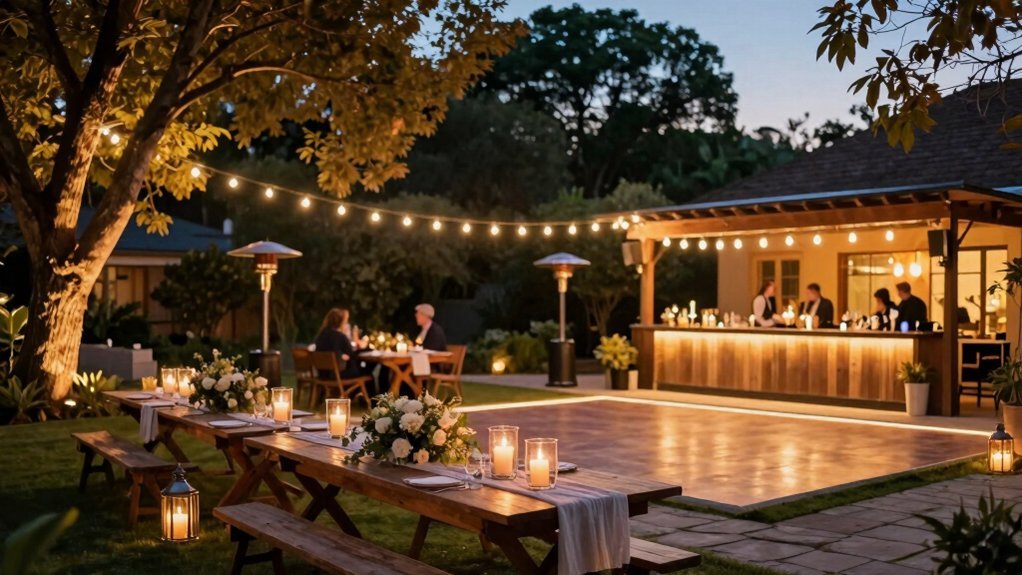
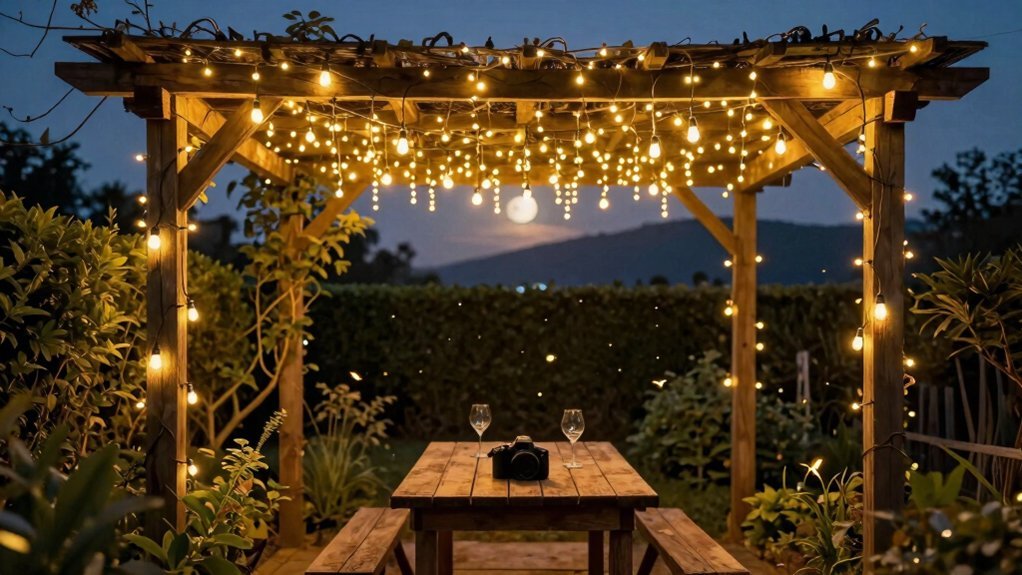
As twilight descends on your backyard reception, thoughtfully designed lighting transforms an ordinary space into a magical evening venue. Create a layered lighting plan that evolves with your celebration’s timeline—brighter during dinner, softer during dancing.
String lights draped across tent ceilings or between trees provide a romantic glow that enhances photos when natural light fades. For depth and ambiance, consider:
- Hurricane vases with candles at dining tables
- Paper lanterns hanging at varying heights
- Pathway lights directing guests to key areas
- Uplighting on trees or architectural features
Don’t forget weather contingencies—have battery-powered alternatives ready in case of power issues. As evening progresses, transition to twinkling, ambient lighting during dancing and dessert to create an intimate atmosphere your guests won’t forget.
Set Up Practical Restroom Solutions for Any Guest Count
While lighting creates the atmosphere for your special day, practical restroom accommodations ensure guest comfort throughout your celebration. For gatherings exceeding 20 guests, invest in upscale portable facilities stocked with extras like breath mints and Band-Aids to minimize indoor bathroom traffic.
Position restrooms strategically—accessible to activity areas yet discreetly placed away from main traffic flow with clear directional signage. Stock essentials including toilet paper, hand sanitizer, soap, and towels in each unit, plus small touch-up kits for guest convenience.
Coordinate with your caterer and planner about service access, water needs, and waste removal scheduling to prevent logistical issues. Always prepare for unexpected weather or power problems with sheltered locations or generator backup to keep facilities functioning smoothly throughout your event.
Organize a Catering Plan That Works Without a Full Kitchen
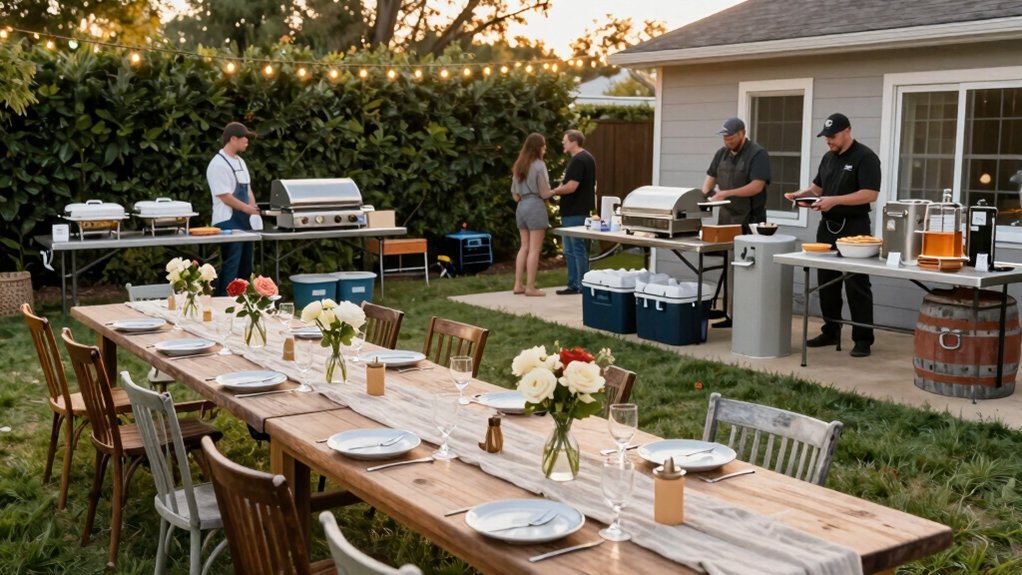
When planning your backyard wedding reception, you’ll need a specialized catering strategy that doesn’t rely on a traditional kitchen setup. Consider hiring professional caterers or food trucks who can prepare meals off-site and manage service flow through strategically placed prep and serving stations. Ensure your outdoor food safety by coordinating power needs, selecting weather-appropriate menu items, and scheduling meal service to complement your reception’s natural movement patterns.
Catering Solutions
How can you serve a memorable meal without a full kitchen? Your backyard reception can still feature excellent food with the right planning. Instead of attempting on-site cooking, bring in professionals equipped to handle outdoor food service safely.
- Hire caterers or food trucks that align with your reception theme and can work within your space constraints
- Coordinate power needs with your venue and DJ, ensuring separate circuits for food service equipment
- Opt for buffet or family-style service rather than plated meals to simplify logistics and reduce staff requirements
- Schedule food service strategically to avoid peak heat times and synchronize with guest arrival patterns
Don’t forget to designate a staging area for food prep and serving, and consider portable restroom trailers if indoor facilities aren’t available.
Setup and Flow
Creating a seamless flow for your backyard reception catering isn’t just about the menu—it’s about logistics. Position a dedicated prep area adjacent to your reception space with clear access points for caterers and guests.
| Planning Element | Implementation Strategy |
|---|---|
| Food Production | Partner with licensed caterers for off-site cooking |
| Service Stations | Establish clearly labeled stations to prevent crowding |
| Power Sources | Secure reliable generator or outlet access for equipment |
| Weather Contingency | Design covered areas for food protection |
Work with your caterer to sequence food delivery and service times strategically. You’ll need appropriate equipment—warming trays, portable coolers, and serving stations—positioned to maintain food safety. Map out guest movement patterns before finalizing your layout to ensure the buffet or food stations don’t create bottlenecks in high-traffic areas.
Outdoor Food Safety
The challenge of outdoor food safety demands meticulous planning when you don’t have a traditional kitchen at your disposal. Hire a licensed caterer or food truck instead of attempting on-site cooking, which reduces fire hazards and ensures proper food handling practices.
Create a comprehensive strategy that addresses:
- Temperature control – Keep hot foods above 140°F and cold foods below 40°F during transport and service
- Designated preparation areas – Set up cleanable surfaces with handwashing stations and separate zones for different food types
- Strategic scheduling – Time food deliveries to coincide with guest arrivals and meal service
- Environmental management – Implement pest control measures and establish a waste management system with covered bins
This structured approach will safeguard your guests’ health while allowing you to focus on hosting a memorable reception.
Craft a Sound System Strategy That Won’t Disturb Neighbors
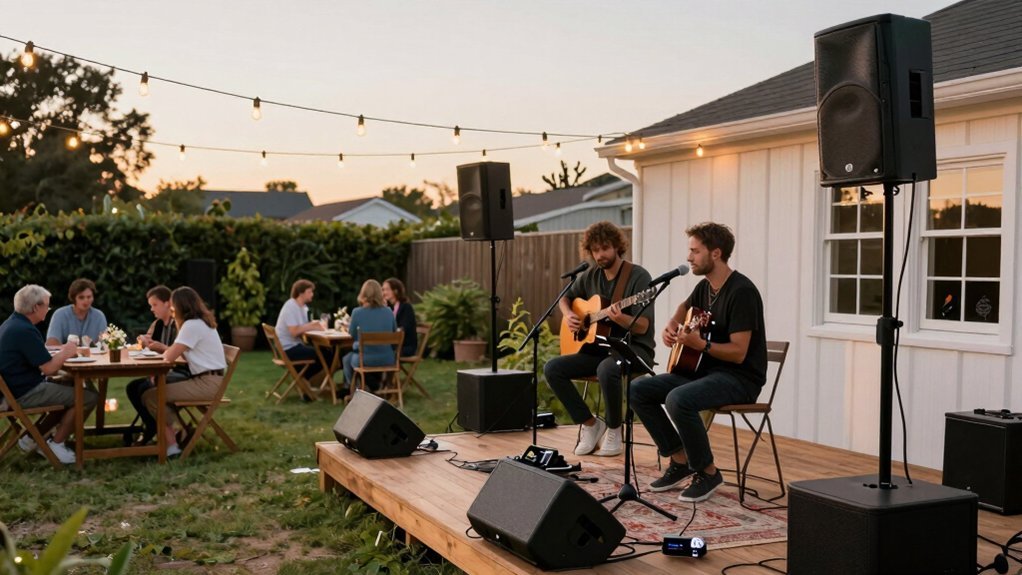
When planning your backyard reception, sound management becomes one of the most essential yet overlooked aspects that can make or break neighborhood relations. Keep average sound levels under 65 dB at your property line during dinner and schedule louder moments after 9 pm.
Position speakers directionally toward your yard’s interior using a minimal setup of 2-3 powered units. Work with your DJ to utilize closed-back, efficient systems and conduct gradual sound checks.
| Time Period | Sound Strategy |
|---|---|
| Setup | Gentle testing |
| Dinner | Under 60 dB |
| Speeches | Focused audio |
| Toasts | After 9 pm |
| Late night | Quiet background music |
Notify neighbors about your schedule in advance, provide a contact person for adjustments, and consider offering small goodwill gestures.
Incorporate Natural Elements Into Your Décor Scheme
Beyond sound management, your backyard’s natural beauty offers an untapped canvas for reception décor that both saves money and creates an authentic atmosphere. Let your yard’s inherent features become the stars of your celebration instead of competing with them.
- Transform trees and greenery into natural backdrops for your ceremony and photos, eliminating the need for expensive artificial structures
- Select a color palette that complements the landscape’s existing tones—earthy browns, rich greens, and soft neutrals work beautifully with minimal additional decor
- Enhance natural focal points with strategic DIY elements like handcrafted signage, lanterns, or string lights that amplify the outdoor setting
- Use the landscape to guide your layout—place seating in shaded areas and utilize existing pathways to create natural flow for guests
Establish a Guest Parking Plan That Respects Your Neighborhood
Hosting a backyard reception doesn’t end at your property line—your neighborhood becomes an extension of your venue when guests arrive. Create a designated parking area with clear signage and cones to establish a smooth one-way traffic flow.
Your home celebration footprint extends beyond your yard. Thoughtful parking management creates harmony with neighbors and eases guest arrival.
Notify neighbors 1-2 months ahead with your event schedule, parking plan, and contact information for day-of concerns. Send guests written parking instructions including street etiquette and any permit requirements.
Reserve prime spaces for VIPs, vendors, and service vehicles to keep loading zones clear. Consider offering shuttle service or rideshare incentives from a central pickup point to minimize street congestion.
Your thoughtfulness about parking logistics won’t just prevent neighborhood tension—it’ll ensure guests arrive relaxed and ready to celebrate your special day.
Delegate Day-Of Logistics to Trusted Friends or Coordinators
You’ll need a reliable team handling day-of logistics so you can fully enjoy your backyard celebration without constant interruptions. Assign specific roles to trusted friends or hire a coordinator who can oversee vendor arrivals, manage the timeline, and make quick decisions when unexpected situations arise. Establish a clear communication system with your team, including sharing a detailed run-of-show document and designating point people for different aspects of your reception.
Assign Clear Roles
When planning a backyard reception, managing all the moving parts yourself can quickly become overwhelming. Assigning specific roles with clear checklists ensures accountability and prevents important details from falling through the cracks.
Create a team of trusted helpers and give each person distinct responsibilities:
- Catering coordinator – Manages food timing, serving stations, and communicates with kitchen staff
- Entertainment liaison – Handles music cues, speech coordination, and keeps activities on schedule
- Guest experience manager – Oversees seating, parking assistance, and answers guest questions
- Vendor point person – Coordinates deliveries, setup requirements, and serves as the main contact for all service providers
Provide each coordinator with a detailed checklist and establish a group communication channel for quick updates throughout the event.
Establish Communication System
Once you’ve assigned key roles to your team members, establishing a robust communication system guarantees everyone stays coordinated during your backyard reception. Create a shared, real-time checklist with assigned owners for timeline milestones, power requirements, seating changes, and rain contingency plans.
Designate a single point of contact (SPOC) for each major area—catering, rentals, entertainment, and restrooms—to streamline decision-making and reduce confusion. Schedule brief 15-20 minute huddles before both ceremony and reception to review roles and emergency protocols.
Ensure your communication infrastructure works by distributing printed schedules, venue maps, and documented contact information to all staff and helpers. Consider using group chats, radios, or dedicated apps to maintain instant communication throughout the event, especially during critical vendor transitions.
Frequently Asked Questions
What Is the 50 30 20 Rule for Weddings?
You’ll allocate 50% of your wedding budget to essentials, 30% to non-essentials like décor and experiences, and 20% to savings or contingency funds for unexpected costs.
What Is the 30 5 Rule for Weddings?
The 30-5 rule allocates 30 minutes for major wedding segments with 5-minute buffers between transition. You’ll keep your timeline flowing smoothly, minimize guest downtime, and maintain engagement throughout your reception.
Is $5000 a Good Budget for a Wedding?
$5000 can work for a backyard wedding if you’re careful with priorities. You’ll need to limit your guest list, embrace DIY projects, and focus on essentials rather than luxuries.
How Many People Should You Have at a Backyard Wedding?
You’ll want 20-50 guests for a comfortable backyard wedding, though you can stretch to 60-100 with tenting. Consider your yard size, seating options, and essential amenities when deciding.