Your seasonal wedding planning checklist should start with date selection based on typical weather patterns, followed by a thorough property assessment. Create detailed contingency plans for rain or heat waves, select season-appropriate décor and menu items, and choose comfortable attire that suits your climate. Book vendors experienced with outdoor celebrations within the right timeline (9-12 months for peak seasons). Don’t forget climate-specific comfort elements—your perfectly-timed backyard celebration awaits in the details.
Mapping Your Seasonal Backyard Wedding Vision
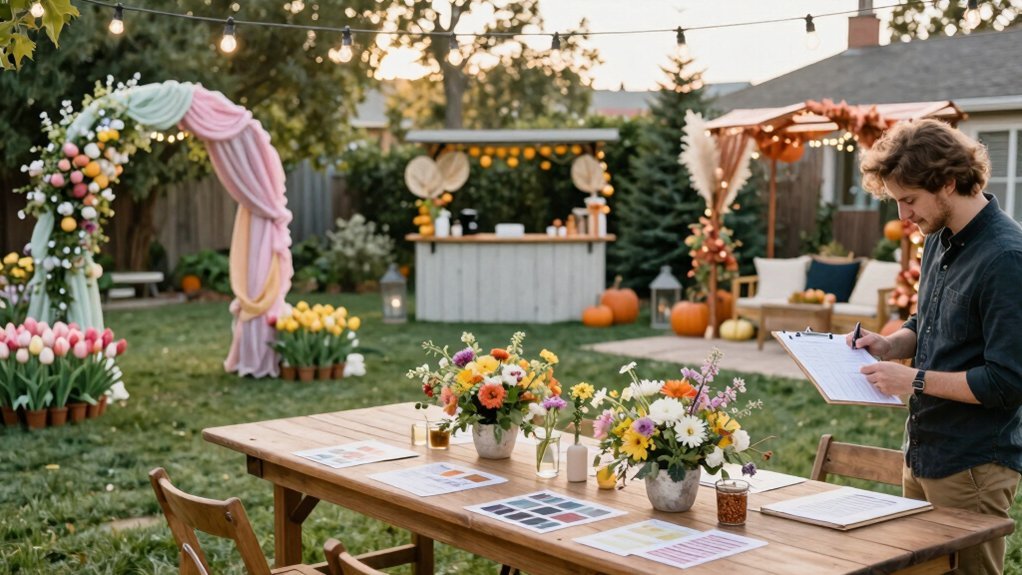
Why settle for a conventional venue when your own backyard offers a personalized canvas for your special day? Start by selecting a date that aligns with your area’s typical weather patterns, always including a contingency plan for unexpected rain or heat waves.
Let nature guide your design choices by embracing seasonal elements—spring’s lush greenery, autumn’s warm tones, or summer’s coastal blues. Identify your property’s natural features like garden arches or mature trees that can serve as stunning ceremony backdrops while reducing rental costs.
Prioritize practical considerations early: adequate restroom facilities, guest parking, reliable power sources, and appropriate weather protection. Create a trusted vendor list with professionals experienced in outdoor settings to ensure your backyard transformation comes together seamlessly.
Assessing Your Outdoor Space for Each Season
How will your backyard transform throughout the changing seasons before your wedding day arrives? Understanding your space’s unique characteristics during each season ensures your celebration adapts perfectly to nature’s rhythm.
- Spring preparations require evaluating tree canopy coverage, soil drainage capacity, and sprinkler systems to manage increased rainfall and moisture.
- Summer planning means tracking sun patterns throughout the day and installing shade solutions like pergolas or canopies to keep guests comfortable in peak-heat areas.
- Fall considerations include establishing efficient leaf removal processes, assessing fire risks, and ensuring gutters can handle heavy leaf fall.
- Winter readiness demands checking outdoor furniture durability, installing non-slip pathway surfaces, and enhancing lighting for shorter days and potential frost conditions.
Create a year-round maintenance calendar that aligns with local climate patterns to maintain both safety and aesthetics.
Weather Contingency Plans for Backyard Celebrations
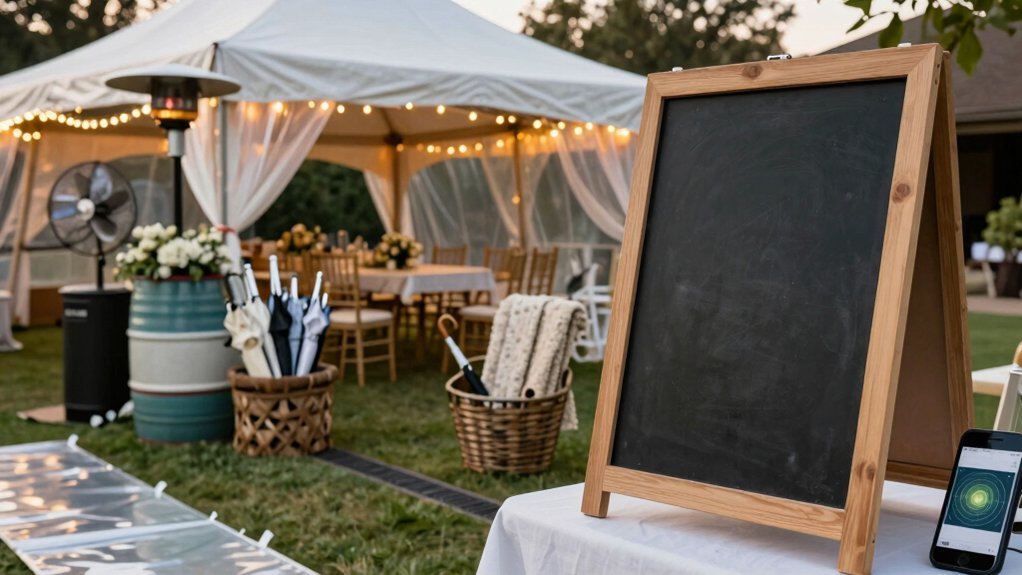
When planning a backyard wedding, secure proper tent coverage with sidewalls that can withstand expected weather conditions for your chosen season.
Communicate your rain plan clearly to guests and vendors through your invitation suite or wedding website, including details about possible timing changes or venue alternatives.
Research historical climate patterns for your area to identify the most favorable weather window, then prepare season-specific safeguards like drainage solutions for spring showers or shade structures for summer heat.
Tent and Canopy Options
The unpredictable nature of seasons demands thoughtful weather contingency planning for your backyard wedding celebration. When selecting your protective covering, consider both functionality and aesthetics to create a seamless experience regardless of weather conditions.
- Choose between pole tents, frame tents, or clear-top canopies based on your venue’s requirements and ensure they’re professionally rated for wind and rain resistance
- Calculate space needs by allowing 10-15 square feet per guest, plus additional room for dance floors, buffet stations, and entertainment areas
- Incorporate weatherproofing elements like sidewalls with windows for cold days, heating/cooling options, and appropriate flooring to protect against mud
- Verify all necessary permits, fire safety compliance, and emergency exit plans before finalizing your tent installation
Rain Date Communication
Weather often becomes the invisible guest at every outdoor celebration, so establishing clear rain date communication is essential for backyard weddings. Create a dedicated section on your wedding website outlining your contingency plans, including potential rain dates within one to two weeks of your original date.
In your invitations, clearly state your rain policy and direct guests to your website for updates. Include details about transportation changes, parking adjustments, and appropriate attire for wet conditions.
Confirm flexibility with all vendors regarding arrival times and setup routes for inclement weather. Specify whether you’ll switch to an indoor venue or reschedule entirely, and outline any refund policies. This transparency allows guests to prepare accordingly and reduces your stress when faced with unpredictable weather forecasts.
Season-Specific Risk Mitigation
Despite careful planning, each season brings unique weather challenges that can impact your backyard wedding celebration. Creating season-specific contingency plans will help you confidently navigate these risks while protecting your special day.
- Summer weddings: Prepare for heat waves with misting stations, shaded seating areas, and timed outdoor activities during cooler morning or evening hours
- Fall celebrations: Address unpredictable temperature drops with portable heaters, warm beverage stations, and weatherproofed tent structures
- Spring gatherings: Combat rain and mud with elevated flooring systems, strategic drainage planning, and dedicated umbrella stations
- Winter events: Install industrial heaters, wind barriers, and snow removal services on standby
Allocate 5-15% of your décor budget specifically for weather contingencies and assign a trusted coordinator to monitor forecasts and activate your plan when needed. Remember: the right preparation transforms weather challenges into memorable moments.
Seasonal Décor and Landscaping Timeline
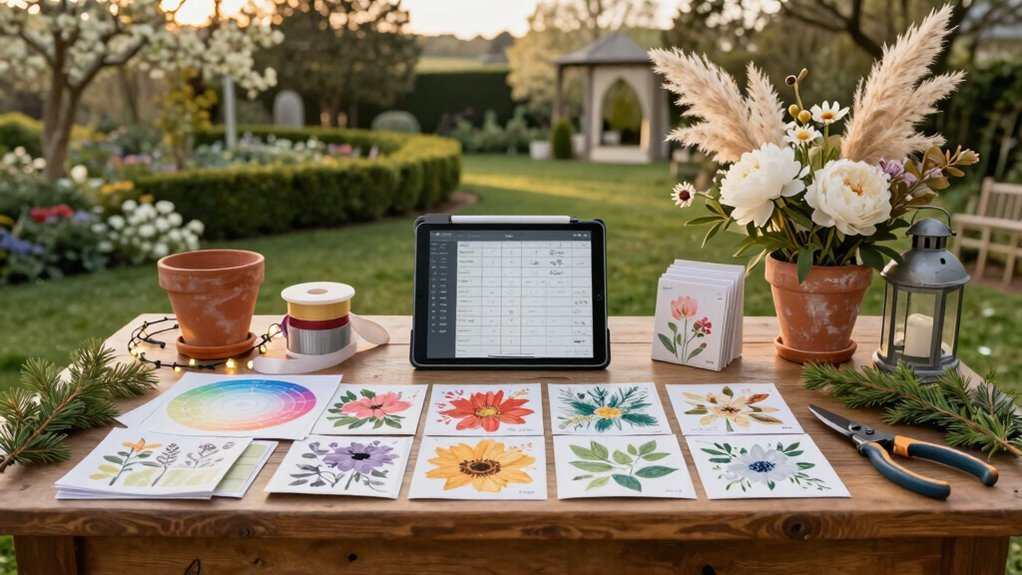
Creating the perfect backdrop for your wedding requires careful timing and seasonal awareness. You’ll want to coordinate with venue staff about three to four weeks before your celebration to ensure fresh arrangements and stable infrastructure.
| Season | Key Décor Elements |
|---|---|
| Spring | Fresh blooms like tulips and peonies with outdoor-ready lighting to highlight blooming landscapes |
| Summer | Heat-friendly décor with shade solutions, misting fans, and drought-tolerant plants |
| Fall | Warm tones (amber, burgundy, copper) with pumpkins or gourds and wind-resistant seating |
| Winter | Evergreen greenery, candlelit centerpieces, and heated, slip-resistant walkways |
Each season offers unique décor opportunities that can enhance your wedding’s ambiance. Plan accordingly to maximize your venue’s natural beauty while preparing for seasonal conditions.
Choosing Season-Appropriate Menus and Refreshments
Your wedding menu should reflect not only your taste preferences but also the seasonality of ingredients available during your celebration date. Each season offers unique culinary opportunities that can enhance your guests’ experience.
- Spring: Highlight fresh asparagus, citrus, herbs, and early berries; pair with sparkling wines or rosé to complement the sense of renewal
- Summer: Feature grilled dishes, fresh salads, and cooling sorbets alongside revitalizing beverages like iced tea or chilled white wines
- Fall: Showcase harvest bounty with pumpkin, apples, mushrooms, and heartier proteins; complement with spiced Chardonnay or Pinot Noir
- Winter: Embrace comfort with roasted meats, root vegetables, and festive desserts paired with robust reds or warming drinks like port
Don’t forget weather considerations—cooling stations for summer and hot beverages for winter celebrations.
Selecting Attire and Comfort Items for Your Climate
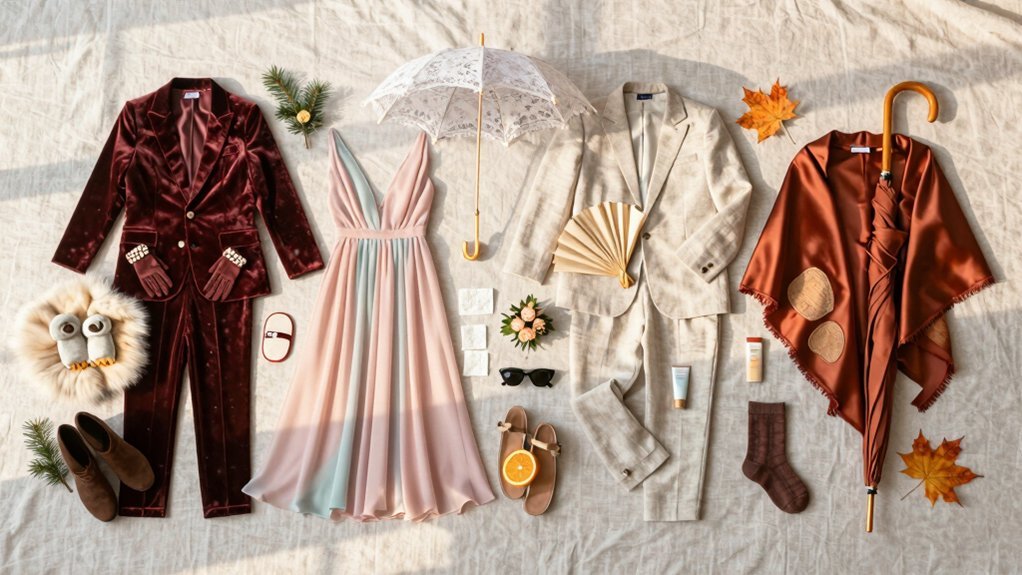
Just as seasonal ingredients enhance your menu, the right attire ensures everyone stays comfortable while looking their best. Choose fabrics that complement your season—lightweight silk or chiffon for summer celebrations, heavier satin or velvet for winter weddings.
Don’t forget practical footwear considerations, including cushioned insoles for lengthy ceremonies or closed-toe options for colder venues. Align your wedding party’s attire with venue conditions by selecting breathable layers for outdoor summer events.
Include climate-specific accessories like bridal wraps for cool evenings or parasols for sun protection. Remember to schedule alterations with buffer time for seasonal adjustments—fabric behavior changes with temperature and humidity, potentially affecting fit.
These thoughtful choices will keep you and your guests comfortable throughout your special day, regardless of what Mother Nature brings.
Seasonal Vendor Considerations and Booking Windows
When should you start booking vendors for your seasonal celebration? Your timeline varies significantly based on your chosen season and day of the week. For peak seasons, don’t delay!
- Spring and winter weddings require 9-12 months advance booking for photographers, florists, and venues, with spring focusing on seasonal bloom availability
- Summer celebrations need 6-9 months for caterers and rental companies to secure inventory during their busiest period
- Fall weddings should lock in key vendors 8-10 months ahead, especially before holiday weekends fill calendars
- Consider off-peak options like weekdays or Sundays across any season for potential 6-8 month booking windows with better pricing
Remember that each season brings unique vendor considerations—from winter heating solutions to summer outdoor contingencies—that should factor into your planning timeline.
Guest Comfort Elements for Your Backyard Setting
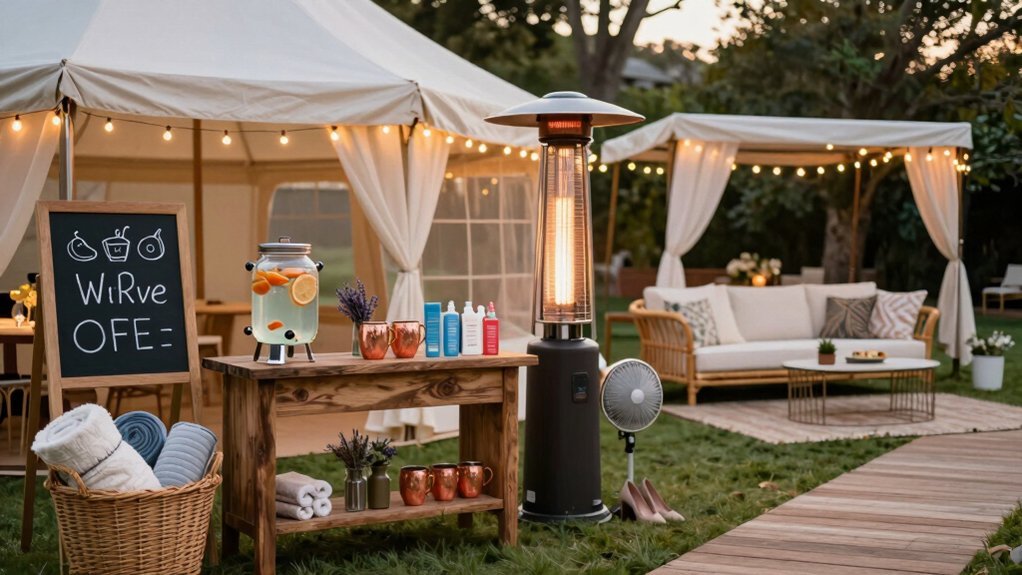
Once you’ve secured the perfect seasonal vendors, it’s time to focus on creating an environment where your guests will feel truly comfortable in your backyard setting. Your outdoor venue requires thoughtful planning to ensure everyone enjoys your special day regardless of weather conditions or personal needs.
| Comfort Element | Implementation Tips |
|---|---|
| Shade & Cooling | Set up tents, fans, and misting stations to combat heat |
| Hydration | Position water stations throughout, offering infused and sparkling options |
| Seating | Arrange comfortable chairs with legroom; accessible seating near exits |
| Quiet Areas | Create a shaded retreat space for guests needing a break |
Don’t forget restroom accessibility—ensure they’re well-signed, fully stocked with essentials, and equipped with ample hand sanitizer and toilet paper to last throughout your celebration.
Day-Of Timeline Adjustments Based on Seasonal Factors
Crafting the perfect wedding day timeline requires careful consideration of the season’s unique characteristics and challenges. You’ll need to adapt your schedule to maximize comfort and photographic opportunities while minimizing seasonal disruptions.
Every season tells a different wedding story—your timeline should be its most thoughtful narrator.
- For summer weddings, schedule photography during cooler morning hours and build in hydration breaks to keep your bridal party comfortable
- Winter celebrations demand extra buffer time between ceremony and reception to account for potential travel delays, plus clear communication about venue heating
- Autumn events should leverage the “golden hour” for ceremonies and photos, with adjusted lighting for earlier sunsets
- Spring timelines work best with earlier arrival windows to avoid afternoon rain, with mood lighting ready for overcast conditions
Don’t forget season-specific vendor bookings—summer entertainment requires longer lead times, while rain-prone months need confirmed indoor backup spaces.
Frequently Asked Questions
How Do Seasonal Color Palettes Affect Wedding Photography?
Seasonal color palettes enhance your wedding photos by creating harmony with the environment. You’ll find autumn’s warm tones, winter’s cool hues, spring’s pastels, and summer’s vibrant colors elevate your photography.
Should We Purchase Wedding Insurance for Specific Seasonal Risks?
Yes, you should purchase wedding insurance for seasonal risks like winter storms, summer hurricanes, or spring flooding. It’ll protect your investment if weather disrupts your special day.
How Can We Incorporate Cultural Seasonal Traditions?
Research your heritage’s seasonal customs and incorporate them into your ceremony, menu, and décor. You’ll honor family traditions while creating meaningful memories that reflect both your cultures and the season’s essence.
What Seasonal Factors Affect Wedding Videography Sound Quality?
You’ll face wind noise in spring, buzzing insects in summer, rustling leaves in fall, and echo from snow in winter. Rain and outdoor crowds affect audio clarity year-round.
How Do Different Seasons Impact Transportation Logistics?
You’ll face snow delays in winter, unpredictable rain in spring, heat-related traffic in summer, and early darkness in fall. Plan alternate routes and buffer time accordingly.