Your wedding needs a secured perimeter with monitored entry points, a robust guest verification system, and protected areas for gifts and valuables. Develop weather contingencies with alternative plans for outdoor events. Coordinate with neighbors on access points and establish communication channels for security concerns. Install proper lighting and designate authorized personnel for gift handling. These foundational measures will transform your special day into a safe, worry-free celebration.
Assessing Your Backyard Perimeter for Secure Event Boundaries

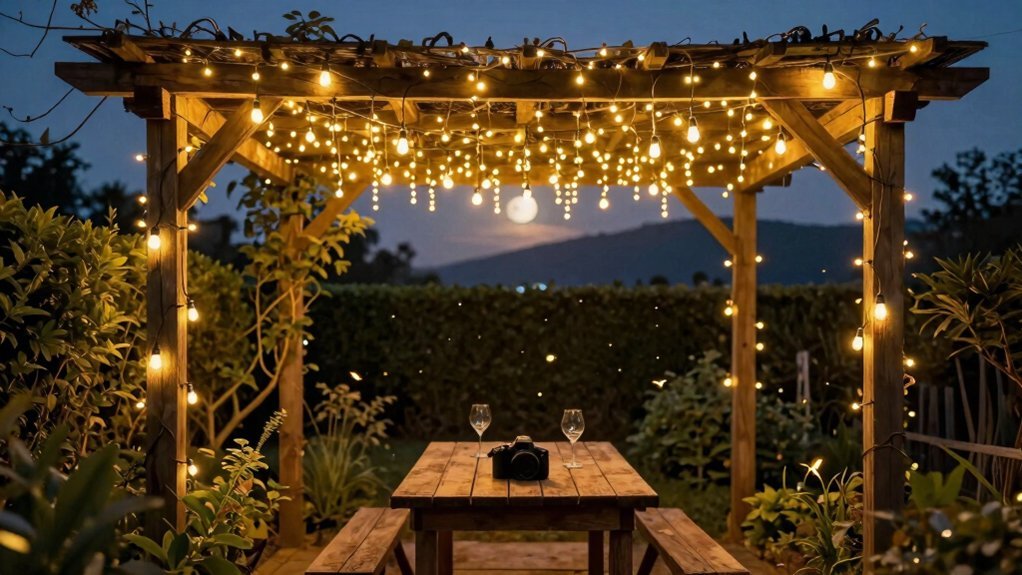
When planning a backyard wedding, how secure is your outdoor space? Start by inspecting your perimeter for clearly marked emergency exits that remain unobstructed throughout your event. Ensure outdoor lighting covers all potential gaps and entry points.
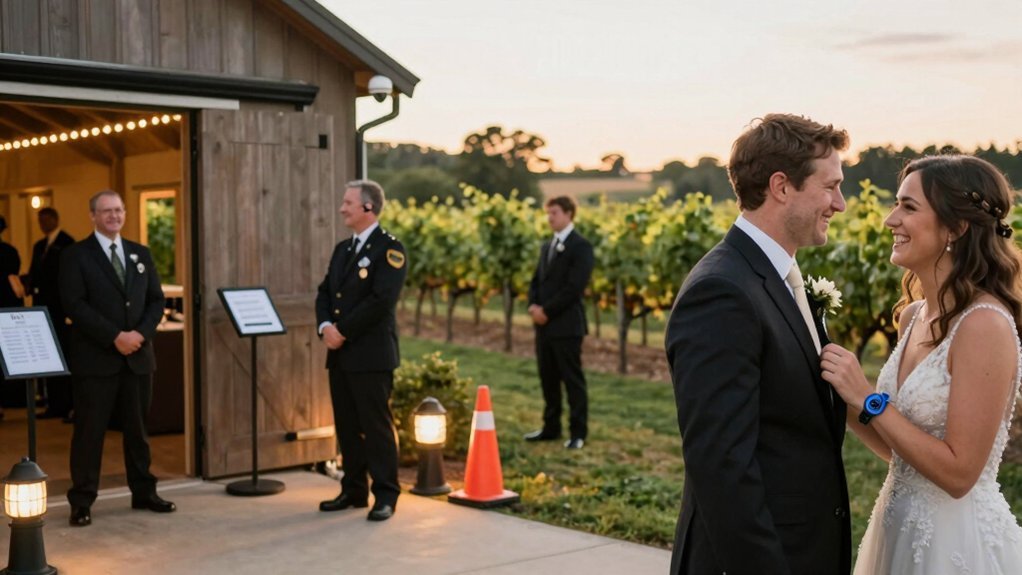
Document all access points including gates, doors, and fence openings, then designate which will have monitored entry controls to prevent gate-crashers. Consider installing visible security measures like cameras or portable lighting along boundaries to deter theft and trespassing.
Define clear crowd flow boundaries that keep guests away from restricted areas such as storage sheds or utility zones. Finally, create a simple perimeter contingency plan that outlines staff responsibilities, communication methods, and emergency contact points specific to your backyard setup.
Creating Guest Management Systems for Private Property Events
How effectively can you control who enters your backyard wedding? Start by establishing a comprehensive verification system with RSVPs and unique access codes for invited guests. Designate a single welcome point with a clearly marked entry area and staffed check-in station to prevent uninvited arrivals.
Implement a digital guest list with mobile check-ins that provide real-time updates if someone arrives late or is on a restricted list. Your system should include visual cues that guide guests to check in properly before entering your celebration space.
Create household-based seating and flow plans to minimize crowding and maintain appropriate distancing where needed. Don’t forget to designate a secure, monitored area for gifts and valuables with access limited to authorized staff only.
Protecting Valuables and Gift Displays in Outdoor Settings
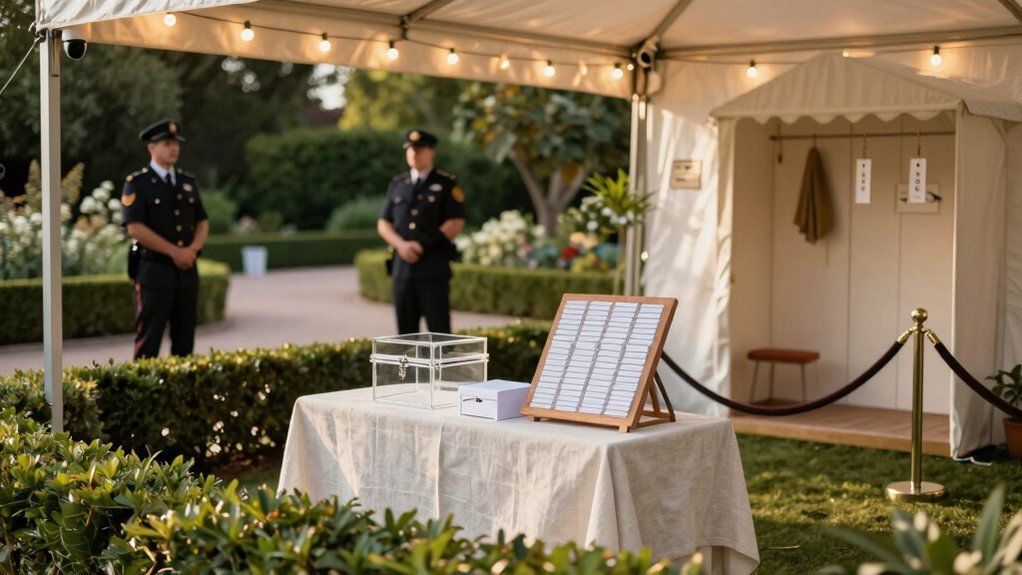
Why do outdoor weddings require extra vigilance for gift security? Open spaces create more access points for potential theft, and weather conditions can complicate monitoring efforts.
Designate a trusted friend or family member to oversee your gift table throughout the reception. They should store cash envelopes in a locked container as they arrive. Consider using digital gift registries whenever possible to minimize physical items requiring protection.
Place your gift display in a secure, controlled area with limited access. The supervision should be continuous, with clear documentation of any irregularities. Establish specific procedures for gift removal, including who’s authorized to handle items and where they’ll be stored between ceremony and reception.
For maximum security, implement a sign-out system when gifts are transported from your venue to their final destination.
Weather Contingency Planning for Backyard Celebrations
Backyard weddings offer intimate charm but remain vulnerable to nature’s unpredictability. Develop a robust Plan B with weatherproof alternatives like sturdy tents with sidewalls or an indoor backup location that can be activated within minutes of adverse conditions.
Monitor forecasts 48-72 hours ahead and track day-of updates to strategically shift timing—perhaps moving your ceremony to cooler hours or delaying cocktail service during passing showers.
Beyond your main venue, install shade canopies, rain tarps, or portable temperature control equipment to maintain guest comfort as conditions change. Secure all décor and equipment by properly anchoring tents and using weighted installations that can withstand gusts.
Finally, clearly communicate your contingency logistics to guests through invitations or your wedding website, including directions to alternate spaces and potential timing adjustments.
Coordinating With Neighbors on Security and Access Controls
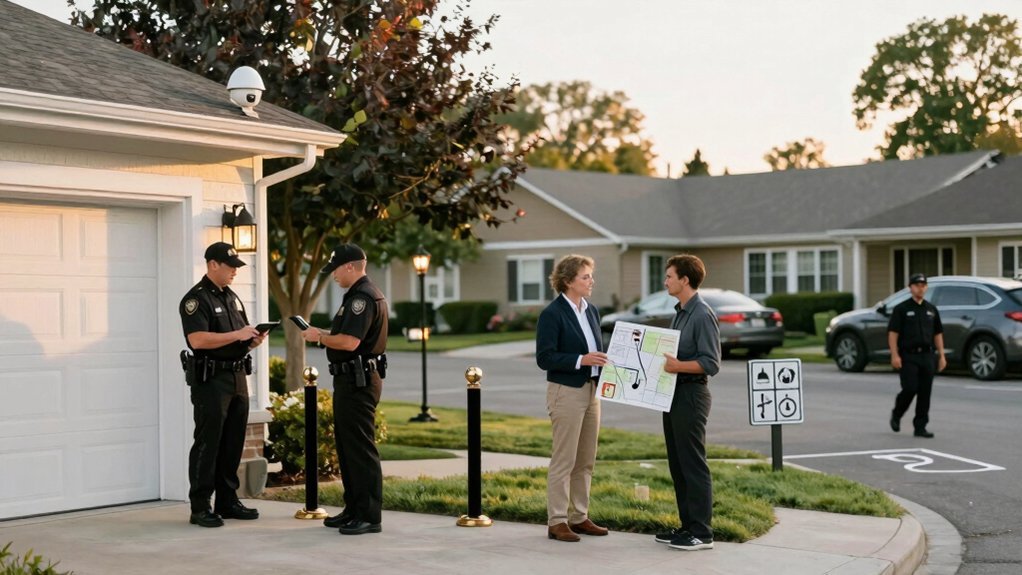
When planning a wedding in residential areas, your neighbors become essential security partners rather than mere bystanders. Coordinate with them to establish agreed access points that prevent guest overflow onto their properties during busy arrival times.
Create and share a contact list and emergency plan with nearby residents so they know exactly who to call with security concerns or noise complaints. Consider hosting brief pre-wedding meetings to align on event timing, parking arrangements, and quiet hours.
Install visible but discreet access controls at perimeter gates to prevent unauthorized entry while maintaining neighborhood comfort. A shared communication channel—whether text or app-based—enables real-time updates about gate closures, security incidents, or weather changes that might affect your neighbors. This collaborative approach transforms potential opposition into valuable security allies.
Frequently Asked Questions
Do You Need a Security Guard at Your Wedding?
You don’t always need a security guard, but consider one for large weddings, high-profile events, venues with open access, or when displaying valuable gifts and décor.
What Is the 50 30 20 Rule for Weddings?
The 50/30/20 rule divides your wedding budget into 50% for venue and essentials, 30% for food and beverages, and 20% for décor, attire, and contingencies. You’ll find it helps prevent overspending.
What Is the 30 5 Rule for Weddings?
The 30/5 rule schedules wedding activities in 30-minute blocks with 5-minute transition buffers. You’ll limit guest movements to no more than 30 people in a 5-minute window to prevent crowding and bottlenecks.
Is $5000 Enough for a Wedding?
$5,000 isn’t typically enough for a complete wedding. You’ll struggle to cover venue, catering, attire, photography, and decorations with this budget in most areas.