
Choose plastic or composite cutting boards for outdoor use as they’re lightweight, weather-resistant, and won’t warp with moisture. Look for foldable or rollable designs that save precious pack space while offering adequate cutting surface. Opt for quick-clean surfaces with reinforced edges that withstand temperature fluctuations and extended exposure to elements. These practical considerations will transform your outdoor food prep experience on your next adventure.
Choosing the Right Material for Durability and Weight
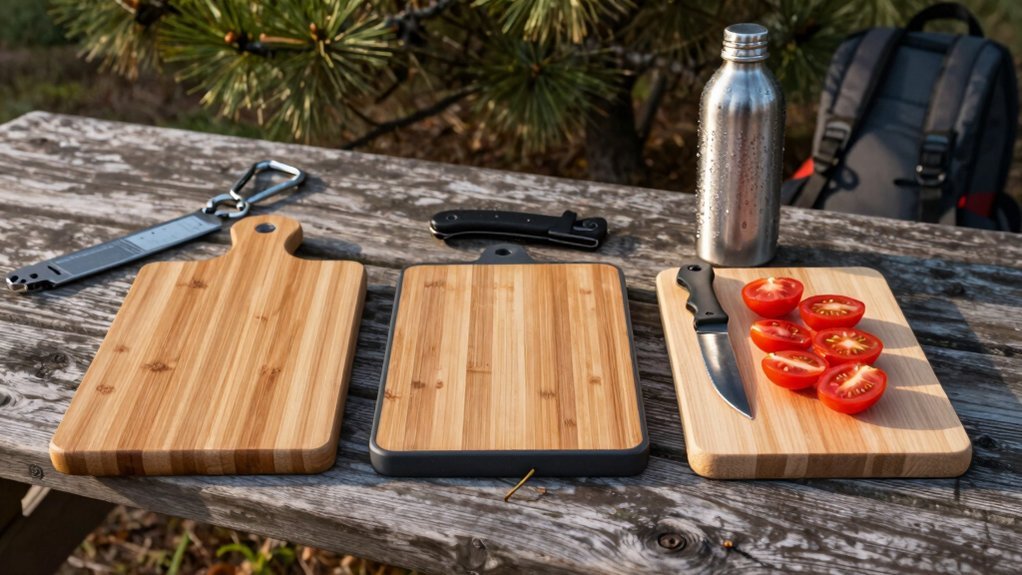
When selecting a portable outdoor cutting board, what material strikes the perfect balance between durability and weight? Plastic boards offer excellent resistance to warping and weather exposure, making them ideal for outdoor adventures. They’re lightweight and practical for transport.
For outdoor prep, plastic cutting boards deliver unmatched durability against elements while keeping your pack light and manageable.
Composite boards like Epicurean provide versatility with good durability while maintaining a pleasant cutting feel—a middle ground between function and performance.
Wood boards deliver superior cutting experience but require indoor storage after use as they’re susceptible to warping from moisture exposure. Skip expensive end grain options; edge grain wood provides better value.
Bamboo presents an affordable alternative but requires more care when exposed to outdoor elements. For the best combination of portability and resilience, plastic or composite materials typically outperform natural options in outdoor settings.
Space-Saving Designs That Maximize Portability
How do you maximize your outdoor cooking space when every inch of pack space matters? Flexible cutting boards offer the perfect solution for space-conscious outdoor chefs. These innovative boards roll or fold to fit into the tightest spaces in your camp box or backpack.
- Rollable designs slip easily into narrow gaps between other camp kitchen gear
- Ultra-thin profiles add minimal weight to your pack while providing ample cutting surface
- Available in multiple sizes to match your specific food prep needs
- Inexpensive plastic options from box stores won’t break your budget
- Foldable models compress to a fraction of their usable size for transport
The space efficiency of flexible cutting boards makes them ideal companions for backpackers and car campers alike who value functionality without sacrificing precious pack space.
Weather-Resistant Features for Outdoor Performance
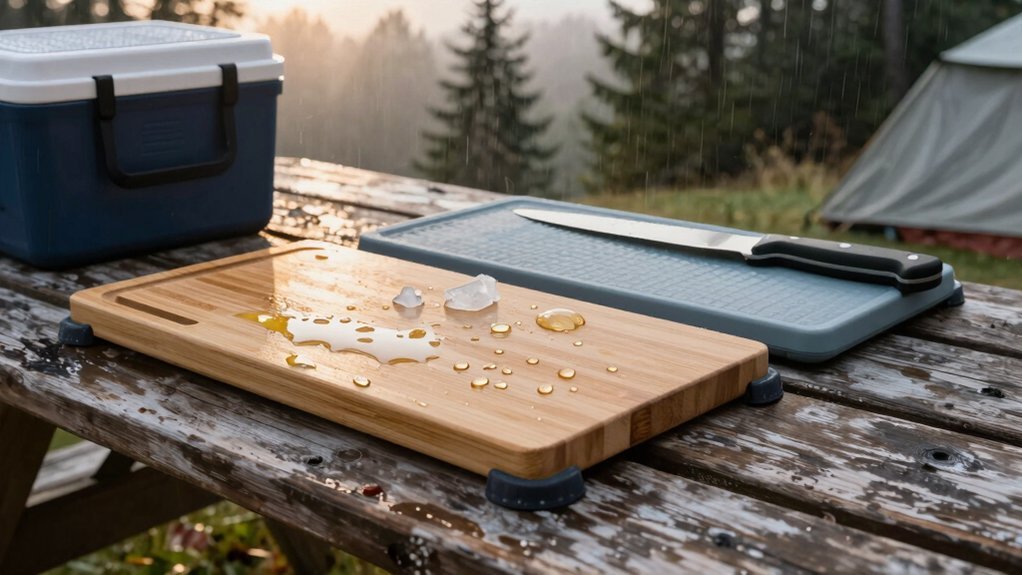
Why settle for indoor cutting boards that warp and deteriorate in outdoor conditions? When selecting a portable cutting board for outdoor use, prioritize weather-resistant materials that maintain their integrity in variable environments.
Plastic cutting boards offer superior resistance to moisture and temperature fluctuations, preventing the warping and splitting common in wood alternatives. Look for boards constructed with high-quality, weather-resistant plastics or durable composites that stand up to sun exposure and occasional rain.
Pay attention to construction quality—boards with superior glues and reinforced edges will outlast cheaper options when exposed to outdoor elements. Choose models with low moisture absorption properties to maintain hygiene standards regardless of weather. Your outdoor cutting surface should clean easily without harboring bacteria, even after extended outdoor use.
Frequently Asked Questions
Why Do You Put a Wet Paper Towel Under a Cutting Board?
You put a wet paper towel under your cutting board to prevent slipping. It creates friction that helps grip both surfaces, dampens vibrations, reduces noise, and gives you better control when cutting.
Can You Leave a Cutting Board Outside?
You shouldn’t leave wood cutting boards outside as they’ll warp and crack. Plastic boards can withstand outdoor elements better, but you’ll still get the longest life by storing all boards indoors.
How to Make Cutting Board Waterproof?
Apply food-grade polyurethane or mineral oil sealer to create a moisture barrier. For end grain boards, use multiple thin coats of potable varnish. Finish with beeswax and reapply every few months.
Do You Need to Oil a Wooden Cutting Board Before Use?
Yes, you should oil a new wooden cutting board before first use. This conditions the wood, prevents moisture absorption, and creates a protective barrier against stains and bacteria.