
To safely handle meat with grilling forks, always use separate utensils for raw and cooked meat—ideally color-coded for easy identification. Never touch cooked food with a fork that’s contacted raw meat without washing it first in hot, soapy water for at least 20 seconds. Choose forks with solid handles and no crevices where bacteria can hide. Clean all surfaces that contacted raw meat thoroughly. The two-fork method is just the beginning of proper meat handling safety.
The Two-Fork Method for Raw and Cooked Meat
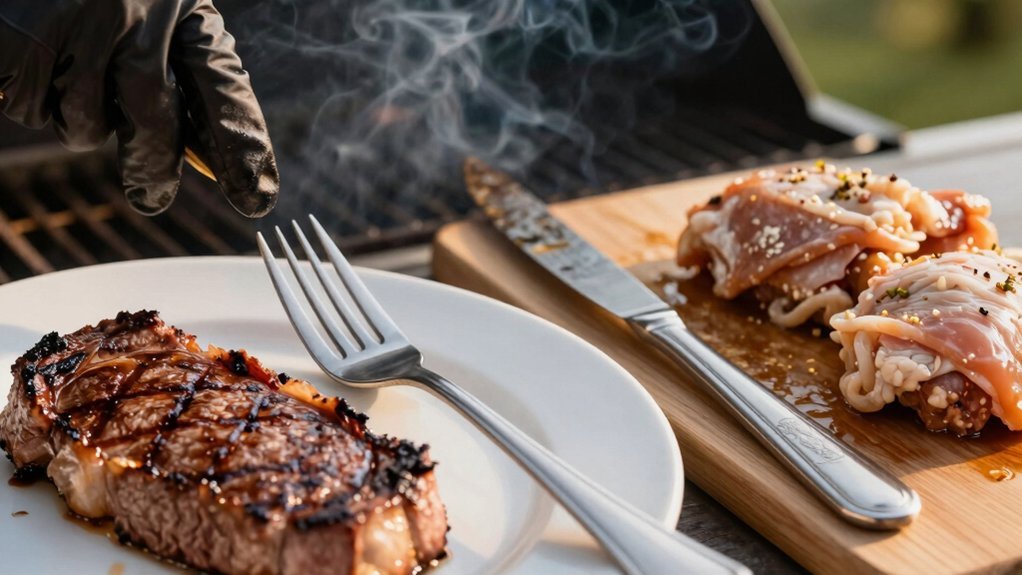
Why risk food poisoning when a simple technique can keep your grilling safe? The Two-Fork Method creates a crucial barrier between raw and cooked meat, preventing dangerous bacteria transfer during your cookout.
You’ll need two distinctly different forks—consider color-coding them (red for raw, green for cooked) to avoid confusion. Use your raw fork exclusively for handling uncooked meat, placing it on a clean surface when you’re ready to flip. Once your meat is cooked, immediately switch to your clean fork for serving and any additional handling.
Never let your raw fork touch cooked portions. If you need to reuse the raw-handling fork, wash it thoroughly first. This simple system maintains a hygienic boundary throughout the entire grilling process, keeping your guests safe while you master the grill.
Proper Cleaning Techniques Between Uses
You’ll need to sanitize your grilling forks thoroughly with hot, soapy water between handling raw and cooked meat to eliminate dangerous bacteria.
Scrub all surfaces of the utensil with soap, paying special attention to tines and crevices where meat particles might hide.
Switching to separate, clean forks for cooked meat offers the safest approach, preventing cross-contamination that could lead to foodborne illness.
Hot Water Sanitizing Method
Whenever handling raw meat with grilling forks, proper cleaning between uses is essential to prevent cross-contamination. Hot water is your first line of defense against harmful bacteria.
Wash your grilling forks thoroughly in hot, soapy water at a minimum temperature of 140°F (60°C) for at least 20 seconds. This temperature effectively breaks down fats and kills many bacteria present in raw meat juices. After washing, rinse your forks with clean water to remove any soap residue.
For drying, either air-dry the utensils or pat them dry with a clean towel. Never use damp towels, as moisture creates an ideal environment for bacterial growth. If you’re handling high-risk meats like poultry, follow this hot water cleaning with a sanitizing step for maximum safety.
Soap Scrubbing Techniques
How effectively you scrub your grilling forks determines whether dangerous bacteria remain on your utensils. Use hot water and dish soap to thoroughly clean all surfaces, paying special attention to crevices where meat juices hide. Focus on the joint areas, gaps between tines, and handle connections where bacteria thrive.
For proper technique, first rinse away visible debris, then apply soap and scrub vigorously. Don’t forget to clean the handle thoroughly, as it’s often overlooked. After scrubbing, rinse completely to remove all soap residue before drying with a clean towel.
When soap isn’t available, an alcohol-based hand sanitizer can temporarily disinfect your forks, but this isn’t a substitute for proper washing. For ultimate safety, consider implementing the two-set rule: separate utensils for raw and cooked meats.
Avoid Cross-Contamination Risks
Cross-contamination represents one of the greatest risks when handling meat with grilling forks. Never use the same fork for both raw and cooked meat without proper cleaning between uses. Once your fork touches raw meat, it’s contaminated with potentially harmful bacteria.
To protect yourself and your guests, switch to a clean fork after handling raw meat, or thoroughly wash your current fork with hot, soapy water before using it on cooked portions. Consider color-coding your utensils—dedicate specific forks for raw handling and others for serving cooked meat.
Don’t forget about surfaces. Clean and sanitize cutting boards, countertops, and trays that contacted raw meat before placing cooked food on them. Always serve cooked meat on fresh, clean plates—never reuse surfaces that held raw meat.
Recognizing When Your Grilling Fork Needs Replacing
Your grilling fork’s condition directly impacts food safety, making it essential to recognize replacement indicators. Watch for rust development or visible cracks, which create perfect hiding spots for harmful bacteria that can transfer to your food.
Loose handles aren’t just inconvenient—they’re dangerous, potentially failing mid-use and causing burns or contamination when handling raw meat.
Rust and Cracks
When should you retire your trusty grilling fork? Pay close attention to signs of deterioration that could compromise food safety. Visible rust spots, pitting, or flaking coating indicate material degradation where bacteria can lurk. If rust persists after scrubbing with a stiff brush, it’s time for a replacement to prevent transferring metallic flavors to your food.
Inspect handles carefully, especially wooden or resin ones. Cracks exceeding 1/8 inch provide perfect hiding spots for moisture and bacteria. A loose-feeling handle is another clear signal that your fork has reached the end of its service life. Don’t overlook bent tines or misalignment, as these structural issues reduce your control and increase cross-contamination risks when handling raw and cooked meats.
Loose Handles
How often do you check your grilling fork’s handle before each use? You should inspect for any wobbling or spinning between the handle and fork head. When a handle moves independently of the tines, it’s time for a replacement—not a workaround.
Loose handles create uneven leverage when flipping heavy cuts like bone-in steaks, substantially increasing your risk of dropping hot meat or suffering burns. Watch for cracks or gaps at the handle-ferrule junction, as these areas can harbor dangerous bacteria.
If you notice your fork handle loosening during grilling or after washing, stop using it immediately and switch to a secure utensil. Prompt replacement of worn forks maintains proper grip, prevents juices from seeping into compromised joints, and helps avoid cross-contamination while grilling.
Temperature Testing With Grilling Forks vs. Thermometers
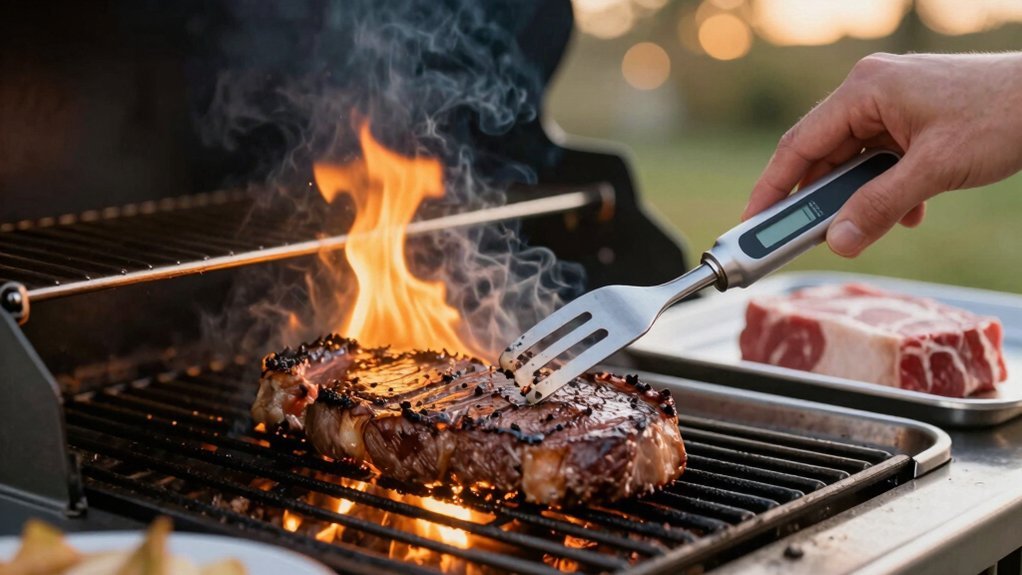
Why risk foodborne illness when the solution is so simple? Meat thermometers are the only reliable method to ensure your food reaches safe internal temperatures. Don’t be fooled by meat color or juiciness when piercing with grilling forks – these visual cues can be misleading.
Reserve your grilling forks for handling and flipping meat, not testing doneness. Piercing meat repeatedly releases valuable juices and gives inaccurate temperature readings. Instead, insert a thermometer into the thickest part of the meat, avoiding bones, fat, and stuffing.
If you must use forks, sanitize them between handling raw and cooked meat to prevent cross-contamination. Remember these critical temperature targets: poultry (165°F), ground meats (160°F), and beef steaks (145°F with rest time). Your family’s safety is worth the small investment in a quality meat thermometer.
Cross-Contamination Risks Specific to Fork Design
The design of your grilling forks matters more than you might realize when it comes to food safety. Forks with tine holes or gaps can transfer raw meat juices to other surfaces and cooked foods, creating cross-contamination hazards.
Choose forks with closed, single-piece handles that have fewer crevices where bacteria might hide. These designs are safer than multi-piece tools with joints that can trap contaminants. When you pierce meat with a fork, you’re potentially releasing juices that contain bacteria, so avoid excessive piercing.
For maximum safety, use color-coded or clearly labeled forks—one dedicated exclusively for raw meat and another for cooked products. This simple system helps you instantly identify which tool is safe to use, reducing the risk of accidentally contaminating your perfectly cooked meal.
Storage Solutions to Prevent Bacterial Growth
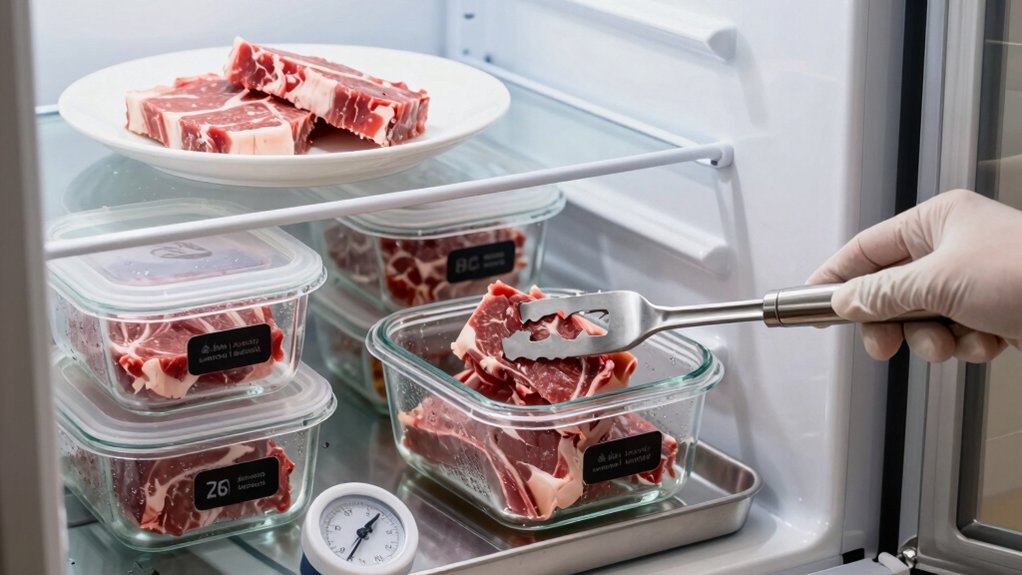
Proper storage of meat and grilling tools forms the foundation of safe outdoor cooking practices. Keep raw and cooked meats in separate, clearly labeled containers, and always use a fresh plate for cooked meat to prevent bacterial transfer.
Refrigerate perishable meats at 40°F or below within two hours of purchase—or within one hour if it’s hotter than 90°F outside. When transporting meat to your grill, use a dedicated cooler with ice packs to maintain safe temperatures.
For frozen meat, thaw it safely in your refrigerator, in frequently changed cold water, or in the microwave if you’ll cook it immediately. Don’t leave meat at room temperature—discard any that’s been unrefrigerated beyond two hours (one hour in hot conditions).
Materials That Make Safer Grilling Forks
Beyond safe storage practices, your choice of grilling tools directly impacts food safety outcomes. Opt for stainless or high-carbon stainless steel forks that resist corrosion and sanitize easily between handling raw and cooked meats.
Look for forks with non-porous handles made of tempered wood, silicone, or plastic to minimize bacterial hiding spots. The best designs feature tight-fitting tines without cracks or seams where meat juices might accumulate.
Consider color-coded utensils to distinguish between tools for raw versus cooked foods, dramatically reducing cross-contamination risks. For your comfort and safety, choose forks with long, ergonomic grips that remain cool while keeping your hands at a safe distance from heat.
These material considerations aren’t just about durability—they’re essential safeguards against foodborne illness.
Essential Sanitation Steps for Backyard Cookouts
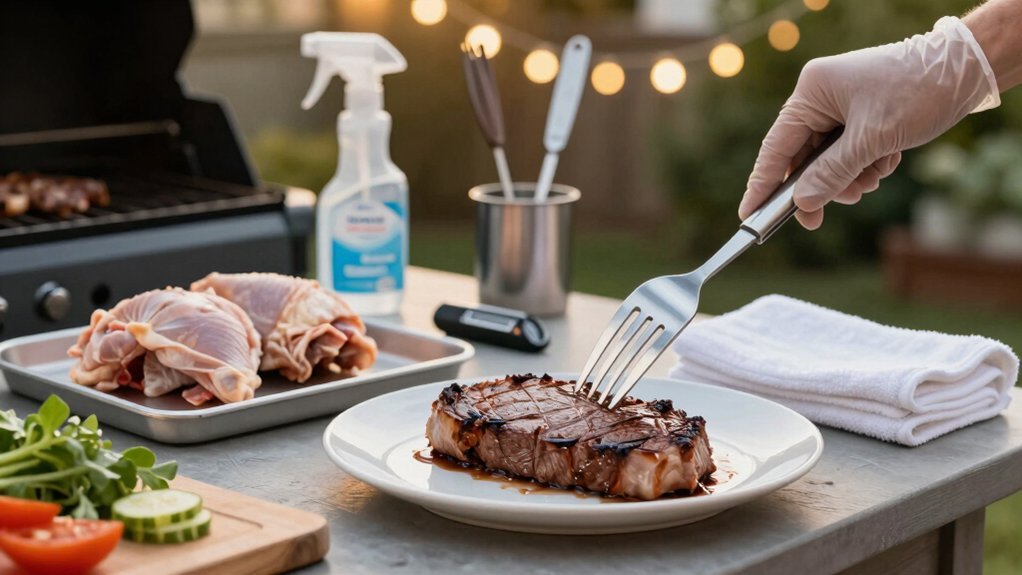
Maintaining pristine sanitation during backyard cookouts represents your first line of defense against foodborne illness. Wash your hands with soap and warm water for 20 seconds before handling utensils and after touching raw meat or poultry.
Always use separate utensils for raw and cooked meats—or thoroughly wash them between uses. When you’re using grilling forks, clean and sanitize them immediately after they contact raw meat before using them on cooked foods.
Keep raw meat cold (below 40°F) during storage and transport by using coolers with ice for outdoor events. Don’t trust appearances alone—use a meat thermometer to verify proper cooking temperatures: 165°F for poultry, 160°F for ground meats, and 145°F for steaks and fish.
Frequently Asked Questions
What Are the 4 C’s to Handling Meat?
The 4 C’s to handling meat are Clean, Separate, Cook, and Chill. You’ll need to wash hands and surfaces, prevent cross-contamination, cook to safe temperatures, and refrigerate properly.
How to Reduce Carcinogens When Grilling Meat?
Pre-cook or marinate meat with herbs, trim visible fat, sear then move to indirect heat, flip only once or twice, and avoid charring to reduce cancer-causing compounds during grilling.
What Is the Proper Way to Hold a Fork When Cutting Meat?
Hold your fork firmly in your non-dominant hand with tines pointing down. Angle it slightly away from your body while securing the meat perpendicular to your intended cut.
Can You Handle Raw Meat With Bare Hands?
You can handle raw meat with bare hands, but it’s not recommended. Always wash thoroughly for 20 seconds with soap afterward to prevent bacterial contamination of surfaces and foods.