You’ll want to start with a four-foot fence and self-latching gates that keep unsupervised kids out of the pool area. Add door and gate alarms to alert you when someone enters unexpectedly. Install a safety cover that meets ASTM weight standards, and choose VGB-compliant anti-entrapment drain covers. Don’t forget non-slip deck surfaces, rescue equipment like a reaching pole and ring buoy, and proper lighting. Each layer below offers critical protection for your family.
Pool Fencing and Self-Latching Gates
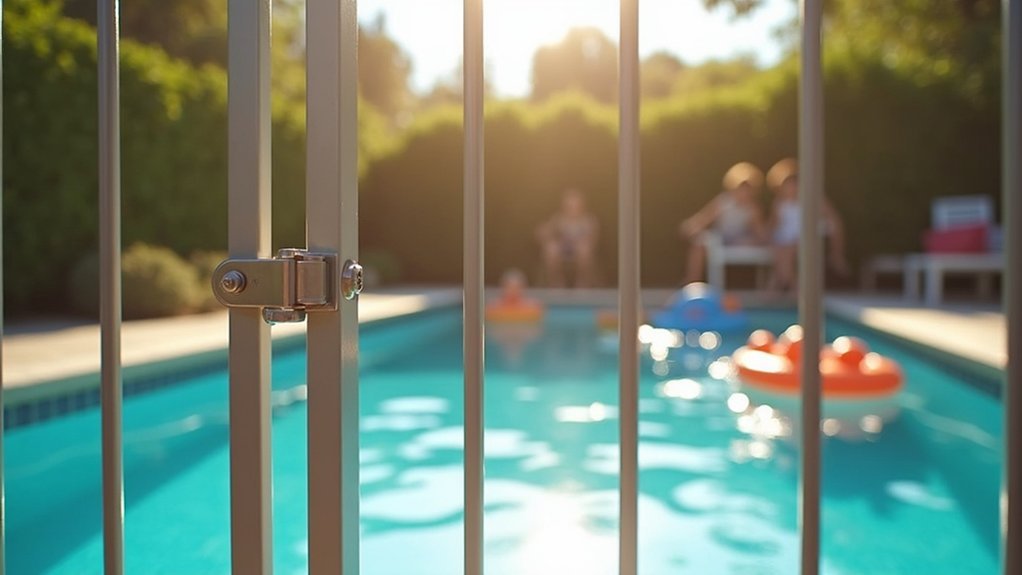
A properly installed pool fence serves as the first line of defense against accidental drownings, particularly for young children who may wander toward the water unsupervised.
A pool fence isn’t just a barrier—it’s your child’s first line of protection against tragedy.
You’ll want to choose a fence at least four feet tall with no footholds that could help a child climb over.
Self-latching gates are essential companions to your pool fence.
These gates close and lock automatically, eliminating the risk of someone forgetting to secure the entrance.
You should install latches high enough that small children can’t reach them, and make certain they open outward, away from the pool area.
Check your local regulations, as many municipalities have specific requirements for pool barriers.
Regular inspections help you catch any damage or wear that could compromise your fence’s effectiveness.
Pool Alarms and Motion Sensors
Beyond physical barriers, you’ll want to take into account pool alarms and motion sensors as additional layers of protection. These devices come in several varieties, including surface wave sensors, subsurface disturbance detectors, and wearable alarms that alert you when someone enters the water unexpectedly.
Proper installation following manufacturer guidelines and regular maintenance checks guarantee your alarm system remains reliable when you need it most.
Types of Pool Alarms
When it comes to protecting your pool area, you’ll find several types of alarms designed to detect unauthorized entry or accidental falls.
Surface Wave Alarms
These devices float on the water and trigger when they detect wave disturbances caused by someone entering the pool.
Subsurface Alarms
Mounted below the waterline, these sensors detect pressure changes and underwater movement, reducing false alarms from wind or debris.
Gate and Door Alarms
You’ll want these installed on every entry point leading to your pool area.
Consider these key factors when choosing your alarm system:
- Sensitivity settings – adjustable levels help minimize false alerts
- Battery backup – guarantee protection during power outages
- Volume range – loud enough to hear from inside your home
Installation and Maintenance Tips
Selecting the right alarm system only solves half the equation—proper installation and ongoing maintenance determine whether your safety devices actually work when you need them. You’ll want to position sensors according to manufacturer specifications and test them weekly.
| Task | Frequency |
|---|---|
| Battery replacement | Every 6-12 months |
| Sensor cleaning | Monthly |
| Full system test | Weekly |
| Professional inspection | Annually |
Don’t forget to check that your alarm’s sensitivity settings match your pool’s conditions. Wind, rain, and debris can trigger false alarms if you haven’t calibrated properly. Keep a maintenance log to track battery changes and testing dates. When you replace batteries, test the entire system immediately to confirm everything functions correctly.
Safety Covers and Pool Nets
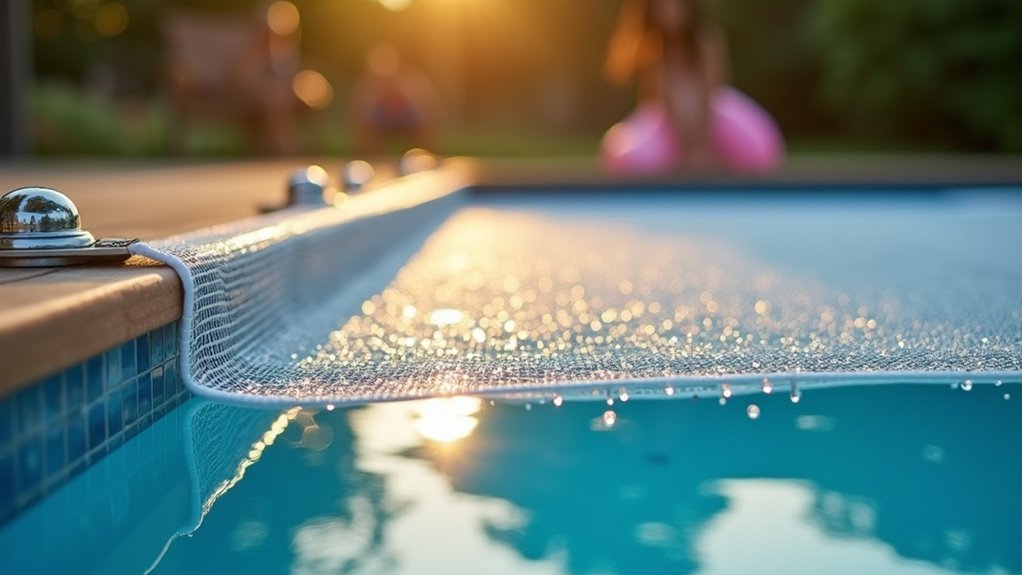
When you’re looking to protect your pool from unauthorized access, you’ll find several types of safety covers and nets designed to meet different needs and budgets.
You’ll need to understand proper installation and maintenance requirements to guarantee these barriers function correctly over time.
Before purchasing, check the weight capacity standards to confirm the cover can support enough weight to prevent accidental drownings.
Types of Safety Covers
Diving into the world of pool protection, you’ll find two primary options that stand out: safety covers and pool nets.
Each offers distinct advantages depending on your family’s needs and budget.
Safety Covers
You can choose from three main types:
- Mesh covers – Allow rainwater to drain through while blocking debris and preventing access
- Solid vinyl covers – Create a complete barrier that keeps out water, sunlight, and contaminants
- Automatic covers – Retract with the push of a button, offering convenience and consistent use
Pool Nets
These lightweight alternatives stretch across your pool’s surface, creating a strong barrier that supports significant weight.
They’re less expensive than covers and won’t collect standing water, making them popular among budget-conscious families.
Installation and Maintenance
Proper installation proves essential for both safety covers and pool nets to function as intended. You’ll want to hire certified professionals who understand local safety codes and manufacturer specifications. Incorrect installation compromises the protective barrier and puts your family at risk.
| Safety Covers | Pool Nets |
|---|---|
| Anchor into deck every 3-5 feet | Secure to brass anchors around perimeter |
| Tension straps monthly | Check hook connections weekly |
| Clean with mild soap seasonally | Remove debris after storms |
| Inspect for tears before each use | Replace frayed sections immediately |
| Professional re-tensioning annually | Professional inspection every 2 years |
You should inspect your cover or net regularly for wear, tears, or loose fittings. Store covers properly during off-seasons to prevent UV damage and extend their lifespan.
Weight Capacity Standards
Understanding weight capacity standards helps you choose a safety cover or pool net that genuinely protects your family. ASTM F1346-91 sets the benchmark, requiring covers to support at least 485 pounds per five square feet. This standard guarantees the cover can hold a child or adult who accidentally walks onto it.
When evaluating options, consider these key factors:
- Cover type: Mesh covers drain water but solid covers require pumps to prevent dangerous pooling
- Anchor strength: Check that deck anchors match the cover’s weight rating
- Net tension: Pool nets must maintain proper tension to meet safety thresholds
You should verify manufacturer certifications before purchasing. Don’t assume all products meet safety standards—look for independent testing documentation and replace covers showing wear or damage immediately.
Anti-Entrapment Drain Covers
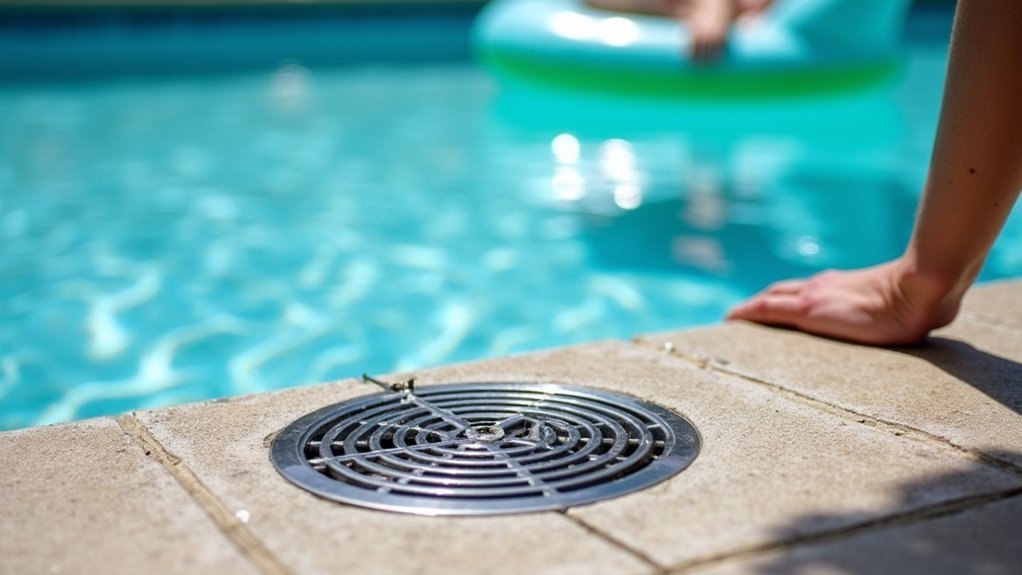
When children or adults swim near pool drains, powerful suction can trap hair, limbs, or swimwear against the drain opening, creating a drowning hazard that’s claimed numerous lives over the years. Anti-entrapment drain covers prevent this danger through specialized designs that distribute suction across a wider surface area.
You’ll find these covers feature dome-shaped or curved profiles that make it physically impossible for body parts to fully seal against them. The Virginia Graeme Baker Pool and Spa Safety Act requires all public pools to install compliant drain covers, but you should upgrade your home pool as well.
When selecting covers, look for VGB-certified products rated for your pump’s flow rate. Replace damaged or missing covers immediately, and consider installing a safety vacuum release system for additional protection.
Non-Slip Surfaces and Deck Materials
Slippery pool decks frequently cause painful injuries that range from minor scrapes to serious head trauma and broken bones. You can prevent these accidents by choosing the right materials and adding non-slip treatments to your pool area.
When selecting deck materials, consider these slip-resistant options:
- Textured concrete – You’ll get excellent grip when sealed with non-slip additives
- Brushed stone pavers – These provide natural traction while staying cool underfoot
- Rubber surfacing – This cushioned material offers superior grip and reduces impact injuries
Don’t overlook existing surfaces. You can retrofit your current deck with non-slip coatings, adhesive strips, or interlocking rubber tiles. Focus on high-traffic zones like ladder areas, diving board approaches, and pool entry points where water accumulates most frequently.
Life-Saving Equipment and Rescue Tools
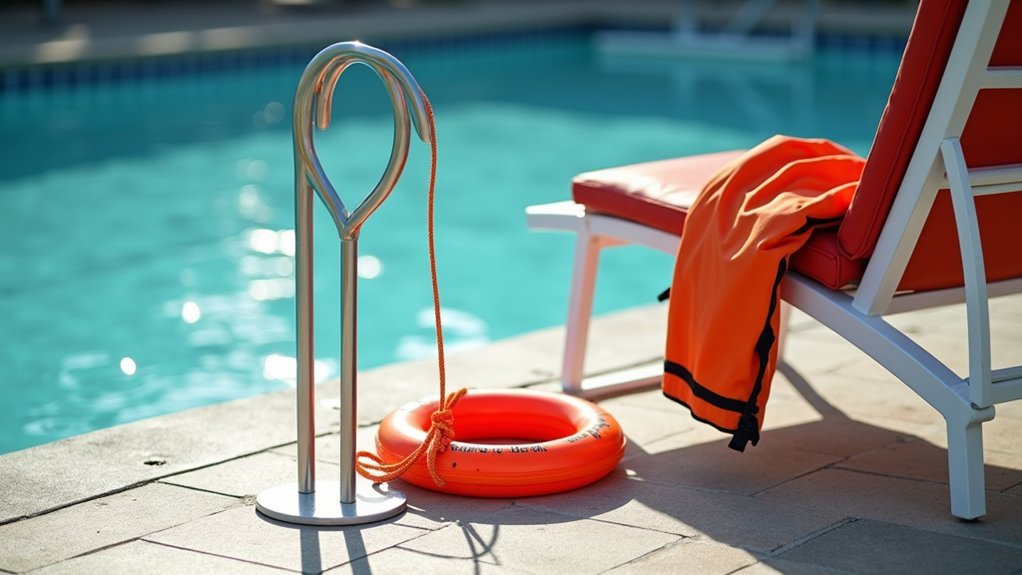
Every pool owner should stock essential life-saving equipment within arm’s reach of the water.
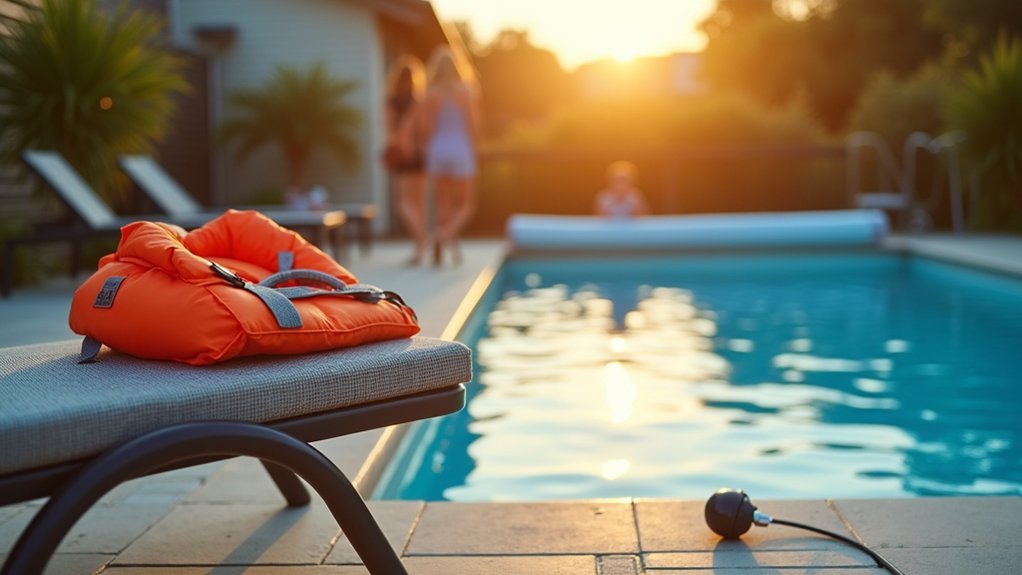
You’ll want a reaching pole that extends at least 12 feet, allowing you to pull struggling swimmers to safety without entering the pool yourself.
Keep a U.S. Coast Guard-approved ring buoy with attached rope nearby for throwing to distressed swimmers.
You should also invest in a shepherd’s hook, which helps you grab someone who’s panicking or unconscious.
Mount a waterproof first aid kit on your pool fence, stocked with bandages, antiseptic, and CPR instructions.
Consider adding a spine board if you frequently host guests.
Don’t forget to learn CPR—equipment means nothing without proper training.
Check your rescue tools monthly for damage and replace worn items immediately.
Proper Lighting for Nighttime Visibility
Beyond daytime precautions and rescue equipment, your pool’s safety extends into the evening hours when visibility drops dramatically.
You’ll need strategic lighting to prevent accidents and guarantee swimmers can see pool depths, edges, and steps clearly.
Consider these essential lighting options:
- Underwater LED lights – These illuminate the pool’s interior, making it easy to spot swimmers and identify depth changes
- Perimeter pathway lights – These guide family members safely around the deck and prevent tripping hazards
- Motion-activated floodlights – These alert you when someone approaches the pool area unexpectedly
You should install lights that meet electrical safety codes for wet environments.
Choose fixtures rated for pool use and have a licensed electrician handle installation.
Proper lighting doesn’t just enhance ambiance—it’s a critical safety layer that protects your family after dark.
Frequently Asked Questions
How Often Should Children Take Swimming Lessons to Ensure Pool Safety?
You should enroll your children in swimming lessons at least once weekly, year-round. Consistent practice helps them build water confidence and essential skills. Don’t stop during winter—they’ll retain abilities better with continuous training.
What Is the Recommended Adult-To-Child Supervision Ratio for Pool Activities?
You should maintain a 1:1 ratio for infants and toddlers, while you can supervise up to 4 older children who’ve mastered basic swimming skills. Don’t get distracted—keep your eyes on the water constantly.
Are Inflatable Pools Subject to the Same Safety Regulations as Permanent Pools?
You should know inflatable pools aren’t typically subject to the same building codes as permanent pools. However, you’re still responsible for following basic safety practices, supervision requirements, and any local ordinances that may apply to temporary swimming structures.
What Emergency First Aid Training Should Pool Owners Complete?
You should complete CPR and basic life support certification, learn rescue breathing techniques, and take a water safety course. You’ll also want training in recognizing drowning signs and treating hypothermia effectively.
How Do Local Building Codes Affect Pool Safety Feature Requirements?
Your local building codes dictate specific requirements for fencing heights, gate latches, pool covers, and alarm systems. You’ll need to check with your municipality before installation since regulations vary markedly between jurisdictions and affect compliance.