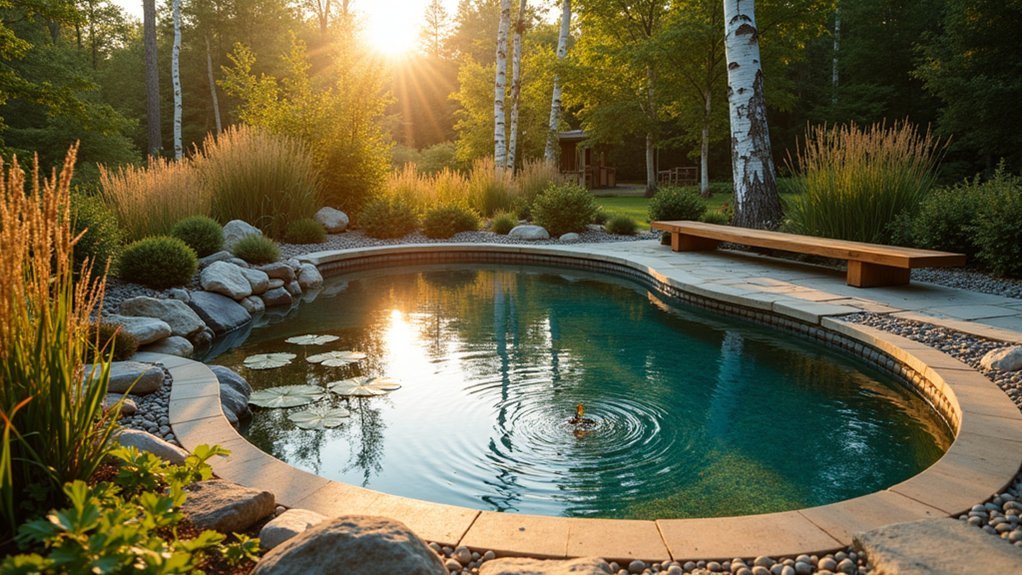
Building a natural swimming pool means you’ll create a two-zone system where plants and beneficial bacteria replace harsh chemicals. You’ll need a swimming area paired with a regeneration zone that takes up at least 50% of your pool’s surface. This plant-filled section uses gravel beds, aquatic vegetation, and microorganisms to filter water naturally. With proper planning for sunlight, native plants, and ecosystem balance, you can maintain crystal-clear water while blending seamlessly into your landscape.
Understanding the Natural Swimming Pool Concept and How It Works
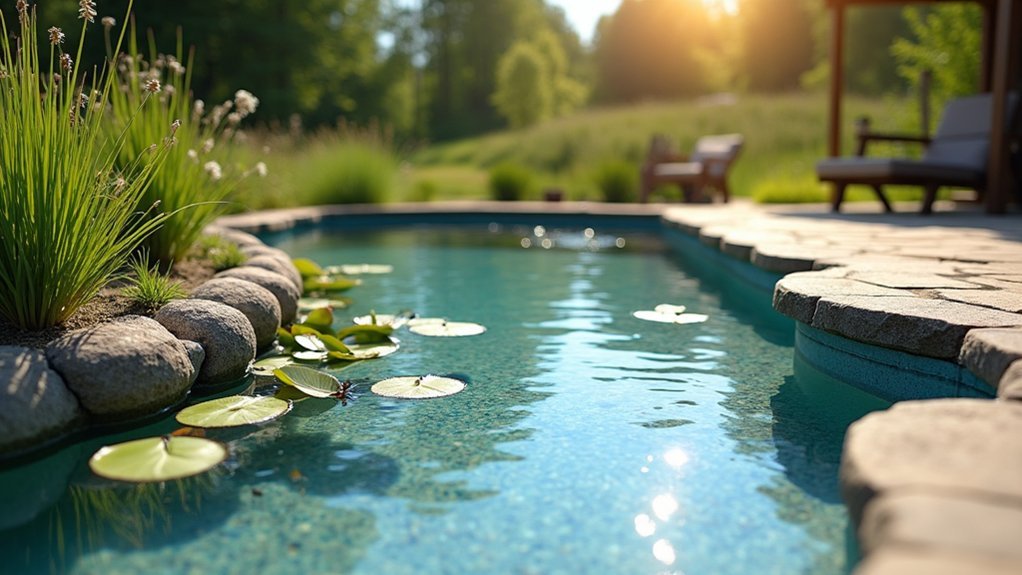
When you first encounter a natural swimming pool, you might mistake it for a decorative pond—and that’s precisely the point. These pools combine swimming areas with regeneration zones filled with aquatic plants that filter and purify the water naturally.
Here’s how it works: your pool splits into two sections. The swimming zone provides clear water for recreation, while the regeneration zone houses plants, gravel, and beneficial bacteria that eliminate contaminants. Water circulates between both areas, passing through the plant roots and substrate that trap debris and break down organic matter.
You won’t need chlorine or harsh chemicals. Instead, the ecosystem does the heavy lifting. Beneficial microorganisms consume algae and bacteria, while plants absorb excess nutrients that would otherwise cloud your water.
Choosing the Right Location and Size for Your Eco-Friendly Pool
Now that you understand how natural pools function, you’ll need to pick the perfect spot in your yard and determine the right dimensions for your project. Consider sunlight exposure, existing trees, and underground utilities before breaking ground.
| Factor | Ideal Condition | Why It Matters |
|---|---|---|
| Sunlight | 6+ hours daily | Supports plant growth in regeneration zone |
| Slope | Level or gentle grade | Reduces excavation costs and structural issues |
| Tree proximity | 15+ feet away | Minimizes leaf debris and root intrusion |
You’ll want at least 400 square feet total—half for swimming and half for the plant filtration zone. Measure your available space carefully, accounting for decking and buffer areas. Don’t forget to check local zoning regulations before finalizing your plans.
Designing the Regeneration Zone for Natural Water Filtration
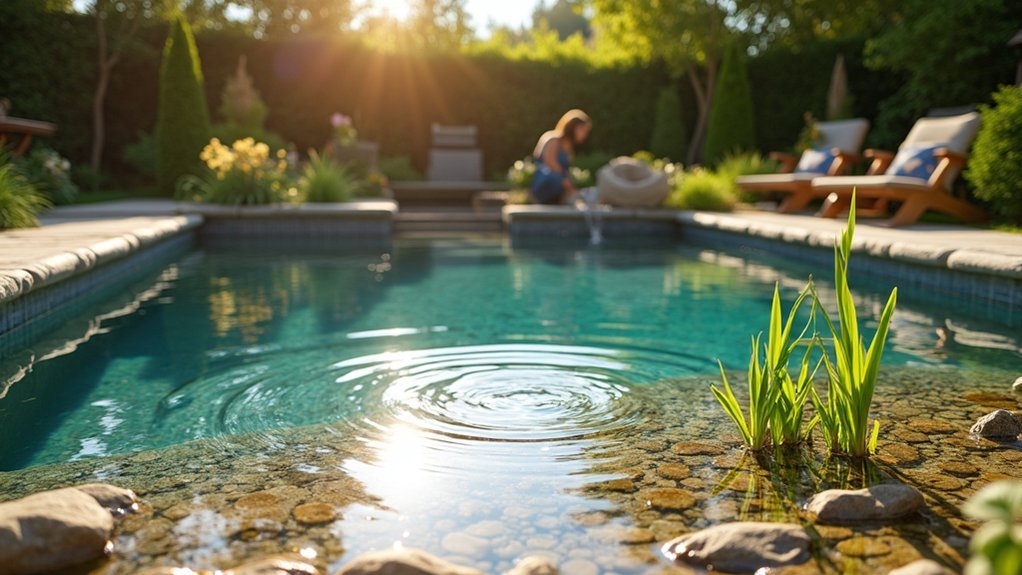
You’ll need to carefully design your regeneration zone, which serves as the living filter that keeps your pool water crystal clear without chemicals.
Selecting the right aquatic plants is essential—you’re looking for species that efficiently absorb nutrients, thrive in your climate, and provide adequate oxygenation.
Your regeneration zone should typically occupy 30-50% of your total pool surface area, though exact sizing depends on factors like swimmer load, sun exposure, and your chosen plant varieties.
Optimal Plant Selection Criteria
Selecting the right aquatic plants for your regeneration zone determines how effectively your natural pool filters and purifies water. You’ll want to prioritize native species that thrive in your climate and require minimal maintenance once established.
Choose plants based on three key criteria: nutrient absorption capacity, root structure, and growth habits. Submerged oxygenators like hornwort remove excess nutrients while adding dissolved oxygen. Emergent plants such as cattails and irises provide powerful filtration through their extensive root systems.
You should also consider seasonal performance. Mix evergreen and deciduous varieties to maintain year-round filtration. Avoid aggressive spreaders that’ll overtake your zone and require constant trimming.
Balance your selection between deep-water, marginal, and floating plants. This layered approach maximizes surface area for beneficial bacteria colonization and creates a self-sustaining ecosystem.
Zone Sizing Requirements
Because your regeneration zone serves as the biological engine of your natural pool, getting its size right isn’t optional—it’s essential for clean, healthy water.
You’ll need your regeneration zone to equal at least 50% of your swimming area’s surface. For a 400-square-foot swim zone, plan for 200 square feet minimum of planted filtration area.
Calculate your zone depth between 12 and 18 inches to support robust root systems while maintaining adequate water flow. Shallow zones warm faster, accelerating beneficial bacterial activity during cooler months.
If you’re working with limited space, consider vertical planting walls or tiered shelving to maximize filtration capacity. You can also wrap the regeneration zone around your swimming area’s perimeter, creating a natural border that doubles as wildlife habitat while processing nutrients efficiently.
Selecting Native Plants That Purify and Oxygenate Pool Water
When designing your natural swimming pool, the plants you choose serve as the biological heart of your water filtration system. Native aquatic species work harder and require less maintenance because they’ve adapted to your local climate and soil conditions.
You’ll want to incorporate submerged oxygenators like hornwort and waterweed, which release oxygen directly into the water while absorbing excess nutrients. Floating plants such as water lilies shade the surface, reducing algae growth and cooling water temperatures.
For your regeneration zone, select marginal plants like cattails, rushes, and sedges. These powerhouses filter nitrogen and phosphorus through their root systems. Don’t overlook native irises and pickerelweed—they attract beneficial insects while removing contaminants.
Research which species thrive in your region before purchasing, and avoid invasive varieties that could escape into local waterways.
Installing the Proper Liner and Structural Components
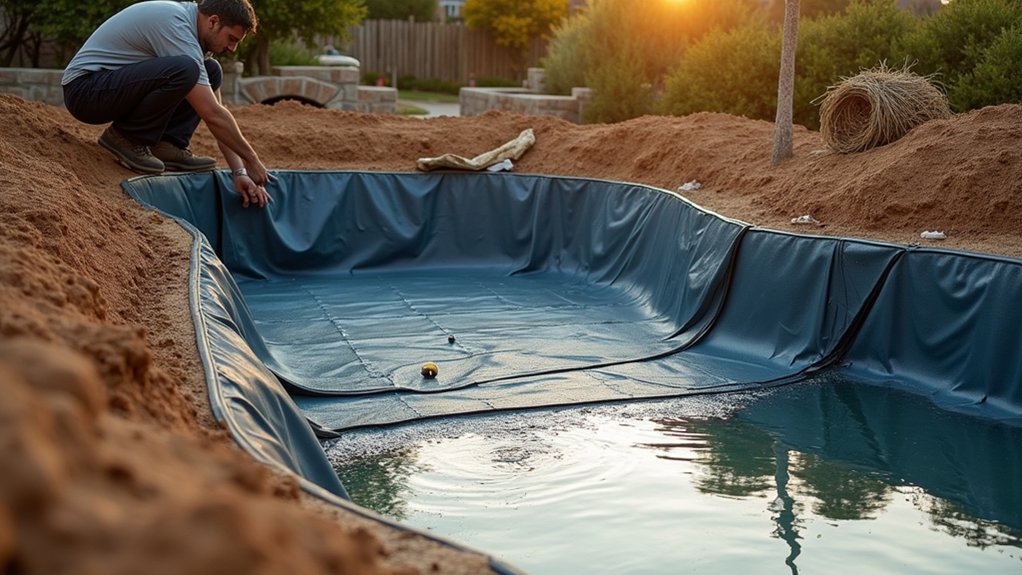
Your liner choice determines whether your natural pool thrives for decades or fails within a few seasons. EPDM rubber liners remain the gold standard for natural pools because they’re non-toxic, UV-resistant, and flexible enough to accommodate organic shapes. You’ll need a minimum thickness of 45 mil for durability.
EPDM rubber liners are the gold standard—non-toxic, UV-resistant, and built to last decades.
Before installing your liner, you must prepare the structural foundation properly:
- Compact the excavated base and add a 2-inch sand layer to prevent punctures from rocks or roots
- Install underlayment fabric across all surfaces to protect the liner from abrasion
- Position concrete or timber retaining walls between swimming and regeneration zones
Secure your liner edges with stone coping or buried anchors. Don’t rush this step—proper installation prevents costly leaks and guarantees your pool’s longevity.
Creating a Balanced Ecosystem With Beneficial Microorganisms
Once your liner sits securely in place, the real magic begins—establishing the invisible workforce that keeps your water crystal clear without chemicals.
You’ll introduce beneficial bacteria through specialized starter cultures designed for natural pools. These microorganisms colonize your filtration zones and break down organic matter before it becomes problematic. Add nitrifying bacteria first—they convert harmful ammonia from debris and wildlife into less toxic nitrates that plants absorb.
Don’t rush this process. Your ecosystem needs four to six weeks to mature properly. During this period, test water parameters weekly and resist the urge to swim. You’re fundamentally cultivating a living filter.
Supplement your bacterial colonies with daphnia and other zooplankton. These tiny organisms consume algae and provide additional biological filtration, creating multiple layers of natural water purification working continuously.
Maintaining Water Quality Without Harsh Chemicals
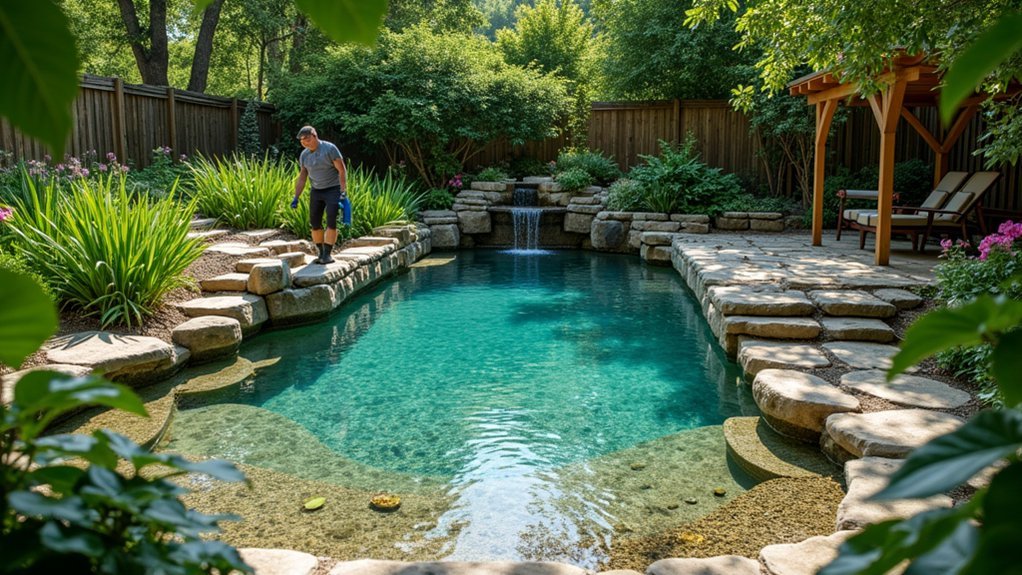
Regularly monitoring your natural pool’s water quality doesn’t require a chemistry degree—just consistent attention and a few simple tools.
Keeping your natural pool pristine is simpler than you think—no chemistry expertise required, just consistency.
You’ll want to test your water weekly using natural pool test kits that measure pH, phosphate levels, and oxygen content.
When imbalances occur, you can correct them using mineral-based solutions and beneficial bacteria rather than chlorine or algaecides.
Your maintenance toolkit should include:
- Skimmer nets and pond vacuums to remove organic debris before it decomposes
- Barley straw bundles that naturally inhibit algae growth as they break down
- Aeration systems that boost oxygen levels and support healthy bacterial colonies
You’ll also need to trim aquatic plants regularly and clean your regeneration zone’s gravel beds seasonally.
These practices keep your water crystal clear while protecting the ecosystem you’ve created.
Integrating Your Natural Pool Into Your Backyard Landscape Design
Beyond water quality, a natural pool’s success depends on how seamlessly it blends with your existing outdoor space. You’ll want to take into account your yard’s natural contours, existing vegetation, and overall aesthetic before breaking ground.
Start by mapping sun exposure patterns throughout the day. Position your pool where it receives adequate sunlight for plant filtration zones while offering shaded swimming areas. Use native plants around the perimeter to create smooth shifts between pool and garden.
Incorporate natural stone or local materials for edging and pathways. These choices reduce environmental impact while creating visual harmony. You can add boulders, driftwood, or gravel beaches to soften hard lines.
Weigh sight lines from your home and patio. Strategic placement transforms your pool into a focal point that enhances your entire landscape’s appeal.
Frequently Asked Questions
How Much Does a Natural Swimming Pool Cost Compared to Traditional Pools?
You’ll typically spend $50,000 to $100,000 for a natural swimming pool, which costs about 10-20% more upfront than traditional pools. However, you’ll save considerably on chemicals and maintenance over time.
Can I Convert My Existing Chlorine Pool Into a Natural Swimming Pool?
Yes, you can convert your existing chlorine pool into a natural swimming pool. You’ll need to add a regeneration zone with aquatic plants, install a biological filtration system, and remove chemical treatment equipment.
Are Natural Swimming Pools Safe for Young Children and Pets to Use?
Yes, you’ll find natural swimming pools safe for young children and pets. They’re chemical-free, so there’s no risk of chlorine irritation. You should still supervise children closely and make sure your pool has gentle, accessible entry points.
How Long Does It Take to Construct a Complete Natural Swimming Pool?
You can expect to spend three to six weeks constructing your natural swimming pool. Complex designs with extensive filtration zones take longer, while simpler builds go faster. Weather conditions and site preparation also affect your timeline.
Do Natural Swimming Pools Attract Mosquitoes or Other Unwanted Insects?
You won’t attract mosquitoes if you’re maintaining proper water circulation. Moving water prevents breeding. Your pool’s ecosystem, including plants and beneficial organisms, naturally controls pests while frogs and dragonflies help eliminate any unwanted insects.