To get the most from your solar string lights, you’ll want to position the panel where it receives 6–8 hours of direct sunlight daily and choose lights rated IP65 or higher for weather resistance. Measure your deck’s perimeter and add 10–15% extra length for swags, then select 2700–3000K bulbs for a warm, cozy glow. Use damage-free mounting options like adhesive hooks or magnetic clips, and clean panels monthly. These essential strategies below will help you create the perfect outdoor ambiance.
Choose the Right Solar Panel Placement for Maximum Charging
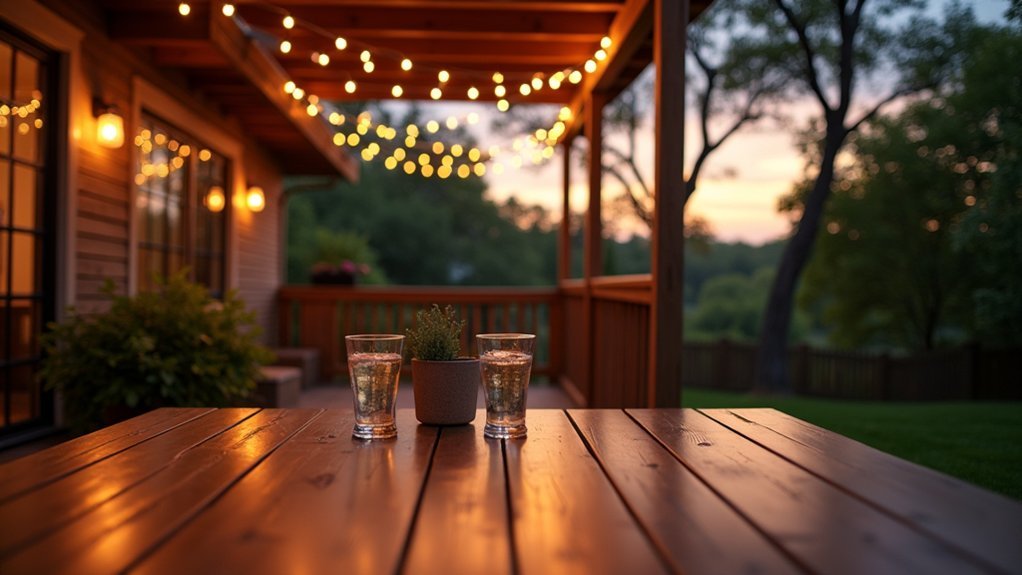
When it comes to powering your deck’s string lights, solar panel placement makes all the difference between vibrant evening illumination and dim, disappointing results.
Position your solar panel where it receives direct sunlight for at least six to eight hours daily. South-facing locations work best in the Northern Hemisphere, capturing maximum sun exposure throughout the day. Avoid shaded spots near trees, overhangs, or tall structures that block sunlight during peak hours.
Six to eight hours of direct sunlight daily transforms your solar string lights from barely glowing to brilliantly shining.
Mount the panel at a slight angle to optimize light absorption and prevent debris accumulation. Clean the surface regularly to maintain charging efficiency. If your deck sits in partial shade, consider using an extension cable to place the panel in a sunnier location nearby.
This simple adjustment dramatically extends your lights’ runtime each evening.
Select Weather-Resistant String Lights Built for Outdoor Use
Outdoor string lights frequently face harsh conditions that indoor varieties simply can’t handle. You’ll want lights rated IP65 or higher to guarantee protection against rain, snow, and dust. Check that the bulbs feature shatterproof construction, especially if you’re mounting them in high-traffic areas.
| Feature | Minimum Standard | Recommended |
|---|---|---|
| IP Rating | IP44 | IP65+ |
| Material | Plastic | ABS Plastic |
| Wire Type | Copper | Rubber-coated |
| UV Resistance | Basic | High |
| Temperature Range | 32-100°F | -4 to 122°F |
Look for reinforced connections between bulbs and the main wire, as these points often fail first. Rubber-coated wiring resists cracking in temperature extremes. You’ll extend your lights’ lifespan markedly by investing in quality weather-resistant construction upfront.
Calculate the Ideal Length and Bulb Count for Your Deck Space
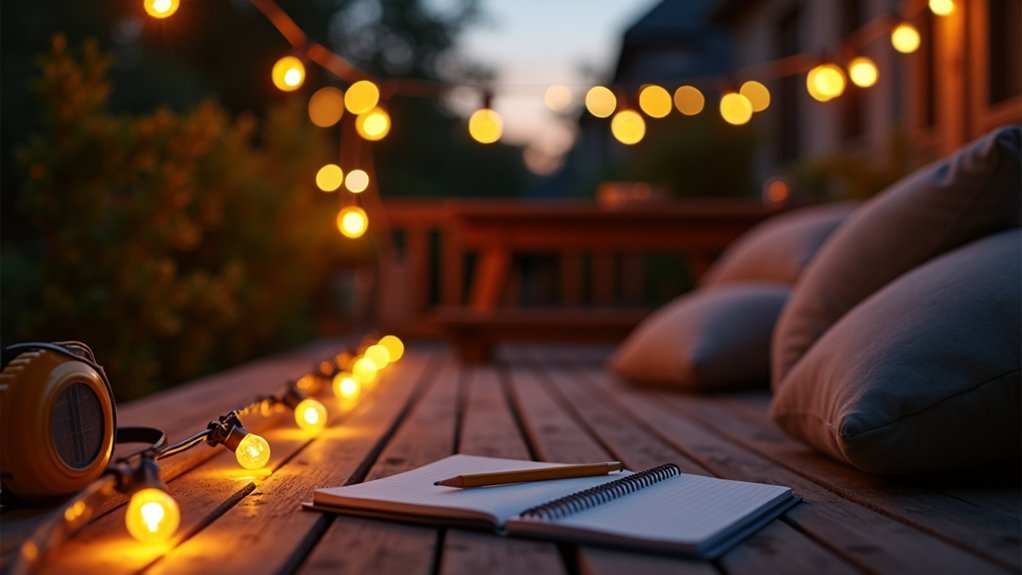
Before you purchase string lights, measure your deck’s perimeter and any areas where you’ll drape or zigzag the strands. Add 10-15% extra length for swags and connections to power sources.
For bulb spacing, consider your lighting goals. Bulbs placed 6-8 inches apart create bright, focused illumination perfect for dining areas. Spacing of 12 inches or more produces softer ambient lighting ideal for relaxation zones.
To calculate bulb count, divide your total strand length by the spacing distance. A 50-foot strand with 12-inch spacing gives you approximately 50 bulbs.
Don’t forget vertical elements like posts and railings. Wrap them with shorter strands to add depth and dimension to your overall lighting design.
Create Stunning Hanging Patterns That Enhance Your Entertainment Area
Once you’ve determined the right length and bulb count, you’re ready to transform your deck with eye-catching hanging patterns.
You can create a zigzag canopy design that draws the eye across your space, layer lights at varying heights for dimensional interest, or strategically position strands to highlight focal points like your outdoor dining table or seating area.
These techniques turn basic string lights into an intentional design element that elevates your entire entertainment zone.
Zigzag Canopy Light Designs
Creating a zigzag canopy pattern transforms your deck into an inviting outdoor living room that draws guests in and keeps them lingering long after sunset.
You’ll need to install anchor points along opposite edges of your deck, spacing them evenly to achieve balanced zigzags. String your solar lights from one side to the other, alternating attachment points to create the distinctive pattern.
| Deck Size | String Length | Anchor Points |
|---|---|---|
| Small (10×10) | 50 feet | 6-8 |
| Medium (12×16) | 75 feet | 8-10 |
| Large (16×20) | 100 feet | 10-12 |
| Extra Large (20×24) | 150 feet | 12-14 |
| Custom | Varies | Calculate spacing |
Maintain consistent tension across all lines to prevent sagging. This design provides excellent overhead coverage while creating visual depth.
Layered Height Arrangements
When you arrange solar string lights at multiple heights, you’ll add dimension and visual interest that single-level installations simply can’t match.
Start by establishing three distinct planes: high lights near the roofline, mid-level strands at eye height, and lower accent lighting closer to the deck surface.
Hang your highest strand eight to ten feet up to create an ambient glow. Position your middle layer around six feet to frame conversation areas without obstructing views. Add a third layer at three to four feet along railings or planters for intimate accent lighting.
Space each layer at least eighteen inches apart vertically to prevent tangling and make certain each strand shines independently. This tiered approach transforms flat spaces into inviting, three-dimensional entertainment zones.
Focal Point Illumination Techniques
Strategic focal point lighting draws your guests’ eyes exactly where you want them, transforming ordinary deck features into compelling visual anchors.
Position solar string lights to frame your outdoor dining table, creating an intimate gathering space that naturally becomes the conversation hub.
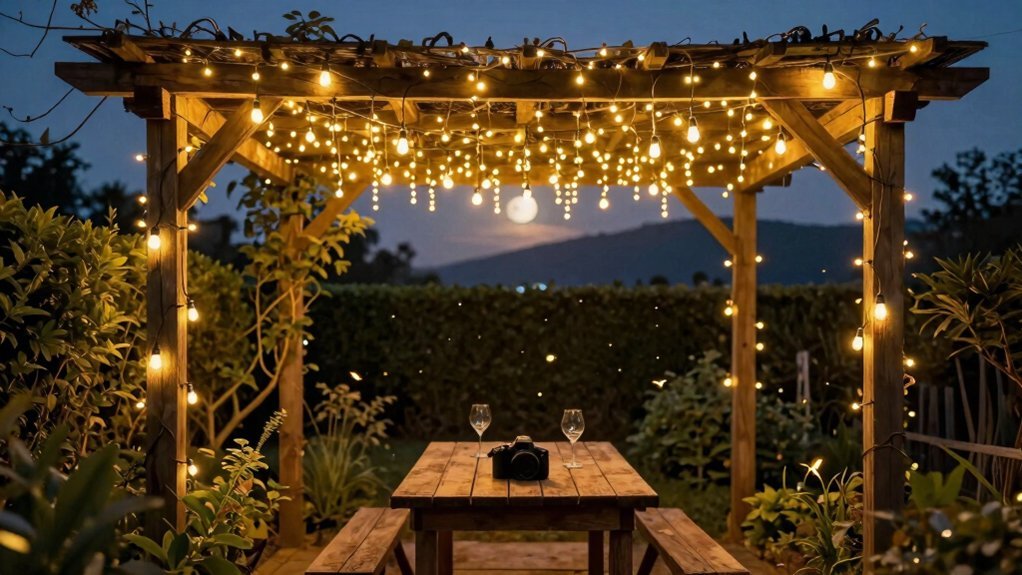
Wrap lights around architectural elements like pergola posts or railings to define your entertainment zone’s boundaries.
Drape strands in a sunburst pattern radiating from a central point above your seating area for dramatic overhead impact.
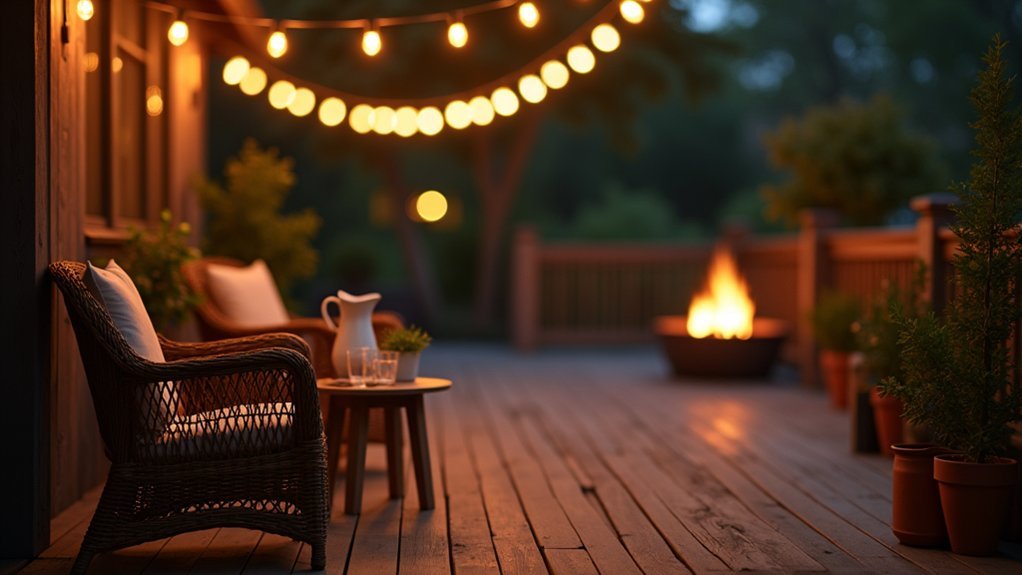
Highlight specific features by concentrating light density around fire pits, water features, or statement planters.
You’ll create depth by mixing bright focal clusters with softer ambient sections throughout your deck.
This contrast guides movement and establishes distinct activity zones while maintaining visual cohesion across your entire entertainment space.
Match Light Color Temperature to Your Desired Ambiance
Have you ever wondered why some outdoor spaces feel warm and inviting while others seem cold and sterile? The answer lies in color temperature, measured in Kelvins.
For cozy deck gatherings, choose solar string lights between 2700K and 3000K. These warm white tones create intimate atmospheres perfect for dinner parties and relaxed conversations. They complement wooden deck surfaces beautifully.
If you’re hosting lively celebrations or need brighter task lighting, opt for 4000K to 5000K. These cooler temperatures provide crisp, energizing illumination ideal for game nights or outdoor cooking areas.
Consider your deck’s purpose before purchasing. You can also mix temperatures strategically—warm lights in seating areas and cooler options near grilling stations. This approach lets you customize zones that serve different entertainment needs throughout the evening.
Install Secure Mounting Points Without Damaging Your Deck
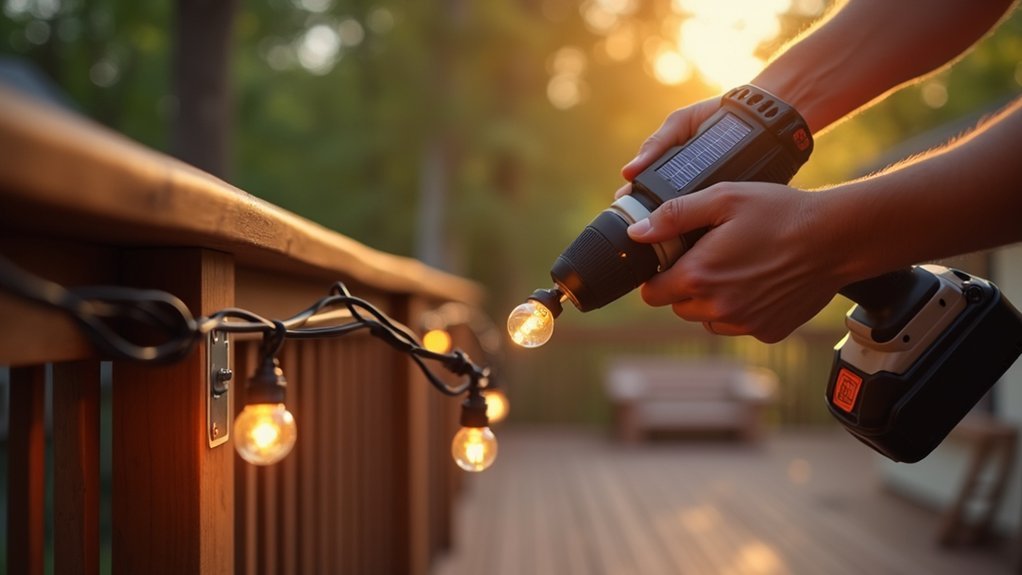
Before you start drilling holes into your beautiful deck, consider the many damage-free mounting options that’ll keep your solar string lights secure all season long.
Adhesive hooks designed for outdoor use work perfectly on railings and posts, while magnetic clips attach instantly to metal surfaces without leaving marks.
For wooden structures, try tension-mounted poles that clamp onto your deck railing or freestanding shepherd’s hooks that you can position anywhere.
Cable tie mounts with strong adhesive backing provide reliable anchor points along beams and overhangs.
When you need extra stability, wrap lights around existing features like pergola posts, umbrella poles, or gazebo frames.
You can also use removable cup hooks that screw into joints between boards, making future removal simple and virtually invisible.
Maintain Your Solar String Lights for Years of Reliable Performance
Regularly cleaning your solar panels guarantees they’ll capture maximum sunlight and keep your string lights glowing brightly night after night. Wipe panels monthly with a damp cloth to remove dust, pollen, and debris that block absorption.
| Maintenance Task | Frequency | Benefit |
|---|---|---|
| Clean solar panels | Monthly | Maximum charging efficiency |
| Inspect wiring | Seasonally | Prevent electrical failures |
| Store indoors | Winter months | Extend lifespan |
Check all connections and bulbs before each season begins. Replace damaged bulbs immediately to prevent strain on the circuit. During harsh winters, bring your lights inside to protect batteries from extreme cold. Store them in a dry location away from moisture. With proper care, quality solar string lights will illuminate your deck gatherings for five years or more.
Frequently Asked Questions
Can Solar String Lights Be Left Outside During Winter Months?
You can leave solar string lights outside during winter, but you’ll want to check the manufacturer’s ratings first. Most quality lights handle cold temperatures well, though you should remove them during severe storms or heavy snowfall.
How Long Do Solar String Lights Stay Illuminated After a Full Charge?
After a full charge, your solar string lights typically stay illuminated for 6 to 12 hours. You’ll get the best results when you’ve placed your panels in direct sunlight throughout the day.
Do Solar String Lights Work on Cloudy or Rainy Days?
Yes, solar string lights work on cloudy or rainy days, but they won’t charge as efficiently. You’ll notice shorter illumination times since the panels receive less sunlight. They’ll still function, just with reduced brightness and duration.
Can I Connect Multiple Solar String Light Sets Together?
You can typically connect multiple solar string light sets together, but check the manufacturer’s guidelines first. Most sets allow daisy-chaining 2-3 strands maximum. Connecting too many will reduce brightness and drain the battery faster.
What Is the Average Lifespan of Solar String Light Batteries?
You can expect your solar string light batteries to last 1-3 years with regular use. You’ll notice shorter run times as they age, but you can easily replace them to extend your lights’ lifespan.