
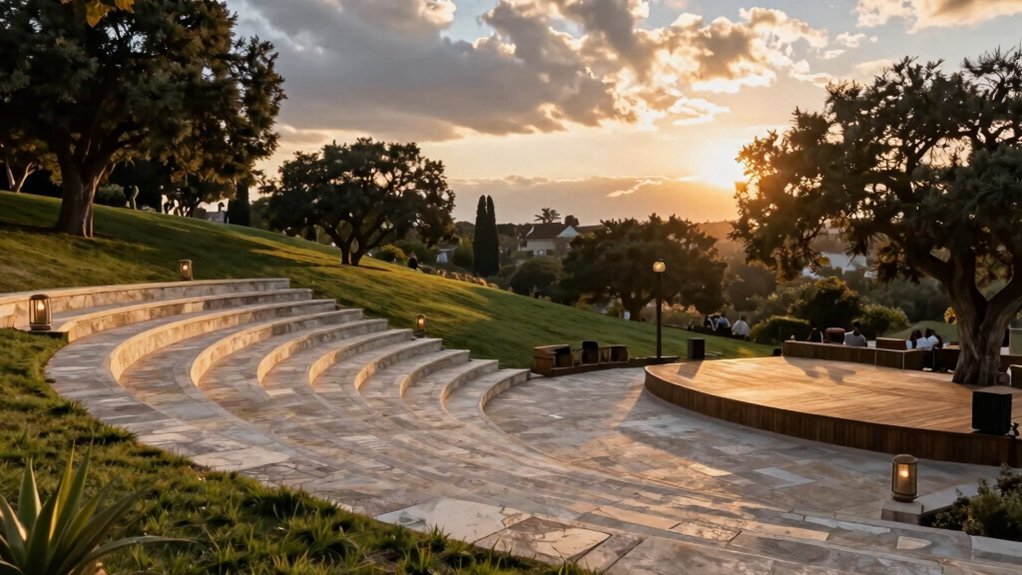
You get clear sightlines and natural acoustics from an amphitheater that uses shells, landscape, and concentric seating to project sound toward every seat. The shells reflect stage sound for amplification without constant electronics, while hard surfaces and thoughtful geometry keep clarity and reduce muddiness. Location, weather protection, shade, and year-round multi-use design let you host concerts, films, theater, and daytime gatherings alike. If you want more, you’ll discover how geography and programming shape every detail.
The Open-Air Advantage: Natural Acoustics and Sightlines
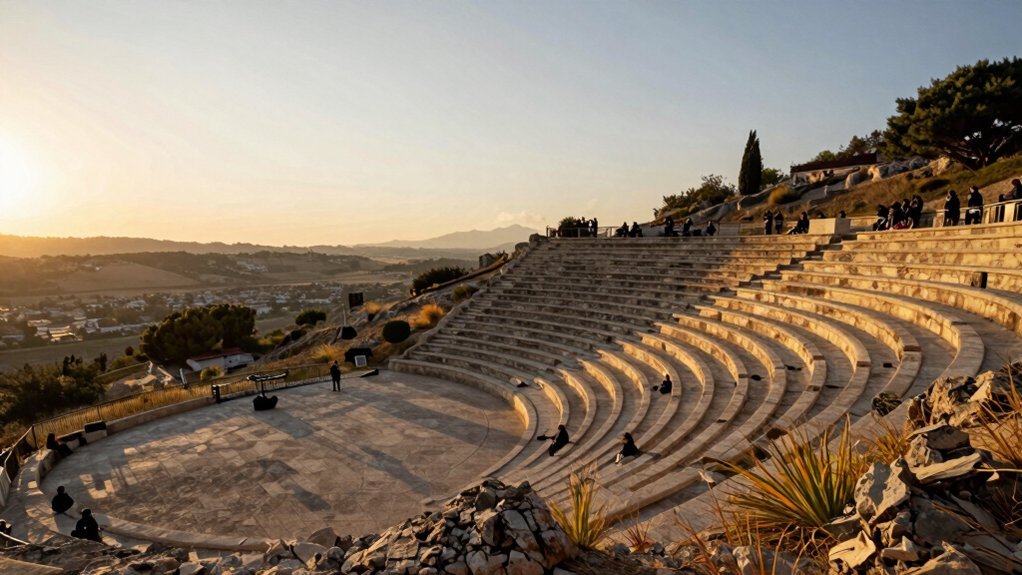
The open-air design puts you closer to the action while delivering natural acoustics and sweeping sightlines. With concentric seating around a central performance area, you get optimized visibility from every seat and a shared sense of immersion.
In venues like Red Rocks, the surrounding geology reflects and amplifies sound, reducing the need for enclosed walls. You experience clear projection as crowds spread out, not just up front, so voices and instruments travel across the venue.
The open sky also minimizes harsh confinement, letting sound decay naturally and avoiding muffled tones. You benefit from landscape-driven distribution that enhances audience experience without relying heavily on artificial amplification. This synergy makes every seat feel balanced, whether you’re close to the stage or farther back in the hush.
Shells and Surfaces: Directing Sound for Every Seat
How do shells and surfaces steer sound to every seat without cluttering the mix? They reflect and project stage sound toward the audience while picking up performance to amplify it. Hard surfaces raise reverberation, so thoughtful shell geometry and surface treatment keep clarity intact. Natural venues like Red Rocks show how surrounding geology can enhance acoustics without mechanical amplification. Shell designs and reflective surfaces focus energy toward seating areas, boosting intelligibility, and the concentric seating around a stage shapes how sound distributes to each seat. This balance reduces muddiness and guides voices and instruments with precision. In practice, tailor angles, distances, materials to venue. No seat goes unheard today.
| C1 | C2 | C3 |
|---|---|---|
| Focus | Distribution | Size |
| Angles | Alignment | Reverberation |
| Materials | Pickup | Clarity |
| Rocks | Natural | Amplification |
Flexible Seating, Stage, and Multi-Use Outdoors

Flexible seating and adaptable stages let outdoor venues host concerts, theater, lectures, and film screenings with ease. You’ll design circles around a central area to maximize sightlines and acoustics, so every seat feels connected to the performance. Open-air setups let you lean on natural topography and shells or reflective surfaces to project sound toward the audience, while still keeping the space flexible for different events. Shelled amphitheaters, like Shoreline and Hollywood Bowl, show how acoustic shells reflect stage sound and boost amplification without overwhelming performers. Your design supports multi-use programming, from live music to film nights and community talks, keeping spaces active year-round. Location, landscape, parking, shade, and weather protection shape comfort and success, guiding every seating and staging choice for audiences and times.
Landscaping as a Performance Space: Geography in Your Backyard
Your backyard geography shapes acoustics, so you can tune sightlines and sound with the lay of the land. Natural terrain—gentle slopes, berms, and existing rock—creates seating and helps project music without harsh amplification. Design the shared spaces—paths, plantings, and water features—so crowds, performers, and weather all co-exist as part of the performance.
Geography Shapes Acoustics
Geography shapes acoustics by turning the landscape into a natural sound system—hills, valleys, and rock surfaces reflect and project sound toward the audience, like Red Rocks.
Flat bottom areas host the audience, while surrounding slopes influence sightlines, comfort, and acoustic performance.
Shelled amphitheaters further focus sound from the stage to spectators, boosting projection and clarity.
Surrounding hard materials and rock surfaces create reverberation that makes geology an intentional part of the design.
Designers leverage landscape to minimize weather exposure, improve drainage, and blend the venue with amenities for year round use.
- Optimized sightlines
- Acoustic reflections
- Weather resistant drainage
Together, these elements adapt to audience size and season, ensuring consistent acoustics without excessive amplification.
Your backyard becomes a stage with resonance and comfort everywhere.
Natural Terrain, Shared Spaces
How does your yard become a stage when natural terrain guides seating, sightlines, and acoustics? You use hills and valleys to elevate back rows and keep sightlines clear, with flat bottom areas for the audience. Contours channel sound toward listeners, creating intimate zones without barriers. Shelled designs aren’t required everywhere, but an extra shell reflects and projects music toward the crowd, boosting clarity. You integrate surrounding geology to harmonize visuals with performance, making your space feel native rather than engineered.
Natural geography also provides protection from the elements and guides stormwater management, boosting resilience. Treat landscape features as performance infrastructure to create shared spaces for audiences, vendors, and moments of pause. Red Rocks and Seaside show how geology enhances experience and long-term town growth.
Weather, Shade, and Accessibility for Year-Round Enjoyment
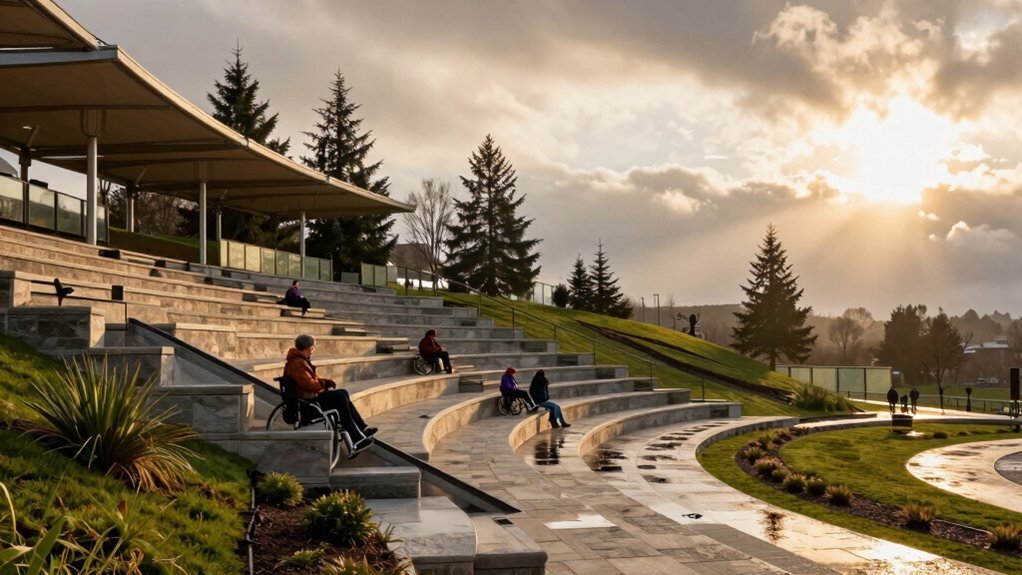
Why do weather resilience, shade, and accessibility matter for year‑round amphitheater enjoyment? You design for sun and rain, so audiences stay comfortable and safe. Shade structures, pavilions, or shells protect from heat and downpours, enabling more performances.
- Weather resilience and shade reduce heat gain and weather disruptions.
- Accessibility ensures comfortable seating and clear sightlines for all abilities.
- Drainage and seasonal adaptability prevent flooding and optimize stage placement.
Natural shading and orientation ease comfort, while geometry and materials influence acoustics and thermal feel. Drainage systems protect safety during rain events, preserving audience trust. Seasonal adaptability guides sun angles, wind patterns, and humidity to sustain performance quality. Thoughtful layout keeps audiences comfortable, engaged, and returning home.
Elevating Community: From Family Nights to Neighborhood Events
Your amphitheater design brings families together for intimate nights and invites neighbors to larger gatherings.
With flexible seating and easy access to nearby downtown amenities, community events grow from family nights to thriving neighborhood celebrations.
Family Nights Together
A flexible downtown amphitheater makes family nights effortless and inclusive. You experience multi-purpose programming that hosts family nights, concerts, markets, and gatherings in a single open-air venue, keeping evenings lively without moving you around. Proximity to ground-level amenities makes it easy to grab a bite or a treat, boosting accessibility and downtown vitality for every outing.
- Flexible spaces for frisbee, picnics, and movie nights
- Daytime family-friendly programs plus evening performances
- Central location with shared parking and multi-modal access
With sunken seating and natural surroundings, you enjoy comfortable, versatile spaces for any time. This setup invites recurring family nights and stronger community interaction, aligning with the broader goal of elevating community through inclusive, neighborhood-scale experiences. Together, you shape everyday gathering moments here.
Neighborhood Events Thrive
Neighborhood events thrive when a flexible downtown amphitheater invites residents to gather for markets, concerts, storytelling, and cultural happenings. You experience how these spaces become community hubs, hosting family nights, neighborhood gatherings, and pop-up celebrations that strengthen everyday connections. Open-air design stages and concentric seating maximize capacity while keeping sightlines clear, so every performance feels intimate and grand at once. With proximity to dining, retail, and hotels, foot traffic rises, boosting local spending during events. This multi-use approach supports daytime frisbee, picnics, and storytelling, then shifts to concerts, theater, or film screenings after dark. Central, well-located venues enable easy multi-modal access and smart parking, widening participation for residents and visitors alike. The result is lasting civic pride, cleaner streets, and more vibrant downtown life.
Frequently Asked Questions
What Are the Advantages of Amphitheaters?
They provide excellent acoustics, natural sightlines, and a shared, immersive experience; you gain flexible, multi-use spaces, seasonal appeal, and lower operating costs over time, plus community vitality, tourism draw, and resilient, adaptable design for all.
What Is Special About the Amphitheater?
What’s special about the amphitheater is its design that amplifies sound naturally, brings you and others together around a central stage, and uses the landscape to create intimate, immersive, versatile outdoor performances for everyone, everywhere.
What Are the Principles of Amphitheatre Design?
You’re optimizing sightlines, acoustics, and audience immersion; you’re leveraging natural terrain; you’re aligning stage orientation; you’re using shell acoustics; you’re designing for multi-use spaces; you’re integrating AVL; you’re prioritizing comfort, safety, and accessibility for all.
What Is the Purpose of the Amphitheater?
You use an amphitheater to host performances and events outdoors with sightlines and amplified acoustics, bringing people together, while you leverage topography to enhance sound, fueling local vitality by attracting audiences to shops and eateries.


Leave a Reply