
To host a perfect backyard cornhole tournament, select a level playing surface with 27 feet between boards and clear overhead space. Choose a suitable format (single or double elimination) and use a bracket app for tracking. Set up quality equipment with matching bags, establish clear scoring rules, and create balanced team pairings. Add a comfortable spectator zone with shade and seating. Don’t forget refreshment stations and regular break times. These essentials will elevate your tournament from casual to championship-worthy.
Choose the Perfect Tournament Format
When planning your backyard cornhole tournament, selecting the right format is your first essential decision. For larger gatherings, consider a single-elimination bracket that keeps things moving efficiently. If you want to give players a second chance, opt for double-elimination, though this will extend your event duration.
Next, determine how you’ll pair competitors. Random drawings create unpredictable matchups that level the playing field, while skill-based pairings can balance teams and maintain competitive matches throughout.
To manage your tournament smoothly, utilize bracket apps like Scoreholio or Brackelope that generate brackets and track progress in real-time. Create a clear schedule with assigned courts and designated scorers to prevent disputes. This preparation ensures accurate tracking and minimizes downtime between matches.
Select an Ideal Backyard Playing Area
Finding the perfect spot for your cornhole tournament means securing a flat, level surface that can accommodate the full 27-foot court length between boards.
You’ll need to measure carefully and ensure there’s enough obstacle-free space surrounding the playing area to prevent interference from spectators or stray bags.
Don’t forget to check that your surface is stable enough to prevent wobbling during gameplay—avoid uneven turf or gravel that might affect the players’ throwing accuracy.
Flat, Level Surface Essential
Why do professional cornhole players obsess over their playing surface? Because they know even slight irregularities can dramatically affect gameplay. You’ll want the same advantage for your backyard tournament.
Choose a flat, level area where boards won’t wobble and bags will travel consistently. Your playing surface should be completely free of debris, roots, or dips that might cause unpredictable bounces or skids.
Ensure you have enough space—at least 27 feet between boards plus additional clearance around all sides. Avoid overly soft turf where boards might sink or shift during play.
If your yard has minor slopes, don’t worry. For outdoor setups on grass or pavement, simply use adjustable levelers or shims to compensate and create that perfect playing field.
Measure Full Court Length
With your level surface secured, precise measurements become your next focus. Official cornhole play requires 27 feet between boards—this is your non-negotiable minimum playing length. Using a measuring tape, mark this distance clearly before setting up your boards.
Don’t forget to plan for adequate clearance around your court. Allow approximately 10 feet on each side and behind the boards to give players throwing room and prevent interference with other activities. This extra space ensures bags won’t land in flowerbeds or bounce off nearby furniture.
If your yard can’t accommodate a full-sized setup, consider a compact alternative with a single board, some folding chairs, and boundary tape. When finalizing placement, factor in the sun’s position—nobody wants to throw directly into blinding light during your tournament’s critical moments.
Provide Obstacle-Free Surroundings
The ideal cornhole playing area demands more than just the right measurements—it requires a thoughtfully cleared space where players can focus on their technique without distractions. Scan your backyard for potential hazards and remove all debris, rocks, and sticks that could deflect bags or cause players to trip.
| Area to Check | Potential Obstacles | Solution |
|---|---|---|
| Playing Surface | Uneven ground, slopes | Select flat, level area |
| Throwing Lanes | Rocks, sticks, toys | Clear completely |
| Overhead Space | Tree branches, lights | Ensure 8+ feet clearance |
| Surrounding Area | Furniture, planters | Create 5-foot buffer zone |
| Ground Surface | Mud, loose gravel | Use mats or solid surface |
Position your setup away from strong winds and consider adding shade for player comfort—a canopy works perfectly when the summer sun is beating down.
Prepare Quality Cornhole Equipment
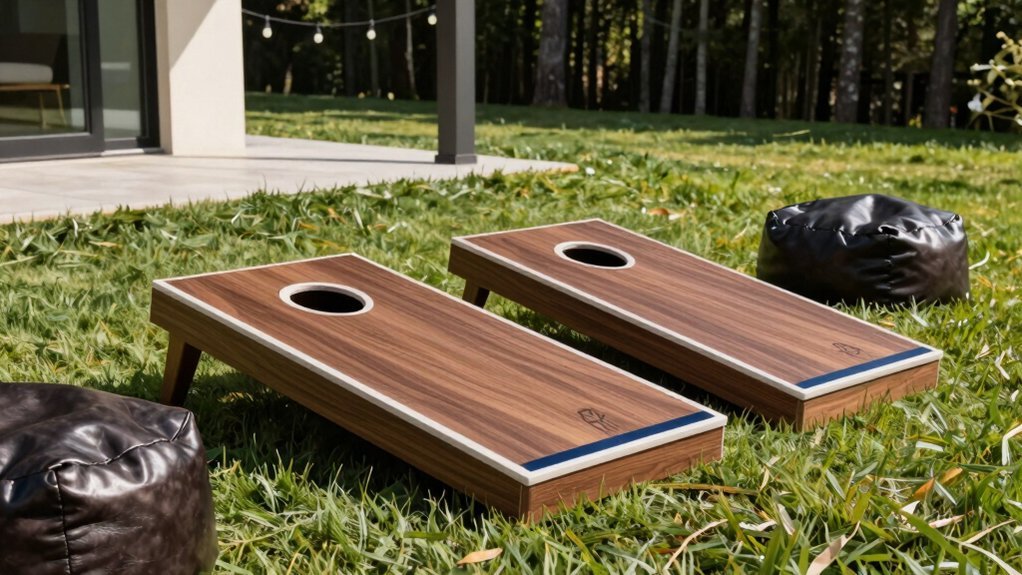
Setting up the perfect cornhole tournament begins with having regulation-quality equipment at your disposal. Choose boards measuring 27 inches between them with faces of 24 by 48 inches for standard play. You’ll need official bags filled with either corn kernels or resin pellets, typically 8 bags per team.
- Inspect boards before play for warping, loose screws, or torn surfaces
- Replace worn components prior to tournament day
- Consider custom logos or personalized boards to enhance visual appeal
- Use dedicated carrying cases for easy transport and setup
- Ensure you have complete sets with matching bags for all teams
Proper equipment preparation prevents delays and ensures fair competition. Quality boards and bags make the difference between a frustrating experience and a smoothly-run tournament that everyone will enjoy.
Establish Clear Scoring Rules
You’ll need to clearly define how points are counted to ensure your cornhole tournament runs smoothly. Establish a standard scoring system—typically 3 points for bags in the hole and 1 point for bags on the board, with cancellation scoring between opponents. Designate an impartial scorekeeper and post visible rules to quickly resolve any scoring disputes that might arise during heated competition.
Point System Basics
How often have friendly cornhole matches turned into heated debates over scoring? Prevent those disputes by establishing a clear point system everyone understands from the start.
Stick to standard cornhole scoring rules where cancellation applies after each round. The difference between teams’ scores determines who advances on the scoreboard. Make sure everyone knows exactly when the game ends – typically at 21 points.
- Award 3 points for bags that go through the hole
- Count 1 point for bags that land and stay on the board
- Apply cancellation scoring (opposing teams’ points cancel each other)
- Designate a non-playing scorer to track points objectively
- Post visible scoring rules near the playing area for quick reference
Consider creating simple scorecards for teams to track their progress throughout the tournament.
Scoring Disputes Resolution
Even with a well-established point system, scoring disputes can still derail your cornhole tournament’s fun factor. Prevent arguments by establishing and publishing your scoring method before the first toss, clearly defining hole-in values (3 points), on-board landings (1 point), and cancellation rules.
Designate a non-playing scorekeeper to track points and resolve disagreements in real-time. Post a visible rule sheet at your courts listing foul penalties and disqualification criteria for scoring violations.
Choose a consistent format like best-of-nine rounds to 21 points to minimize confusion. When disputes arise, follow a simple protocol: pause play, consult the rule sheet, and if necessary, defer to your designated tournament official for the final call. This structured approach keeps the competition friendly and focused on fun.
Create Balanced Team Matchups
Creating balanced team matchups can make or break your backyard cornhole tournament’s success. When players feel competitions are fair, everyone has more fun. Consider separating beginners from advanced players first, then mixing them to create balanced teams across all rounds.
- Use random pairings to prevent stacked teams, especially at gatherings with mixed skill levels
- Try apps like Scoreholio or Brackelope to randomize matchups and track progress
- For larger events, pair by estimated skill level, ensuring each team includes comparable experience
- Implement a blind-draw doubles format where partners are randomly assigned
- Create a handicap-friendly rotation system that maintains balance throughout the tournament
Don’t let mismatched teams dampen the competitive spirit. With thoughtful pairings, even newcomers will feel they’ve a fighting chance against more experienced players.
Set Up a Comfortable Spectator Zone
While balanced teams keep the competition fair, the enjoyment of your cornhole tournament extends beyond the players themselves. Create a shaded viewing area with at least 6-8 feet of clearance from the boards to ensure spectators don’t interfere with gameplay.
Position this zone along the sides of courts rather than behind throwing lanes, and furnish it with 2-3 chairs per area plus folding tables for drinks and personal items. Your guests will appreciate having a dedicated space to relax between matches.
Install clear signage for safety rules and a visible scoreboard so everyone can follow the action without crowding the playing area. For families attending, set up a separate kids’ zone with activities or mini cornhole boards to keep younger guests entertained away from the competition.
Organize Refreshments and Break Areas
A well-planned refreshment strategy can transform your cornhole tournament from good to memorable. Set up shaded stations near the playing area with coolers containing water, lemonade, and adult beverages to keep players hydrated and comfortable. Position a clearly labeled snack table with finger foods and fruits for quick energy between games.
Create a dedicated rest area with ample seating to prevent court crowding during breaks. Remember to schedule regular water breaks and offer electrolyte drinks to maintain player performance and safety. Post visible signage about beverage rules and break times to minimize game interruptions.
- Create shaded refreshment stations with varied drink options
- Offer a dedicated snack table with easy-to-grab foods
- Establish comfortable rest areas away from the courts
- Schedule regular hydration breaks throughout the tournament
- Use clear signage to communicate refreshment rules and times
Frequently Asked Questions
How Do I Handle Disputes About Scoring or Rules?
Appoint a neutral referee before starting. You’ll prevent arguments by clearly establishing rules upfront. When disputes arise, make quick, fair decisions and move on to maintain the fun atmosphere.
What’s the Best Way to Accommodate Players With Different Skill Levels?
Create skill-based handicaps, offer coaching for beginners, or use mixed-skill teams. You’ll keep games competitive by giving newer players closer throwing positions or bonus points when needed.
Should I Offer Prizes and What Kinds Work Best?
Yes, offer prizes! Gift cards, beverage koozies, and small trophies work best. You’ll create excitement when you award different prize categories like “Most Improved” alongside the championship winners.
How Do I Manage Play During Unexpected Weather Changes?
Have a pop-up canopy ready for light rain. You’ll need tarps to cover boards during heavier downpours. For wind, use sandbags on board legs and heavier beanbags during play.
What Alternative Games Pair Well With Cornhole for Variety?
Pair cornhole with ladder toss, washer toss, or kan jam. They’re similar in skill level, portable, and use the same space. Spikeball and bocce ball offer different movement dynamics.

Leave a Reply