
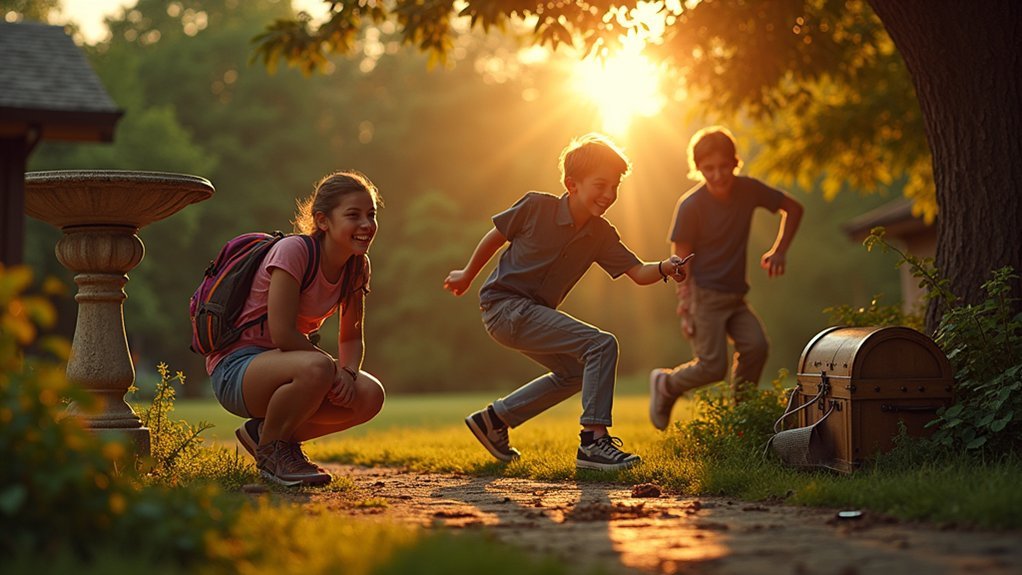
You can transform your backyard into an unforgettable adventure zone with these three epic scavenger hunts. Try a glow-in-the-dark night quest using UV-reactive paint and blacklight flashlights, or launch a photo mission hunt where teens earn points for creative smartphone shots with hashtag themes. For puzzle lovers, design a mystery hunt with riddles, ciphers, and locked boxes leading to a grand prize. Each idea below includes setup tips and scoring strategies to maximize the fun.
Glow-in-the-Dark Night Quest Challenge
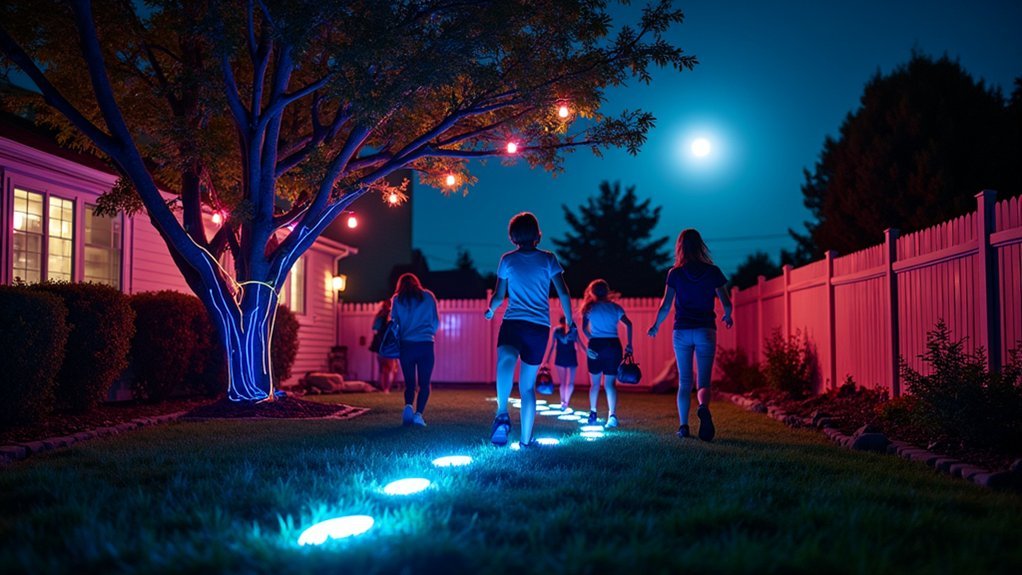
When the sun goes down, the real adventure kicks off with a glow-in-the-dark scavenger hunt that’ll transform your backyard into an electrifying nighttime playground.
Hide glow sticks, LED bracelets, and fluorescent objects throughout bushes, trees, and garden beds.
You can also paint clues on rocks using UV-reactive paint that only appears under blacklight.
Give each teen a small blacklight flashlight and a list of items to find.
Set a timer for 30 minutes to amp up the competition.
Create teams and assign point values to different objects—rare items earn more points.
For extra excitement, include glow-in-the-dark puzzle pieces that teams must collect and assemble to reveal the final treasure location.
You’ll watch teens sprint through darkness, hunting for hidden treasures while creating unforgettable memories.
Photo Mission Scavenger Hunt With Social Media Twists
Trading glowing treasures for smartphone cameras brings a whole new dimension to backyard scavenger hunts. You’ll create missions that challenge teens to capture creative photos while adding fun social media-style elements.
Set up photo challenges that require teamwork and creativity. Each completed mission earns points, and bonus points go to the most original interpretations.
| Challenge Type | Mission Example | Points |
|---|---|---|
| Perspective Shot | Forced perspective with garden gnome | 10 |
| Group Pose | Recreate a famous album cover | 15 |
| Creative Filter | Nature shot using only shadows | 20 |
Add hashtag themes for each round, like #BackyardSafari or #GardenGlowUp. You can create a private group where teens share their submissions instantly. The competitive element keeps everyone engaged while building memorable content they’ll actually want to keep.
Mystery Puzzle Hunt With Hidden Clues and Prizes
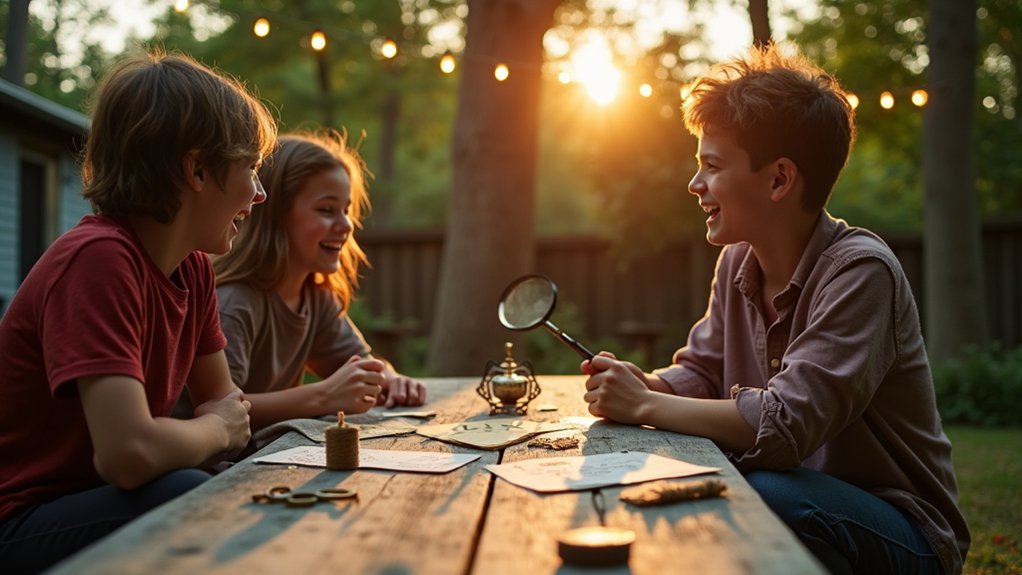
Although photo challenges spark creativity, mystery puzzle hunts tap into teens’ love of problem-solving and competition. You’ll want to create a series of interconnected clues that lead participants through your backyard toward a final prize.
Start by hiding your grand prize, then work backward to design five to seven clues. Each clue should require solving a riddle, decoding a cipher, or completing a physical challenge before revealing the next location. Consider using invisible ink, QR codes, or locked boxes with combination hints.
Divide teens into teams of two or three to encourage collaboration. Set a time limit of 45 minutes to maintain urgency. Hide smaller prizes at intermediate checkpoints to keep motivation high throughout the hunt. The winning team claims the ultimate prize while runners-up receive consolation rewards.
Frequently Asked Questions
How Many Teens Can Participate in a Backyard Scavenger Hunt at Once?
You can include 10-30 teens in your backyard scavenger hunt, depending on your space and activity style. For larger groups, you’ll want to divide participants into teams of 3-5 players for better engagement.
What Is the Ideal Duration for a Teen Scavenger Hunt?
You’ll want to plan for 60 to 90 minutes, which gives teens enough time to search, solve clues, and stay engaged without losing interest. Don’t forget to include extra time for explaining rules beforehand.
How Do I Handle Teens With Mobility Limitations During Outdoor Hunts?
You’ll want to create alternative challenges that don’t require running or climbing. Assign them strategic roles like photographer, puzzle solver, or team navigator. You can also design stations they’ll reach easily while others complete physical tasks.
What Backup Plans Work Best if Weather Suddenly Turns Bad?
You’ll want to prepare indoor alternatives like garage-based challenges or covered patio stations. Keep waterproof containers ready for clues, and create a text-based digital hunt teens can complete from sheltered spots if storms hit.
Should Parents Supervise or Let Teens Run the Hunt Independently?
You should stay nearby but give teens space to run the hunt themselves. Let them problem-solve and lead while you remain available for emergencies or questions. This balance builds their confidence and independence.



Leave a Reply