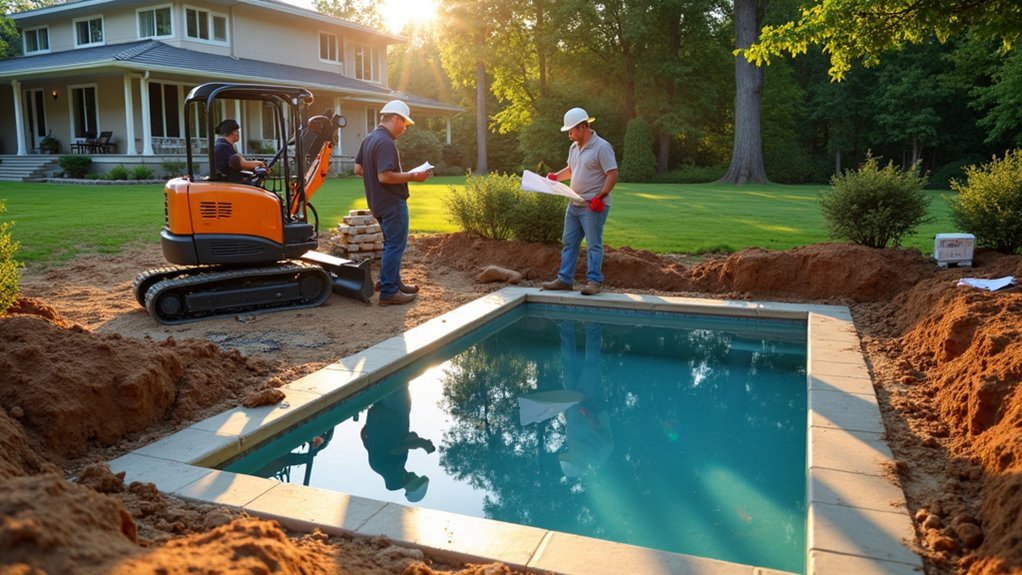
You’ll pay anywhere from $1,500 for a basic above-ground pool to over $100,000 for a custom concrete design. Vinyl liner pools typically run $25,000–$45,000, fiberglass costs $30,000–$60,000, and gunite pools start around $50,000. Don’t forget the extras—electrical work adds $1,500–$3,500, plumbing runs $1,200–$2,500, and safety fencing costs $1,500–$4,000. Most experts recommend budgeting 15%–20% beyond your quoted price to cover the often-overlooked expenses that can quickly add up.
Average Price Ranges for Different Pool Types
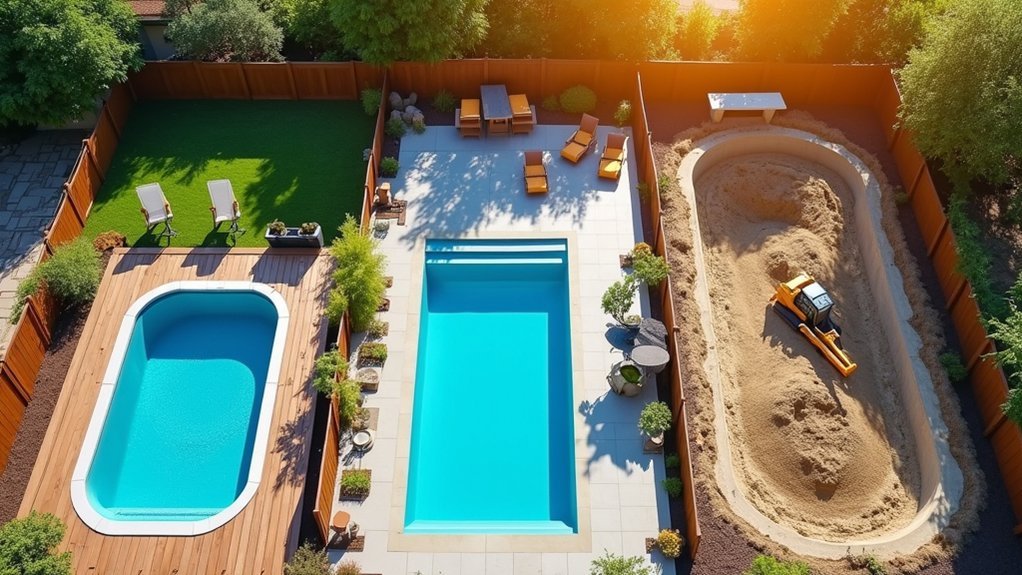
When you’re planning a backyard pool installation, the type of pool you choose will dramatically impact your total investment. Vinyl liner pools offer the most budget-friendly option, typically ranging from $25,000 to $45,000.
Your pool type choice is the single biggest factor determining your backyard installation budget.
Fiberglass pools fall in the mid-range at $30,000 to $60,000, with faster installation times offsetting higher upfront costs.
Concrete pools represent the premium choice, costing between $50,000 and $100,000 or more. You’ll pay extra for their complete customization options and durability.
Above-ground pools remain the most affordable at $1,500 to $15,000, though they add less property value.
Keep in mind these figures cover basic installations. Your final price will fluctuate based on pool size, depth, location, and regional labor rates.
Additional features like heating systems or custom shapes push costs higher.
Inground Pool Installation Expenses Breakdown
When you’re planning an inground pool installation, understanding where your money goes helps you budget effectively.
Your total costs break down into two main categories: excavation and labor costs, which cover the physical work of digging and constructing your pool, and materials and equipment fees, which include everything from concrete or fiberglass to pumps and filtration systems.
Let’s examine what you can expect to pay for each of these essential components.
Excavation and Labor Costs
Before your dream pool takes shape, excavation and labor costs will claim a significant portion of your budget—typically 25% to 50% of the total project expense. You’ll find that soil conditions dramatically impact your final bill. Rocky terrain or clay-heavy ground requires specialized equipment and extended dig times, pushing costs higher.
| Cost Factor | Price Range |
|---|---|
| Basic Excavation | $1,500–$5,000 |
| Difficult Terrain | $5,000–$15,000 |
Labor rates vary by region, but you should expect to pay between $50 and $100 per hour for skilled workers. Your crew will handle digging, grading, and debris removal. If they encounter underground utilities, boulders, or high water tables, you’ll face additional charges. Getting multiple quotes helps you identify fair pricing in your area.
Materials and Equipment Fees
Although excavation prepares the ground, materials and equipment fees typically represent the largest slice of your inground pool budget—often 50% to 60% of total costs.
You’ll pay for the pool shell itself—whether fiberglass, vinyl liner, or concrete—plus plumbing pipes, electrical wiring, and structural rebar.
Your filtration system, pump, and heater add $2,000 to $10,000 depending on quality and pool size. You’ll also need to budget for skimmers, returns, drains, and lighting fixtures. Concrete or gunite pools require additional materials like plaster, tile, and coping stones for finishing.
Don’t overlook smaller items that add up quickly: PVC fittings, adhesives, sealants, and waterproofing membranes. Equipment rental fees for cranes or specialized machinery also factor into this category. Request itemized quotes to understand exactly where your money goes.
Above Ground Pool Costs and Considerations
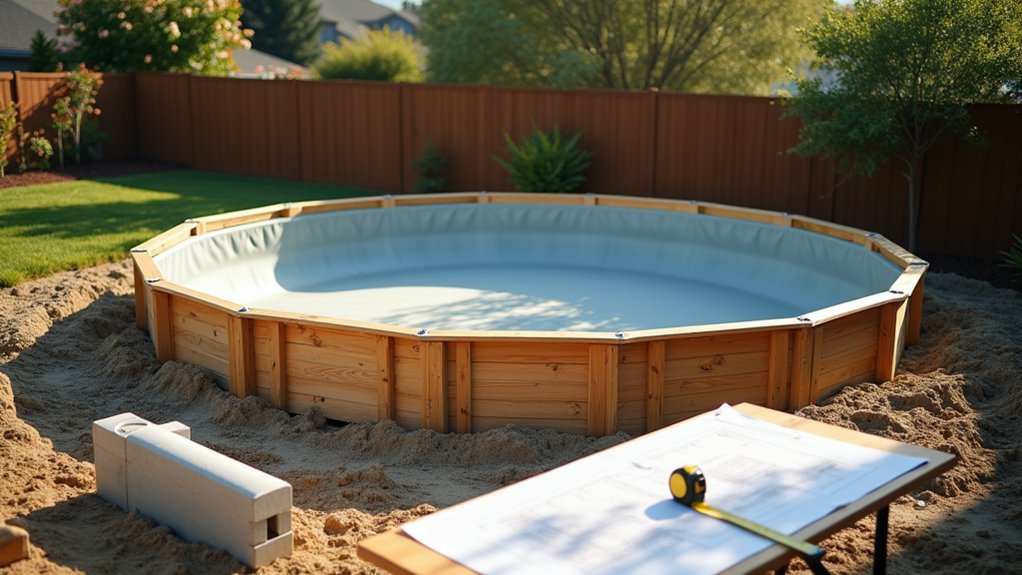
Above ground pools offer a budget-friendly alternative to their in-ground counterparts, typically costing between $1,500 and $15,000 for complete installation.
Above ground pools deliver serious savings, with complete installations running just $1,500 to $15,000 compared to pricier in-ground options.
You’ll find these pools easier to install, often requiring just a few days versus weeks for in-ground options.
When planning your above ground pool purchase, consider these key factors:
- Pool size and shape directly impact your total cost
- Wall material quality affects durability and longevity
- Deck and landscaping additions can double your investment
- Annual maintenance runs approximately $500 to $1,000
You should also factor in site preparation costs. Leveling your yard, adding a sand base, and ensuring proper drainage are essential steps you can’t skip.
While above ground pools depreciate faster than in-ground versions, they’re an excellent choice if you’re working with a limited budget.
Fiberglass Pool Pricing Factors
Fiberglass pools represent a mid-range investment that’ll set you back between $20,000 and $85,000 for a complete installation.
Your final price depends heavily on pool size and shape. Standard rectangular designs cost less than freeform or custom configurations. Depth matters too—deeper pools require more excavation and structural support.
Geographic location affects pricing noticeably. Labor rates, permit fees, and transportation costs for the pre-manufactured shell vary by region. Delivering a fiberglass shell to remote areas can add thousands to your budget.
Site preparation drives costs up quickly. Rocky soil, tight access points, or sloped terrain demand additional work. You’ll also factor in decking, fencing, electrical hookups, and landscaping restoration.
The good news? Fiberglass pools require less maintenance than concrete alternatives and install faster, often within one to three weeks.
Concrete and Gunite Pool Investment Requirements
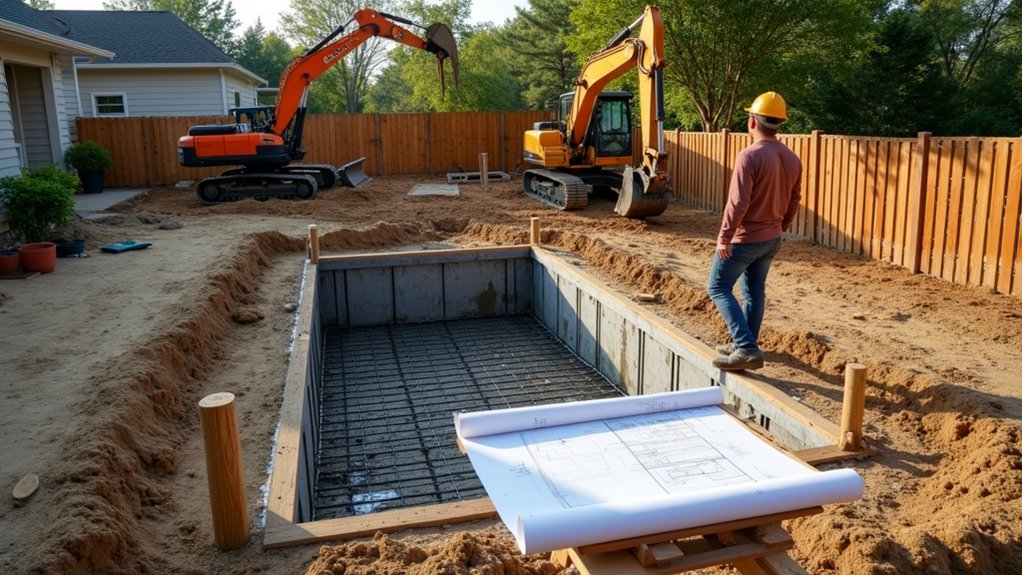
When you’re considering a concrete or gunite pool, you’ll need to budget substantially more for both materials and skilled labor compared to other pool types.
These custom pools typically cost between $50,000 and $100,000 or more, with the hand-applied construction process requiring specialized crews working over several weeks.
Beyond the initial investment, you should also prepare for higher long-term maintenance expenses, including resurfacing every 10-15 years and increased chemical and cleaning costs.
Material and Labor Costs
Concrete and gunite pools represent the most significant investment among all pool types, with material and labor costs reflecting the intensive construction process they require. You’ll find these pools demand skilled craftsmen and extended construction timelines.
Your material and labor breakdown typically includes:
- Raw materials (concrete, rebar, plumbing): $15,000-$25,000
- Excavation and soil removal: $1,500-$5,000
- Skilled labor for shell construction: $10,000-$20,000
- Finishing work (plaster, tile, coping): $5,000-$15,000
Labor costs alone can consume 50-60% of your total budget because gunite application requires specialized pneumatic equipment and experienced technicians. You’re paying for precision—the shell must cure properly and maintain structural integrity for decades.
Expect the construction phase to span 8-12 weeks, with labor crews working multiple phases throughout the project.
Long-Term Maintenance Expenses
Although your upfront investment in a concrete or gunite pool is substantial, the ongoing maintenance costs will markedly impact your total ownership expenses over time. You’ll spend between $80 and $150 monthly on chemicals, electricity, and water to keep your pool functioning properly.
Concrete pools require acid washing every three to five years, costing $450 to $650. You’ll also need to replaster the surface every 10 to 15 years, which runs $10,000 to $20,000 depending on your pool’s size. Equipment replacements add up quickly—pumps last 8 to 12 years and cost $500 to $1,500, while heaters need replacing every 10 years at $1,500 to $4,000.
Budget approximately $3,000 to $5,000 annually for routine maintenance. Over 20 years, you’re looking at $60,000 to $100,000 in total upkeep costs.
Vinyl Liner Pool Budget Expectations
Vinyl liner pools offer the most budget-friendly entry point into pool ownership, typically running between $25,000 and $45,000 for a complete installation.
You’ll get a smooth, non-abrasive surface that’s gentle on skin and available in numerous patterns and colors.
However, you should plan for these recurring costs:
- Liner replacement every 5-9 years: $4,000-$8,000
- Annual chemical and maintenance supplies: $500-$1,000
- Potential leak repairs: $350-$1,500 per incident
- Winterization services: $150-$300 annually
Your initial savings come with trade-offs. Liners are vulnerable to punctures, fading, and algae growth in seams.
You can’t install salt chlorination systems without risking premature liner degradation.
Factor these ongoing expenses into your budget before committing to this pool type.
Excavation and Site Preparation Fees
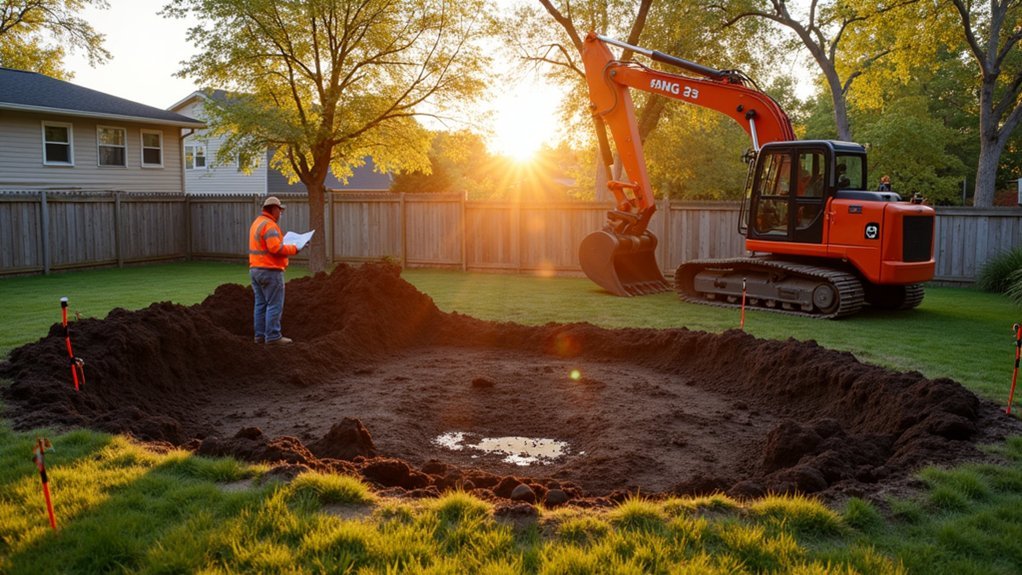
Before any digging begins, you’ll need to budget for soil testing requirements that determine your ground’s stability and composition.
Equipment access challenges can considerably increase costs if crews must navigate narrow gates, slopes, or obstacles to reach your backyard.
You should also factor in debris removal expenses, which cover hauling away rocks, dirt, and other materials excavated from the pool site.
Soil Testing Requirements
When you’re preparing to install a backyard pool, soil testing isn’t just a recommended step—it’s essential for determining whether your property can support the structure and what additional work you’ll need.
Professional soil testing typically costs between $500 and $1,500, depending on your location and testing complexity. This analysis reveals critical information about your ground conditions.
A thorough soil test evaluates:
- Soil composition and drainage capacity
- Water table depth and groundwater presence
- Load-bearing strength for structural support
- Potential for soil expansion or contraction
If testing uncovers problematic conditions like high clay content or unstable soil, you’ll face additional excavation costs. Rocky terrain may require specialized equipment, while poor drainage might necessitate extra waterproofing measures.
Addressing these issues early prevents costly structural failures later.
Equipment Access Challenges
Getting heavy excavation equipment into your backyard can markedly impact your total installation costs, especially if your property has limited access points. Standard excavators require at least 8 to 10 feet of clearance width to reach your dig site. If your property falls short, contractors must use smaller machinery that extends project timelines and labor hours.
Fences, gates, mature trees, and narrow side yards create common obstacles. You’ll pay extra if crews need to temporarily remove fencing sections or coordinate crane lifts for equipment placement. Some properties require hand digging for portions of the excavation, which can add $1,500 to $5,000 to your budget.
Before signing contracts, walk your property with potential installers. They’ll identify access challenges early and provide accurate cost estimates that prevent surprise charges later.
Debris Removal Expenses
Once excavation wraps up, you’re left with massive piles of dirt, rocks, and debris that won’t disappear on their own. Hauling away this material adds $500 to $1,500 to your project, depending on volume and local disposal fees.
Several factors influence your debris removal costs:
- Total cubic yards of excavated material
- Distance to the nearest disposal facility
- Type of debris (clean fill versus mixed materials)
- Local landfill or dump fees
You might save money if your contractor can repurpose some dirt for backfilling or landscaping. However, rocky or clay-heavy soil typically requires complete removal. Some homeowners offset costs by offering free fill dirt to neighbors or construction projects, though this requires coordination and doesn’t eliminate all hauling expenses.
Permits and Inspection Costs by Region
Before you break ground on your backyard pool, you’ll need to secure the proper permits and schedule inspections—costs that vary dramatically depending on where you live. In rural areas, you might pay as little as $100 for a basic building permit. However, urban centers like Los Angeles or New York can charge $500 to $2,000 or more.
Most jurisdictions require multiple inspections throughout construction, including electrical, plumbing, and final safety checks. These typically run $50 to $150 each. Some regions mandate additional permits for fencing, excavation, or water features.
Don’t skip this step to save money. Unpermitted pools create serious problems when selling your home and may violate local safety codes. Contact your local building department early to understand exact requirements and budget accordingly.
Decking and Patio Surround Expenses
Beyond the pool itself, you’ll need to budget for the decking and patio area that surrounds your new swimming space.
Your material choices—from basic concrete to premium natural stone or composite decking—will materially impact your total costs, with prices ranging from $6 to $30 or more per square foot.
Labor and installation expenses typically add another $5 to $15 per square foot, depending on the complexity of your design and local contractor rates.
Material Options and Pricing
Selecting the right decking and patio materials around your pool markedly impacts both your budget and long-term maintenance costs. You’ll find options ranging from budget-friendly to premium, each with distinct advantages.
Here’s what you can expect to pay per square foot:
- Concrete (basic) – $6 to $12
- Pavers – $10 to $25
- Natural stone – $15 to $30
- Composite decking – $20 to $40
Concrete offers the lowest upfront cost but may crack over time. Pavers provide durability and easy repairs since you can replace individual pieces.
Natural stone delivers unmatched aesthetics but requires sealing. Composite decking resists fading and won’t splinter, making it ideal for bare feet.
Consider your climate, desired aesthetic, and maintenance tolerance when choosing materials for your pool surround.
Labor and Installation Costs
Labor costs for pool deck installation typically run between $5 and $15 per square foot, though this figure can climb higher depending on your material choice and site complexity.
You’ll pay more for intricate patterns, curved edges, or multi-level designs that demand specialized skills.
Expect additional charges if your yard requires significant grading or excavation before work begins.
Rocky soil, tree root removal, and drainage modifications add $500 to $2,000 to your final bill.
Most contractors bundle material and labor into one quote, but you should request itemized estimates.
This breakdown helps you compare bids accurately and identify where you might save money.
Don’t forget permit fees, which range from $100 to $500 depending on your municipality.
Your contractor typically handles this paperwork, but you’re responsible for the cost.
Pool Equipment and Filtration System Pricing
Every backyard pool requires essential equipment to keep water clean, safe, and properly circulated. You’ll need to budget between $2,000 and $5,000 for a complete filtration and equipment package.
Your basic equipment costs typically break down as follows:
- Pool pump: $500–$1,500
- Filter system: $400–$1,200
- Heater: $1,500–$4,000
- Chlorinator or salt system: $300–$2,000
The type of filtration you choose affects both upfront costs and long-term maintenance expenses. Sand filters cost less initially but require more frequent replacement.
Cartridge and DE filters offer superior filtration at higher price points.
Variable-speed pumps cost more upfront but can reduce your energy bills by up to 80%. You’ll also want to factor in automation systems if you prefer convenient, smartphone-controlled pool management.
Electrical and Plumbing Installation Charges
Once you’ve selected your pool equipment, you’ll need licensed professionals to connect everything properly. Electrical work typically runs between $1,500 and $3,500, covering the dedicated circuit, GFCI outlets, bonding, and grounding requirements. Your electrician must install a sub-panel near the pool equipment pad to power the pump, heater, and lighting systems.
Plumbing costs range from $1,200 to $2,500 for standard installations. This includes PVC piping for water circulation, skimmer connections, return lines, and main drain installation. If you’re adding water features or a spa, expect to pay an additional $500 to $1,000 for extra plumbing runs.
Both trades require permits and inspections in most jurisdictions. Don’t cut corners here—improper electrical or plumbing work creates safety hazards and voids equipment warranties.
Landscaping and Fencing Requirements
Although your pool itself represents the centerpiece of your backyard transformation, you’ll need to budget separately for landscaping restoration and mandatory safety fencing.
Your pool is just the beginning—budget separately for landscaping repairs and required safety fencing to complete your backyard vision.
Heavy equipment damages lawns, gardens, and existing hardscaping during installation, requiring post-construction repairs.
Most municipalities mandate pool fencing meeting specific height and gate requirements. You’ll typically encounter these landscaping and fencing costs:
- Basic lawn restoration and reseeding: $500–$1,500
- Pool-compliant safety fencing (aluminum or mesh): $1,500–$4,000
- Decorative landscaping with drought-resistant plants: $2,000–$5,000
- Concrete or paver patio installation: $3,000–$10,000
Check local codes before selecting fencing materials, as regulations vary by jurisdiction.
Some areas require self-closing gates, specific latch heights, or non-climbable designs. Skipping proper fencing isn’t just illegal—it creates serious liability issues and voids most homeowner’s insurance pool coverage.
Hidden Costs Most Homeowners Overlook
Beyond landscaping and fencing, several unexpected expenses catch homeowners off guard during pool installation.
You’ll likely face permit fees ranging from $500 to $2,000, depending on your municipality.
Soil testing and excavation complications can add thousands if contractors encounter rock, clay, or high water tables.
Don’t forget about utility upgrades.
Your electrical panel may need expansion to handle pumps and heaters, costing $1,000 to $3,000.
Gas line extensions for heated pools add another $500 to $2,000.
You’ll also pay for water to fill your pool initially—typically $50 to $200—plus ongoing chemical startup costs around $300.
Many homeowners overlook increased property taxes and higher homeowner’s insurance premiums, which can rise 5% to 10% annually.
Budget an extra 15% to 20% beyond your quoted price for these surprises.
Ongoing Maintenance and Annual Operating Expenses
Owning a pool means committing to year-round expenses that extend far beyond your initial investment. You’ll spend between $1,200 and $1,800 annually on basic maintenance alone, including chemicals, cleaning supplies, and filter replacements.
Your ongoing costs typically break down into four major categories:
- Chemicals and water testing – $300 to $600 per year
- Electricity for pumps and heating – $500 to $1,200 annually
- Professional cleaning services – $100 to $250 monthly if you outsource
- Repairs and equipment replacement – $200 to $500 yearly on average
Don’t forget about seasonal expenses like winterizing in colder climates, which adds $150 to $300 each year. Water costs also increase your utility bills, especially when you’re refilling after backwashing filters or addressing evaporation during hot months.
Frequently Asked Questions
How Long Does a Typical Backyard Pool Installation Take From Start to Finish?
You’ll typically wait 8 to 12 weeks for your backyard pool installation, though timelines vary. Concrete pools take longest—often 3 to 6 months—while fiberglass pools can be ready in just 2 to 4 weeks.
Will Installing a Pool Increase My Homeowner’s Insurance Premiums?
Yes, you’ll likely see your homeowner’s insurance premiums increase by 5-10% when you add a pool. You’re taking on additional liability risk, so contact your insurance provider before installation to understand your specific costs.
What Time of Year Is Best to Install a Backyard Pool?
You’ll get the best results scheduling your pool installation in fall or winter. Contractors have more availability, you’ll often score off-season discounts, and your pool will be ready when summer arrives.
How Much Does a Pool Increase My Home’s Resale Value?
You can expect a pool to boost your home’s value by 5% to 8% on average. However, you’ll typically recover only 40% to 50% of your installation costs when you sell.
Can I Finance My Pool Installation, and What Are Typical Loan Terms?
Yes, you can finance your pool installation through home equity loans, personal loans, or pool-specific financing. You’ll typically find terms ranging from 5-15 years, with interest rates between 6-12% depending on your credit score.


Leave a Reply