
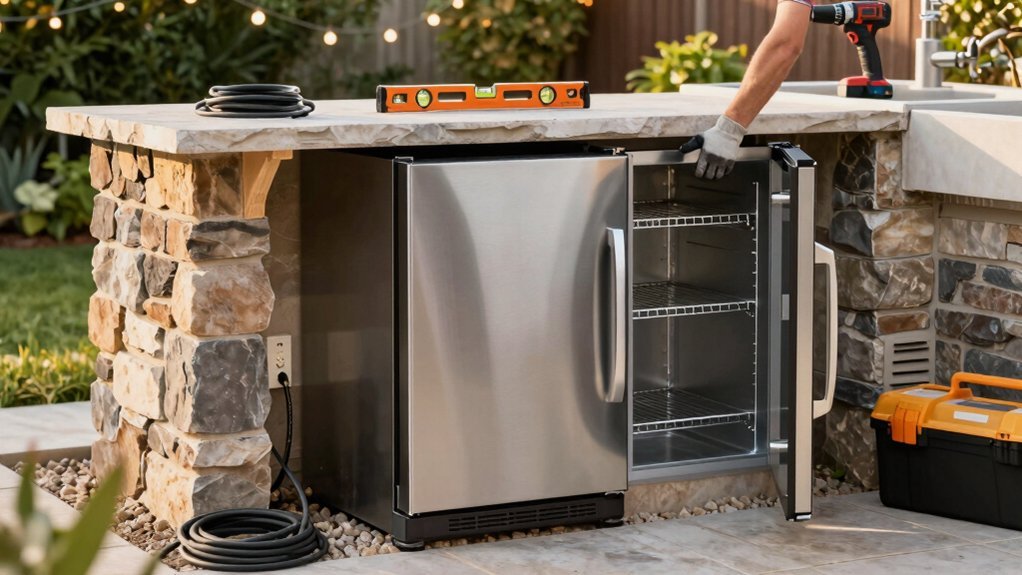
To install a backyard wine fridge, choose an outdoor-rated unit and place it in a shaded area away from direct sunlight and heat sources. Ensure it sits on a perfectly level surface with proper ventilation clearance (at least 1 inch on all sides). Connect to a GFCI-protected outdoor outlet and allow the unit to settle for 24 hours before loading wine. Set temperature to 55°F for storage, adjusting as needed for serving. Follow these steps for years of perfect outdoor wine enjoyment.
Selecting the Right Outdoor Wine Refrigerator
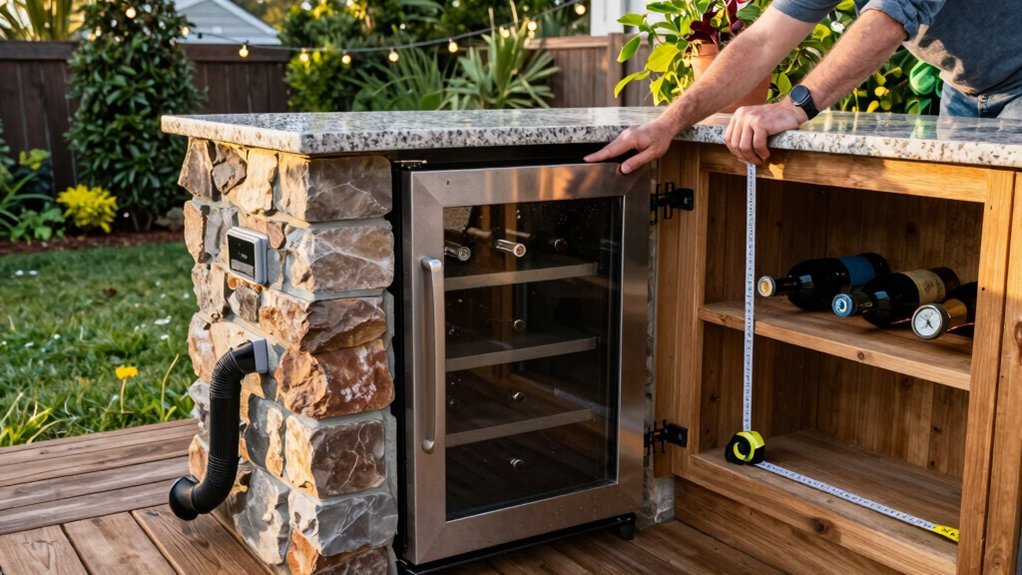
Why settle for indoor wine storage when your backyard can house a dedicated wine fridge? For outdoor installations, you’ll need a specifically outdoor-rated unit designed to withstand temperature fluctuations and humidity.
First, determine whether you need a built-in or freestanding model. Built-in refrigerators feature front ventilation systems that allow for flush installation, while freestanding units require space around them for proper air circulation through their side or rear vents.
Ensure your electrical setup includes an outdoor-rated outlet—most units require 110-volt power, though some larger models may need 220-volt connections and a dedicated circuit breaker. When planning placement, avoid direct sunlight and heat sources like grills or ovens. Position your wine fridge with adequate clearance for ventilation to maximize efficiency and lifespan.
Finding the Perfect Location for Your Backyard Wine Fridge
When choosing where to place your backyard wine fridge, prioritize shaded areas that protect it from direct sunlight to maintain ideal cooling efficiency and prevent temperature fluctuations. You’ll need reliable access to an outdoor-rated electrical outlet nearby, avoiding extension cords that could create safety hazards or compromise performance.
Position your unit on a level surface with adequate ventilation clearance, keeping it away from grills, outdoor heaters, and other heat-generating equipment.
Shade vs. Sun
Where you place your backyard wine fridge can make all the difference between perfectly chilled wines and an overworked, inefficient unit. Sunlight exposure is your fridge’s worst enemy, causing interior temperatures to rise and forcing the compressor to work harder, consuming more energy and shortening its lifespan.
For optimal performance:
- Select a fully shaded area under trees or against a north-facing wall to naturally protect your unit
- Install a pergola or canopy if natural shade isn’t available, providing both UV protection and aesthetic value
- Keep at least 5 feet of distance between your wine fridge and heat-generating appliances like grills or outdoor heaters
- Add a small awning directly over the unit to shield it from rain while maintaining proper ventilation around all sides
Access to Power
How effectively you power your backyard wine fridge can determine its reliability and longevity. Ensure you have a dedicated outdoor-rated outlet within reach, ideally on a circuit designed for continuous operation. The outlet must be properly grounded with GFCI protection for safety in outdoor environments.
| Power Consideration | Requirement | Why It Matters |
|---|---|---|
| Outlet Type | Outdoor-rated | Weather resistance |
| Circuit | Dedicated | Prevents overloading |
| Protection | GFCI | Safety from moisture |
| Location | Within reach | Avoids extension cords |
| Capacity | Matches fridge needs | Prevents tripping breakers |
Position your fridge with sufficient clearance for ventilation, keeping it away from heat sources. Install on a level surface to reduce vibration, and ensure the power setup accommodates the unit without restricting door movement or airflow.
Preparing a Stable Foundation and Proper Ventilation
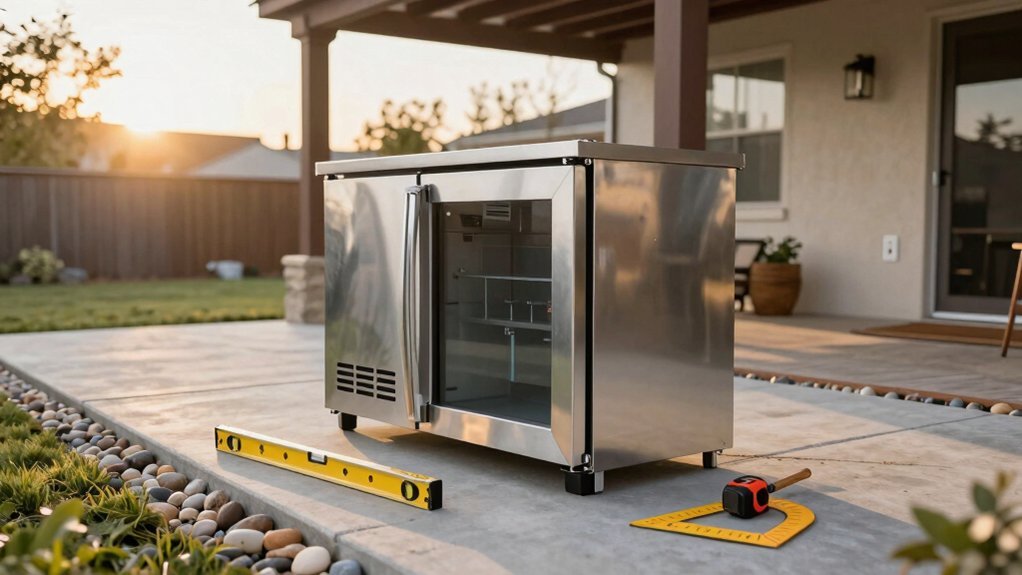
A stable foundation and proper ventilation form the backbone of any successful backyard wine fridge installation. You’ll need to create an environment that maintains consistent temperatures and prevents operational issues.
- Find a perfectly level surface for your wine fridge or use leveling feet to ensure it sits evenly on all four legs, preventing door alignment problems and internal rack binding.
- Allow at least 1 inch of clearance around built-in units and adequate space behind freestanding models to ensure proper airflow.
- Position your fridge away from direct sunlight and heat sources that can force the unit to work harder and consume more energy.
- Let your wine fridge settle for a couple hours after placement before powering it up, allowing the coolant to stabilize properly.
Setting Up Electrical Requirements and Weatherproofing
When planning your outdoor wine fridge installation, electrical setup and weatherproofing deserve careful attention to guarantee safety and longevity. Ensure you have an outdoor-rated outlet within easy reach of your wine fridge location. For larger units, you’ll need to plan for a dedicated circuit—never rely on extension cords for permanent installations.
Verify your outlet matches your fridge’s requirements, typically a standard 110-volt NEMA 5-15 connection, though some units may require 220-volt service. Position your fridge away from direct sunlight and heat sources to improve efficiency and prevent system strain.
For built-in installations, apply weatherproof sealant around edges to protect against moisture intrusion. After installation, let the unit settle for 24 hours before loading with wine, then monitor temperature and humidity levels regularly.
Installation and Leveling Process
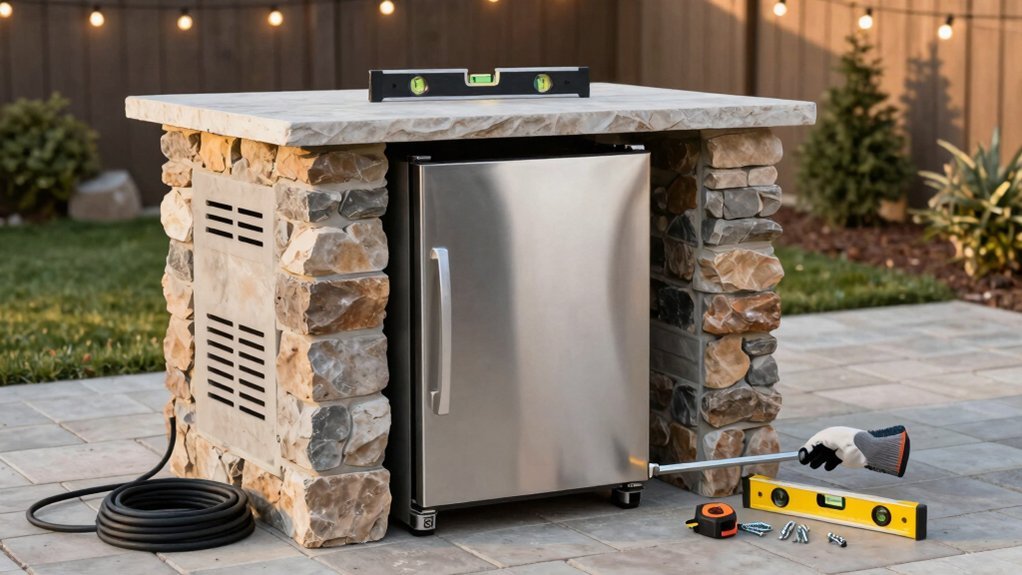
Once you’ve prepared your space with proper electrical connections and weatherproofing, the installation and leveling process demands attention to detail for peak performance. Gather your basic tools—level, screwdriver, and wood scraps for shimming—before carefully positioning your wine fridge in its designated area.
- Use a level to check that all four legs rest evenly on the surface, adjusting with shims if necessary
- Ensure proper ventilation clearance, especially for built-in units that require front venting
- Recheck levelness after final placement, as uneven positioning can cause door misalignment
- Allow the unit to settle for at least two hours before plugging it in to reduce strain on the compressor
Proper leveling prevents mechanical issues and extends the life of your outdoor wine fridge.
Temperature Control and Initial Setup
With your outdoor wine fridge properly installed and leveled, the next step involves setting up ideal temperature conditions for your collection. Before powering up your unit, allow it to settle for a couple of hours—this gives the coolant time to acclimate and reduces strain during startup.
For long-term storage, set your fridge to 55°F, the optimal temperature for stable aging. If you’ve invested in a dual-zone unit, you can separate storage from serving temperatures, accommodating different wine types simultaneously. Sparkling wines serve best around 40°F, whites and rosés between 50-60°F, and reds at 60-65°F.
Using a single-zone fridge? No problem. Store everything at 55°F and simply chill bottles before serving as needed. This versatile approach ensures your wines remain in peak condition until you’re ready to enjoy them.
Maintenance Tips for Outdoor Wine Storage
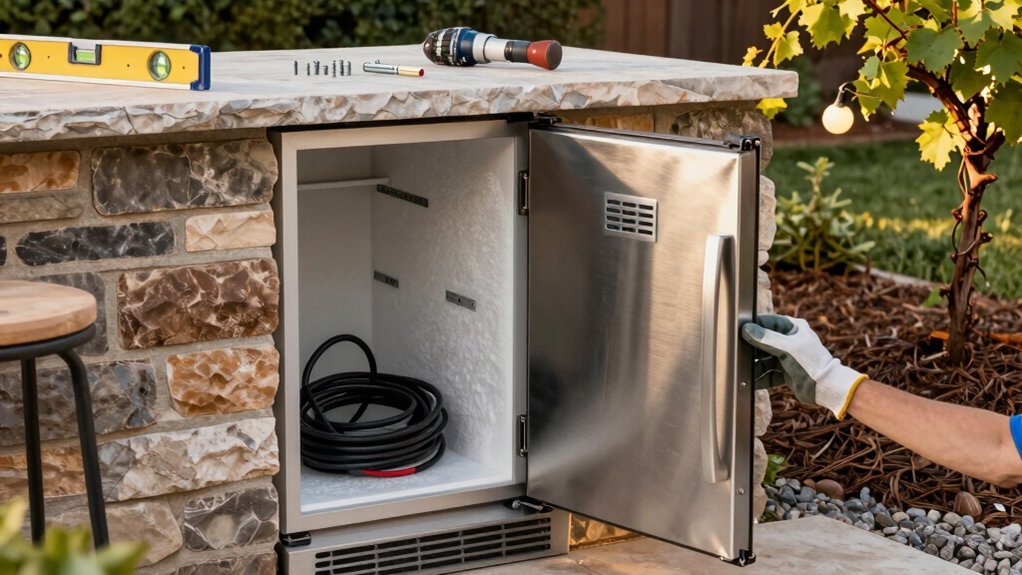
To keep your outdoor wine fridge running efficiently, you’ll need to clean the unit thoroughly every six months, paying special attention to air vents and filters. Prevent moisture buildup by regularly checking for condensation and addressing any signs of frost immediately. Don’t forget to replace the filters according to the manufacturer’s recommendations, typically every 3-6 months depending on your climate and usage patterns.
Clean Every Six Months
Why wait for problems to develop with your outdoor wine fridge? Establish a bi-annual cleaning routine to keep it functioning at peak performance. Regular maintenance prevents costly repairs and protects your wine investment.
- Unplug the unit completely before starting the cleaning process
- Remove all bottles and store them temporarily in a cool, dark location
- Take out all shelves and wipe down the interior with a soft cloth
- Look for concerning signs like moisture buildup or frost, which indicate possible malfunction
Once you’ve thoroughly cleaned everything, reassemble the unit and reload your collection. Monitor the fridge for a few hours after restarting to ensure it returns to proper temperature and maintains normal operation. This simple maintenance ritual will extend your wine fridge’s lifespan substantially.
Prevent Moisture Buildup
Moisture buildup represents one of the greatest threats to your outdoor wine fridge’s longevity and your collection’s quality. Regularly check for condensation inside your unit and wipe it away promptly to prevent mold growth and metal corrosion.
Ensure your fridge has adequate ventilation by maintaining clearance around all sides. This allows moisture to escape rather than becoming trapped inside the cabinet. Apply weatherproof sealant to vulnerable areas and use protective covers when the fridge isn’t in use.
Position your wine fridge away from direct rain exposure and high humidity zones to reduce the moisture burden. Don’t overlook door gaskets and seals—inspect them frequently for signs of leakage and replace damaged components immediately. These simple preventive measures will maintain optimal humidity control and protect both your appliance and wine investment.
Replace Filters Regularly
While controlling moisture protects your outdoor wine fridge’s structure, maintaining its internal air quality requires equal attention. Carbon filtration systems are your wine’s first defense against odor infiltration, which can seep through corks and affect flavor. You’ll need to replace these filters every three to six months to ensure optimal storage conditions.
- Check your filter location in the owner’s manual and create a replacement schedule to avoid forgetting this crucial task
- When installing new filters, ensure they’re properly seated for effective airflow and filtration
- After restocking your collection or moving the unit, reassess filter placement and condition
- Keep ventilation paths clear of debris to help your filtration system work efficiently and maintain consistent temperature
Frequently Asked Questions
How Easy Is It to Install a Wine Fridge?
You’ll find freestanding wine fridges easy to install yourself – just place, level, and plug in. Built-in models require more precision and may need professional installation for proper ventilation.
Do You Need a Special Outlet for a Wine Fridge?
Yes, you’ll need a dedicated standard 110V outlet for most wine fridges. Outdoor models may require weatherproof GFCI protection. Don’t use extension cords for continuous operation.
Can You Have a Wine Fridge Outside?
Yes, you can have a wine fridge outside, but it must be specifically outdoor-rated to withstand weather fluctuations. Don’t use regular indoor units, as they’ll quickly fail in outdoor conditions.
Do You Need Plumbing for a Wine Fridge?
No, you don’t need plumbing for a wine fridge. They’re self-contained units with sealed cooling systems. Most outdoor models only require electricity and proper ventilation, not water connections.

Leave a Reply