
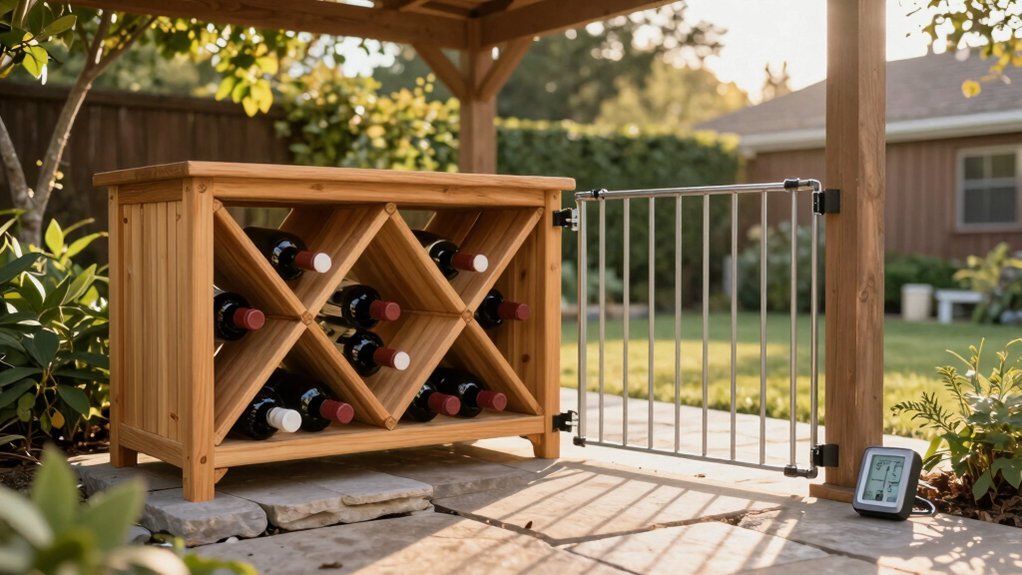
To safely store wine in your backyard, first install a climate-controlled unit that maintains temperatures around 55°F with minimal fluctuations. Next, protect bottles from harmful UV rays by using opaque covers or placing them in a completely shaded area. Finally, seal your storage space with weatherstripping and elevate racks to prevent pest invasions. These protective measures will help preserve your collection’s quality and flavor profiles for years to come.
Temperature Management in Outdoor Environments
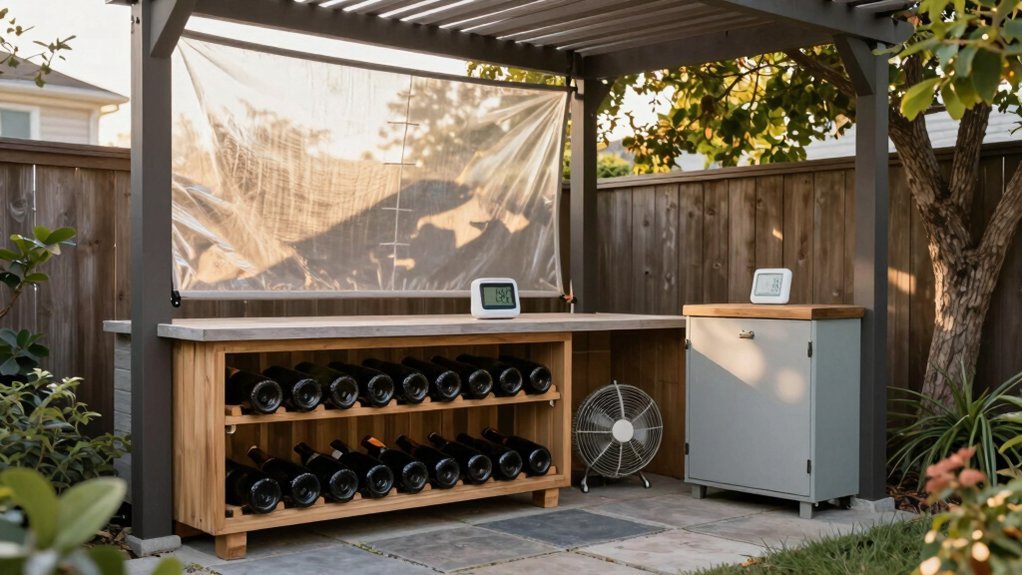
When storing wine in your backyard, maintaining proper temperature is the most critical factor for preserving quality.
You’ll need to keep a stable environment around 55°F (13°C) with daily fluctuations under 8°F to prevent premature aging.
Maintaining wine at 55°F with minimal temperature swings preserves its character and prevents quality deterioration.
Most outdoor settings naturally exceed the acceptable 45-65°F range, risking cork damage and spoilage.
Install a dedicated climate-controlled unit or create a shaded, insulated enclosure that minimizes ambient temperature swings.
Monitor your setup with a reliable thermometer and hygrometer to track both temperature and humidity levels.
Position your storage away from direct sunlight and heat sources, using opaque, UV-filtering covers for protection.
Ensure proper ventilation to prevent heat buildup while maintaining stability.
A wine fridge designed for outdoor use offers the most reliable solution for serious collectors.
Protective Measures Against Elements and Light Exposure
Protecting your wine from harmful environmental elements requires strategic planning and specialized equipment.
Shield your bottles from direct sunlight by establishing a completely shaded, windowless storage area or using UV-filtered covers to prevent photoxidation that degrades flavor profiles.
Position your collection in a cool, dark corner or beneath protective cabinetry to minimize exposure to heat sources.
Install odor barriers such as charcoal filters or specialized wraps near your storage area to prevent strong smells from penetrating corks and tainting your wine.
Mount bottles on stable racks in areas with minimal vibration, away from foot traffic and operating equipment to preserve sediment integrity during aging.
Finally, invest in a weather-resistant enclosure that maintains cork health by guarding against environmental fluctuations that compromise your wine’s quality.
Securing Wine From Pests and Environmental Hazards
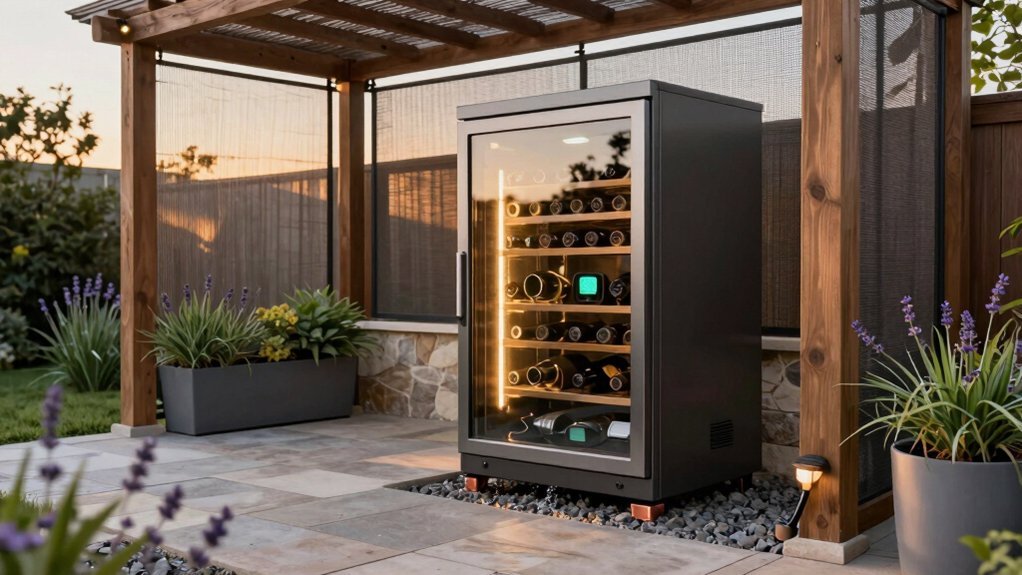
Your outdoor wine collection faces threats beyond temperature and light—unwanted pests can quickly turn your prized vintages into an expensive disaster. Implement these preventative measures to protect your investment:
- Seal all storage areas with tight-fitting lids, screens, and weatherstripping on doors and vents to create an impenetrable barrier against determined critters.
- Elevate wine racks off the ground and position them away from outdoor lighting that might attract insects and provide hiding places for rodents.
- Choose weatherproof, UV-resistant materials for your storage solutions and keep bottles protected from direct sunlight exposure.
- Maintain a clean perimeter around your storage area by promptly removing fallen fruit, birdseed, and other potential attractants that might lure pests toward your collection.
Regularly inspect for pest evidence such as droppings or gnaw marks, and deploy integrated pest management strategies when necessary.
Frequently Asked Questions
What Is the 30 30 Rule for Wine?
The 30/30 rule means you shouldn’t let wine experience temperature changes greater than 30°F above or below optimal storage range to prevent spoilage and cork damage during storage.
What Is the 20 20 Rule for Wine?
The 20/20 rule means you should keep your wine’s temperature within 20°F daily fluctuation and maintain at least 20% humidity to preserve cork seals and prevent premature aging.
How to Store Wine for 20 Years Without a Fridge?
Store bottles horizontally in a cool, dark place at 55°F with 60% humidity. You’ll need stable temperature with minimal fluctuations, no vibrations, and protection from light and odors.
How to Properly Store Wine at Home?
Store your wine horizontally at 55°F with minimal temperature fluctuations. Keep humidity around 60%, avoid light exposure, and eliminate vibrations. A dedicated wine cabinet offers ideal conditions for long-term storage.


Leave a Reply