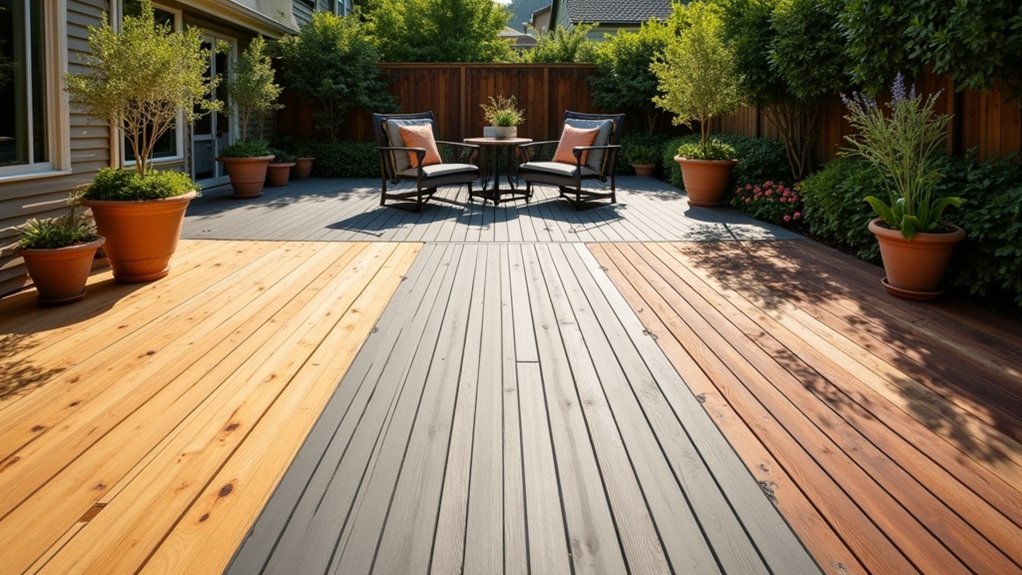
Your choice of decking material shapes both your budget and your weekend plans for years to come. Pressure-treated lumber offers the most affordable option with solid durability when you’re willing to stain and seal regularly. Composite decking costs more upfront but frees you from most maintenance tasks. Tropical hardwoods like ipe deliver unmatched longevity and natural beauty at premium prices. Each material brings distinct tradeoffs in cost, appearance, and upkeep that you’ll want to explore further.
Pressure-Treated Lumber for Budget-Friendly Durability
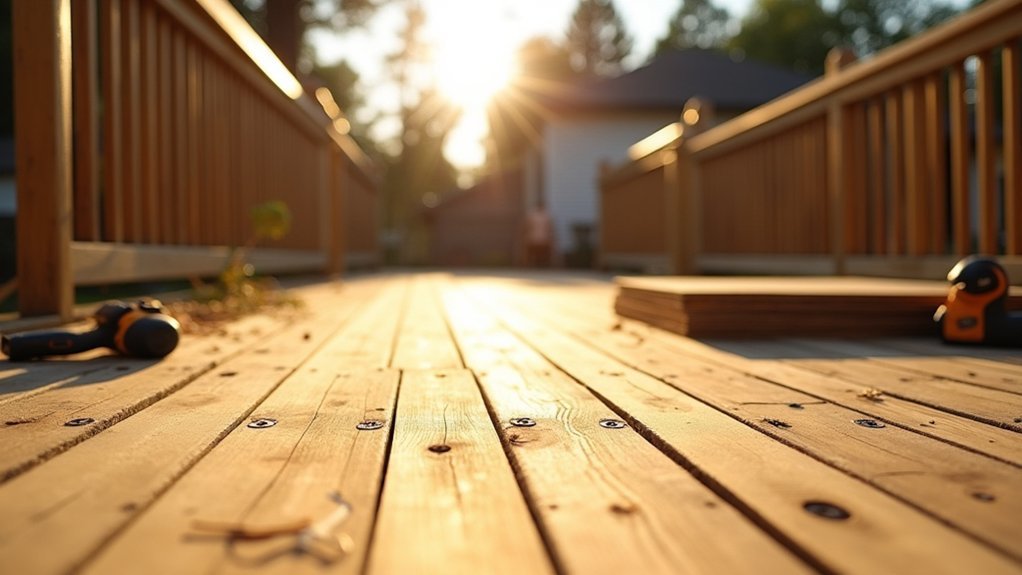
Pressure-treated lumber stands as the go-to choice for homeowners who want a sturdy deck without draining their wallet.
You’ll find this material at nearly every home improvement store, making it incredibly accessible for DIY projects. The wood undergoes a chemical treatment process that protects it against rot, insects, and fungal decay.
You can expect your pressure-treated deck to last 15 to 20 years with proper maintenance.
The material accepts stains and paints well, giving you flexibility in customizing your outdoor space. You’ll need to let the wood dry for several months before applying finishes.
While it’s not as visually striking as composite or hardwood options, pressure-treated lumber delivers reliable performance at a fraction of the cost.
It’s perfect if you’re building on a tight budget.
Composite Decking for Low-Maintenance Outdoor Living
If you’re willing to invest more upfront to eliminate years of staining, sealing, and splinter repairs, composite decking offers a compelling alternative to traditional lumber. These boards combine wood fibers with plastic polymers, creating a surface that resists rot, insects, and moisture damage without chemical treatments.
You’ll find composite decking in dozens of colors and grain patterns that mimic natural wood. The material won’t warp, crack, or fade like traditional lumber, and cleaning requires only soap and water. Most manufacturers back their products with 25-year warranties.
The tradeoff? Composite costs two to three times more than pressure-treated wood initially. It also retains heat in direct sunlight, making barefoot walking uncomfortable on hot days. However, you’ll recoup costs over time through reduced maintenance expenses.
Tropical Hardwoods for Premium Weather Resistance
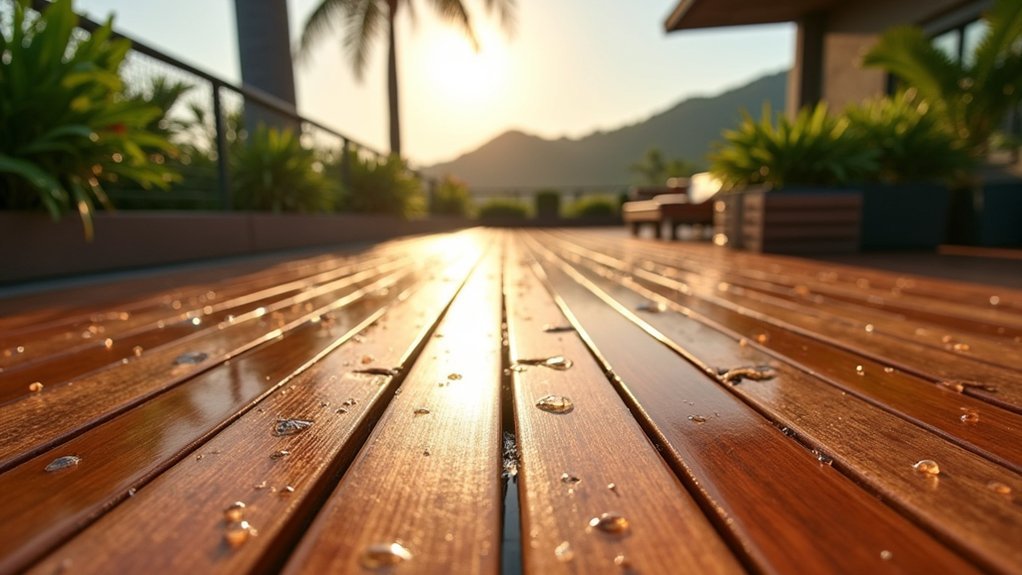
Tropical hardwoods like ipe, cumaru, and tigerwood deliver unmatched durability that can last 50 years or more without chemical preservatives. These dense woods contain natural oils that resist rot, insects, and moisture damage even in harsh climates.
Tropical hardwoods resist rot and insects naturally, delivering 50+ years of durability without chemical treatments.
You’ll pay a premium for tropical hardwoods—often two to four times more than pressure-treated lumber. However, their longevity offsets the initial investment over time. The tight grain structure means you won’t deal with splintering or warping that plagues softer woods.
Installation requires specialized tools since these materials can dull standard drill bits quickly. You’ll need to pre-drill every screw hole. Consider hiring experienced contractors familiar with hardwood decking.
Maintenance stays minimal—an annual cleaning and optional oil treatment keeps your deck looking rich and vibrant for decades.
Frequently Asked Questions
What Permits Do I Need Before Building a Deck in My Backyard?
You’ll typically need a building permit before constructing your deck. Check with your local building department, as requirements vary by location. You may also need zoning approval and must follow setback regulations and local building codes.
How Much Weight Can a Typical Residential Deck Safely Support?
You can expect your typical residential deck to safely support around 40-60 pounds per square foot. However, you’ll want to check your local building codes since requirements vary based on your deck’s design and intended use.
What Is the Average Cost to Hire a Professional Deck Installer?
You’ll typically pay between $15 and $35 per square foot for professional deck installation, totaling $4,500 to $10,500 for an average 300-square-foot deck. Your costs vary based on materials, design complexity, and location.
How Long Does It Typically Take to Build a Standard-Sized Deck?
You’ll typically spend 1-3 weeks building a standard-sized deck, depending on its complexity. If you’re hiring professionals, they’ll often complete the project faster—usually within 1-2 weeks for a straightforward design.
Can I Build a Deck Directly Over an Existing Concrete Patio?
Yes, you can build a deck over concrete. You’ll need to install sleepers or a pedestal system to create airflow and drainage. Make sure the concrete slopes away from your home to prevent water damage.


Leave a Reply