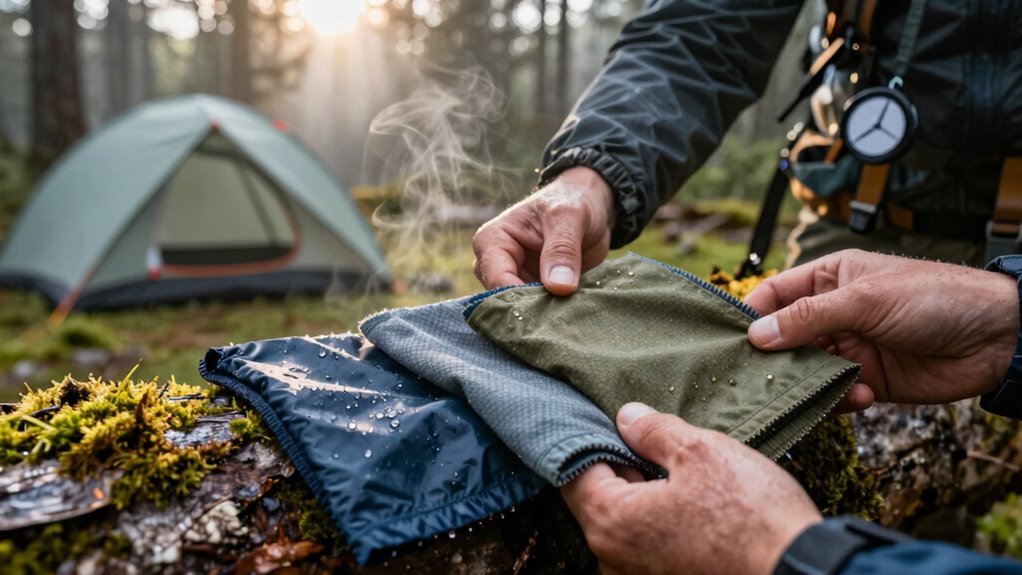
When choosing breathable weatherproof outdoor fabrics, look for materials that balance water resistance with vapor transmission to prevent that clammy plastic feeling. Prioritize UV-stable, solution-dyed fabrics like acrylic or polyester that won’t fade or break down in sunlight. Select options with mold-resistant properties and easy-care finishes that withstand cleaning with common detergents. These three considerations will ensure your outdoor textiles remain comfortable, durable, and fresh in all conditions.
Balance Water Resistance and Breathability for Year-Round Comfort
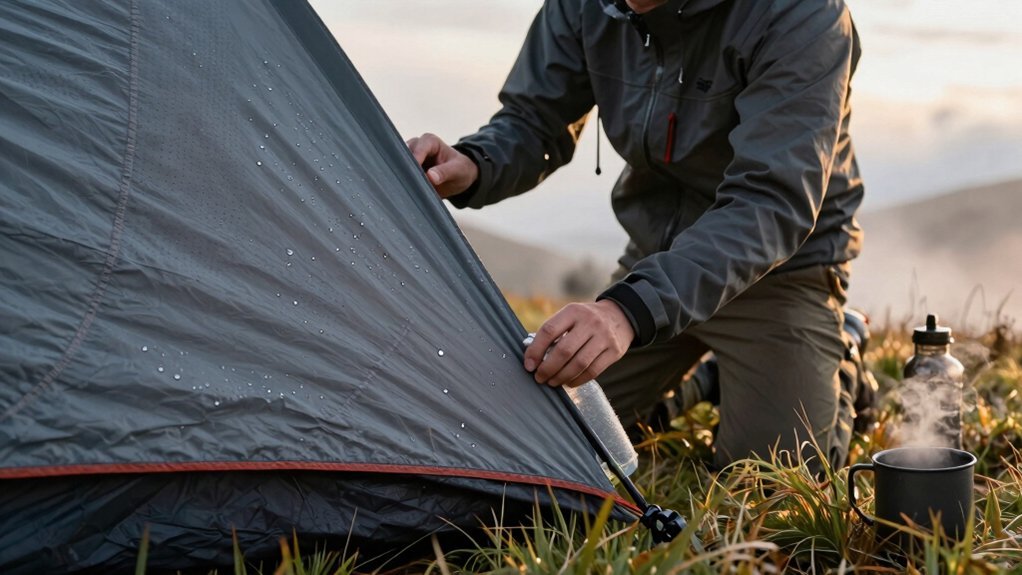
How do you stay dry without feeling like you’re wrapped in plastic? The secret lies in understanding waterproof membranes that allow moisture vapor to escape while blocking liquid water from entering. When shopping for outdoor gear, look for fabrics that offer this crucial balance.
Consider the activity level and conditions you’ll face. Higher breathability typically comes with lighter fabrics or selective mesh panels that boost airflow without compromising protection. For extended use in varying conditions, examine laminate constructions like 3-layer or 2.5-layer designs that pair waterproofing with breathable backers.
Don’t overlook DWR (Durable Water Repellent) finishes – they prevent fabric saturation and maintain breathability. Compare water column ratings with fabric weight to ensure you’re getting sufficient rain protection while maintaining comfort across seasons.
Select Uv-Protected Fabrics That Withstand Sun Exposure
While waterproofing keeps you dry in the rain, what about the sun’s relentless assault on your outdoor gear?
Waterproofing battles the rain, but who’s protecting your gear from the sun’s daily onslaught?
To ensure lasting protection, choose fabrics with high UV resistance ratings from tests like G154, G155, TM16, or Q-SUN/QUV.
Solution-dyed acrylic or polyester fabrics offer superior UV stability since the pigment penetrates the fiber rather than just coating it.
Look for special barrier finishes like Sunbrella rain barrier or Hi-Clean that enhance both UV protection and appearance longevity.
Reputable brands like Sunbrella, Outdura, and Tempotest consistently use UV-stable, solution-dyed fibers in their products.
Don’t overlook warranty details—Sunbrella’s 5-year warranty, for instance, signals confidence in their fabric’s ability to withstand sun exposure without significant fading or degradation.
Choose Easy-To-Clean Materials With Mold Resistance
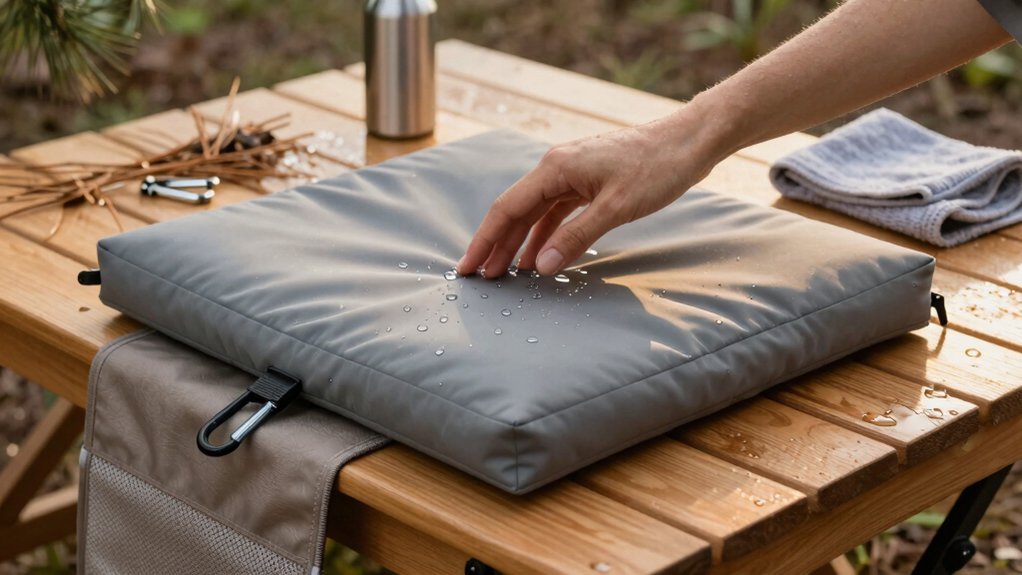
Outdoor fabric that’s beautiful but turns into a mold farm isn’t worth the investment, no matter how well it handles sun exposure. Look for solution-dyed acrylic or polyester fabrics that resist staining and maintain their vibrant colors after cleaning. These materials won’t fade when you wipe them down or wash them regularly.
Check for mold and mildew resistance certifications like ASTM G21 and AATCC 30, especially if you live in humid conditions. Opt for PFAS-free options such as Renegade that can handle cleaning with common detergents and bleach without degrading. Fabrics with barrier finishes like Sunbrella or Tempotest with Hi-Clean treatments offer excellent protection. For maximum convenience, choose cushions with removable, machine-washable covers that you can easily clean to prevent mold growth.
Frequently Asked Questions
What Is the Best Waterproof Outdoor Fabric?
You’ll want 3-layer laminated fabrics with high hydrostatic head ratings and breathable membranes. Look for solution-dyed acrylics like Sunbrella or PFAS-free options with UV and mildew resistance.
Is 10K or 20K Waterproof Better?
20K is technically better than 10K for waterproofing. You’ll get superior protection in heavy rain and extreme conditions, though it’s often heavier and less breathable than 10K options.
What Fabric Is Like Sunbrella but Cheaper?
Look for Outdura or Tempotest solution-dyed acrylic fabrics. You’ll get similar UV resistance and water repellency to Sunbrella with slightly shorter warranties, saving you money on outdoor upholstery.
What Are the Disadvantages of Sunbrella Fabric?
Sunbrella’s disadvantages include higher cost, less breathability in hot weather, reliance on treatments for water resistance, need for specific cleaners, and varying warranty terms depending on product line.

Leave a Reply