
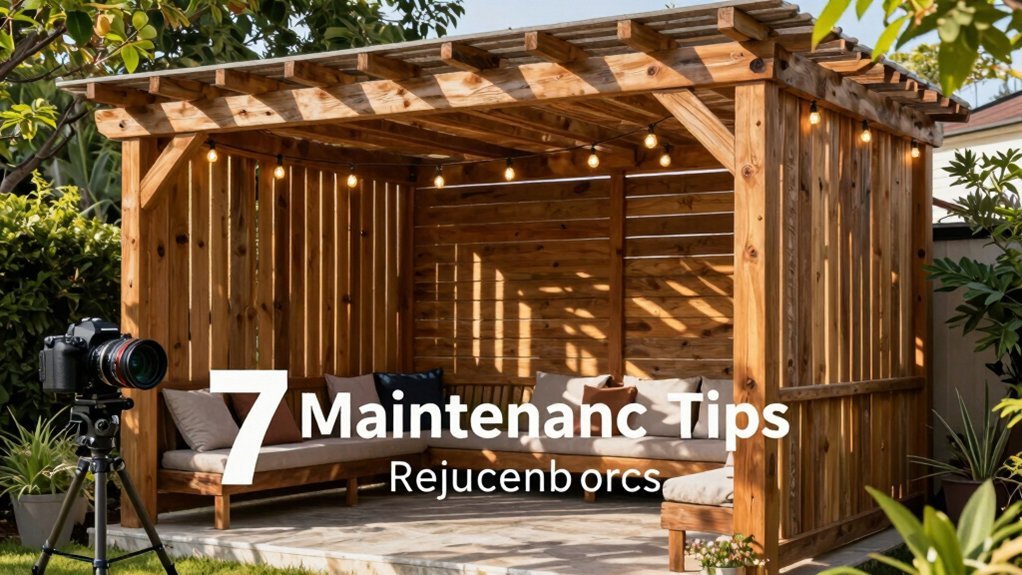
You’ll maintain your cedar pergola by inspecting joints regularly, removing debris to prevent moisture pockets, and applying protective stain every two to three years. Trim vines twice yearly to reduce weight stress on beams, tighten fasteners promptly, and manage ground moisture with proper drainage. Address insect damage immediately and treat affected wood with sealant. These preventive steps protect your entertainment space from deterioration, though you’ll discover deeper strategies below that maximize your pergola’s lifespan.
Inspect Structural Integrity and Joints Regularly
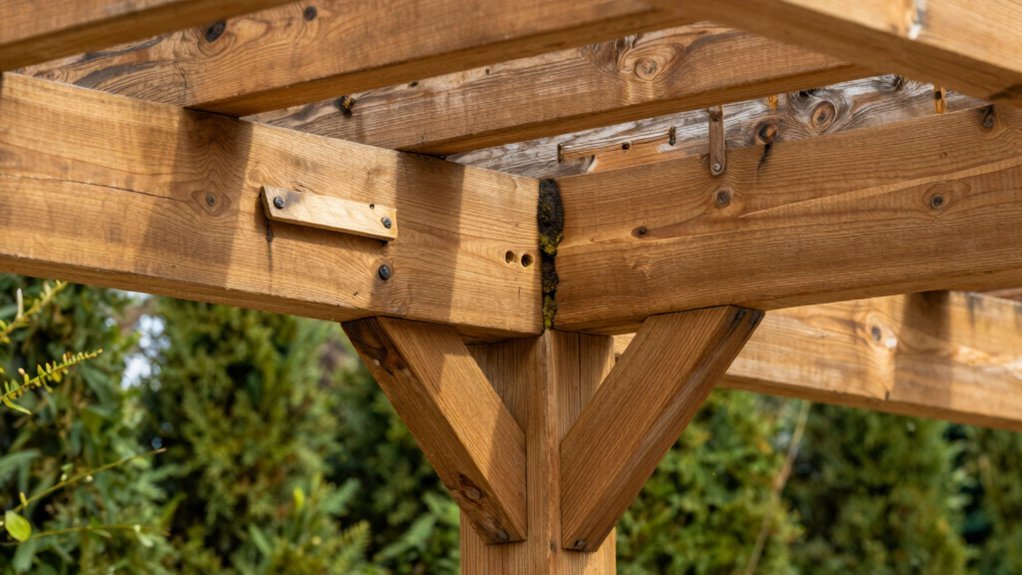
How often are you checking your cedar pergola’s joints and connections? You should inspect them regularly to catch problems before they become costly repairs. Look for looseness, cracks, and insect damage at all structural connections. These issues can progress quickly if you ignore them.
Check your fasteners for corrosion or looseness, then tighten or replace them promptly. This simple step maintains joint integrity and prevents structural failure. You’ll also want to examine beams for uneven settling or sagging, which signals underlying load or moisture problems requiring immediate attention.
Pay special attention to post-to-footing connections and ground contact areas. Ensure proper drainage here to prevent rot and termite access. Schedule annual or semi-annual inspections, especially after storms, to identify small issues early before they escalate into major damage.
Clean and Remove Debris to Prevent Moisture Buildup
Leaves, twigs, and debris accumulating on your cedar pergola create pockets where moisture gets trapped, fostering mold growth and wood decay. You’ll want to regularly remove this buildup from surfaces and gaps to maintain your structure’s integrity.
Hose down your pergola gently to wash away dirt, pollen, and organic material that hold moisture against the wood. Clear clutter around the base and ensure proper drainage to prevent standing water at the posts and feet. Trim nearby vines and plant growth that trap moisture and create damp, shaded conditions.
After rainfall, inspect for standing moisture and dry affected areas promptly. Reseal these spots as needed to protect the wood. Consistent cleaning and moisture management keep your entertainment area safe and long-lasting.
Apply Protective Stain Every Two to Three Years
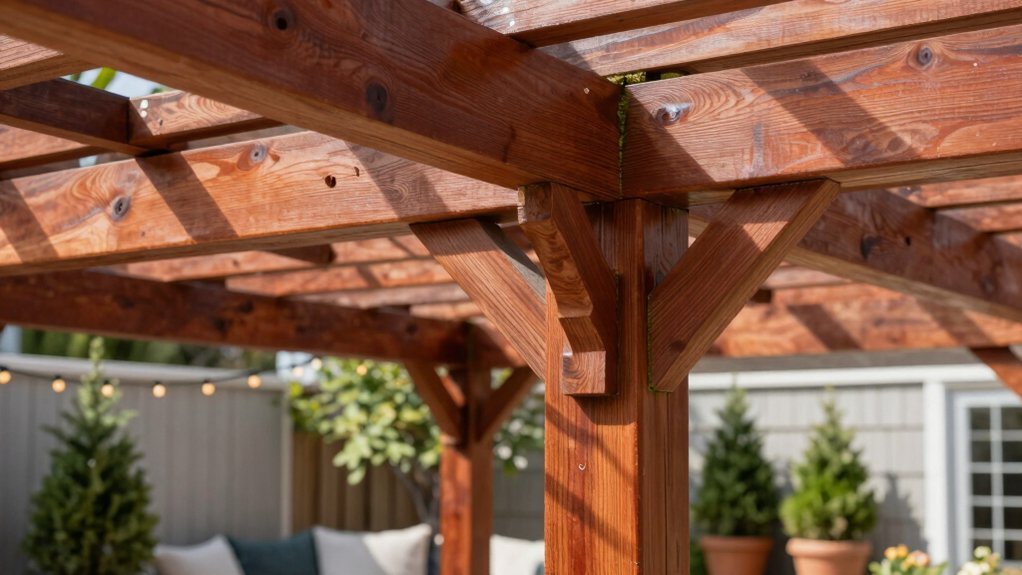
You’ll want to understand why regular staining matters and how to time your applications correctly to keep your cedar pergola looking vibrant and protected.
Cedar’s natural oils fade under UV exposure and moisture, causing that weathered gray appearance you’re trying to prevent.
Why Stain Cedar Regularly
Why does cedar need regular staining when it’s naturally rot- and insect-resistant? While cedar’s inherent properties protect against decay and pests, UV exposure gradually bleaches the wood, creating an undesirable dull gray patina. Staining preserves the warm, rich color you love while forming a protective barrier that locks in natural cedar oils.
This barrier is crucial—it reduces moisture absorption that causes swelling, warping, and cracking. Without it, your pergola deteriorates faster despite cedar’s natural resistance. Regular staining every two to three years maintains finish integrity and sustains your entertainment space’s aesthetic appeal.
Beyond appearance, consistent staining increases property value by demonstrating proper maintenance. Touch up high-exposure spots annually to extend the interval between full refinishing. You’ll protect your investment while keeping your pergola looking stunning.
Timing Your Stain Applications
How often should you actually reapply stain to keep your cedar pergola protected? You’ll want to restain every two to three years to maintain color vibrancy and shield your wood from UV damage and moisture infiltration.
Timing matters significantly for successful stain application. Consider these factors:
- Seasonal conditions – Choose moderate temperatures and low humidity periods for optimal penetration and durability
- Surface preparation – Clean thoroughly with oxygen bleach or vinegar solution, then lightly sand to open the grain
- Curing requirements – Allow adequate drying time before exposure to moisture, and consider adding a clear protective sealant for enhanced resistance
Regular maintenance between applications—removing leaves and debris—prevents moisture retention that prematurely degrades your stain. This simple practice extends the life of your protective finish considerably.
Trim Vines and Foliage to Reduce Weight Stress
You’ll need to trim your vines and foliage twice yearly to prevent excessive weight from stressing your pergola’s structural joints, especially during wet seasons.
Overgrown vegetation can accumulate moisture and debris, creating dangerous load conditions on your roof beams and supports.
Weight Distribution and Safety
Because overgrown vines and foliage accumulate moisture and catch wind, they’re creating unnecessary stress on your cedar pergola’s structural members. Heavy vegetation transfers extra load to joints and timbers, increasing warping and failure risks.
After pruning, inspect these critical areas:
- Trimmed sections – Check for sharp edges or splinters that could compromise wood integrity and create stress concentration points
- Fasteners and joints – Tighten any loose bolts or brackets exposed during vegetation removal to restore proper weight distribution
- Air circulation – Verify improved airflow reduces mold growth on remaining vines, protecting wood from moisture-related deterioration
Regular pruning every six months removes accumulated snow and rain weight before it strains your structure. Lower canopy sections decrease bending stress on support beams. These maintenance steps keep your entertainment space safe and structurally sound.
Seasonal Trimming Schedule
When’s the best time to trim your pergola’s vines and foliage? You’ll want to establish a twice-yearly schedule that minimizes stress on your wood structure.
| Season | Timing | Benefits |
|---|---|---|
| Spring | Before new growth | Prevents weight buildup |
| Summer | Mid-season | Improves air circulation |
| Fall | Before storms | Reduces branch damage risk |
| Winter | After harsh weather | Allows structural recovery |
Schedule trimming before or after severe weather to protect joints and timbers from additional strain. Regular cutting enhances visibility of your pergola’s surface while reducing moisture that promotes mildew growth. You’ll also improve ventilation around lattice and beams, lowering rot risk. Properly managed foliage prevents falling branches from damaging your entertainment space during storms, keeping your structure safe and your gatherings secure.
Address Loose Fasteners and Hardware Promptly
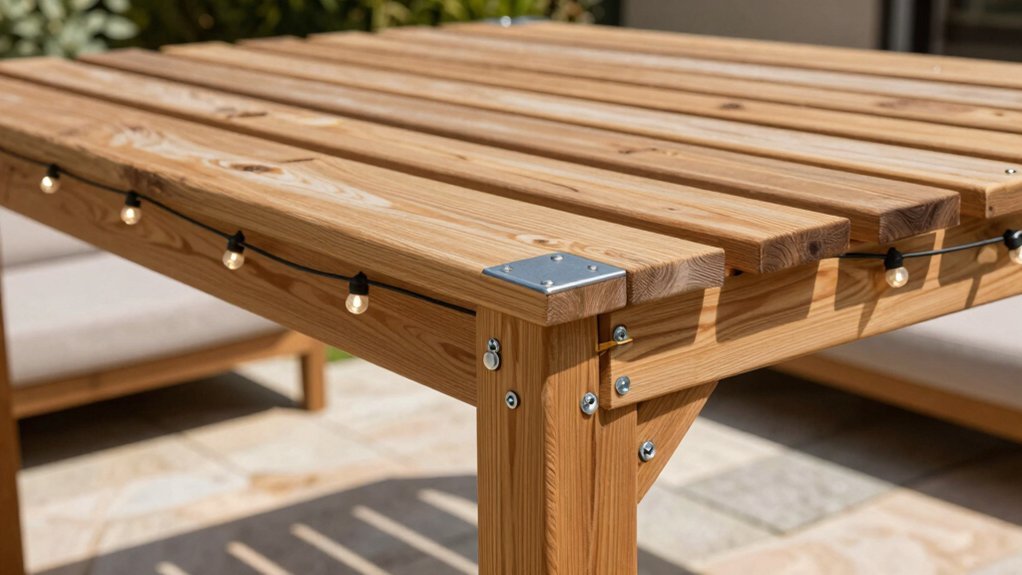
How often do you inspect your cedar pergola’s fasteners? Loose hardware threatens your structure’s integrity and safety, so you’ll want to establish a consistent maintenance routine.
Check all fasteners regularly and tighten them immediately to prevent joint stress and potential failure. Pay special attention to roof timbers and connections where stress accumulates most intensely. Addressing looseness early stops problems from spreading.
Regular fastener checks and timely tightening prevent joint stress and structural failure in cedar pergolas.
- Inspect hardware for rust, corrosion, or wear, replacing compromised components promptly
- Ensure accessibility around the entire structure to seal joints and protect fasteners from moisture
- Establish seasonal check routines before and after harsh weather to catch loose hardware early
You’ll maintain your pergola’s longevity by staying proactive with fastener maintenance rather than waiting for visible damage to appear.
Manage Ground Moisture and Prevent Rot
While tight fasteners keep your pergola structurally sound, ground moisture poses an equally serious threat to your cedar’s longevity. You’ll protect your investment by keeping the structure elevated on pavers, concrete pads, or proper drainage systems that prevent soil moisture from wicking into the wood.
Ensure small gaps between beam ends and ground to maximize air circulation. After rainfall, inspect for standing water around posts and redirect it through grading or drainage solutions.
Apply moisture-resistant sealant or stain every two to three years, prioritizing end grain and lower surfaces most vulnerable to moisture damage. Trim surrounding vegetation and maintain clearance around the base to improve airflow and minimize rot-promoting dampness. These preventative measures significantly extend your pergola’s lifespan.
Treat Insect Activity and Wood Damage Immediately
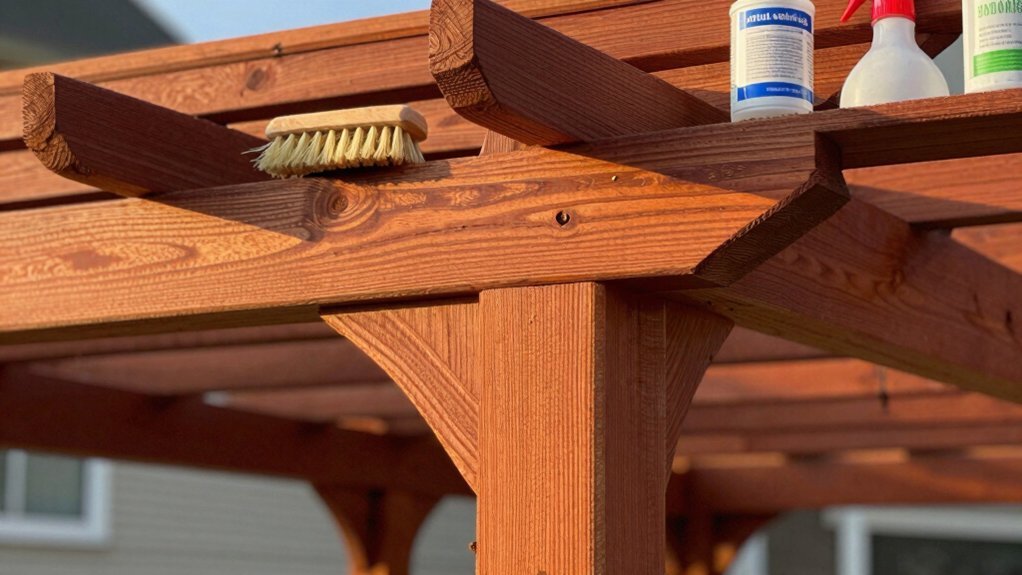
Because cedar’s natural appeal attracts wood-boring insects and termites, you’ll need to inspect your pergola regularly for signs of infestation. Look for small exit holes, frass, and sawdust around joints and fasteners, then address findings promptly.
When you spot damage, take these immediate steps:
- Treat affected areas with appropriate insecticides or hire a professional before resealing
- Repair cracks, splits, and softened wood with epoxy filler or putty
- Remove debris and vines that harbor pests and trap moisture
After treatment, re-stain or seal the cedar to restore protective barriers and prevent future infestations. Keep your entertainment area clean and well-maintained—this simple practice deters insects while preserving your pergola’s structural integrity and appearance.
Frequently Asked Questions
How Do You Maintain a Cedar Pergola?
You’ll maintain your cedar pergola by inspecting regularly for damage, re-staining every three years, cleaning gently with damp cloths, keeping it dry with proper drainage, and tightening loose fasteners. You should also seal high-exposure areas more frequently to prevent weathering.
What Is the Best Way to Protect a Cedar Pergola?
You’ll best protect your cedar pergola by applying stain or sealant every 2–3 years, cleaning it regularly with mild soap and water, avoiding power washing, and inspecting seasonally for damage. These steps preserve its natural beauty and structural integrity effectively.
How Long Will a Cedar Pergola Last?
Your cedar pergola’ll last 30+ years when you maintain it properly. You’ll extend its lifespan by keeping it off direct ground contact, staining every three years, and ensuring good drainage. You’re investing in durability with cedar’s natural rot resistance.
Do I Need to Stain a Cedar Pergola?
Yes, you should stain your cedar pergola. Staining protects against UV damage, moisture, and temperature changes that cause graying and cracking. You’ll need to re-stain every 2–3 years to maintain color and preserve your pergola’s lifespan.


Leave a Reply