
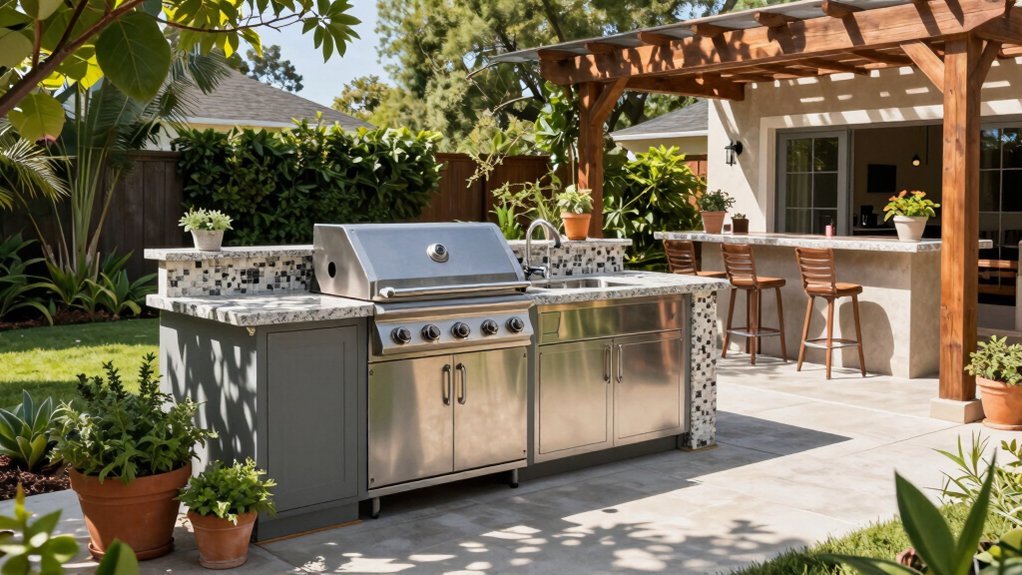
You’ll transform your backyard into a functional outdoor kitchen by planning a layout that separates cooking, prep, and entertaining zones, choosing weather-resistant materials like stone or composite countertops, and installing essential components—starting with a quality grill and prep station. You’ll need to manage permits and decide whether to tackle installation yourself or hire professionals. Understanding these foundational steps positions you well for creating a cohesive design that’ll serve you for years.
Planning Your Backyard Kitchen Layout
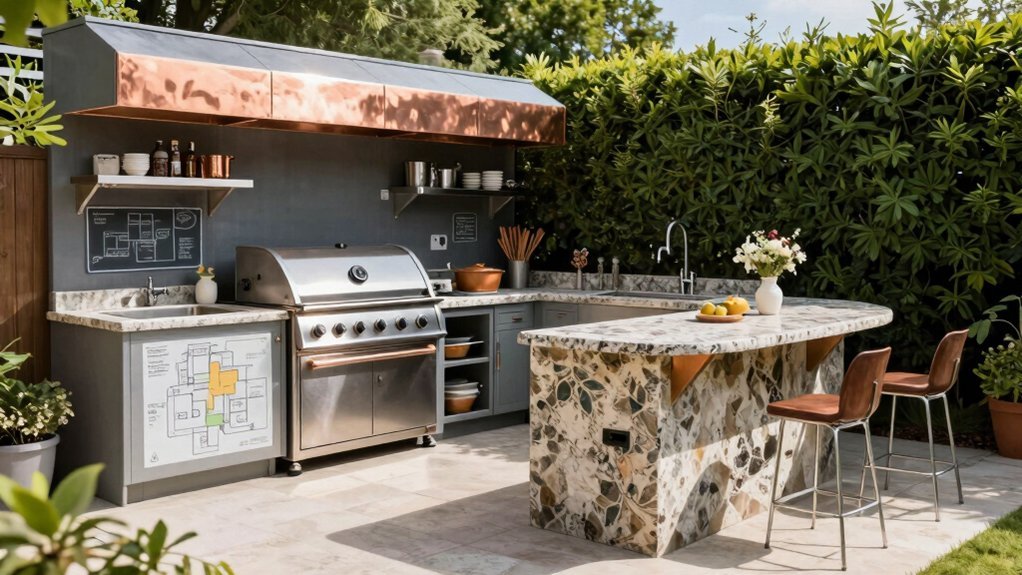
How you arrange your backyard kitchen will ultimately determine whether you’ve created a functional entertaining space or a cramped cooking zone. You’ll want to select a layout that fits your space—straight configurations work for smaller areas, while L-shaped or U-shaped designs maximize larger footprints.
Plan your traffic patterns carefully. Keep cooking, prep, plating, and entertaining areas separate to avoid crowding near the grill. You’ll need at least 8 feet of linear space for basic functionality, though 10–12 feet gives you better movement and comfort.
Establish distinct zones between cooking, prepping, and serving. This separation minimizes cross-traffic and simplifies cleanup afterward. Consider incorporating modular island concepts with 4–8 foot connectors. This approach lets you reconfigure or expand your kitchen as your needs evolve.
Selecting Durable Materials for Your Space
When you’re building your custom backyard kitchen, you’ll want to choose materials that withstand harsh outdoor conditions while matching your aesthetic vision. Stone, wood, and stainless steel each offer distinct advantages—stone provides natural beauty, wood adds warmth through rot-resistant varieties like cedar or teak, and stainless steel delivers modern durability and weather resistance. You’ll need to weigh maintenance requirements against longevity to ensure your countertops, cabinetry, and finishes can handle sun exposure, moisture, and temperature swings without compromising style.
Weather-Resistant Material Options
The durability of your backyard kitchen depends largely on the materials you choose. Stone, composite, and sealed concrete excel as outdoor countertop options, each offering distinct advantages. Stone provides natural beauty and exceptional weather resistance, while composite materials combine durability with low maintenance. Sealed concrete delivers a modern aesthetic at a reasonable cost.
For cabinetry and structural elements, stainless steel withstands moisture and temperature fluctuations without rusting or warping. If you prefer wood’s warmth, select rot-resistant varieties like cedar or teak, but understand they’ll require regular maintenance and protective treatments.
When selecting finishes, anticipate how materials weather over time—fading, warping, and rust develop differently across options. Plan for ongoing maintenance to preserve your kitchen’s appearance and functionality throughout changing seasons.
Balancing Style and Durability
Choosing materials that withstand harsh outdoor conditions doesn’t mean sacrificing aesthetics—you can achieve both durability and visual appeal by selecting complementary materials that age gracefully together.
| Material | Weather Resistance | Maintenance Level |
|---|---|---|
| Natural Stone | Excellent | Moderate (resealing needed) |
| Stainless Steel | Excellent | Low |
| Cedar/Teak | Good | High |
Pair stone islands with stainless steel appliances to create a cohesive, resilient aesthetic that resists fading, chipping, and corrosion. This combination ensures your investment remains both beautiful and functional for years. Prioritize sealants and coatings designed for outdoor exposure, and commit to regular maintenance—cleaning, resealing stone, and inspecting weatherproof fasteners—to keep surfaces looking updated and protected against sun, rain, and temperature fluctuations.
Essential Components and Appliances
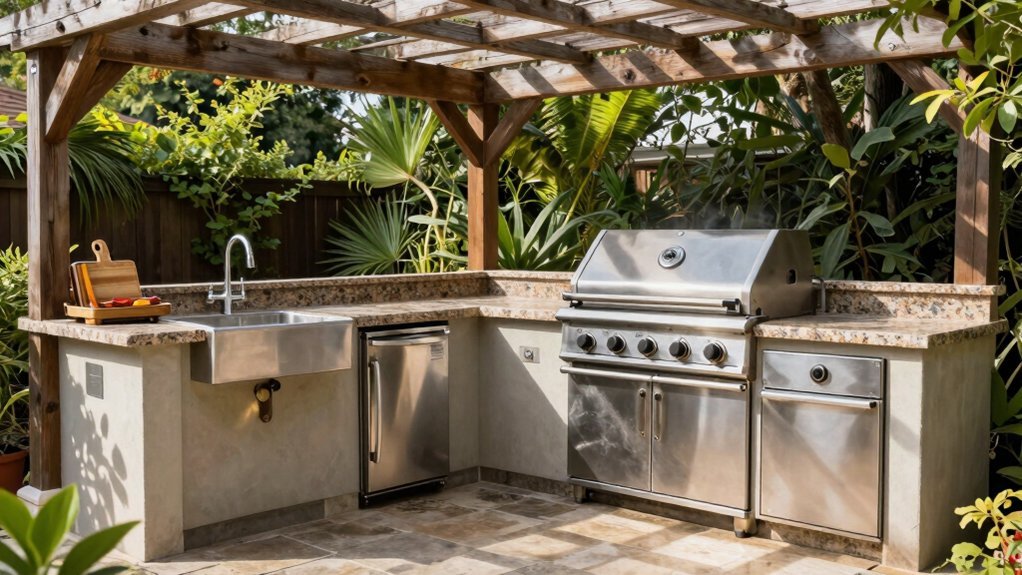
You’ll want to build your outdoor kitchen around a quality grill, which serves as the centerpiece of your cooking space. Add refrigeration and storage solutions that protect your ingredients from the elements while keeping everything you need within arm’s reach. Finally, include a prep and cleanup station with a sink and counter space so you can handle food preparation and maintain cleanliness throughout your cooking sessions.
The Grill Foundation
What makes an outdoor kitchen truly functional? You’ll find the answer at your grill foundation.
The grill serves as your outdoor kitchen’s heart, and you’ll need to choose wisely among several options:
- Gas grills offer convenience and consistent heat control
- Charcoal grills deliver authentic flavor and high temperatures
- Pellet grills provide versatility with smoking capabilities
- Electric grills suit compact spaces and apartment settings
- Built-in models integrate seamlessly into island designs
You’ll want to consider gas line accessibility, proper ventilation to clear fumes, and adequate storage for grilling utensils nearby. Your grill island layout—whether linear, galley, L-shaped, or U-shaped—should optimize workflow around your cooking zone.
Durability matters too. You’ll invest in weather-resistant components that withstand outdoor conditions while maintaining peak performance year-round.
Storage and Refrigeration
Where does your outdoor kitchen keep drinks cold and food fresh while you’re entertaining? You’ll need dedicated refrigeration and smart storage solutions that withstand outdoor conditions.
| Storage Component | Purpose |
|---|---|
| Outdoor Fridge | Keeps beverages and perishables accessible, minimizing indoor trips |
| Weather-Resistant Cabinetry | Protects items from sun, rain, and temperature swings |
| Roll-Out Bins | Organizes frequently used utensils and towels near prep zones |
| Bulky Item Station | Houses ice makers and propane away from main surfaces |
| Easy-Clean Surfaces | Prevents grime accumulation and allows quick rinsing |
Invest in weatherproof coatings for all cabinetry to ensure durability. Arrange storage with practical zoning—place cutting boards and utensils within arm’s reach of your cooking area. Position bulky items like extra propane or beverage dispensers in a dedicated zone away from prep surfaces but still accessible. Choose materials that rinse easily rather than dusty finishes that trap grime.
Prep and Cleanup Stations
How efficiently you prep and clean food depends on thoughtfully positioned stations that keep everything you need within arm’s reach. Position your prep zone adjacent to your cooking area to minimize unnecessary trips and maximize workflow.
Your prep and cleanup stations should include:
- Plumbed sinks with running water for food prep and utensil cleaning
- Built-in cutting board pull-outs and dedicated utensil drawers for streamlined preparation
- Weather-resistant cabinetry and drainboards for quick tool air-drying
- Roll-out trash bins and recycling setup to maintain tidiness
- Open counter space with integrated storage for frequently used items
These thoughtfully designed elements keep your outdoor kitchen organized and functional, allowing you to focus on cooking rather than constantly retrieving supplies.
Budget and Permit Considerations
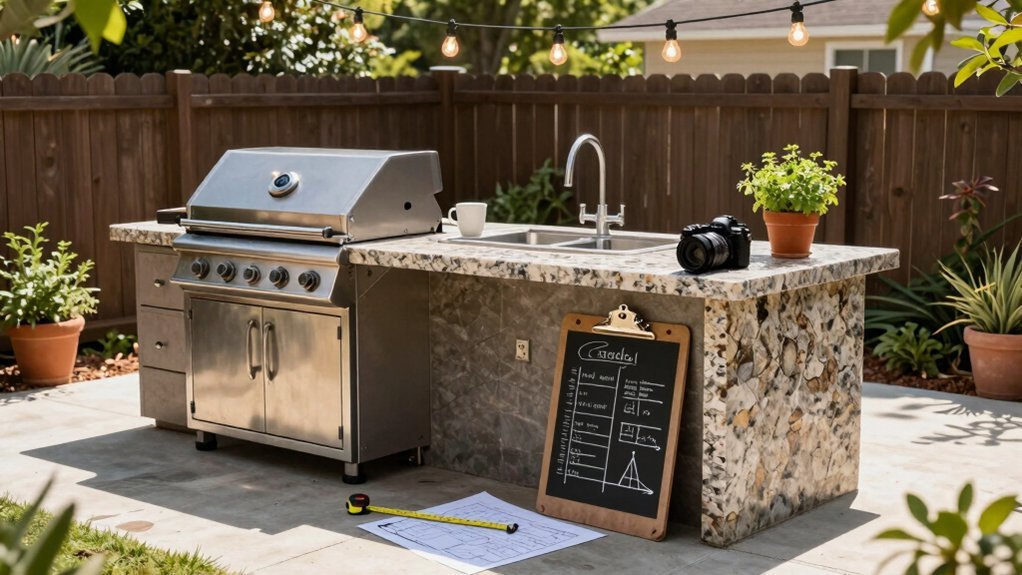
When you’re planning your custom backyard kitchen, understanding the financial and regulatory landscape is essential to avoiding cost overruns and construction delays.
Your budget will fluctuate based on project scope, material selections, and appliance choices—permits alone can add $250–$2,000 to your total costs.
Prioritize essential components: a quality grill, weather-resistant countertops, storage cabinets, and a functional sink. Consider optional refrigeration for perishables.
Material decisions impact both durability and maintenance; stone offers longevity, cedar or teak provide warmth, and stainless steel delivers modern aesthetics.
You’ll face a crucial choice between DIY installation and professional services. DIY reduces upfront expenses but demands considerable time and expertise. Professional installation guarantees code compliance, superior craftsmanship, and faster completion.
Research permit requirements early in your planning process to prevent unexpected delays and expenses.
DIY Installation Versus Professional Installation
Once you’ve mapped out your budget and secured necessary permits, you’ll face a fundamental decision: installing your backyard kitchen yourself or hiring professionals.
DIY installation lets you save money and customize your design, but demands significant time, construction skill, and experience. Professional installation guarantees quality workmanship and code compliance while completing your project efficiently.
DIY saves money and allows customization, but requires time and skill. Professionals ensure quality, code compliance, and faster completion.
Consider these key factors:
- Skill level: DIY suits simpler layouts if you have carpentry and masonry experience
- Project complexity: Professional installation’s essential for plumbing, electrical, and ventilation systems
- Timeline: Professionals complete projects faster than DIY approaches
- Cost trade-off: Higher upfront professional fees offset potential mistakes and rework
- Risk tolerance: Professionals reduce costly errors and ensure lasting results
Weigh your capabilities, timeline, and budget carefully before deciding.
Design Styles and Aesthetic Integration
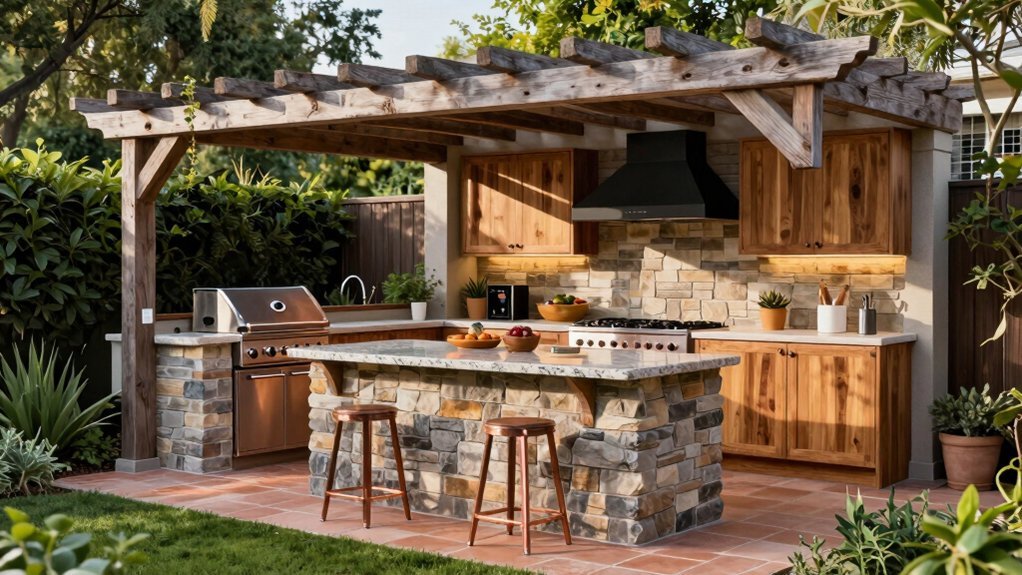
What transforms a functional outdoor kitchen into a stunning extension of your home? Deliberate design choices that blend styles cohesively.
You’ll want to establish a consistent color palette and material selection across cooking, dining, and social zones. Rather than clashing styles, you can pair Modern Organic with Tulum-inspired elements through thoughtful transitions.
| Design Element | Material Choice | Integration Strategy |
|---|---|---|
| Countertops | Stone or limestone | Complements island and sink |
| Focal Point | Smoked glass or turquoise | Anchors visual interest |
| Flooring | Durable, weather-resistant | Connects indoor-outdoor flow |
| Hardware | Unified finish | Reinforces aesthetic cohesion |
Select one bold material as your focal point while keeping surrounding elements unified. Incorporate durable appliances and finishes that withstand the elements without sacrificing style. This approach ensures your backyard kitchen feels intentionally designed rather than randomly assembled.
Maintenance and Year-Round Care
Your beautifully designed backyard kitchen requires consistent upkeep to maintain both its aesthetic appeal and functionality. Establish a maintenance routine that protects your investment year-round.
You’ll want to prioritize these essential care tasks:
- Clean countertops, cabinets, and appliances after use to prevent weather-related staining and deterioration
- Seal and inspect stone or masonry surfaces annually to combat cracking and water damage during freeze-thaw cycles
- Check cabinet seals, hinges, and drawers regularly for corrosion, rust, or warping
- Schedule plumbing and gas connection inspections before seasonal use and after severe weather
- Install proper ventilation, covers, or shade structures to minimize sun and rain exposure
Frequently Asked Questions
Can I Install a Backyard Kitchen in a Rental Property or Apartment?
You can’t permanently install a backyard kitchen in a rental property without your landlord’s written consent. You’re better off choosing portable, removable options like modular grills or cart-style kitchens that you’ll take with you when you move.
How Do Outdoor Kitchen Designs Accommodate Guests With Dietary Restrictions or Allergies?
You’ll accommodate dietary restrictions by designing separate prep zones, installing multiple cooking stations, and organizing clearly labeled ingredient storage. You’ll also want dedicated utensils and cutting boards to prevent cross-contamination while entertaining guests with allergies.
What Insurance Coverage Is Needed for a Custom Backyard Kitchen Installation?
You’ll need general liability insurance, property coverage for the kitchen structure, and workers’ compensation if you’re hiring contractors. Contact your homeowner’s insurance provider to ensure your custom installation’s adequately covered against potential accidents and damage claims.
Are There Noise Ordinances That Affect Outdoor Cooking Equipment in Residential Areas?
Yes, you’ll find noise ordinances in most residential areas that restrict outdoor cooking equipment like grills and smokers. You should check your local municipal codes and contact your city’s planning department to confirm specific decibel limits and operating hours for your equipment.
How Can I Integrate Smart Home Technology Into My Backyard Kitchen Setup?
You can integrate smart home technology by installing WiFi-enabled thermostats on grills, smart lighting systems, automated irrigation controls, and voice-activated speakers. You’ll also want weatherproof smart plugs for appliances and a mobile app to monitor temperatures remotely.


Leave a Reply