
You should choose material-specific deck cleaning products because they’re formulated to match your decking’s unique chemistry. Generic cleaners contain harsh chemicals like bleach and ammonia that strip protective oils, raise wood grain, and can cut your deck’s lifespan in half. Whether you’ve got composite boards, exotic hardwoods, or pressure-treated lumber, the right cleaner protects your investment while avoiding costly damage. Below, you’ll discover exactly how each material responds to proper care.
Understanding How Wood Deck Surfaces React to Generic Cleaners
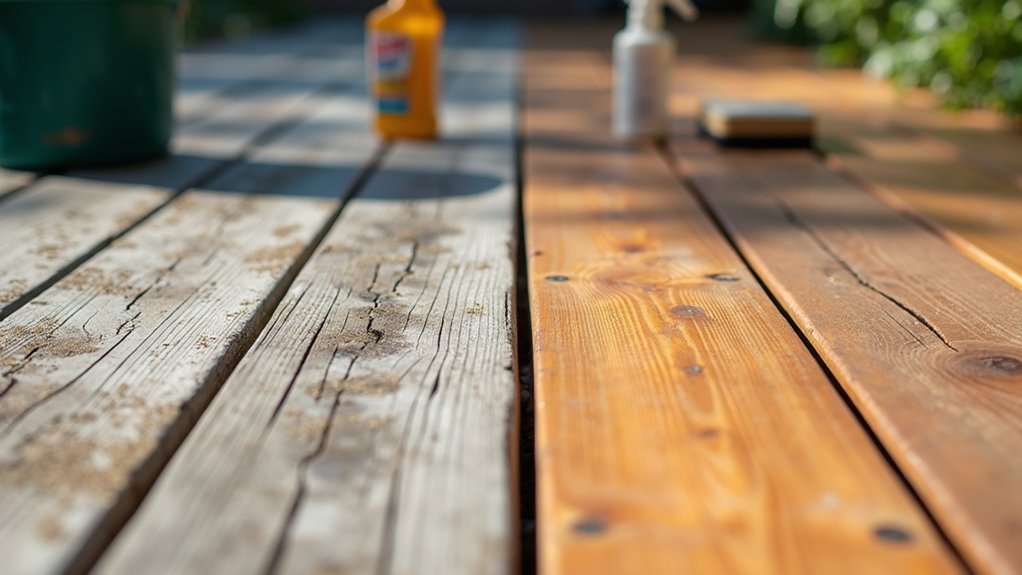
When you grab a generic all-purpose cleaner from under your sink, you mightn’t realize the damage it can cause to your wood deck. These products often contain harsh chemicals like bleach, ammonia, or sodium hydroxide that strip away natural oils and protective treatments from wood fibers.
Your deck’s surface becomes vulnerable when exposed to these aggressive formulas. The wood grain raises, splinters form, and the cellular structure weakens over time. You’ll notice graying, cracking, and accelerated weathering within months of repeated use.
Generic cleaners also fail to address wood-specific issues like tannin stains, mildew penetration, and UV damage. They clean surface dirt but don’t protect or restore the material underneath. You’re basically trading short-term cleanliness for long-term structural degradation that shortens your deck’s lifespan markedly.
The Science Behind Composite Deck Cleaning Formulations
Although composite decking materials eliminate many traditional wood maintenance headaches, they require specifically engineered cleaning solutions that work with their unique molecular structure.
Composite boards blend wood fibers with polyethylene or polypropylene plastics, creating a surface that reacts differently to chemicals than natural lumber.
You’ll find that material-specific composite cleaners contain surfactants designed to penetrate the plastic-wood matrix without degrading polymer bonds.
These formulations target organic growth like mold and mildew while protecting the protective cap layer many manufacturers apply.
Generic cleaners often contain harsh solvents or bleach concentrations that can fade pigments, weaken structural integrity, and void your warranty.
Purpose-built solutions maintain proper pH levels that won’t etch the surface or leave residue that attracts future dirt accumulation.
You’re protecting both appearance and longevity when you choose compatible products.
Protecting Natural Wood Grain With Ph-Balanced Solutions
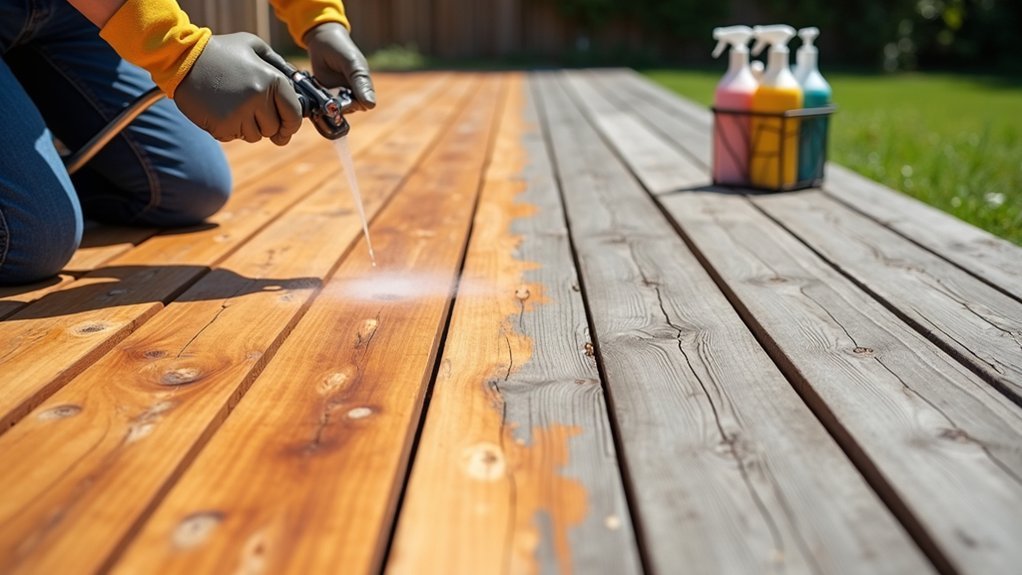
When you’re cleaning natural wood decks, pH-balanced solutions work to preserve delicate wood fibers that harsh chemicals can break down over time.
You’ll prevent surface damage like raised grain, etching, and premature weathering by choosing cleaners that match wood’s naturally slightly acidic composition. These formulations also help maintain your deck’s natural color by avoiding the bleaching or darkening effects that extreme pH levels cause.
Wood Fiber Preservation
Preserving wood fibers requires more than simple cleaning—it demands attention to your deck’s chemical balance. When you use harsh alkaline or acidic cleaners, you’re breaking down the lignin that holds wood cells together.
This degradation causes splintering, graying, and premature aging that no amount of sealing can reverse.
pH-balanced solutions work differently. They lift dirt and mildew without stripping essential oils or disrupting the wood’s natural structure.
You’ll notice your deck maintains its flexibility and resistance to cracking when you choose products formulated specifically for your wood type.
Cedar, redwood, and pressure-treated lumber each respond uniquely to cleaning agents. What protects one species may damage another.
Preventing Surface Damage
Because your deck’s grain pattern defines its character and value, protecting it during cleaning should be your top priority. Harsh chemicals with extreme pH levels strip away natural oils, raise wood fibers, and cause irreversible etching that dulls your deck’s appearance.
pH-balanced cleaners work with your wood’s natural chemistry rather than against it. They lift dirt, mildew, and stains without attacking the cellular structure that gives each board its unique texture and warmth. You’ll notice the difference immediately—cleaned wood retains its smooth feel and defined grain lines.
When you choose products formulated specifically for your deck material, you’re investing in long-term preservation. These solutions remove contaminants effectively while maintaining the protective lignin bonds that keep wood fibers intact. Your deck stays beautiful longer, and you’ll avoid costly repairs from chemical damage.
Maintaining Natural Color
Beyond structural integrity, your deck’s original color represents one of its most valued aesthetic qualities.
pH-balanced cleaners don’t just protect wood fibers—they preserve the rich tones that made you choose that specific wood species in the first place.
Harsh chemicals strip away natural oils and pigments, leaving wood looking faded and gray.
Material-specific formulas work differently by maintaining the wood’s inherent characteristics while removing dirt and grime.
Benefits of pH-balanced solutions for color preservation:
- Retain natural tannins that give wood its distinctive hue
- Prevent oxidation that causes premature graying
- Maintain oil content essential for color depth
- Protect against UV damage between treatments
You’ll notice the difference immediately after cleaning.
Your deck maintains its warm, inviting appearance rather than developing the washed-out look common with generic cleaners.
Why Pressure-Treated Lumber Requires Specialized Cleaning Agents

When you’re cleaning pressure-treated lumber, you can’t use just any deck cleaner without risking damage to the wood’s chemical preservatives.
Standard cleaning agents may react poorly with the copper-based compounds infused into the lumber, potentially breaking down the protective treatment that prevents rot and insect damage. You’ll need cleaners specifically formulated to work alongside these preservatives while effectively removing dirt, mildew, and stains without compromising your deck’s structural integrity.
Chemical Treatment Compatibility
Pressure-treated lumber undergoes a preservation process that infuses chemicals deep into the wood fibers, and this treatment creates unique cleaning requirements you can’t ignore.
Using incompatible cleaners can trigger harmful reactions that degrade the protective chemicals or damage the wood itself.
You’ll need cleaners specifically formulated to work alongside these embedded preservatives:
- Avoid chlorine bleach, which accelerates corrosion of metal fasteners and breaks down wood fibers
- Choose oxygen-based cleaners that lift dirt without neutralizing treatment chemicals
- Select pH-balanced formulas designed for treated wood surfaces
- Look for copper-safe products if your lumber contains copper-based preservatives
When you match your cleaner to your wood’s treatment type, you’ll maintain structural integrity while achieving thorough cleaning results.
Preserving Wood Integrity
Although pressure-treated lumber resists rot and insect damage better than untreated wood, its chemically infused structure makes it vulnerable to harsh cleaning agents that would be perfectly safe on natural timber.
The preservatives embedded in pressure-treated wood create a delicate chemical balance. When you use acidic or overly alkaline cleaners, you risk stripping these protective compounds, leaving your deck exposed to the very threats the treatment was designed to prevent.
Specialized cleaners maintain a neutral pH range that won’t react with copper-based preservatives. They lift dirt and mildew without dissolving the wood’s protective barrier. You’ll also avoid the graying and fiber damage that generic cleaners often cause.
Choose products labeled specifically for pressure-treated lumber. Your deck will stay structurally sound while maintaining its appearance for years.
Preserving the Finish on Exotic Hardwood Decking Materials
Exotic hardwood decking materials like ipe, cumaru, and tigerwood require specialized care that differs markedly from standard lumber maintenance.
These dense woods contain natural oils that protect against rot and insects, but generic cleaners can strip these beneficial compounds and damage the wood’s distinctive grain patterns.
When you use material-specific products designed for exotic hardwoods, you’ll protect your investment and maintain that rich, beautiful appearance.
Here’s what the right cleaner does for your exotic deck:
- Preserves natural oil content that provides built-in weather resistance
- Maintains the wood’s unique color depth without causing bleaching or discoloration
- Cleans effectively without raising the grain or creating a fuzzy surface texture
- Prepares the surface properly for UV-protective finishes and sealants
You’ll extend your deck’s lifespan substantially with proper product selection.
Chemical Compatibility Between PVC Decking and Cleaning Products
While PVC decking offers exceptional durability and low maintenance requirements, it demands careful attention to chemical compatibility when selecting cleaning products. Harsh chemicals can damage the protective cap layer, causing discoloration, fading, or surface degradation that’s often irreversible.
You should avoid chlorine bleach, acetone, and solvent-based cleaners on your PVC deck. These substances break down the vinyl compounds and strip away UV inhibitors built into the material. Instead, choose pH-neutral cleaners specifically formulated for synthetic decking.
When you’re tackling tough stains, opt for oxygen-based bleach alternatives that won’t compromise your deck’s integrity. Always test new products in an inconspicuous area first. Check your manufacturer’s guidelines, as using unapproved chemicals may void your warranty. The right cleaning products protect your investment while maintaining your deck’s appearance for years.
Preventing Discoloration on Aluminum Deck Surfaces
Because aluminum decking resists rot, insects, and moisture damage, many homeowners assume it’s completely maintenance-free—but without proper care, these surfaces can develop unsightly discoloration over time.
Aluminum decking isn’t maintenance-free—neglect it, and discoloration will follow.
You’ll want to avoid harsh chemicals that react with aluminum’s protective coating. Standard cleaners containing bleach, ammonia, or acidic compounds can cause oxidation, leaving permanent white spots or streaky patterns on your deck.
To protect your aluminum deck’s appearance, follow these guidelines:
- Use pH-neutral cleaners specifically formulated for aluminum surfaces
- Rinse thoroughly after cleaning to prevent residue buildup
- Clean spills promptly before they bond with the surface
- Apply cleaning solutions with soft-bristle brushes to avoid scratching
When you choose material-specific products, you’re preserving the finish that keeps your aluminum deck looking vibrant for decades.
How Wrong Cleaners Damage Deck Sealants and Stains
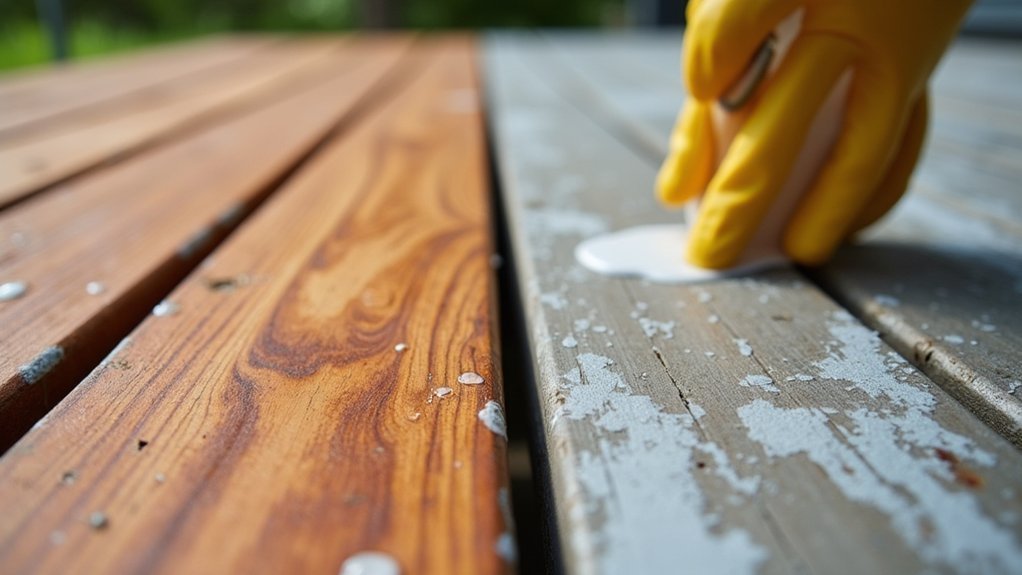
Your deck’s sealant and stain form a protective barrier that shields the wood from UV rays, moisture, and everyday wear—but using the wrong cleaning products can break down this barrier in ways you won’t notice until the damage is done.
Harsh chemicals like bleach and ammonia-based cleaners strip away protective coatings, leaving wood vulnerable to cracking and fading. High-alkaline products dissolve the oils in stains, causing them to peel or flake prematurely. Even pressure washing with excessive force can blast away sealant layers you’ve carefully applied.
Once damaged, your deck loses its water-repellent properties. You’ll see moisture seeping into the grain, promoting rot and mold growth beneath the surface. The solution is simple: match your cleaner to your deck’s specific finish to preserve its protection.
Matching Cleaning Strength to Your Deck Material Durability
Protecting your deck’s finish is only half the equation—you also need to take into account how much scrubbing and chemical strength the underlying material can handle. Different materials have varying tolerance levels for aggressive cleaning.
Match your cleaning approach to your deck material—what protects one surface can destroy another.
Here’s how to match cleaning strength to your deck type:
- Softwoods like cedar and pine require gentle, low-pressure cleaning with mild detergents to prevent fiber damage and gouging
- Hardwoods such as ipe and mahogany tolerate moderate cleaning strength but still need pH-balanced formulas to preserve natural oils
- Composite decking handles most cleaners well but can’t withstand harsh abrasives that scratch protective caps
- Pressure-treated lumber accepts stronger solutions but degrades faster with bleach-heavy products
You’ll extend your deck’s lifespan by selecting cleaners that work with your material’s natural durability rather than against it.
Environmental Benefits of Targeted Deck Cleaning Solutions
When you choose a cleaning product formulated for your specific deck material, you’re also making a smarter environmental choice. Targeted solutions work more efficiently, meaning less product washes off into your yard and local waterways.
Many material-specific cleaners now come in biodegradable formulas that break down safely without harming plants, pets, or aquatic ecosystems.
Reduced Chemical Runoff
Because targeted deck cleaning solutions work effectively at lower concentrations, they markedly reduce the volume of harmful chemicals that wash into nearby soil, storm drains, and waterways.
When you’re using a product designed for your specific deck material, you’re applying only what’s necessary—nothing more.
Here’s how material-specific cleaners minimize environmental impact:
- Lower application rates mean less product flows off your deck during rinsing
- Faster biodegradation occurs because formulations contain fewer harsh synthetic compounds
- Reduced toxicity levels protect aquatic life in local streams and ponds
- Decreased soil contamination preserves beneficial microorganisms in your yard
You’ll find that switching to targeted solutions protects both your deck and the surrounding ecosystem.
Your cleaning routine becomes part of responsible environmental stewardship.
Biodegradable Formula Options
Beyond simply reducing runoff, you can take environmental responsibility a step further by choosing biodegradable deck cleaning formulas. These products break down naturally without leaving harmful residues in your soil or waterways.
| Feature | Biodegradable | Traditional |
|---|---|---|
| Decomposition Time | Days to weeks | Months to years |
| Aquatic Toxicity | Low/None | Often high |
| Soil Impact | Minimal | Potentially harmful |
| Plant Safety | Generally safe | Can damage vegetation |
You’ll find biodegradable options specifically designed for wood, composite, and vinyl decking materials. They’re formulated to deliver powerful cleaning action while using plant-based surfactants and natural enzymes. When you rinse your deck, these solutions won’t harm nearby gardens or contaminate groundwater. You’re protecting your outdoor space and the broader ecosystem simultaneously.
Cost Savings From Using the Right Product the First Time
Selecting the correct deck cleaning product for your specific material might cost a few extra dollars upfront, but it’ll save you considerably more in the long run. When you use the wrong cleaner, you risk damaging your deck’s surface, leading to expensive repairs or premature replacement.
Here’s what proper product selection helps you avoid:
- Surface etching from overly acidic cleaners on composite materials
- Wood fiber damage that requires sanding and refinishing
- Premature sealant failure when residue prevents proper adhesion
- Multiple cleaning attempts that waste time and product
You’ll also extend your deck’s lifespan considerably. A well-maintained wood deck lasts 15-20 years, while improper cleaning can cut that timeline in half. Invest wisely now, and you’ll protect both your deck and your wallet.
Extending Your Deck Lifespan Through Proper Material Care
While choosing the right cleaning products matters, your deck’s longevity depends equally on how consistently you maintain it throughout the year. Regular cleaning prevents dirt buildup that traps moisture against your deck’s surface, causing premature deterioration.
For wood decks, you’ll want to clean seasonally and reseal every two to three years. Composite materials require less frequent attention but still benefit from quarterly cleanings to prevent mold growth in textured surfaces.
Inspect your deck monthly for damage signs like splintering, warping, or discoloration. Address issues immediately before they spread. Clear debris from gaps between boards where moisture accumulates.
Following material-specific care guidelines can extend your deck’s life by 50% or more, protecting your investment for decades rather than years.
Frequently Asked Questions
How Often Should I Clean My Deck Throughout the Year?
You should clean your deck at least twice a year—once in spring to remove winter debris and again in fall before cold weather arrives. High-traffic areas may need monthly attention.
Can I Mix Different Deck Cleaning Products Together for Better Results?
You shouldn’t mix different deck cleaning products together. Combining chemicals can create dangerous fumes, reduce effectiveness, or damage your deck’s surface. Stick to one product at a time and follow the manufacturer’s instructions for best results.
What Safety Gear Should I Wear When Applying Deck Cleaning Solutions?
You should wear chemical-resistant gloves, safety goggles, and a respirator mask when applying deck cleaning solutions. Don’t forget closed-toe shoes and long sleeves to protect your skin from splashes.
Should I Rinse My Deck Before Applying Material-Specific Cleaning Products?
Yes, you should rinse your deck before applying cleaning products. This removes loose dirt, debris, and dust that can interfere with the cleaner’s effectiveness. A quick rinse helps the material-specific solution penetrate and work properly.
How Long Should I Wait After Cleaning Before Applying New Deck Stain?
You should wait 24 to 48 hours after cleaning before applying new deck stain. This allows the wood to dry completely, ensuring the stain absorbs properly and adheres well for lasting protection.



Leave a Reply