

You can maximize a compact outdoor space by building multi-level deck platforms that create distinct zones for dining and lounging while tucking storage beneath raised sections. Built-in benches along railings eliminate bulky furniture, and floating decks on gravel beds work perfectly for yards under 200 square feet. L-shaped corner layouts reclaim wasted areas, while fold-down tables and integrated planters add function without sacrificing floor space. Below, you’ll discover specific strategies for each approach.
Multi-Level Deck Platforms to Maximize Vertical Space

When you’re working with a small outdoor area, building up instead of out can transform a cramped yard into a functional retreat. Multi-level deck platforms create distinct zones for dining, lounging, and entertaining without expanding your footprint. You’ll gain usable square footage by stacking platforms at varying heights.
Consider connecting levels with wide steps that double as seating. This eliminates the need for extra chairs while maintaining an open feel. You can tuck storage underneath raised platforms for cushions, gardening tools, or outdoor games.
Strategic placement matters. Position your highest platform where you’ll catch the best views or afternoon shade. Use lower levels near your home’s entrance for easy access. Built-in planters along platform edges soften shifts between levels while adding greenery without sacrificing floor space.
Built-In Seating Solutions That Save Square Footage
When you’re working with limited deck space, built-in seating eliminates the need for bulky standalone furniture that eats up valuable square footage.
You can maximize corner areas with L-shaped bench arrangements, choose storage-integrated seating that doubles as hidden compartments for cushions and outdoor supplies, or install foldable wall-mounted benches that disappear when not in use.
These smart solutions let you accommodate guests without sacrificing the open feel of your compact outdoor retreat.
Corner Bench Arrangements
Corner bench arrangements transform often-wasted deck corners into functional seating that maximizes every square inch of your compact outdoor space. You’ll gain seating for four to six people while using minimal floor area that traditional furniture would consume.
L-shaped benches tucked into corners create natural conversation zones and leave your deck’s center open for movement. You can add hinged seats to incorporate hidden storage for cushions, outdoor games, or gardening supplies.
Choose bench depths between 16 and 20 inches for comfortable seating without overwhelming your space. Install backrests at a slight angle for extended comfort during outdoor gatherings.
Consider extending one arm of your corner bench along a railing to create continuous perimeter seating. This approach defines your deck’s boundaries while eliminating the need for separate chairs entirely.
Storage-Integrated Seating Options
Combining storage with seating doubles your deck’s functionality without claiming extra square footage. You’ll gain hidden compartments for cushions, gardening tools, or outdoor toys while providing comfortable places to sit.
Hinged bench tops offer the easiest access to stored items. Build your benches at standard seat height—around 18 inches—and add weather-resistant hinges rated for outdoor use. You can line the interior with cedar to protect contents from moisture and pests.
L-shaped storage benches work exceptionally well in corners, maximizing often-wasted space. Consider adding divided sections inside to organize different categories of items. Waterproof liners protect contents during rainstorms.
For smaller decks, opt for pull-out drawer systems beneath fixed seats. This design lets you access storage without asking guests to stand up first.
Foldable Wall-Mounted Benches
Foldable wall-mounted benches flip up against your home’s exterior or a privacy wall when you’re not using them, instantly reclaiming valuable deck space. These hinged seats attach directly to vertical surfaces using heavy-duty brackets and piano hinges, supporting multiple guests when lowered yet disappearing within seconds.
You’ll find models in weather-resistant materials like teak, cedar, and powder-coated steel. Consider installing a continuous bench along one wall or spacing individual seats where you need them most. Add soft-close mechanisms to prevent slamming and protect fingers.
For extra functionality, choose designs with slim storage compartments built into the seat backs. When folded, they create a flat profile that won’t obstruct foot traffic. Mount them at standard seat height—approximately 18 inches—for comfortable use during gatherings.
Floating Deck Designs for Tiny Yard Footprints
When you’re working with a tiny yard, floating decks offer an ideal solution because they don’t require deep footings or permanent foundations. These ground-level platforms sit on concrete deck blocks or gravel beds, making installation straightforward and cost-effective. You can position them anywhere in your yard without worrying about underground utilities or complex permitting processes.
Floating decks work exceptionally well in spaces under 200 square feet. Consider using composite decking materials that resist moisture damage from ground contact. You’ll want to maintain a slight gap between boards for drainage and air circulation.
To maximize your tiny footprint, build your floating deck in geometric shapes that complement your yard’s boundaries. L-shaped or hexagonal designs create visual interest while fitting snugly into corners or irregular spaces.
Corner Deck Layouts That Utilize Overlooked Areas
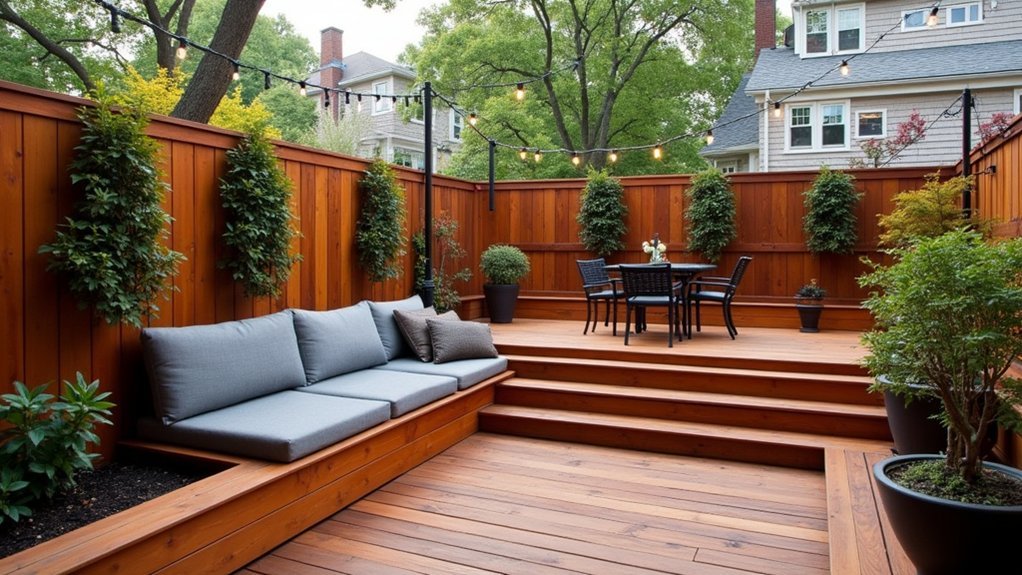
Those L-shaped designs mentioned earlier naturally lead to one of the most underutilized areas in any compact yard: corners. You’ll find that corner deck layouts transform awkward, neglected spaces into functional outdoor living areas. By building directly into a 90-degree intersection where fences or walls meet, you’re claiming square footage that typically goes to waste.
Consider angling your deck at 45 degrees across the corner to create visual interest and maximize usable surface area. You can incorporate built-in seating along the existing fence lines, which eliminates the need for bulky furniture. Add a small bistro table in the center, and you’ve created an intimate dining nook.
Corner placements also offer natural privacy since two sides are already enclosed by your property’s boundaries.
Incorporating Fold-Down Furniture Into Your Deck Plan
When square footage is limited, fold-down furniture lets you maximize your deck’s functionality without sacrificing space.
You’ll find wall-mounted tables that collapse flat when not in use, foldable seating that stores compactly against railings or walls, and hidden storage benches that serve double duty.
These versatile pieces transform your small deck from cramped to comfortable in seconds.
Wall-Mounted Table Options
If you’re working with a small deck, wall-mounted fold-down tables offer one of the smartest solutions for maximizing your usable space. These tables attach directly to your deck’s railing or an adjacent wall, folding flat when not in use. You’ll find options ranging from simple wooden ledges to sophisticated designs with built-in cup holders and storage compartments.
When selecting a wall-mounted table, consider the weight capacity and mounting requirements. Stainless steel brackets resist weather damage and provide sturdy support for dining or workspace needs. Choose materials that complement your existing deck aesthetic—teak, cedar, and composite options all work well outdoors.
Installation typically requires basic tools and secure attachment points. Position your table at standard dining height (28-30 inches) and make certain adequate clearance for comfortable seating when extended.
Foldable Seating Solutions
Foldable seating solutions pair perfectly with wall-mounted tables, letting you transform your compact deck from a tight walkway into a functional outdoor dining area within seconds.
Consider built-in bench seats that fold flat against railings or walls when not in use. These maximize floor space while providing ample seating for guests.
You’ll find hinged chairs that mount directly to deck posts work exceptionally well in narrow spaces. Choose weather-resistant materials like teak, marine-grade polymer, or powder-coated aluminum to guarantee longevity.
Install folding stools beneath elevated planters for hidden seating that serves double duty.
For ultimate flexibility, opt for stackable outdoor chairs you can store in a compact deck box. They’re portable, durable, and ready whenever you need extra seats for impromptu gatherings.
Hidden Storage Bench Designs
Hidden storage benches solve two common deck problems at once—limited seating and nowhere to stash cushions, tools, or outdoor accessories. You’ll maximize every square foot when your seating doubles as concealed storage compartments.
When selecting your bench design, consider these popular options:
| Bench Style | Best For |
|---|---|
| Flip-top lid | Quick access to frequently used items |
| Drawer-style pull-out | Heavy items you’d rather slide than lift |
| Corner L-shaped | Maximizing unused deck corners |
| Backless cube | Flexible placement and extra table surface |
You can build benches directly into your deck’s perimeter railing or position freestanding units where you need them most. Choose weather-resistant materials like cedar or composite lumber, and add hinges with hydraulic lifts for effortless opening.
Narrow Side Yard Deck Transformations
That overlooked strip of land running alongside your house can open up into a surprisingly functional outdoor retreat with the right deck design. You’ll want to maximize every inch while creating visual interest that draws the eye along the space rather than emphasizing its narrowness.
Consider these transformative approaches:
- Linear decking boards running lengthwise to elongate the visual perception of your side yard
- Built-in seating along one wall to preserve walkway space while adding comfort
- Vertical gardens or trellises that bring greenery upward instead of consuming floor area
You can incorporate varied levels or stepping platforms to break up the corridor effect. Strategic lighting along the deck’s edge creates ambiance and guides movement through the space during evening hours.
Wraparound Deck Styles for Small Properties
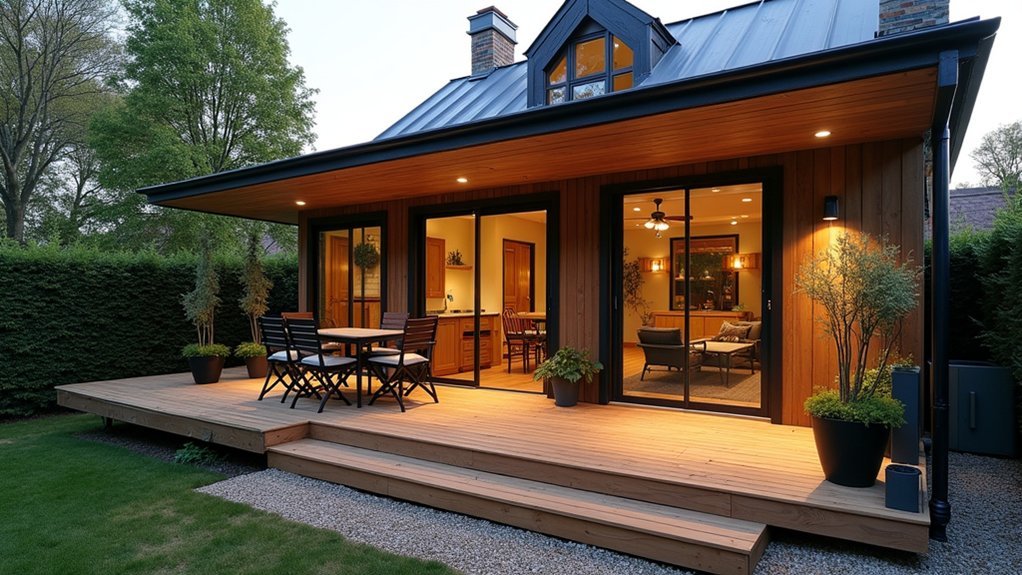
When you’re working with a small property, a wraparound deck can actually make your outdoor space feel larger by creating continuous flow around your home’s exterior. This design connects multiple access points while eliminating the need for separate deck structures that eat up precious yard space.
You’ll want to vary your deck’s width strategically. Keep narrower sections along walkways and expand into wider zones where you’ll place seating or dining areas. This approach maximizes functionality without overwhelming your lot.
Consider incorporating built-in benches along railings to save floor space while adding seating capacity. Choose light-colored decking materials to reflect sunlight and create an airy atmosphere. Don’t forget to integrate planters at corners—they’ll soften shifts and add visual interest without requiring additional ground-level garden beds.
Mixing Materials to Create Visual Depth in Limited Spaces
When you’re working with a compact deck, combining different materials creates the illusion of a larger, more dynamic space. Pairing warm wood planking with sleek metal railings or structural elements adds modern contrast while keeping your design from feeling monotonous.
You can also incorporate stone accents—like a small paver landing or decorative border—to introduce texture and draw the eye through different zones of your outdoor area.
Wood and Metal Combinations
Combining wood and metal transforms a small deck from ordinary to architecturally striking. You’ll create visual contrast that draws the eye and adds dimension without consuming extra square footage. Steel cable railings paired with wooden posts open up sightlines, making your space feel larger while maintaining safety.
Consider these effective combinations:
- Powder-coated aluminum frames with cedar or ipe decking boards for durability and warmth
- Steel cable railings that preserve views and prevent the “boxed-in” feeling
- Metal planter brackets mounted on wooden privacy walls for vertical gardening
You can also incorporate metal accents through furniture legs, light fixtures, or decorative screens. The key is balancing industrial edge with natural warmth. Choose metals with finishes that complement your wood’s undertones for cohesive design.
Stone Accents Add Interest
Stone accents anchor your deck design with texture and permanence that wood and metal alone can’t achieve. You’ll find that incorporating stone elements creates instant visual weight and grounds your compact space with natural elegance.
Consider adding a stone border along your deck’s perimeter or installing a small stone column to support a corner bench. You can embed flat river rocks between deck boards at shift points or create a stone-topped side table that doubles as extra seating.
In tight quarters, stone works hardest when you use it sparingly. A single stone planter or a narrow stone strip beneath your railing prevents the material from overwhelming your space. These strategic placements draw the eye downward, making your deck feel more expansive while adding sophisticated contrast to your design.
Strategic Lighting Techniques to Enhance Small Deck Areas
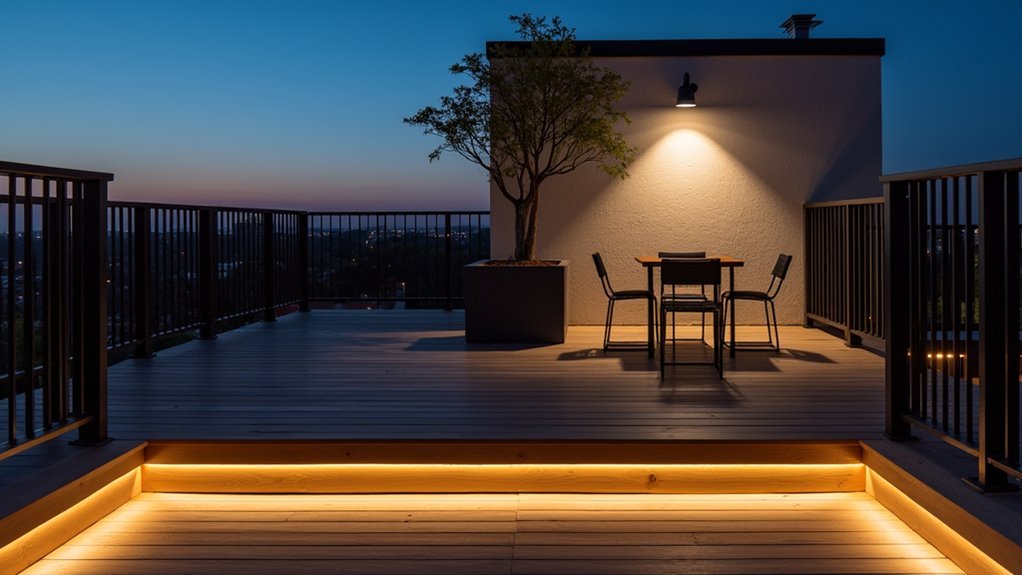
In the sphere of small deck design, thoughtful lighting placement can transform a cramped area into an inviting outdoor retreat that feels markedly larger than its actual footprint. You’ll want to layer your lighting at multiple heights to create depth and dimension.
Consider these effective techniques for your compact deck:
- Recessed step lights – Install these along stairs and borders to define edges without consuming valuable space
- String lights overhead – Drape them across your deck to draw the eye upward and expand the perceived ceiling height
- Solar-powered post caps – Add these to railing posts for ambient glow that doesn’t require electrical work
You can also incorporate LED strip lighting beneath benches or planters to create a floating effect that makes your deck appear more spacious.
Integrated Planter Boxes and Greenery for Compact Decks
Maximizing greenery on a compact deck doesn’t mean sacrificing precious floor space—it means getting creative with where you place your plants.
Built-in planter boxes along railings transform dead space into thriving garden beds while maintaining your walkable area. You can install narrow troughs directly onto balustrades or mount window-box-style containers on the exterior of your railing system.
Consider vertical planting walls that attach flush against your home’s exterior. These living walls add dramatic visual impact without claiming any deck real estate.
Corner planters work double duty as both greenery holders and subtle privacy screens from neighboring properties.
Choose compact plant varieties like dwarf ornamental grasses, trailing succulents, or herb gardens that won’t overwhelm your space. You’ll gain the calming benefits of nature while keeping your deck functional.
Privacy Screen Ideas That Double as Design Elements
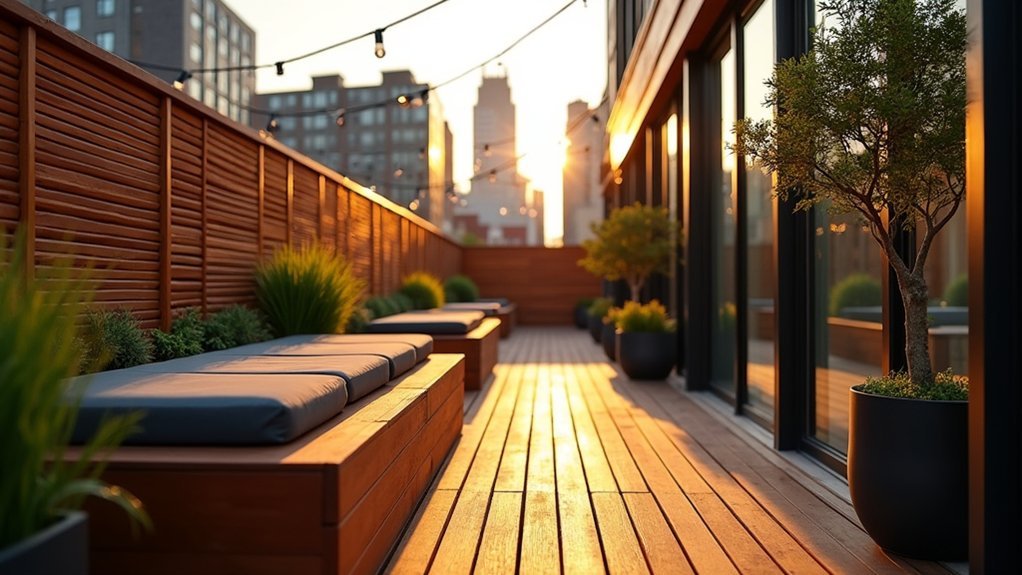
Beyond adding greenery, privacy screens offer another opportunity to enhance your compact deck while solving a practical problem. You’ll find that strategic screen placement creates intimate zones without sacrificing your deck’s open feel.
Privacy screens transform small decks into intimate retreats—blocking unwanted sightlines while preserving the open, airy atmosphere you love.
Consider these dual-purpose privacy solutions:
- Slatted wood screens – They filter light beautifully while blocking sightlines, and you can train climbing plants up them for added texture
- Outdoor curtains – You’ll gain flexible privacy that you can adjust throughout the day, plus they soften hard deck edges
- Decorative metal panels – Laser-cut designs cast dramatic shadow patterns and serve as striking focal points
When selecting your screen, match materials to your deck’s existing aesthetic. Position screens strategically to block only necessary sightlines, preserving views you want to keep.
Combining Deck and Patio Spaces for Seamless Flow
For homeowners with limited outdoor square footage, blending your deck with an adjacent patio creates a unified living area that feels larger than either space alone. You’ll want to maintain consistent design elements between both surfaces while embracing their material differences.
Use matching furniture styles, cohesive color palettes, and repeated planters to tie the spaces together visually. Consider installing step-down shifts that feel intentional rather than abrupt.
| Design Element | Integration Strategy |
|---|---|
| Flooring | Match wood tones to paver colors |
| Lighting | Use identical fixture styles throughout |
| Furniture | Select complementary materials |
| Plantings | Create continuous border gardens |
Position your dining area on one surface and lounging on the other. This zoning approach maximizes functionality while the unified aesthetics guarantee seamless visual flow between spaces.
Budget-Friendly Small Deck Building Tips and Tricks
While you’re planning your compact deck project, you don’t need a massive budget to create an attractive outdoor retreat. Smart material choices and strategic planning can stretch your dollars further than you’d expect.
Consider these money-saving approaches:
- Choose pressure-treated lumber over composite decking—it costs substantially less and lasts decades with proper maintenance
- Keep your design simple by avoiding complex angles, multiple levels, or intricate railing patterns that increase labor and material costs
- Source reclaimed materials from architectural salvage yards or online marketplaces for unique boards at fraction of retail prices
You can also save by doing demolition work yourself and hiring professionals only for structural elements. Build during off-peak seasons when contractors offer better rates.
Planning permits and inspections shouldn’t be skipped—they’ll prevent costly fixes later.
Frequently Asked Questions
What Permits Are Typically Required Before Building a Deck in Residential Areas?
You’ll typically need a building permit, and depending on your location, you may require zoning approval, HOA permission, or electrical permits if you’re adding lighting. Always check with your local building department first.
How Long Does a Small Deck Installation Usually Take to Complete?
You can typically complete a small deck installation in one to three days. If you’re hiring professionals, they’ll handle the work faster, while DIY projects may extend your timeline to a weekend or longer.
What Is the Average Lifespan of Different Decking Materials?
You’ll get 10-15 years from pressure-treated wood, 25-30 years from cedar or redwood, and 25-50 years from composite materials. Aluminum decking lasts longest, often exceeding 50 years with minimal maintenance required.
How Often Should I Reseal or Restain My Wooden Deck?
You should reseal or restain your wooden deck every two to three years. However, you’ll want to inspect it annually for wear, especially in high-traffic areas that may need attention sooner.
Can I Build a Deck Myself or Should I Hire a Professional?
You can build a deck yourself if you’ve got basic carpentry skills and proper tools. However, you should hire a professional for complex designs, elevated structures, or if local codes require permits and inspections.


Leave a Reply