

The best deck drainage solutions depend on your specific needs and budget. You’ll find under-deck ceiling panels, waterproof membranes, and trough-and-channel systems all work effectively when installed with proper slope—typically a quarter inch per foot toward drainage points. Aluminum and vinyl options resist moisture and require minimal maintenance, while EPDM rubber membranes handle temperature swings without cracking. Understanding each system’s installation requirements and upkeep demands will help you choose the right solution for your outdoor space.
Understanding Under-Deck Drainage Systems and How They Work
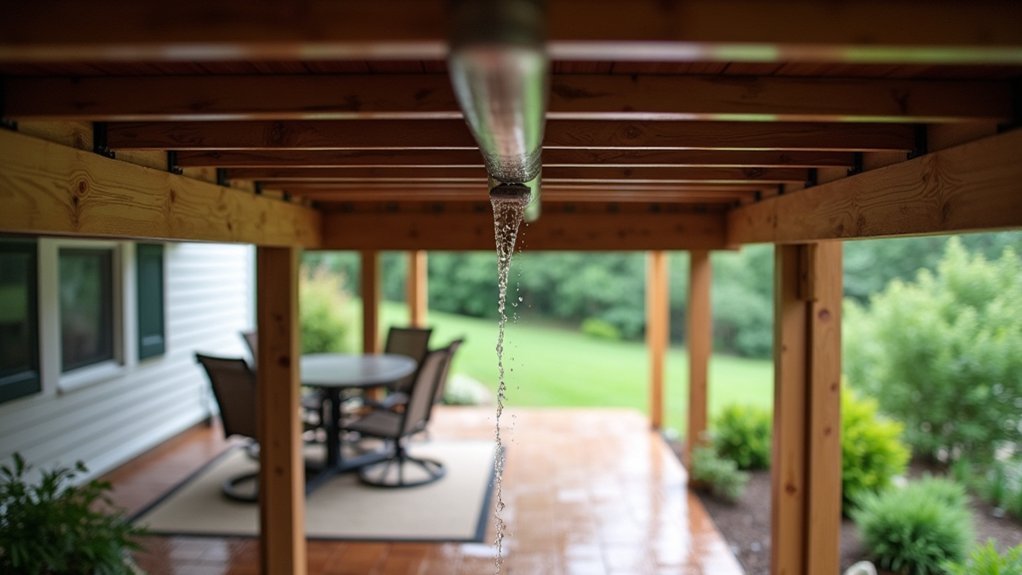
When you’ve invested time and money building a beautiful deck, the space beneath it often becomes a wasted, muddy area that collects debris and remains unusable. An under-deck drainage system transforms this neglected zone into functional outdoor living space.
Transform the forgotten space beneath your deck from a muddy wasteland into valuable outdoor living area.
These systems work by capturing water that seeps through your deck boards and channeling it away from the area below. A network of troughs or panels attaches to your deck’s joists, creating a ceiling-like barrier that collects rainwater.
The system slopes slightly, directing water toward gutters at the perimeter, which then funnel it to downspouts.
You’ll find two main types: ceiling systems that create a finished look and trough systems that remain visible but cost less. Both effectively keep the space dry and usable year-round.
Gutter and Downspout Systems for Elevated Decks
When you’ve installed an under-deck drainage system, you’ll need proper gutters and downspouts to channel water away from your home’s foundation.
Under-deck gutter installation requires positioning troughs along the lowest points of your ceiling panels where water naturally collects. Strategic downspout placement guarantees this captured water flows to designated drainage areas, preventing erosion and moisture damage around your deck’s support posts.
Under-Deck Gutter Installation
Under-deck gutter systems transform the wasted space beneath elevated decks into functional, dry areas you can actually use.
These ceiling-mounted panels collect water that drips between deck boards and channel it toward integrated gutters along the perimeter.
You’ll install these systems by attaching aluminum or vinyl troughs directly to your deck joists.
The panels slope slightly to direct water flow toward downspouts at designated exit points.
Most homeowners complete installation in a weekend with basic tools.
When selecting your system, consider the joist spacing and overall square footage.
Measure carefully since panels come in standard widths designed to fit common 12-inch, 16-inch, or 24-inch joist configurations.
You’ll also need end caps, downspout adapters, and mounting hardware to complete your weatherproof under-deck ceiling.
Downspout Placement Strategies
Strategic downspout placement determines whether your under-deck gutter system performs flawlessly or creates new drainage headaches around your home’s foundation. You’ll want to position downspouts at the lowest points of your gutter runs, typically at corners or every 20 to 30 feet along the span.
Direct your downspouts away from foundation walls by extending them at least four feet from your home. You can connect them to underground drain pipes that empty into dry wells, rain gardens, or storm drains. Consider your yard’s natural slope when choosing discharge locations.
For multi-level decks, you’ll need to coordinate downspout routing between levels. Use splash blocks or underground drainage if extensions would create tripping hazards in high-traffic areas beneath your deck structure.
Ceiling Panel Drainage Solutions for Dry Storage Areas

When you want to create dry storage space beneath your elevated deck, ceiling panel drainage systems offer an effective solution that channels water away while providing a finished look.
You’ll find several panel material options available, from vinyl and aluminum to composite systems, each with distinct installation methods that determine complexity and cost.
Understanding proper maintenance and cleaning tips will help you keep your drainage system functioning efficiently for years to come.
Panel Material Options
Selecting the right panel material directly impacts your ceiling drainage system’s longevity, appearance, and maintenance requirements. You’ll find several proven options on the market, each with distinct advantages for under-deck applications.
Vinyl panels offer excellent moisture resistance and require minimal upkeep. They won’t rot, warp, or support mold growth, making them ideal for humid climates. Aluminum panels provide superior durability and can handle heavy water loads without sagging.
For a more refined look, you can choose powder-coated steel panels that resist corrosion while adding aesthetic appeal. Composite materials blend durability with customizable finishes, letting you match your home’s exterior.
Consider your climate, budget, and desired appearance when making your selection. Each material performs differently in extreme temperatures, so factor in your region’s weather patterns.
Installation Methods Explained
Although your panel material choice matters, proper installation techniques ultimately determine whether your ceiling drainage system performs as intended. You’ll need to establish a consistent slope of at least 1/8 inch per foot toward your designated drainage point.
Start by installing your perimeter trim along the joist edges, ensuring tight connections at corners. Secure panels directly to the underside of your deck joists using manufacturer-recommended fasteners spaced every 12 inches. Overlap panel seams by at least 2 inches and seal joints with compatible adhesive or tape.
Connect your gutter troughs at the low end to capture collected water. Route downspouts away from your foundation. Test the system with a hose before finishing, checking for leaks at seams and proper water flow toward drainage outlets.
Maintenance and Cleaning Tips
Regular maintenance keeps your ceiling panel drainage system functioning properly and extends its lifespan substantially.
Inspect your panels quarterly for debris accumulation, sagging, or damaged seams. Clear leaves, twigs, and sediment from gutters and downspouts before they cause blockages.
Clean your panels twice yearly using a soft-bristle brush and mild soap solution. Avoid harsh chemicals that can degrade vinyl or rubber components. Rinse thoroughly with a garden hose to prevent residue buildup.
Check all connection points and seals for wear or separation. Tighten loose fasteners and replace cracked gaskets immediately.
During winter months, remove snow loads that exceed manufacturer recommendations to prevent structural stress.
Address standing water promptly, as it indicates drainage problems. Adjust panel slopes or clear obstructions to restore proper water flow toward collection channels.
Waterproof Membrane Options for Complete Protection
When you’re looking to protect the space beneath your deck from water damage, waterproof membranes offer the most all-encompassing solution available. These systems create a continuous barrier that channels water away from the underlying structure, keeping everything dry regardless of weather conditions.
You’ll find several membrane types to choose from. Vinyl membranes provide durable, low-maintenance coverage that’s easy to clean. Rubber EPDM membranes excel at handling temperature fluctuations without cracking. Liquid-applied membranes conform to irregular surfaces and create seamless protection.
Installation typically involves securing the membrane to your deck’s substructure, then adding a drainage system to direct water to gutters. You can walk on most membranes, making your under-deck space fully usable. Consider your climate, budget, and intended use when selecting the right membrane for your project.
Troughs and Channel Systems for Effective Water Diversion
Troughs and channel systems provide another reliable approach to keeping water away from your under-deck space, especially if you prefer a solution that works between your existing deck boards. These systems install directly beneath the gaps between boards, catching water as it falls through and directing it toward designated drainage points.
You’ll find aluminum and vinyl options that resist corrosion and handle years of exposure to moisture. The channels connect to downspouts at the deck’s edge, moving water away from your foundation and living areas below.
Installation requires careful slope calculation—typically a quarter inch per foot—to guarantee proper water flow. You can retrofit these systems onto existing decks without major reconstruction.
They’re particularly effective for second-story decks where you want to create dry storage or entertainment space underneath.
DIY Vs Professional Installation of Deck Drainage Systems

Although many homeowners tackle deck drainage installation as a weekend project, the decision between DIY and professional help depends on your skill level, the system’s complexity, and your deck’s specific challenges.
Your skill level, system complexity, and deck challenges determine whether DIY installation or professional help is the right choice.
Consider hiring a professional when you’re facing:
- Multi-level decks requiring integrated drainage networks
- Structural modifications to existing frameworks
- Complex slope calculations for proper water flow
- Systems connecting to underground drainage or gutters
- Warranty requirements that mandate certified installation
DIY installation works well for simple under-deck membrane systems and basic gutter attachments.
You’ll save money but invest significant time. Professionals bring expertise, proper tools, and guarantees that protect your investment. They’ll identify potential issues you might miss and guarantee code compliance. Evaluate your comfort level honestly before deciding.
Maintenance Tips to Keep Your Deck Drainage System Functioning Properly
Whether you installed your deck drainage system yourself or hired a professional, regular maintenance determines how long it’ll last and how well it performs. You’ll want to inspect your system at least twice a year, ideally in spring and fall.
| Maintenance Task | Frequency |
|---|---|
| Clear debris from gutters | Monthly |
| Check for leaks or cracks | Quarterly |
| Flush downspouts | Twice yearly |
| Inspect seams and connections | Annually |
Don’t ignore warning signs like standing water, sagging panels, or slow drainage. These issues worsen quickly if left unaddressed. Clean your gutters and troughs after storms that bring heavy leaf fall or debris. You should also trim overhanging branches to minimize buildup. A few minutes of preventive care saves you from costly repairs down the road.
Frequently Asked Questions
How Much Does a Typical Deck Drainage System Cost to Install?
You’ll typically pay between $1,000 and $3,000 for a basic deck drainage system installation. If you’ve got a larger deck or choose premium materials, you’re looking at $5,000 or more.
Can Deck Drainage Systems Be Installed on Existing Decks?
Yes, you can install deck drainage systems on existing decks. You’ll need to access the area beneath your deck boards, attach troughs or panels between joists, and connect them to gutters and downspouts.
What Permits Are Required for Installing Deck Drainage Systems?
You’ll typically need a building permit if you’re modifying your deck’s structure during drainage installation. Check with your local building department since requirements vary by municipality. Some areas don’t require permits for simple under-deck systems.
How Long Do Deck Drainage Systems Typically Last Before Replacement?
You can expect your deck drainage system to last 15-25 years with proper maintenance. Quality vinyl or aluminum systems typically outlast cheaper options. You’ll extend lifespan by regularly clearing debris and inspecting seams for leaks.
Do Deck Drainage Systems Work in Freezing Winter Climates?
Yes, deck drainage systems work in freezing climates when you install them correctly. You’ll want to choose materials rated for cold temperatures and make certain proper slope so water drains completely before it can freeze and cause damage.


Leave a Reply