
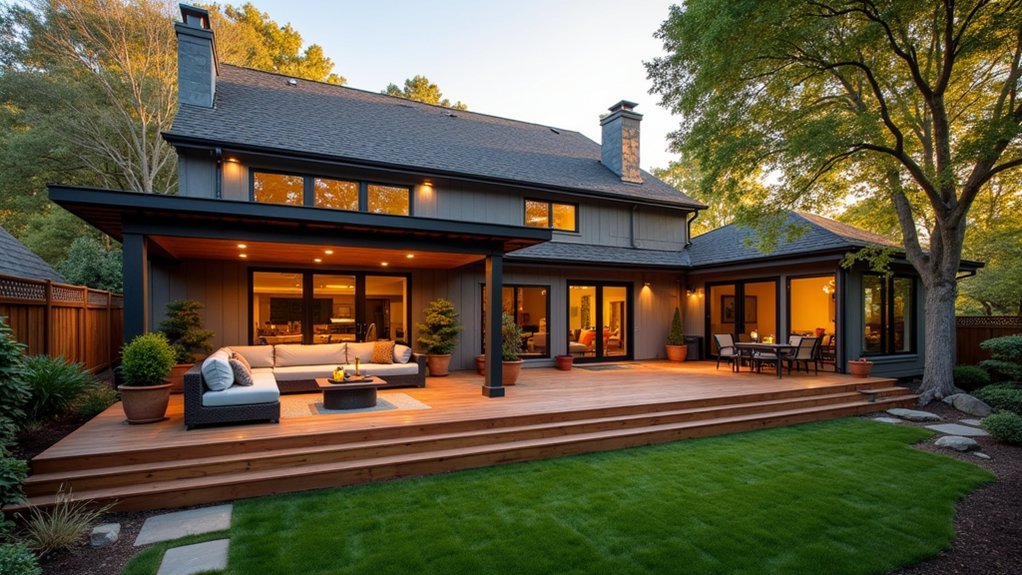
Your deck can evolve alongside your family with smart design choices. Start with multi-level play zones that offer age-appropriate spaces for toddlers through teens. Add built-in seating with hidden storage to keep toys and gear organized. Install a covered dining area for year-round family meals, and choose sturdy railings with vertical pickets spaced no more than four inches apart. Plan flexible zones with modular furniture that’ll adapt as your kids grow—and there’s plenty more to explore below.
Multi-Level Play Zones for Kids of All Ages
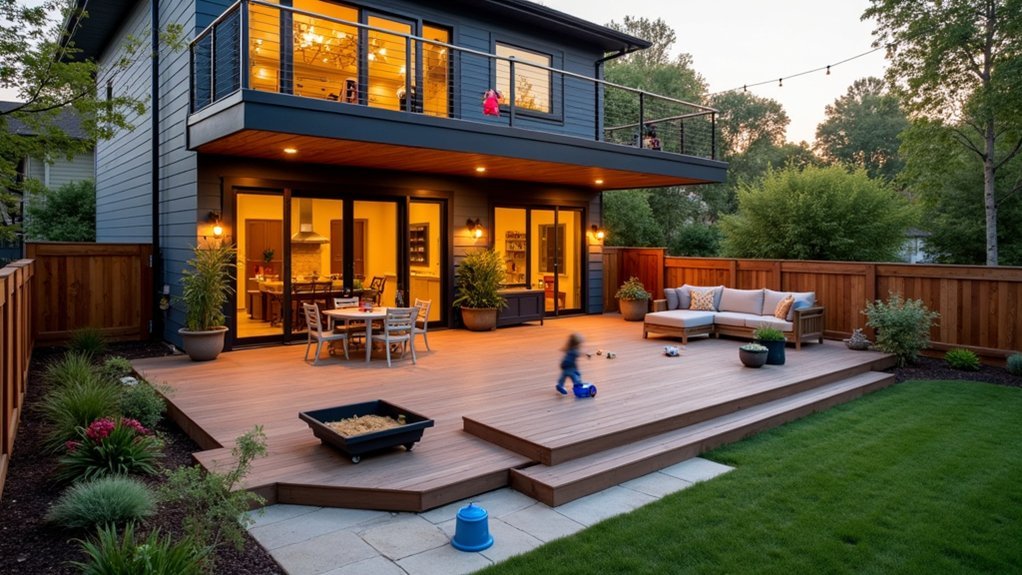
When you’re planning a deck expansion, creating multi-level play zones transforms ordinary outdoor space into an adventure playground that grows with your children. Consider incorporating tiered platforms at varying heights connected by wide, sturdy steps that double as seating.
Design the lowest level for toddlers with built-in sandboxes and soft activity areas. The mid-level works perfectly for school-age kids who need space for games, art projects, or reading nooks. Reserve your highest tier for teens seeking independence—think lounge seating or a homework station with weather-resistant furniture.
You’ll want to install safety railings that meet local codes while maintaining sightlines so you can supervise younger children. Add storage benches throughout each level to contain toys, sports equipment, and outdoor games without cluttering your beautiful new space.
Built-In Seating and Storage Solutions
Although maximizing square footage matters in any deck expansion, built-in seating and storage solutions let you achieve both comfort and functionality without sacrificing precious floor space.
Smart built-ins transform your deck expansion into a multitasking marvel—delivering comfort, storage, and style without eating up valuable floor space.
Consider installing bench seating along your deck’s perimeter with hinged tops that reveal hidden compartments. You’ll store outdoor cushions, toys, and gardening supplies while providing ample seating for family gatherings. L-shaped corner benches create natural conversation areas and define distinct zones within your expanded deck.
You can also incorporate storage beneath deck stairs or build custom planters with concealed compartments. Weather-resistant materials like cedar or composite decking guarantee your built-ins withstand the elements for years.
Don’t overlook vertical storage options. Mounted shelving units and hooks keep frequently used items accessible without cluttering your deck’s surface, giving your growing family room to play and relax.
Covered Outdoor Dining Areas for Family Meals
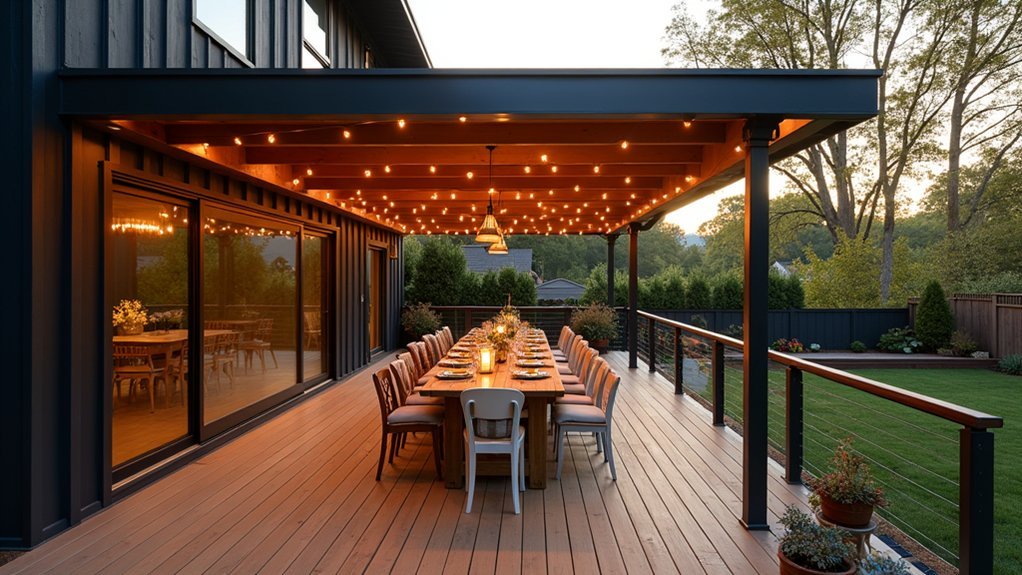
Families often discover that a covered outdoor dining area transforms their deck into a year-round gathering space. You’ll protect your family from sun, rain, and falling leaves while enjoying meals together. Consider installing a pergola with retractable canopy or a solid roof structure that matches your home’s architecture.
| Feature | Best For |
|---|---|
| Pergola with fabric canopy | Flexible shade control |
| Solid roof extension | Complete weather protection |
| Retractable awning | Budget-friendly option |
| Louvered roof system | Adjustable ventilation |
You’ll want to position your dining table where it receives natural light but stays protected from prevailing winds. Add outdoor pendant lighting above the table for evening meals. Don’t forget to include electrical outlets nearby for warming trays and blenders during family gatherings.
Safe and Sturdy Railing Designs for Young Children
Beyond comfortable dining spaces, your deck’s safety features deserve equal attention—especially if young children will be playing nearby.
Safety isn’t an afterthought—when kids are involved, your deck’s protective features matter just as much as its aesthetics.
Modern building codes require railings at least 36 inches high, but consider going taller for added peace of mind.
Choose balusters spaced no more than four inches apart to prevent small heads and bodies from slipping through. Horizontal cable systems may look sleek, but they create climbing hazards for adventurous toddlers.
Instead, opt for vertical pickets or tempered glass panels that block climbing attempts while maintaining your view.
Select materials that resist splintering—composite, aluminum, or properly sealed wood work well.
Test all connections regularly, as children tend to push and pull on railings during play.
Reinforce corner posts with extra hardware for maximum stability.
Flexible Spaces That Grow With Your Family
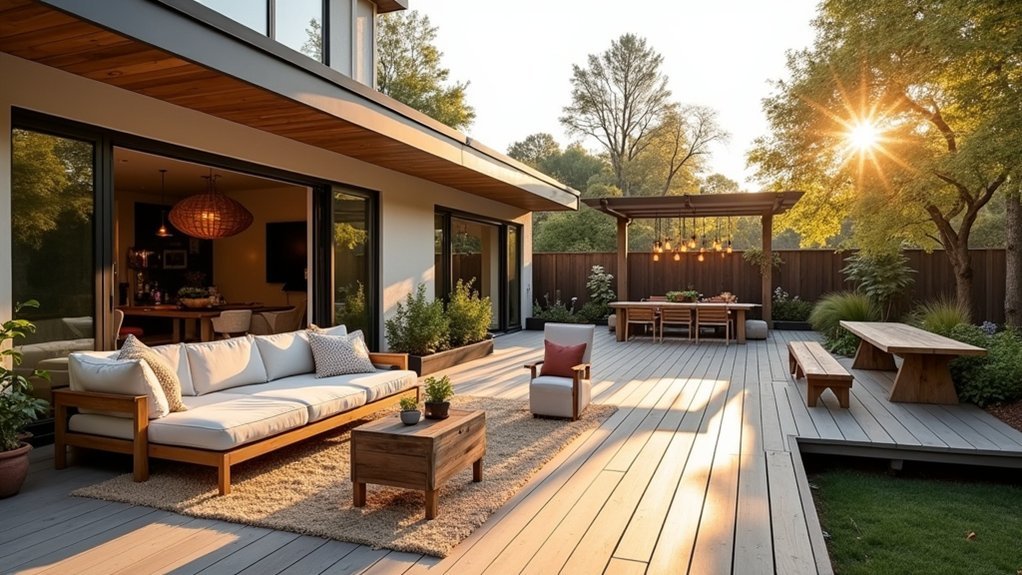
While sturdy railings protect your children today, designing flexible deck spaces guarantees your outdoor investment serves your family for decades to come.
You’ll want zones that transform as your kids grow from toddlers to teenagers.
Consider modular furniture that reconfigures easily and built-in benches with hidden storage.
Install weatherproof electrical outlets for future hot tubs, outdoor kitchens, or entertainment systems.
Three investments you’ll never regret:
- Oversized footings that support future pergolas or covered structures
- Plumbing rough-ins for outdoor sinks or showers
- Extra square footage now—it’s cheaper than expanding later
Design your deck with removable sections for future tree growth or play equipment.
Choose timeless materials and neutral colors that won’t date quickly.
Your family’s needs will evolve, and your deck should adapt seamlessly.
Frequently Asked Questions
How Much Does a Typical Deck Expansion Cost for a Family Home?
You’ll typically spend between $4,000 and $15,000 for a deck expansion, depending on size, materials, and complexity. Composite decking costs more than pressure-treated wood, and you’ll pay extra for features like built-in seating or railings.
What Permits Are Required Before Starting a Deck Expansion Project?
You’ll typically need a building permit before starting your deck expansion. Check with your local building department, as you may also require zoning approval, HOA authorization, and inspections throughout the construction process.
How Long Does a Deck Expansion Usually Take to Complete?
You’ll typically complete a deck expansion in one to three weeks, depending on size and complexity. Weather delays, material availability, and permit inspections can extend your timeline, so you’ll want to plan accordingly.
Which Deck Materials Require the Least Maintenance Over Time?
You’ll find composite and PVC decking require the least maintenance over time. You won’t need to stain, seal, or sand these materials. They resist fading, mold, and insects, giving you more time to enjoy your expanded outdoor space.
Can I Expand My Deck Myself or Should I Hire Professionals?
You can expand your deck yourself if you’re experienced with construction and local building codes. However, you should hire professionals for complex projects involving structural changes, electrical work, or multi-level designs to guarantee safety and compliance.


Leave a Reply