
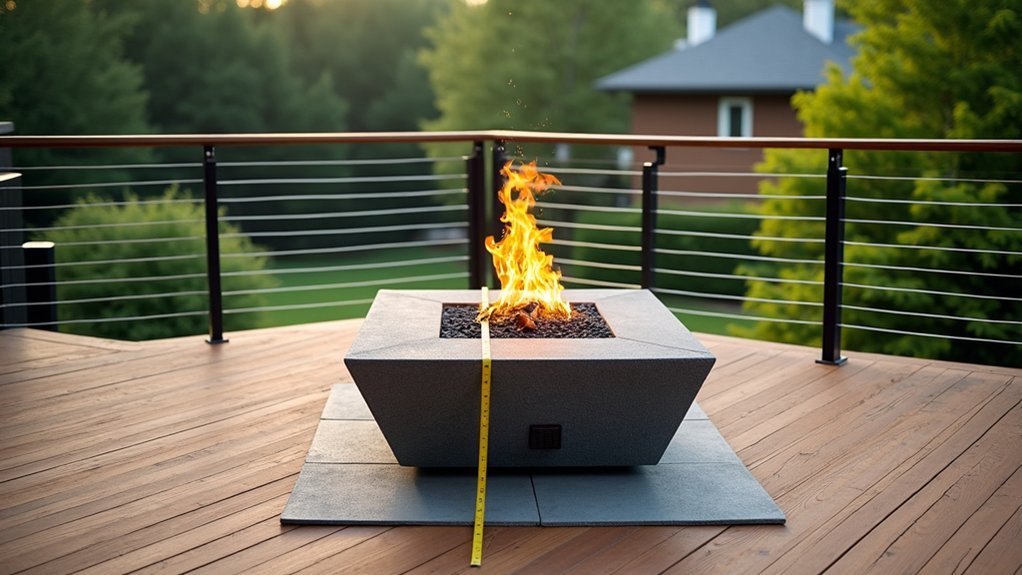
You’ll need to meet five essential safety requirements when installing a fire pit on your deck. First, maintain at least 10 feet of clearance from railings and combustible materials. Second, place a heat-resistant barrier rated for temperatures above 1,400°F beneath your fire pit. Third, keep a 5-pound ABC-rated fire extinguisher within 10 feet. Fourth, verify your deck can support the concentrated weight. Fifth, make certain proper ventilation with 10 feet of vertical clearance above the pit—and there’s more you should know about each requirement.
Proper Clearance Distances Between Fire Pit and Deck Railings
When you’re positioning a fire pit on your deck, maintaining proper clearance from railings isn’t just a recommendation—it’s essential for preventing fires and protecting your family.
You’ll need at least 10 feet of clearance between your fire pit and any deck railing. This distance accounts for radiant heat, flying embers, and unexpected flame flare-ups.
Wooden railings are particularly vulnerable, as they can ignite from prolonged heat exposure even without direct flame contact.
Check your local building codes, since some jurisdictions require 15 feet or more.
You should also consider wind patterns—gusts can push flames and sparks toward railings faster than you’d expect.
Don’t forget vertical clearance. Make sure there’s no overhead structure, awning, or tree branch within 21 feet above your fire pit’s location.
Heat-Resistant Barriers and Protective Padding Materials
Protecting your deck’s surface from intense heat requires the right combination of barriers and padding materials beneath your fire pit. You’ll want to start with a fire pit pad or ember mat rated for temperatures exceeding 1,400°F. These pads create a critical thermal break between flames and your deck boards.
Layer your protection system with heat-resistant materials like volcanic rock, fire bricks, or ceramic tiles. These absorb and dissipate heat before it reaches your decking. You should place a non-combustible base at least two inches thick under portable fire pits.
Consider using carbon fiber or silicone-coated fiberglass mats for lightweight yet durable protection. Always check manufacturer ratings to guarantee your barrier materials match your fire pit’s heat output. Replace any barrier showing signs of degradation immediately.
Fire Extinguisher Placement and Emergency Preparedness

Every deck fire pit setup demands a readily accessible fire extinguisher positioned within 10 feet of your burning area. Choose a 5-pound ABC-rated extinguisher that handles wood, liquid, and electrical fires effectively. Mount it at a visible height between 3.5 and 5 feet from the deck surface.
You’ll also need a garden hose connected and within reach, plus a bucket of sand for smothering stubborn embers. Keep a fire blanket nearby to tackle clothing fires or small flare-ups quickly.
Create an emergency action plan before your first fire. Identify two clear exit paths from your deck area. Store emergency contact numbers in your phone and post them visibly. Brief all household members on extinguisher operation using the PASS method: pull, aim, squeeze, sweep.
Weight Load Considerations for Deck Structural Integrity
Before you install a fire pit on your deck, you’ll need to verify that your structure can handle the added weight. Fire pits range from 50 to over 500 pounds, and that’s before adding fuel, accessories, and surrounding furniture.
Check your deck’s load capacity by reviewing the original building plans or consulting a structural engineer. Most residential decks support 40 to 60 pounds per square foot, but concentrated weight creates different stress than distributed loads.
You should reinforce the area beneath your fire pit with additional joists or blocking. Consider placing the pit near load-bearing posts where structural support is strongest. Distribute weight across multiple joists using a non-combustible base pad that spans at least three joists. Never exceed your deck’s rated capacity, regardless of apparent structural soundness.
Ventilation Requirements and Smoke Management Solutions

While your deck’s structural integrity matters, proper ventilation determines whether your fire pit creates an enjoyable atmosphere or fills your outdoor space with choking smoke.
You’ll need at least 10 feet of vertical clearance above your fire pit to allow smoke to disperse naturally.
Keep at least 10 feet of open sky above your fire pit for smoke to rise and disperse properly.
Position your pit away from walls, pergolas, and overhangs that trap smoke at seating level.
Consider prevailing wind patterns when selecting your installation location.
Place seating upwind to keep guests comfortable during gatherings.
For covered deck areas, install a dedicated ventilation hood or chimney system rated for outdoor fire pit use.
These systems actively draw smoke upward and away from your entertaining space.
You can also add portable fans strategically to redirect smoke when wind conditions shift unexpectedly during use.
Frequently Asked Questions
What Types of Fire Pits Are Safest for Installation on Wooden Decks?
You’ll find propane or natural gas fire pits are your safest options for wooden decks. They don’t produce sparks or embers. Always use a heat-resistant pad underneath and maintain proper clearance from railings.
Do I Need a Permit to Install a Fire Pit on My Deck?
You’ll likely need a permit to install a fire pit on your deck, but requirements vary by location. Check with your local building department or fire marshal’s office before starting your project to make certain of compliance.
What Maintenance Schedule Should I Follow for My Deck Fire Pit?
You should inspect your deck fire pit monthly for rust, cracks, and debris buildup. Clean the burner and check gas connections regularly. Before each season, examine the deck surface underneath for heat damage.
Can I Use a Fire Pit on a Composite Decking Material?
You can use a fire pit on composite decking, but you’ll need a fire-resistant pad underneath. Composite materials can melt or warp from intense heat, so you should maintain proper clearance and use protective barriers.
What Insurance Considerations Apply When Adding a Fire Pit to My Deck?
You should contact your homeowner’s insurance provider before installing a fire pit. You’ll need to verify coverage, understand liability implications, and confirm you won’t void your policy by adding this feature to your deck.




Leave a Reply