
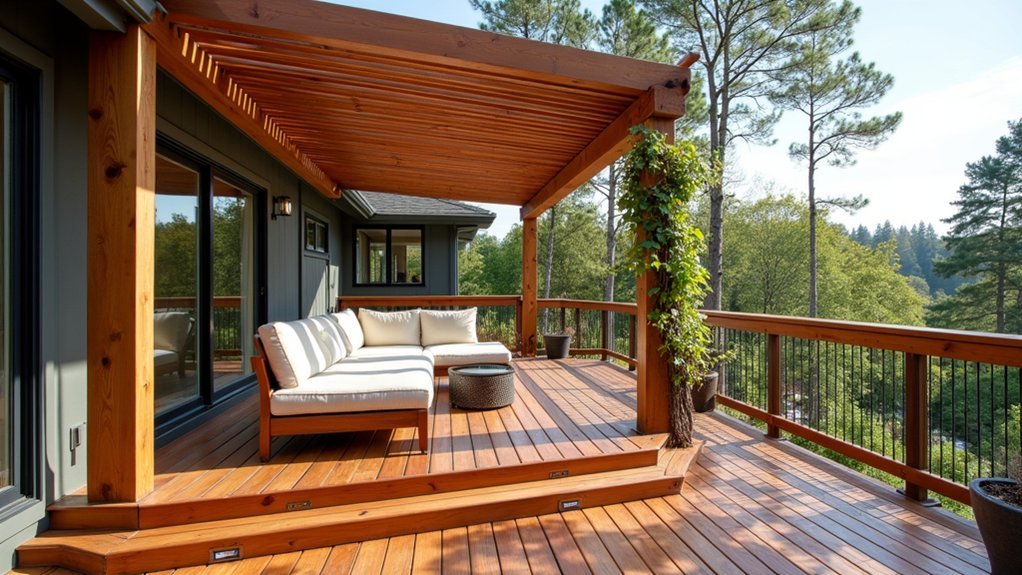
When you’re planning a deck pergola, you’ll need to nail three essential design considerations. First, verify your deck’s structural capacity can handle the added load—attach posts to existing support posts or install new footings below the frost line. Second, choose materials that match your climate, whether that’s pressure-treated lumber, naturally rot-resistant cedar, or low-maintenance aluminum. Third, plan your shade strategy with retractable canopies, louvered systems, or climbing vines. Each element deserves careful attention below.
Structural Integration and Load-Bearing Requirements
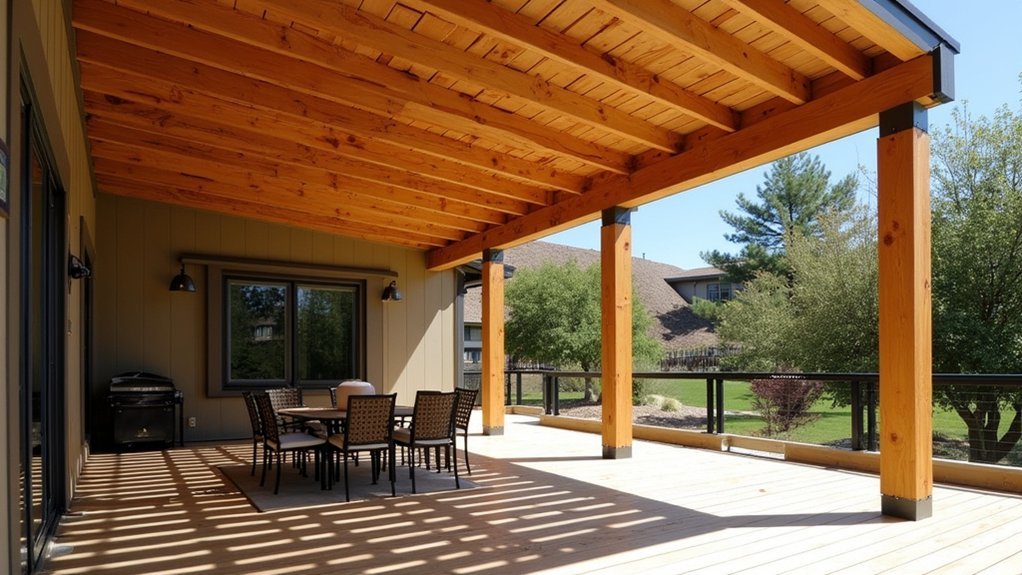
When you’re planning to add a pergola to your existing deck, you’ll need to evaluate whether your current structure can handle the additional weight. Most residential decks weren’t originally designed to support vertical posts and overhead beams, so a professional assessment is essential before you begin.
Your deck’s joists, beams, and footings must accommodate the pergola’s dead load plus environmental forces like wind and snow. You’ll want to attach pergola posts directly to existing support posts or install new footings that extend below the frost line.
Consider using through-bolts rather than lag screws for stronger connections. If your deck frame can’t support the load, you may need to reinforce joists or add blocking between them. Local building codes will dictate specific requirements for your area.
Material Selection for Weather Resistance and Aesthetic Appeal
Once you’ve confirmed your deck can support a pergola, your next major decision involves choosing materials that’ll withstand the elements while complementing your home’s exterior. Each material offers distinct advantages for durability and visual impact.
Popular Pergola Material Options:
- Pressure-treated lumber – affordable and readily available, though requires regular staining to prevent graying
- Cedar or redwood – naturally rot-resistant with rich tones that weather to silver-gray if left untreated
- Aluminum – lightweight, rust-proof, and virtually maintenance-free in powder-coated finishes
- Composite materials – blend wood fibers with polymers for fade-resistant color retention
Consider your local climate when selecting materials. Coastal areas demand corrosion-resistant options, while humid regions require rot-resistant choices.
Match your pergola’s finish to existing deck railings, trim colors, or siding for cohesive curb appeal.
Shade Coverage and Sunlight Control Options
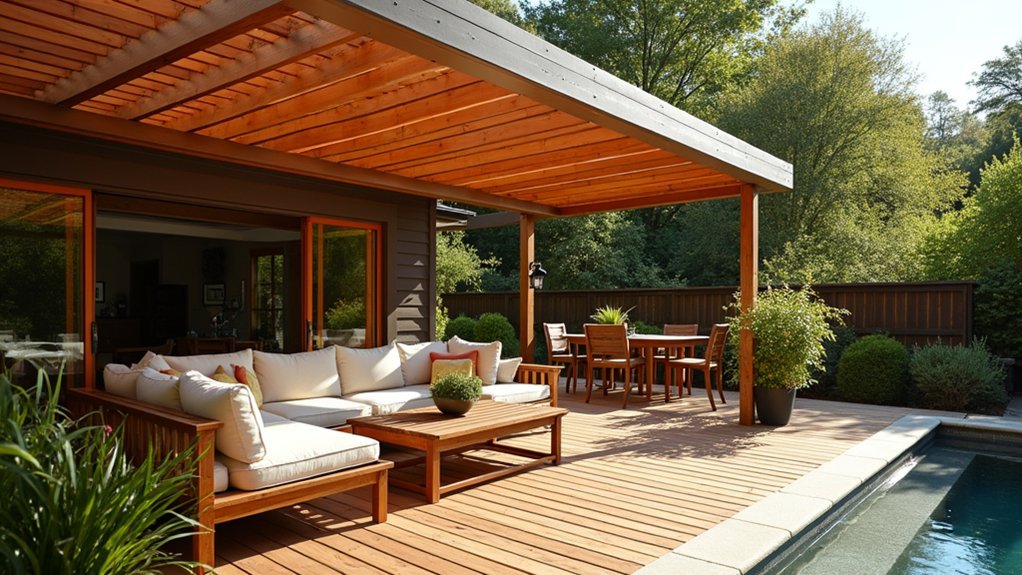
Because your pergola’s open-rafter design provides only partial shade, you’ll want to contemplate additional coverage options that match your outdoor living goals. Retractable canopies offer flexibility, letting you adjust coverage based on weather conditions and time of day.
You can install shade sails between rafters for a modern aesthetic that blocks harmful UV rays while maintaining airflow. Louvered roof systems provide precise control—rotate the slats to filter sunlight or close them completely during rain.
For natural solutions, train climbing plants like wisteria or grape vines along your structure. They’ll create dappled shade that intensifies as the foliage matures each season.
Consider your deck’s orientation when planning. South-facing pergolas receive intense midday sun, requiring more robust shade solutions than north-facing structures.
Frequently Asked Questions
Do I Need a Building Permit to Add a Pergola to My Deck?
You’ll likely need a building permit to add a pergola to your deck. Requirements vary by location, so you should check with your local building department before starting construction to make sure you’re following all regulations.
How Much Does It Typically Cost to Install a Deck Pergola?
You’ll typically spend between $2,000 and $6,000 for a professionally installed deck pergola. Your costs depend on size, materials, and design complexity. Cedar or redwood runs higher than pressure-treated lumber options.
Can I Install a Deck Pergola Myself or Hire a Professional?
You can install a deck pergola yourself if you’re handy with tools and comfortable with structural work. However, you’ll want to hire a professional for complex designs or if local permits require licensed contractors.
How Long Does a Typical Deck Pergola Installation Take to Complete?
You’ll typically complete a DIY deck pergola installation in one to three days, depending on your skill level and design complexity. If you’re hiring professionals, they’ll usually finish the project within one to two days.
Will Adding a Pergola Increase My Home’s Resale Value?
Yes, you’ll likely boost your home’s resale value by adding a pergola. Buyers appreciate outdoor living spaces, and a well-designed pergola can increase your property’s appeal while offering a strong return on investment.


Leave a Reply