
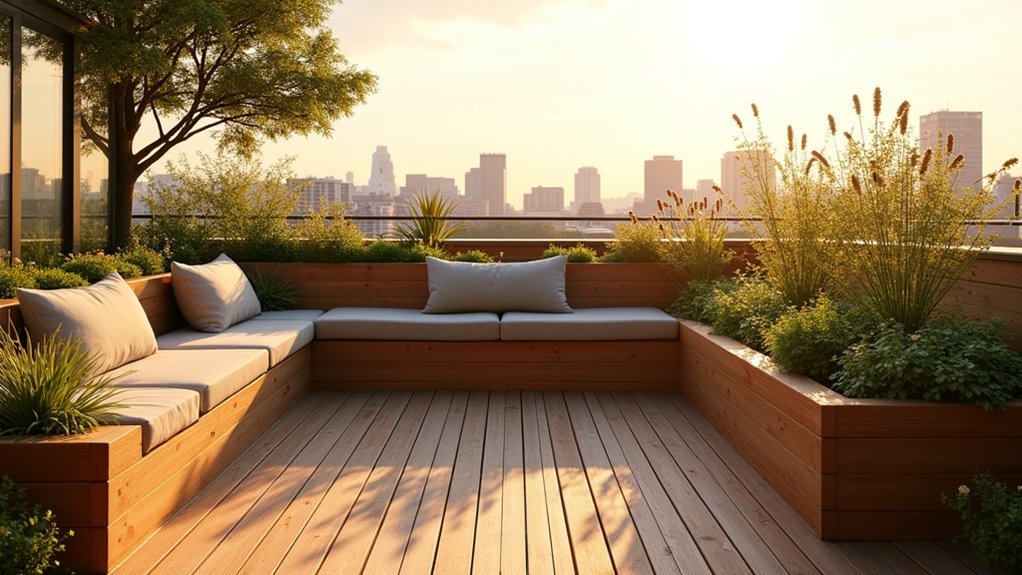
Deck planters with built-in seating combine greenery and comfortable gathering spots into one streamlined structure, saving you precious square footage on smaller decks. You’ll reduce material costs by 30–40% compared to building separate pieces, and you’ll only need to maintain one weatherproofed unit. These dual-purpose features also create natural privacy screens while defining entertainment zones. Below, you’ll discover exactly how to choose materials, dimensions, and designs that work for your space.
Maximizing Limited Deck Space With Dual-Purpose Features
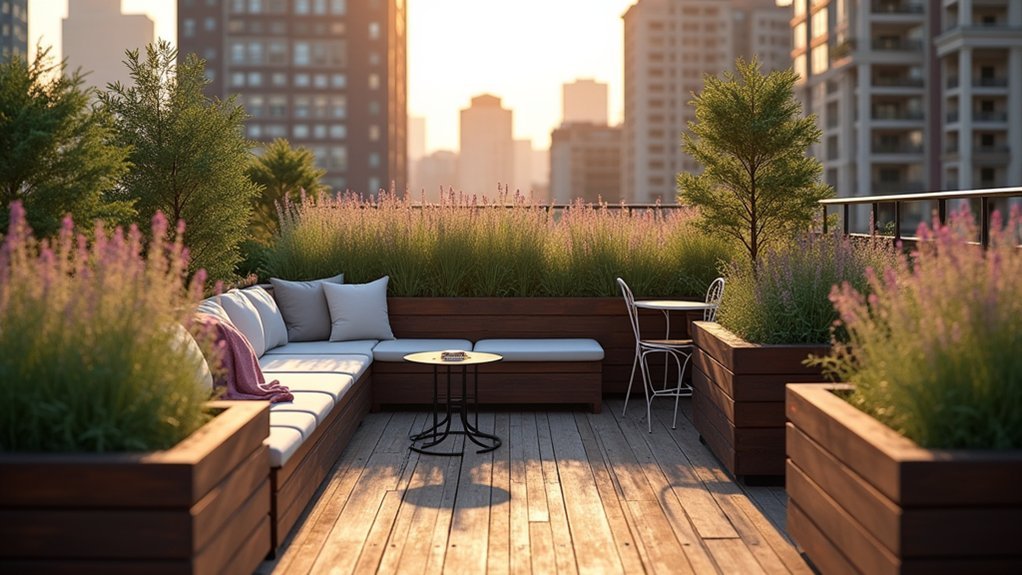
Small decks often force homeowners to choose between greenery and seating, but dual-purpose planters eliminate this frustrating compromise. You’ll gain functional square footage by combining two essential elements into one streamlined structure.
Instead of crowding your deck with separate benches and containers, you’re consolidating your footprint while maintaining both features.
These hybrid designs let you position seating exactly where you want shade or visual screening. You can create intimate conversation areas surrounded by trailing vines or flowering plants that soften hard edges.
The vertical space above your seat becomes prime real estate for greenery that would otherwise consume valuable floor area.
When you’re working with 100 square feet or less, every inch matters. Dual-purpose planters transform dead corners into inviting spots where guests naturally gather.
Creating Natural Privacy Screens While Adding Comfortable Seating
Beyond space efficiency, these integrated planter-bench combinations serve as strategic barriers between your outdoor retreat and neighboring sightlines. You’ll appreciate how tall ornamental grasses, bamboo, or flowering shrubs planted in these structures create living walls that block unwanted views without installing permanent fencing.
Position your planter-benches along deck perimeters where you need the most screening. As plants mature, they’ll form dense foliage that filters noise and provides shade while you relax on the attached seating. This arrangement lets you face inward toward your deck’s focal point rather than staring at property lines.
Choose evergreen varieties for year-round privacy or mix seasonal blooms for changing color displays. The bench component guarantees you’re never sacrificing comfort for seclusion—you’re gaining both simultaneously through smart design choices.
Enhancing Your Outdoor Entertainment Area With Greenery
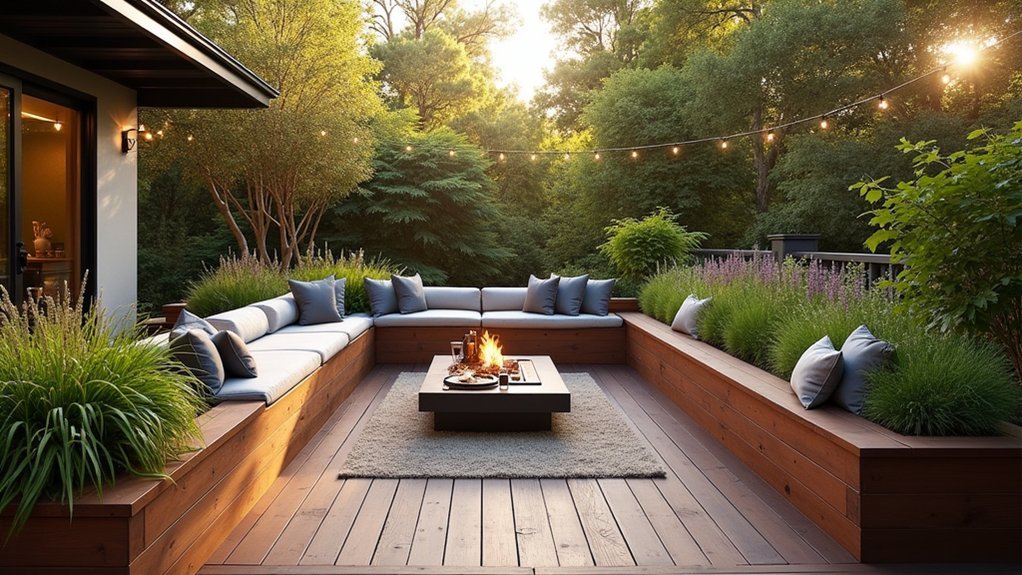
Your deck planters do more than hold flowers—they transform your outdoor space into a welcoming entertainment destination.
Strategic placement of greenery creates natural ambiance that makes guests feel relaxed and comfortable while defining distinct zones for dining, lounging, or conversation.
You’ll find that combining lush plants with built-in seating establishes boundaries between activity areas without the need for walls or barriers.
Plants Create Natural Ambiance
When you surround your deck seating with lush greenery, you’ll transform a simple outdoor space into a living retreat that engages all the senses. The rustle of ornamental grasses, fragrant herbs, and vibrant flowering plants create an atmosphere that manufactured décor simply can’t replicate.
Built-in planters position foliage at the perfect height to frame your seating areas. You’ll enjoy privacy screening without installing fences, and your guests will appreciate the calming effect that greenery provides. Studies show plants reduce stress and improve mood—exactly what you want during outdoor gatherings.
Choose trailing varieties to soften hard edges or upright specimens to add vertical interest. Mix textures and colors throughout the seasons, and you’ll maintain year-round appeal. Your deck becomes more than functional space; it becomes a sanctuary.
Greenery Defines Entertainment Zones
Strategic placement of deck planters naturally divides your outdoor space into distinct entertainment zones without the need for walls or permanent structures.
You’ll create visual boundaries that guide guests through different areas while maintaining an open, welcoming atmosphere.
Here’s how greenery defines your entertainment zones:
- Dining areas become intimate spaces when surrounded by leafy planters that provide privacy from neighbors
- Lounging sections feel cozier with tall ornamental grasses creating natural backdrops
- Conversation nooks emerge when planters frame built-in seating arrangements
- Transition spaces between zones flow naturally with lower plantings
You’re basically using living architecture to shape how people move and gather.
The built-in seating becomes anchored within these green boundaries, giving each zone purpose and identity without cluttering your deck with additional furniture.
Cost Benefits of Combining Planters and Seating in One Structure
Combining planters and seating into a single structure saves you money compared to building them as separate elements. You’ll purchase fewer materials since shared walls eliminate duplicate lumber, and you’ll spend less time on construction.
| Cost Factor | Savings |
|---|---|
| Materials | 30-40% less lumber |
| Labor | Single build time |
| Hardware | Fewer brackets needed |
| Maintenance | One structure to seal |
You’re also reducing long-term expenses. When you weatherproof one combined unit instead of two separate pieces, you’ll use less sealant and spend fewer weekends on upkeep. The shared foundation means you’re not digging multiple post holes or pouring extra concrete. Your deck gains functional square footage without the premium price tag of standalone furniture and container gardens.
Design Options That Complement Your Deck Aesthetic
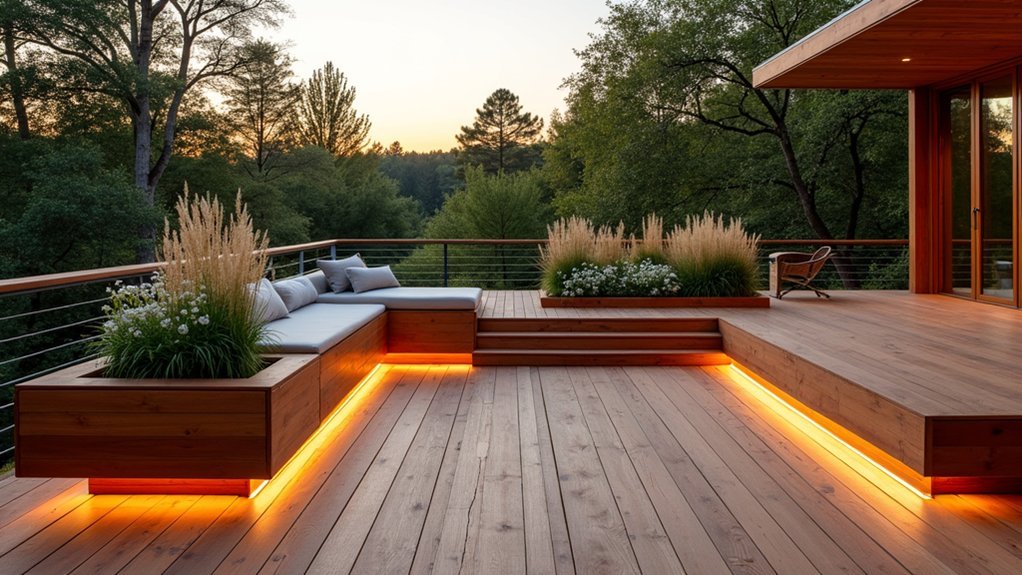
When designing your deck planter with built-in seating, you’ll want to take into account material and color choices that tie into your existing outdoor space.
Whether you prefer the clean lines of modern design or the warmth of traditional styles, there’s a configuration that matches your vision.
You can also explore customizable shape options—from L-shaped corner units to curved benches—that maximize both function and visual appeal.
Material and Color Choices
Selecting the right materials for your deck planter with built-in seating directly impacts both durability and visual appeal. You’ll want options that withstand weather exposure while matching your outdoor space.
Consider these popular material and color combinations:
- Cedar or redwood – Natural warm tones that resist rot and blend seamlessly with traditional deck designs
- Composite materials – Available in grays, browns, and blacks for a modern, low-maintenance look
- Powder-coated metal – Offers bold color options and contemporary styling
- Pressure-treated pine – Budget-friendly and accepts stains in virtually any shade
When choosing colors, match or complement your existing deck boards and railings. You can also create contrast by selecting planters in darker hues against lighter decking.
This intentional coordination elevates your entire outdoor living area.
Modern Versus Traditional Styles
Beyond material and color selection, the overall design style of your planter seating should align with your deck’s architectural character.
Modern designs feature clean lines, geometric shapes, and minimalist profiles that pair well with contemporary homes. You’ll find sleek metal frames, smooth concrete finishes, and angular forms that create a sophisticated look.
Traditional styles offer warmth through curved edges, ornate details, and classic wood construction. These designs complement craftsman, colonial, or cottage-style homes beautifully. You can choose lattice panels, turned posts, or decorative trim to enhance the vintage appeal.
Consider your home’s existing elements when deciding. If you have modern railings and furniture, stick with streamlined planters. For homes with classic architectural details, traditional designs create cohesive outdoor spaces that feel intentionally designed rather than mismatched.
Customizable Shape Configurations
While standard rectangular planters work for most decks, custom shape configurations let you maximize every square foot of your outdoor space. You can design planters that wrap around corners, follow curved deck edges, or create L-shaped seating areas that define distinct zones.
Consider these popular configuration options:
- Corner units that transform unused angles into functional seating
- Curved designs that soften angular deck layouts
- Tiered arrangements that add visual depth and extra planting space
- Modular sections you can rearrange as your needs change
You’re not limited to off-the-shelf dimensions. Work with your contractor to create planters that fit your deck’s exact measurements. This approach eliminates awkward gaps and guarantees your seating flows naturally with your existing layout.
Materials to Consider for Durable Deck Planter Benches
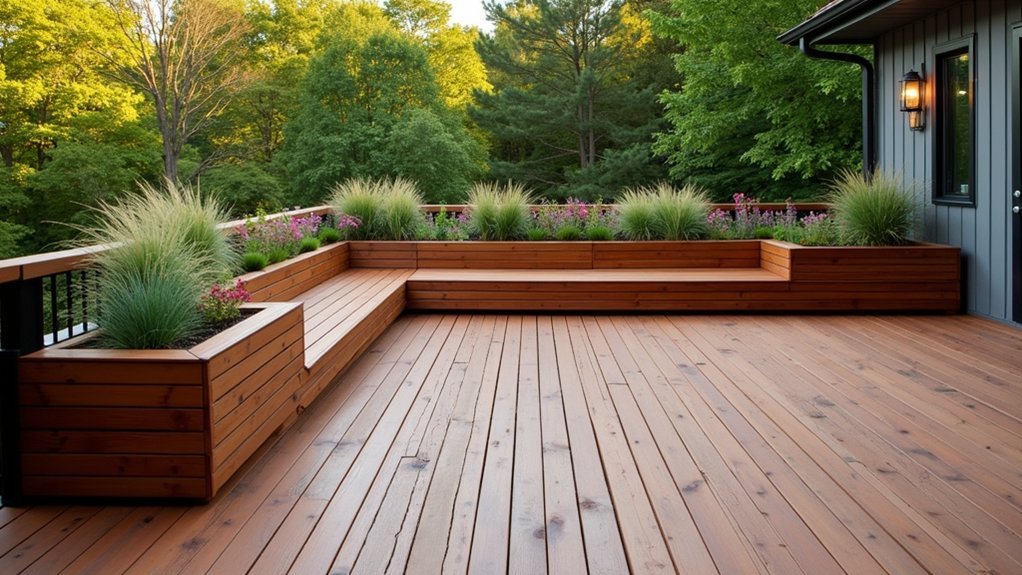
When you’re building deck planter benches that’ll last for years, your material choices matter more than almost any other decision.
Cedar and redwood naturally resist rot and insects, making them excellent choices for outdoor planters. They weather beautifully without chemical treatments.
Composite materials offer another durable option—they won’t splinter, warp, or require annual sealing.
For the planter box interiors, consider lining wood with plastic or metal to prevent moisture damage. Stainless steel hardware prevents rust streaks from staining your deck.
You’ll also want to think about weight capacity. Hardwoods like teak handle heavy soil loads better than softwoods.
If you’re placing planters on elevated decks, aluminum frames reduce structural stress while maintaining strength.
Match your materials to your climate and maintenance preferences for peak longevity.
How Built-In Seating Planters Increase Property Value
Curb appeal translates directly into dollars when potential buyers pull up to your home. Built-in seating planters signal thoughtful design and functional outdoor living space, two features today’s buyers actively seek.
Here’s how these installations boost your property value:
- Permanent landscaping features show buyers the outdoor space is move-in ready
- Multi-functional designs demonstrate efficient use of square footage
- Custom woodwork suggests quality craftsmanship throughout the property
- Defined outdoor rooms expand perceived living space beyond interior walls
Real estate agents consistently report that well-designed outdoor features yield returns of 50-80% on investment. Your deck planter bench does double duty—it beautifies your space while you live there and works as a selling point when you’re ready to move.
Customizing Planter Dimensions for Your Favorite Plants
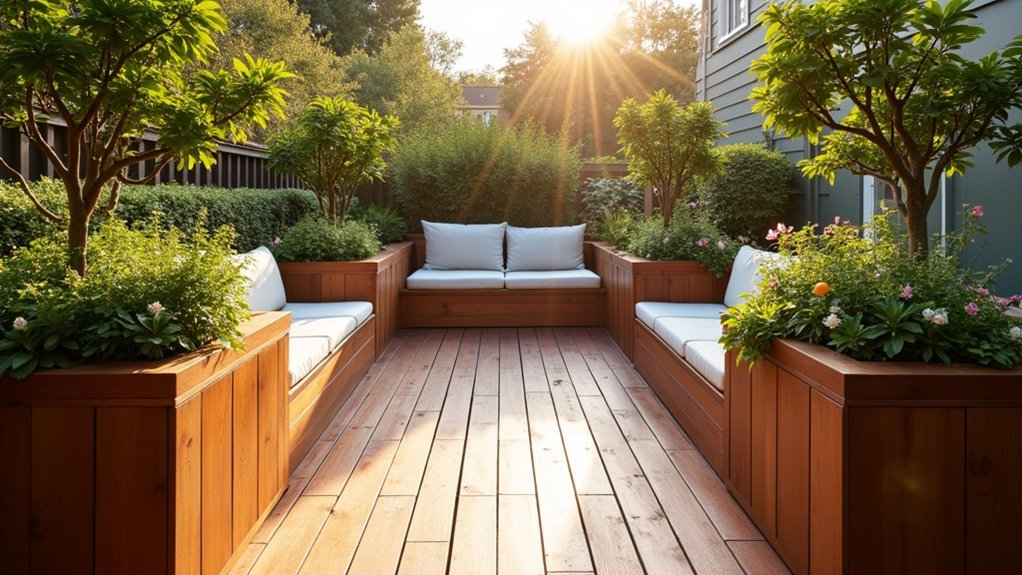
Beyond the financial benefits, your planter’s true success depends on matching its dimensions to the plants you want to grow.
Shallow-rooted herbs like basil and thyme thrive in 6-8 inch depths, while tomatoes and peppers need 12-18 inches for proper root development.
Match your planter depth to your plants — herbs need 6-8 inches, while tomatoes demand up to 18 inches.
Consider your plant’s mature spread when determining width. Ornamental grasses require 18-24 inches of horizontal space, but compact flowers like petunias work well in narrower containers.
You’ll also want to factor in drainage needs. Deep-rooted perennials benefit from extra depth to accommodate gravel layers at the bottom.
If you’re planning mixed plantings, design separate compartments with varying depths within one planter structure.
Measure your selected plants’ requirements before construction begins. This prevents costly modifications later and guarantees your greenery flourishes throughout the growing season.
Maintenance Tips for Long-Lasting Planter Seating Combinations
Although your planter seating combination will add beauty and function to your deck for years, it won’t maintain itself without regular attention. You’ll need to establish a routine that protects both the wood and your plants.
Follow these essential maintenance steps:
- Inspect drainage holes monthly to prevent water buildup that causes rot and damages seating surfaces.
- Apply a weather-resistant sealant annually before spring planting season to protect against moisture and UV damage.
- Clean surfaces quarterly with mild soap and water to remove dirt, pollen, and mildew before they cause staining.
- Check hardware twice yearly and tighten any loose screws or bolts that could compromise structural integrity.
Frequently Asked Questions
Can Deck Planter Benches Support Heavy Adults Sitting for Extended Periods?
Yes, quality deck planter benches can support heavy adults during extended sitting. You’ll want to choose models with reinforced frames, sturdy hardwood construction, and weight capacities exceeding 300 pounds for safe, comfortable use.
Do Built-In Planter Benches Require Special Permits or Building Codes Approval?
You’ll often need permits for built-in planter benches, especially if they’re attached to your deck’s structure. Check your local building codes since requirements vary by municipality. You shouldn’t skip this step to avoid costly fines.
How Do I Prevent Water Damage to My Deck From Planter Drainage?
You’ll want to use waterproof liners inside your planters and install drainage trays beneath them. Elevate planters slightly using rubber feet to promote airflow and prevent moisture from pooling against your deck’s surface.
What Weight Capacity Should I Expect From Planter Bench Combinations?
You should expect quality planter bench combinations to support 250-500 pounds per seating section. Always check manufacturer specifications, as weight capacity varies based on materials, construction methods, and whether you’re using hardwood or composite framing.
Can I Install Heating Elements Beneath Planter Bench Seating for Winter Use?
You can install heating elements beneath planter bench seating, but you’ll need waterproof, outdoor-rated systems designed for this purpose. Consider electric radiant heating pads that won’t damage your plants or compromise the bench’s structural integrity.

Leave a Reply