
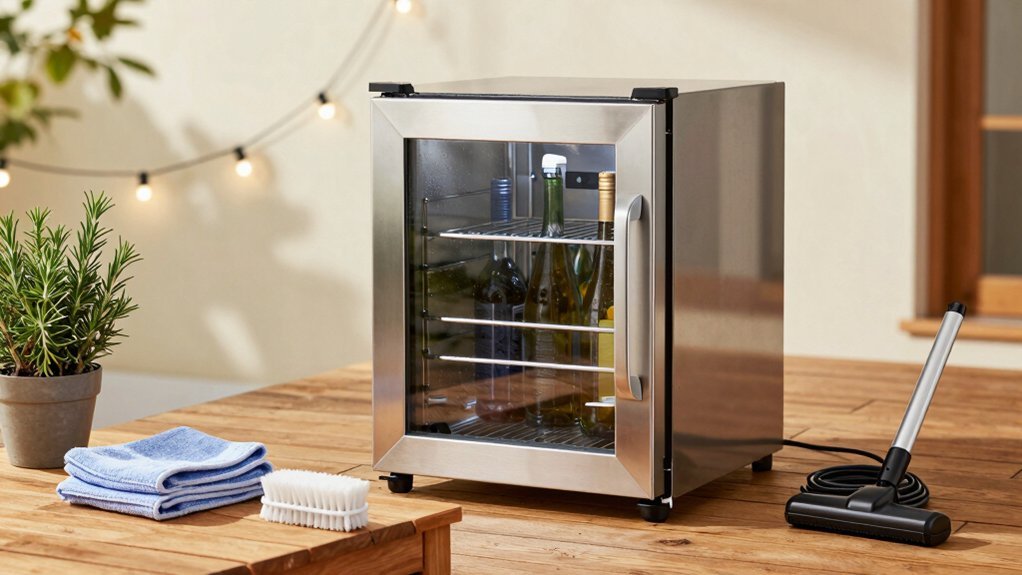
Maintaining your deck wine refrigerator is straightforward with proper attention to ventilation, placement, and cleaning. Ensure 2-3 inches of clearance around all sides, keep vents unobstructed, and clean exterior coils monthly. Position your unit in a shaded area away from heat sources, and regularly check door seals for wear. Use outdoor-rated power cords with GFCI protection. These simple steps will protect your wine collection while extending your appliance’s lifespan substantially.
Essential Seasonal Cleaning for Outdoor Wine Fridges
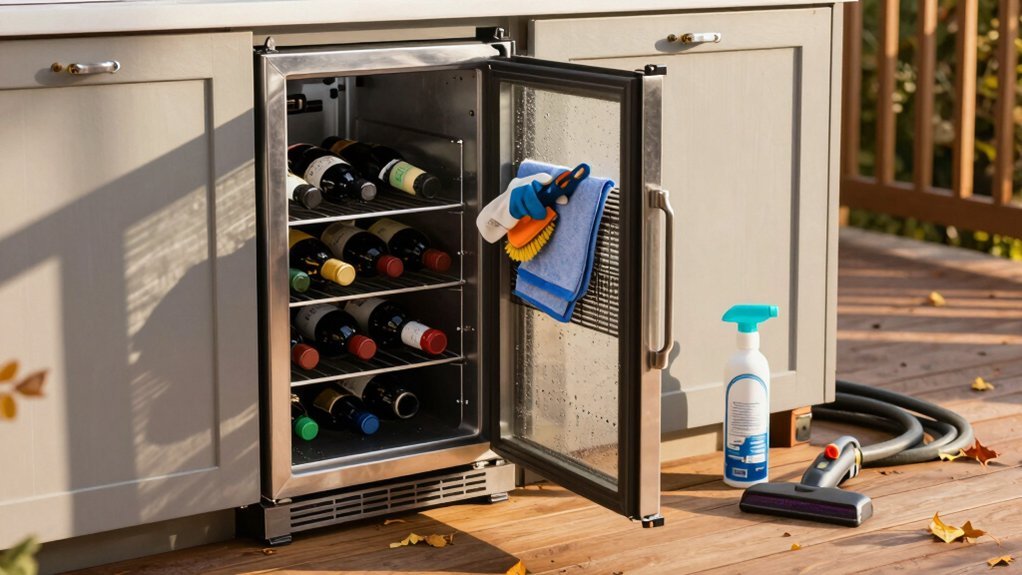
Why let dust and debris sabotage your outdoor wine collection? Seasonal cleaning is crucial for maintaining your deck wine refrigerator’s performance.
Start by removing all shelves and racks. Wash these components with warm, soapy water and dry them thoroughly before reinstalling to prevent mold growth.
Remove shelves and racks first. Clean with warm, soapy water and dry completely to avoid mold issues.
For the interior and exterior surfaces, use a mild soap solution—never harsh chemicals that might damage weatherproof seals.
Don’t neglect the vents and condenser coils. Clean these monthly, or more frequently in dusty environments, to ensure proper airflow. This simple step prevents overheating and extends your unit’s lifespan.
After cleaning, inspect door gaskets and seals for wear. Replace damaged seals promptly to maintain energy efficiency as outdoor temperatures fluctuate. Your wine deserves a properly maintained environment.
Weatherproofing Your Deck Wine Storage Unit
Proper weatherproofing stands as your wine collection’s first line of defense against the elements. Ensure your outdoor unit features a sealed, moisture-resistant exterior cabinet that prevents rain and humidity from penetrating the storage area.
Install your wine fridge on a level, raised platform with 2-3 inches of clearance underneath for proper ventilation and drainage. This elevation helps prevent water pooling and promotes airflow around the unit.
Connect your refrigerator to GFCI-protected outlets using only outdoor-rated power cords to minimize electrical hazards. When not in use, cover the unit with a quality weatherproof cover and position it in a shaded area to reduce UV exposure.
Regularly check door seals and drainage channels for damage or blockages, addressing issues immediately to maintain the unit’s weatherproof integrity.
Temperature Control in Varying Outdoor Conditions
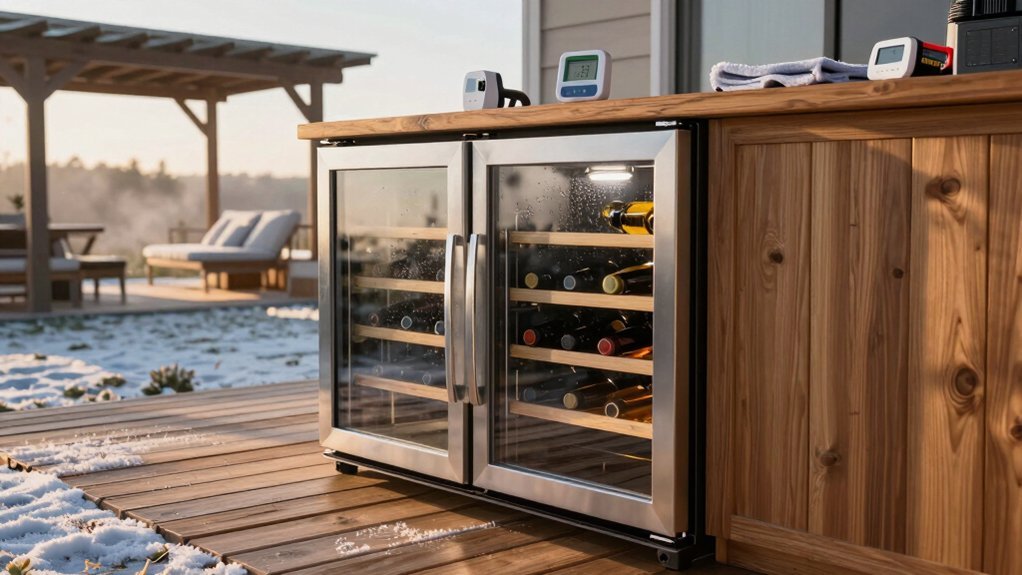
Maintaining stable temperatures in your deck wine refrigerator requires thoughtful management, especially as outdoor conditions fluctuate throughout the seasons. For reliable operation, ensure your unit stays within its rated ambient range, typically handling outdoor temperatures 10–15°F higher than your setpoint.
Create proper clearance around your unit—2–3 inches for freestanding models—to prevent heat buildup that can destabilize internal temperatures. During hotter periods, adjust your thermostat slightly higher (55–60°F) to reduce compressor strain while protecting your collection.
Never place your wine fridge in direct sunlight or near heat sources, as this causes frequent cycling and temperature inconsistencies. Use a calibrated thermometer to regularly verify internal temperatures, and check door seals for leaks that might introduce unwanted temperature fluctuations.
Preventing Moisture Damage to Your Deck Wine Cooler
Maintaining proper humidity between 50-75% protects your cork seals while preventing the mold growth that occurs at higher levels.
You’ll need to inspect seals regularly and ensure your drip trays and drainage tubes remain clear to prevent damaging condensation buildup.
Position your wine cooler with adequate clearance in a shaded, well-ventilated location away from direct water exposure to minimize moisture intrusion that can lead to corrosion.
Humidity Level Control
Why do wine enthusiasts obsess over humidity levels in their coolers? Because proper humidity preserves cork integrity and prevents label damage—two critical factors for long-term wine storage.
Keep your deck wine cooler’s humidity between 50-80%, with 55-65% being the sweet spot for optimal stability. Install a hygrometer to monitor conditions, focusing on maintaining consistent levels rather than chasing perfect numbers. Daily fluctuations can cause condensation on doors and racks.
If your deck environment exceeds 80% humidity, consider a small dehumidifier or inline humidity control accessory. Ensure proper ventilation around the unit with manufacturer-recommended clearances to prevent moisture trapping.
Don’t forget to regularly check drip trays and condensate lines for clogs that could create uneven humidity inside your cabinet and potentially damage your collection.
Seal Inspection Routine
How often do you check the invisible barrier between your prized wine collection and the harsh elements of your deck environment? Your wine cooler’s door seals are critical defenders against moisture intrusion that can compromise storage conditions.
Establish a regular inspection routine that includes:
- Performing the paper test – close the door on a sheet of paper and feel for resistance when pulling it out
- Cleaning gaskets quarterly with mild soap and a soft cloth to prevent hardening
- Checking for cracks, tears, or stretching that signal it’s time for replacement
- Verifying the gasket groove remains clean and debris-free after cleaning
Ensure your cooler sits level on your deck so seals maintain consistent contact across the entire door edge. Replace damaged seals promptly to maintain ideal humidity and protect your wine investment.
Condensation Prevention Tips
Unwanted moisture buildup can silently sabotage your deck wine refrigerator’s performance and longevity. To combat this, position your unit in a shaded, well-ventilated area where temperature differentials won’t trigger excessive condensation.
Maintain ambient humidity between 50-75%, avoiding locations with high external moisture that could migrate into the cabinet. Ensure your cooler sits level with unobstructed drainage systems and a functional drip tray to prevent water pooling near the base.
Don’t overlook the door gasket—keep it clean and inspect regularly for damage. Even small gaps allow warm, humid air to infiltrate, creating condensation on interior surfaces and glass doors. Clearing any blockages in condensate tubes will further prevent internal moisture accumulation that can damage your wine collection and the refrigeration system itself.
Power Supply Safety for Outdoor Beverage Centers
When installing your deck wine refrigerator, power supply safety demands careful attention to prevent potential hazards.
Always plug your unit into a grounded GFCI outlet to minimize electric shock risks in damp environments.
- Connect to a dedicated circuit to avoid overloading and tripping breakers from indoor appliance loads
- Ensure all power cords and connections are outdoor-rated and protected from moisture, UV exposure, and physical damage
- Position your unit under a covered area with proper ventilation, away from direct rain or splashing water
- Inspect cords, plugs and outlets regularly for fraying, discoloration or wear, replacing damaged components immediately
These precautions aren’t just recommendations—they’re essential safeguards that protect both your investment and your safety while enjoying the convenience of outdoor refrigeration.
Proper Ventilation for Deck-Mounted Wine Refrigerators
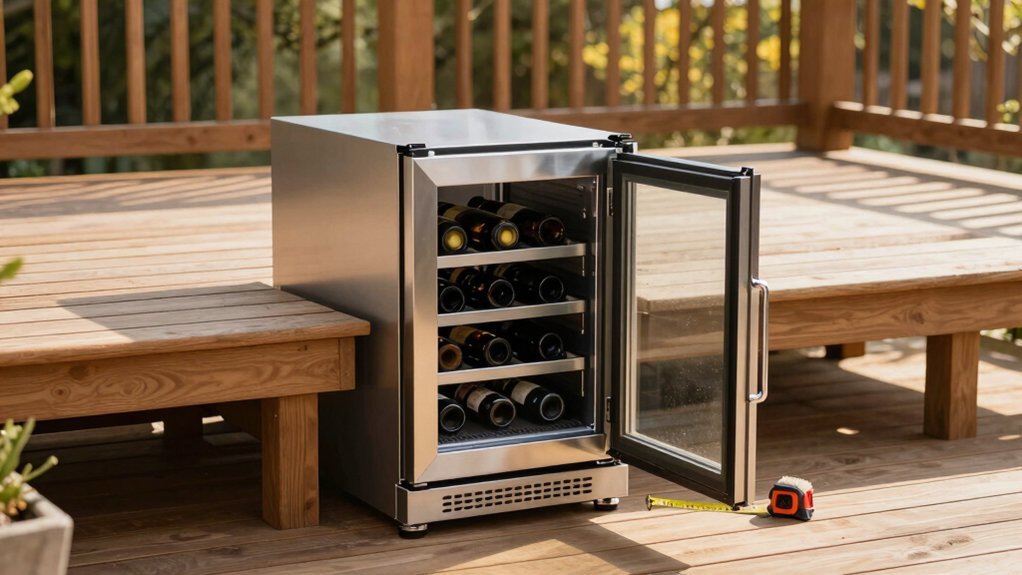
Your deck-mounted wine refrigerator needs 2-3 inches of clearance on all sides to prevent overheating and maintain optimal cooling efficiency.
During summer months, you’ll want to monitor the unit more frequently for potential heat buildup and ensure it’s positioned away from direct sunlight.
Regularly clean the exterior vents and condenser coils to remove dust and debris that could restrict airflow and force your compressor to work harder than necessary.
Ventilation Clearance Requirements
Proper ventilation stands as the cornerstone of effective wine refrigerator operation, especially for units mounted on outdoor decks. Your wine refrigerator requires specific clearance measurements to function optimally and protect your collection.
- Allow 2-3 inches of space on all sides and back of deck-mounted units to prevent heat buildup
- Maintain at least 2 inches of ambient clearance from walls or cabinets to ensure unrestricted airflow
- Position away from direct sunlight and heat sources like grills or outdoor cooking areas
- Keep vents and intake/exhaust openings completely unobstructed—avoid stacking items on or around the unit
Remember to regularly clean exterior vents and coils, as dust accumulation significantly reduces ventilation efficiency. Proper clearance isn’t just about performance—it extends your refrigerator’s lifespan and maintains ideal storage conditions for your wines.
Seasonal Airflow Adjustments
How effectively your deck-mounted wine refrigerator maintains optimal temperature depends largely on seasonal ventilation adjustments. During summer heat, ensure all vents remain completely unobstructed and consider adding a small external fan to boost cooling efficiency when temperatures soar.
In humid seasons, pay special attention to drip trays and coils—keeping them clean prevents moisture-related performance issues and maintains consistent airflow. Conversely, when winter arrives, protect your unit from drafts and extreme cold that can reduce condenser efficiency.
Year-round maintenance should include monthly inspection of exterior vents for dust and lint accumulation. Clean these areas regularly to prevent airflow obstruction. Remember that your wine refrigerator’s performance fluctuates with seasonal changes, but proper ventilation adjustments will keep your collection perfectly preserved regardless of weather conditions.
Heat Buildup Prevention
Heat buildup represents one of the most common enemies of wine preservation in deck installations. Your outdoor wine refrigerator needs proper ventilation to function efficiently and prevent premature component failure.
- Maintain 1-2 inches of clearance around all sides of your unit to ensure adequate airflow and prevent dangerous heat accumulation.
- Clean exterior vents and coils monthly with a soft brush or vacuum to keep airflow paths clear and reduce heat transfer.
- Position your fridge in a shaded area where ambient temperatures stay between 60-85°F, away from direct sun and other heat sources.
- Install a dedicated exhaust vent if your unit sits in an enclosed space where heat can become trapped.
Don’t forget to check condenser fins regularly—dust and debris buildup not only restricts airflow but also significantly increases surface temperatures.
Winterizing Your Outdoor Wine Storage
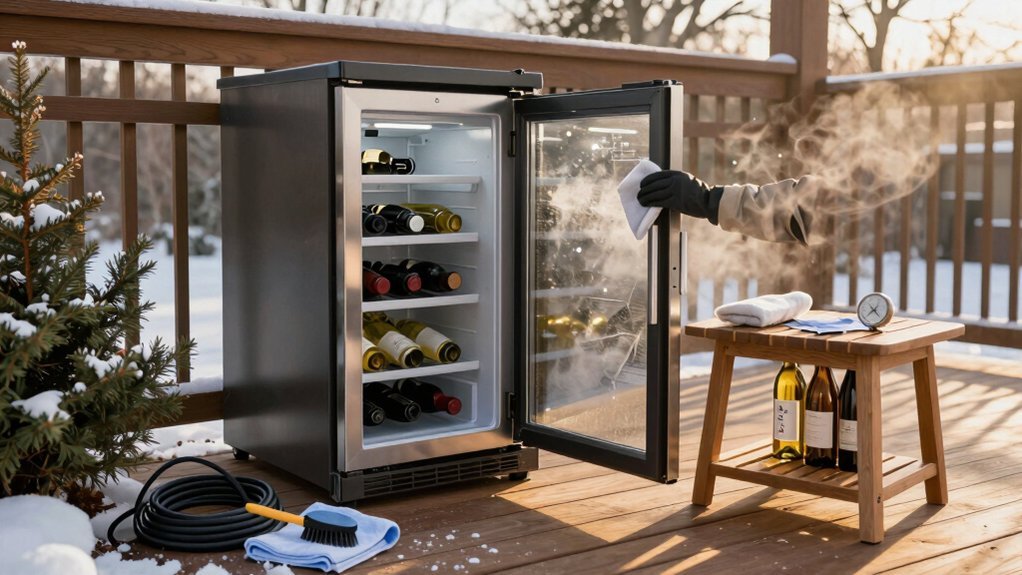
When temperatures begin to drop, your outdoor deck wine refrigerator requires special attention to prevent damage from winter’s harsh conditions. Adjust the temperature setting to 45-50°F to reduce compressor strain while maintaining proper storage conditions.
| Winterizing Task | Why It Matters |
|---|---|
| Adjust temp to 45-50°F | Prevents compressor strain |
| Protect power cords | Prevents moisture damage |
| Remove all bottles | Avoids freezing and expansion |
| Install weatherproof cover | Shields from elements |
Don’t forget to check and clear the drainage tray to prevent water pooling during thaw cycles. Seal any gaps around the unit where moisture could enter and cause electrical issues. When properly winterized, your wine refrigerator will be ready to operate efficiently when warmer weather returns.
Frequently Asked Questions
How to Service a Wine Fridge?
Unplug your wine fridge, clean interior with mild soap, wash shelves separately, check door seals, dust coils monthly, and schedule annual deep cleaning after summer for optimal performance.
Do Wine Fridges Need Maintenance?
Yes, your wine fridge needs regular maintenance. You’ll want to clean it every 2-3 months, inspect door seals monthly, and schedule annual deep cleanings to maintain temperature stability and extend its lifespan.
What Is the Lifespan of a Wine Fridge?
Your wine fridge will typically last 5-15 years. You’ll get the longer lifespan if you choose higher-end models and maintain them properly with regular cleaning and prompt component replacements.
How to Maintain Humidity in a Wine Fridge?
Keep humidity between 50-75% by monitoring with a hygrometer, cleaning filters regularly, checking drip trays, ensuring unobstructed drainage tubes, and maintaining clear vents for proper air circulation.




Leave a Reply