
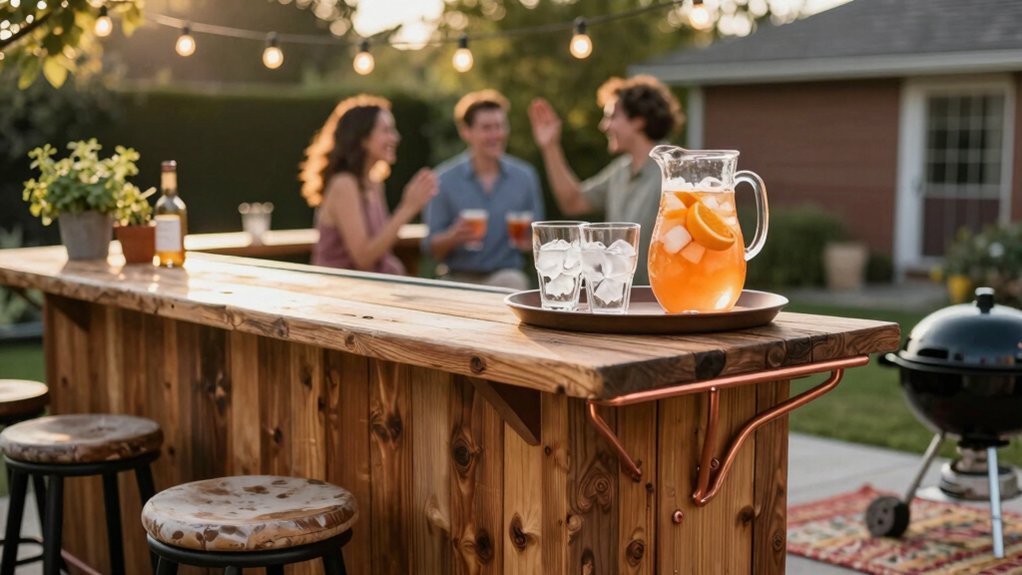
DIY outdoor bar setups give you a customizable hub that fits your space and flows between patio zones. You can personalize layouts, finishes, and features to match how you entertain, all while staying durable in weather. With modular, movable components and budget-friendly materials, you’ll transform hosting into effortless mingling and smooth service. A cohesive palette and weatherproof seating keep chatter moving from grill to pool area. Keep exploring to uncover more tips you can apply.
Personalization That Fits Your Space
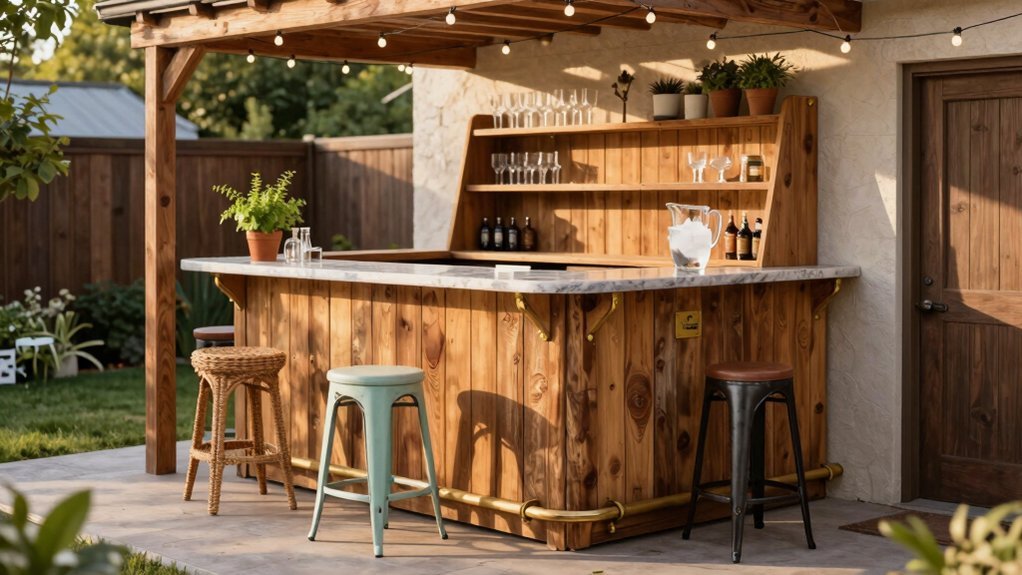
Where space is tight, tailor the layout to fit your footprint and flow, whether you’ve got a compact patio or a sprawling yard. A DIY bar lets you map traffic patterns for effortless service and smooth mingling, keeping guests engaged rather than searching for the punch bowl. You can customize built-in sinks, beverage fridges, and storage to match how often you host and what you serve. Choose materials and finishes—teak, stone, or weatherproof metals—that complement your home’s exterior and existing furniture. Design seating, shade, and lighting to reinforce a cohesive theme, from rustic warmth to modern edge or tropical flair. Add personal touches like a signature cocktail station or a poolside bar to stamp your entertaining brand. Your setup becomes unique to you personally.
Cost-Effective Creativity
Cost-effective creativity comes from building what you need rather than buying it off the shelf. When you DIY your outdoor bar, you cut costs on materials and labor while preserving control over every detail. Personalization shines as you choose layouts, finishes, and features that fit your space and entertaining needs. You’re gaining hands-on satisfaction and a compelling story by crafting shelves, storage, and seating to match your yard’s vibe. You can scale designs from compact patios to spacious setups and add sinks, fridges, or ice makers as desired. Plus, you can use reclaimed or budget-friendly materials to achieve a high-end look at a fraction of commercial prices.
DIY your outdoor bar to save, customize, and scale with reclaimed materials.
- Build with pallets or salvaged wood
- Adapt layout for counts
- Source components on sale or clearance
Social Hub for Entertaining
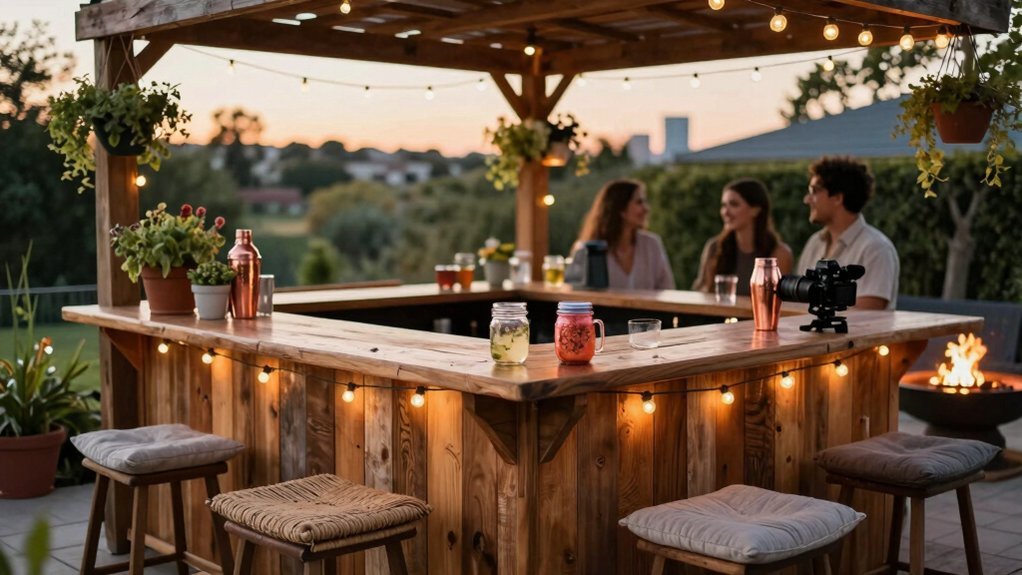
Ever notice how a dedicated outdoor bar becomes the social hub of your yard, inviting guests to mingle, snack, and unwind? With proximity to the outdoor kitchen and pool, you guide conversations across spaces, letting people move between cooking, drinks, and lounging without stepping indoors. Built-in sinks, mini-fridges, ice makers, and storage keep service smooth and beverages within reach, so you stay conversational rather than chasing refills.
Flexible layouts—galley, island, or L-shaped—accommodate intimate chats or larger groups, making your entertaining feel effortless. Weatherproof materials, seating, lighting, and shade extend use into evenings, turning your bar into a durable social hub. This setup invites spontaneous gatherings, keeps energy high, and helps you host with ease, regardless of guest count or weather, throughout the season together.
Seamless Indoor-Outdoor Flow
A seamless indoor-outdoor flow starts by placing the bar where it naturally links your dining patio, pool area, and outdoor kitchen, making service effortless and conversations fluid. An integrated layout, like a galley-style or multi-island setup, lets servers move between the bar, grill, and prep zones without crossing guest seating, boosting efficiency. Extending counter surfaces or wraparound bars helps maintain conversation across indoor and outdoor zones while keeping guests close to activities. Proximity to utilities matters for sinks, ice makers, and beverage refrigerators, ensuring reliable performance outdoors. Weatherproof materials and shaded transitions preserve flow across conditions.
1) Align your bar with entertaining spaces to streamline service.
2) Adopt an ergonomic layout to minimize trips between zones.
3) Extend work surfaces to keep conversation seamless and inclusive today.
Weather-Resistant Durability
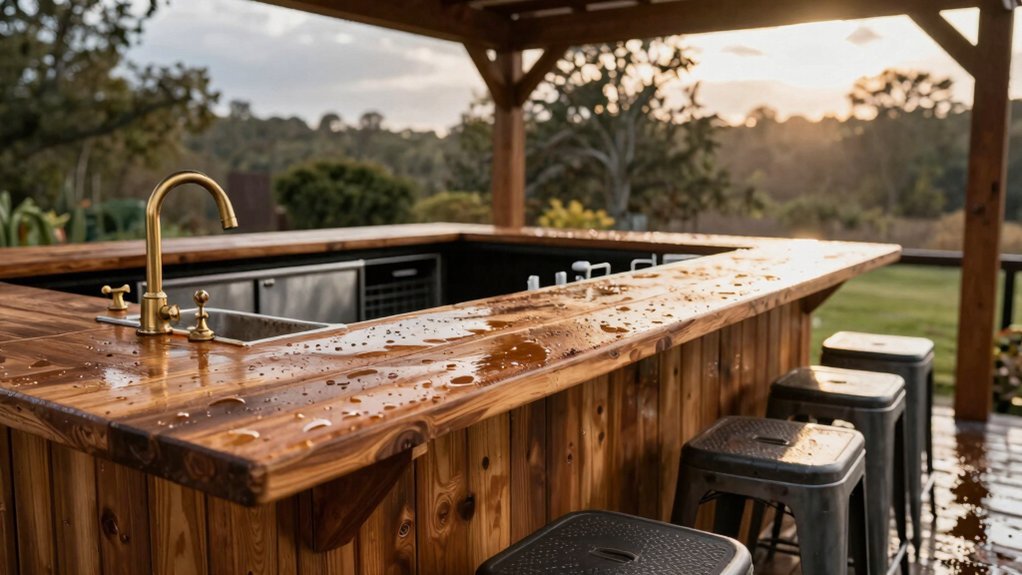
Choosing weatherproof materials sets the foundation for a bar that stays sturdy outdoors, whether you pick teak, powder-coated aluminum, or all-weather wicker.
Keeping sealed surfaces on a regular schedule minimizes maintenance and helps resist moisture and stains.
A rust-proof frame design completes the setup, ensuring your bar holds up against year-round use.
Weatherproof Material Choices
Teak wood is naturally decay-resistant and develops a patina over time, making it a durable long-term investment for outdoor bar construction. When you weigh weatherproof options, prioritize materials designed for outdoor exposure and low maintenance.
Consider these solid choices:
1) Teak for framing and surfaces
2) Powder-coated aluminum for a lightweight, rust-resistant frame
3) All-weather wicker (HDPE) for comfortable seating and accents
These selections resist cracking, fading, and corrosion while preserving a polished look. If you mix metals wisely, you’ll keep maintenance minimal and longevity high.
When you plan finishes, seek outdoor-rated coatings that resist moisture and UV damage. You’ll enjoy safer hosting outdoors and fewer replacements over time. That balance keeps your bar stylish, durable, and ready for seasons ahead, lasting and carefree.
Sealed Surfaces Maintenance
Sealed surfaces protect outdoor bar components from moisture, staining, and UV damage, extending the life of wood, stone, and metal finishes. To keep that protection, reseal every 1–3 years for wood and stone, so water stays repellent and color holds. Use weather-resistant sealants or varnishes specifically rated for exterior use to prevent cracking, peeling, and mold growth. Clean with gentle, non-abrasive cleaners and a soft brush to avoid removing sealant layers. Inspect seals and joints seasonally for wear; reapply sealant to compromised areas to maintain a continuous moisture barrier. If you notice peeling, clouding, or gaps, address them promptly rather than waiting for trouble to spread. Document reseal dates on a simple calendar so maintenance stays on schedule. Your setup remains durable and inviting.
Rust-Proof Frame Design
To build a rust-proof frame, choose materials like 304 stainless steel or powder-coated aluminum that resist moisture and salt exposure.
Powder-coated metals provide a durable, protective layer that slows rusting and maintains color integrity under sun and rain.
Stainless steel frames minimize rust risk even in coastal environments where salt air can accelerate corrosion.
Corrosion-resistant framing requires proper sealing and drainage to prevent moisture buildup at joints and fasteners.
Regular maintenance steps, such as inspecting seals and lubricating hinges, help preserve a rust-proof frame over time.
3-key actions to maintain durability:
1) Inspect seals at least quarterly.
2) Reapply protective coatings or lubricants on joints.
3) Check drainage and clear outlets after rain.
With these steps, your bar won’t rust, lasts longer, and stays inviting outside.
Functional Design for Easy Serve
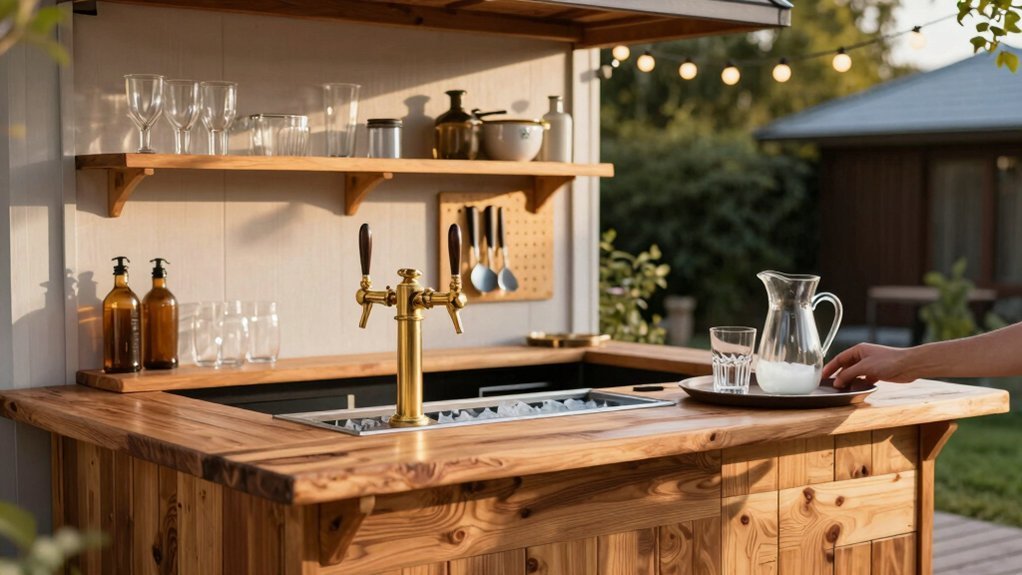
How can you design an outdoor bar that serves with ease while staying organized? Choose a galley-style or multi-island layout so you can move between stations without overdrawing your energy.
Plan a dedicated sink and prep area, plus a built-in beverage fridge or wine cooler and a dependable ice maker, so essentials stay within arm’s reach.
Design a dedicated sink and prep area with a built-in fridge and reliable ice maker for essentials at arm’s reach.
Include storage cabinets for glasses, mixers, and utensils, and add integrated trash and recycling drawers to speed cleanup and keep counters clear.
Flexible layouts—island-style, L-shaped, or U-shaped—with wraparound counters encourage conversation while keeping work zones close.
Position the setup near utilities and select weather-resistant materials like stone, granite, teak, or powder-coated metal to ensure durability and reliable performance outdoors.
With thoughtful routing, you’ll streamline service during peak hours and simplify maintenance after entertaining. That balance keeps guests engaged while you stay efficient.
Flexible Layouts With Mobile or DIY Elements
Modular seating arrangements let you reconfigure zones as the party shifts. Movable bar components keep your service area handy by letting you relocate stations on the fly. DIY touches—portable countertops, foldable carts, and modular panels—make any outdoor space adaptable for different sizes.
Modular Seating Arrangements
Ever wish you could rearrange your outdoor bar setup on a whim? Modular seating lets you. Consider these setups:
- island-style configurations
- wraparound counters
- modular stools.
Choose counter-height stools, wraparound counters, and island-style seating to create flexible layouts. Integrated seating forms U-, L-, or island shapes, keeping guests connected to bar, prep area, and dining space. Weatherproof cushions with quick-dry foam and UV-resistant fabric ensure comfort and durability in conditions. Designing with modular pieces lets you reconfigure for different formats, maximizing usable space without permanent installs. Matching teak, powder-coated metal, and all-weather wicker across seating and bar surfaces preserves a cohesive look while enabling mobile layouts. Choose a consistent palette, and you’ll adapt layouts for entertaining, casual lounging without sacrificing style today.
Movable Bar Components
Want to boost entertaining flexibility? A Movable Bar Cart lets you rearrange drinks and essentials on the fly, making it ideal for dynamic layouts and small spaces. Weather-resistant options keep ice, shakers, and glassware accessible outdoors, even when weather changes. With foldable or rolling designs, you store it compactly when it’s not in use without sacrificing function. It shines for quick service changes, so you can shift from cocktail prep to beverage service without redesigning the space. In rustic or garden settings, a bar cart doubles as decor and function, featuring hooks, shelves, and built-in coolers. Choose finishes that weather well, like treated wood or powder-coated metal, to extend lifespan and keep the setup cohesive with your theme for lasting, flexible entertaining outdoors.
Ambient Lighting and Atmosphere
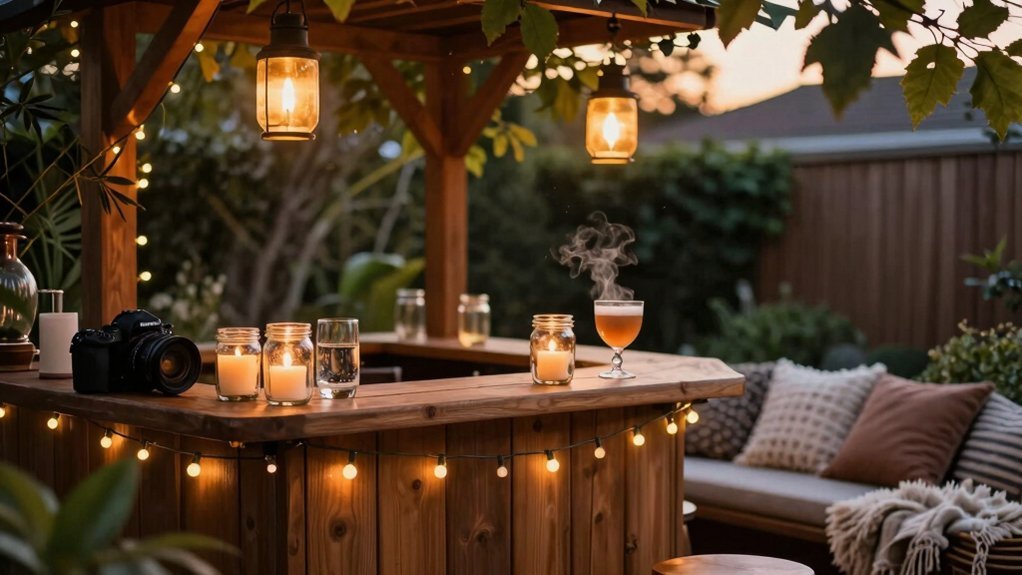
How do you shape the vibe after dark with ambient lighting for an outdoor bar? You blend string lights, lanterns, LED candles, and color-changing LEDs to create mood and visibility. Task lighting around the bar boosts precision for shakes and pours while keeping the space welcoming. A fire pit or tiki torches adds warmth and a focal point that sparks conversation. Eco-friendly options like solar-powered fixtures let you preserve atmosphere without draining power. Decorative elements—plants, water features, and smartly placed lighting—soften sightlines and lift the whole scene.
Blend string lights, lanterns, LEDs, and solar-powered options to shape a warm, conversational after-dark bar.
- Choose solar-powered fixtures to cut electricity use.
- Layer task lighting with ambient options to avoid shadows.
- Use decorative lighting and fire elements to encourage social warmth.
This approach keeps safety clear while inviting lingering conversations at night.
Easy Maintenance and Longevity
Regular upkeep matters for a durable outdoor bar, so clean surfaces with mild detergent and warm water and inspect wood and metal for wear, rust, or loose screws that could create safety hazards. Weather protection, like covers and indoor storage for cushions, extends life by shielding components from rain, sun, and humidity. Keep tools handy for quick fixes, and replace worn components before failures disrupt gatherings.
Periodic re-staining or repainting helps maintain appearance and protects wooden elements from UV damage and moisture intrusion. Lubricating hinges and checking electrical components seasonally reduces the risk of failures during gatherings. It’s smart to schedule simple inspections at season boundaries to catch wear early and swap components before guests arrive. This saves time, money, and frustration. Move forward.
Frequently Asked Questions
How to Turn Your Backyard Into the Ultimate Outdoor Entertaining Space?
Turn your backyard into ultimate entertaining space by laying out a bar and seating zone, choosing weatherproof materials, installing a sink and fridge, adding lighting and shade, and you’re planning flow, storage, and budget carefully.
What Are the Common Mistakes in Bar Design?
Common mistakes in bar design include blocking foot traffic, poor utilities access, and overlooking weatherproofing. You also don’t neglect seating and shade, and mix incompatible finishes that break cohesion and flow for everyday entertaining use.
How Can I Make My Bar More Interesting?
You make it interesting by mixing textures, lighting, and flexible seating, plus a focal feature like a built-in ice well or sculpture. Add color pops, greenery, and a galley or wraparound layout that sparks conversation.
What Are the Latest Trends in Home Bars?
Trending home bars embrace modular layouts, smart tech, and outdoor-ready materials. You’ll see climate-controlled wine storage, chillers, statement lighting, mixed metals, eco-friendly finishes, hidden storage, and weatherproof counters that transition from indoor to outdoor entertaining.

Leave a Reply