
You can expect your outdoor spa to add between $15 and $60 to your monthly electric bill, depending on its size, features, and local climate. A small two-person model runs on the lower end, while an eight-person spa with multiple jets costs more to operate. Winter months can double or triple these expenses as your heater works harder against cold temperatures. Understanding what drives these costs helps you find ways to cut them down.
Understanding Your Spa’s Electrical Requirements
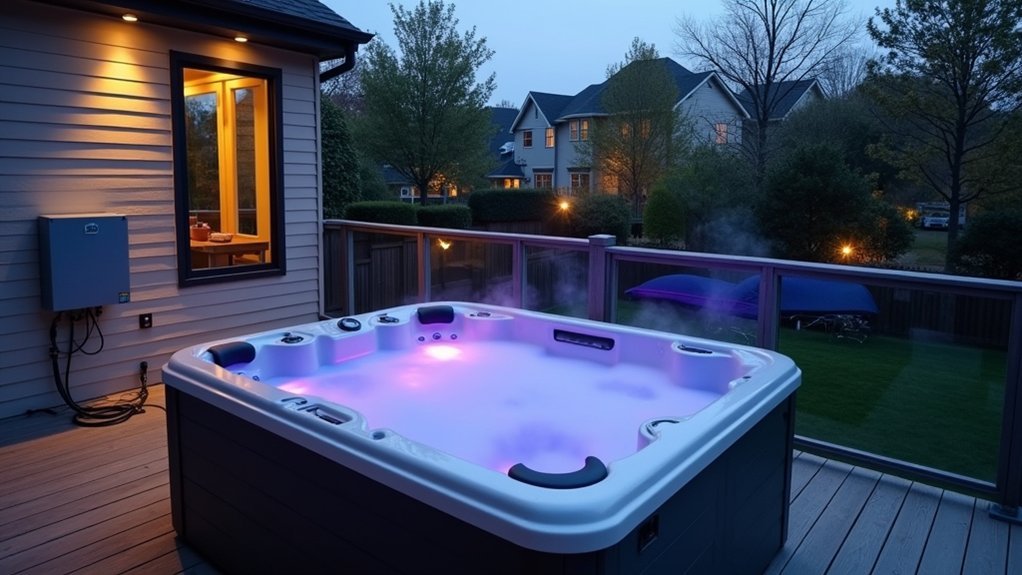
Powering your outdoor spa requires a solid grasp of its electrical demands before you can accurately estimate operating costs. Most residential spas operate on either 120-volt or 240-volt circuits, with larger models typically requiring the higher voltage for optimal heater performance.
Your spa’s wattage rating directly impacts energy consumption. Standard models range from 1,500 to 6,000 watts, with heaters consuming the bulk of that power. You’ll find this information on the manufacturer’s specification plate or in your owner’s manual.
Consider your spa’s amperage requirements too. A 240-volt spa typically draws between 30 and 60 amps, necessitating a dedicated circuit. You should consult a licensed electrician to guarantee your home’s electrical panel can handle the load safely and meets local code requirements.
Monthly Operating Costs Based on Spa Size and Features
When you’re calculating monthly operating costs, your spa’s size plays the most consequential role in determining what you’ll pay. A small two-person spa typically costs $15-25 monthly to operate, while a large eight-person model can run $40-60 or more.
Features markedly impact your energy bill. Jets consume considerable power—a spa with 40 jets draws more electricity than one with 20. LED lighting adds minimal cost, but built-in audio systems and waterfalls increase consumption noticeably.
Heating elements represent your biggest expense. Standard 240-volt heaters range from 1,500 to 6,000 watts. If you maintain higher temperatures or use your spa frequently, expect costs at the upper end. Insulation quality, cover thickness, and your local electricity rates ultimately determine your final monthly expense.
Seasonal Factors That Impact Your Energy Bill
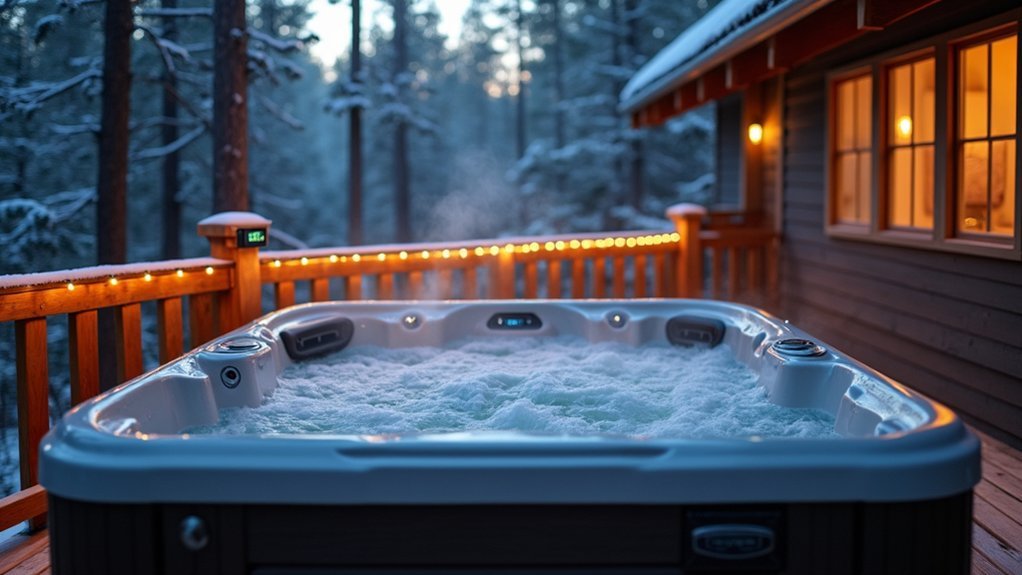
Although your spa’s size and features set a baseline for energy costs, seasonal temperature swings create the most dramatic fluctuations in your monthly bill. During winter months, your heater works overtime to maintain water temperature against freezing air, potentially doubling or tripling your costs compared to summer.
You’ll notice the biggest spikes when outdoor temperatures drop below 40°F. Your spa must continuously heat water that loses warmth rapidly through the cover and shell. Wind chill compounds this effect by stripping heat even faster.
In contrast, summer operation costs decrease markedly. Ambient warmth reduces heating demands, and you may find your spa maintains temperature with minimal energy input.
Spring and fall bring moderate, predictable costs as temperature differentials remain manageable. Tracking these patterns helps you budget accurately year-round.
Energy-Efficient Features That Reduce Running Costs
Investing in energy-efficient spa features cuts your operating costs substantially over the equipment’s lifespan. Modern spas include technology specifically designed to minimize electricity consumption while maintaining peak performance.
Consider these key energy-saving features when shopping:
- Full-foam insulation traps heat effectively, reducing the workload on your heater and cutting energy use by up to 40%.
- Variable-speed pumps adjust their output based on demand, consuming far less electricity than single-speed alternatives during filtration cycles.
- Thermal covers with tight seals prevent heat escape, which accounts for most energy loss in outdoor spas.
You’ll also benefit from LED lighting, which uses 80% less energy than traditional bulbs. These upgrades typically pay for themselves within two to three years through reduced utility bills.
Practical Tips for Lowering Your Outdoor Spa Expenses
Simple daily habits often make the biggest difference in your spa’s energy consumption. Keep your cover secured tightly when not in use, as heat escapes quickly through gaps. Lower the temperature by two to three degrees when you’re away for extended periods.
Run your filtration cycles during off-peak electricity hours to reduce costs. Check your filter monthly and clean it regularly—a clogged filter forces pumps to work harder. Inspect your cover’s foam core annually for waterlogging, which destroys its insulating properties.
Position windbreaks around your spa to minimize heat loss from gusts. Consider adding a floating thermal blanket beneath your main cover for extra insulation. Schedule regular maintenance to catch small issues before they become expensive problems that drain both energy and money.
Frequently Asked Questions
How Long Do Outdoor Spas Typically Last Before Needing Replacement?
You can expect your outdoor spa to last 15-20 years with proper maintenance. You’ll extend its lifespan by keeping the water balanced, replacing filters regularly, and protecting the cover from UV damage.
Does Running a Spa Affect My Home’s Resale Value?
You can boost your home’s resale value with a well-maintained outdoor spa. Buyers often view it as a luxury amenity. However, you’ll want to keep energy costs reasonable to maximize your return on investment.
Are There Tax Credits Available for Energy-Efficient Hot Tubs?
You typically can’t claim federal tax credits specifically for hot tubs, but you may qualify for state or local energy rebates. Check with your utility company—they sometimes offer incentives for energy-efficient spa equipment.
Can Solar Panels Effectively Power an Outdoor Spa Year-Round?
You can power your outdoor spa with solar panels year-round, but you’ll likely need a substantial array and battery storage system. Winter months and cloudy regions require backup heating to maintain consistent temperatures.
What Maintenance Costs Should I Budget for Beyond Electricity Expenses?
You should budget for water treatment chemicals ($20-40 monthly), filter replacements ($50-150 annually), cover replacement every 5-7 years ($300-500), and professional servicing ($150-300 yearly) to keep your outdoor spa running efficiently.


Leave a Reply