

To design a fire pit area for evening entertaining, start with a focal pit—round concrete or built‑in—surrounded by built‑in benches for cohesive seating. Choose smokeless, propane, or natural gas for clean heat and easy ignition, and consider dual‑function pits as room dividers. Plan sightlines with retaining walls, stone patios, and layered lighting from path to flame. Add cushions, tables, and textiles for comfort, and you’ll see how it comes together for year-round entertaining and comfort.
Choosing Fire Pit Styles and Designs
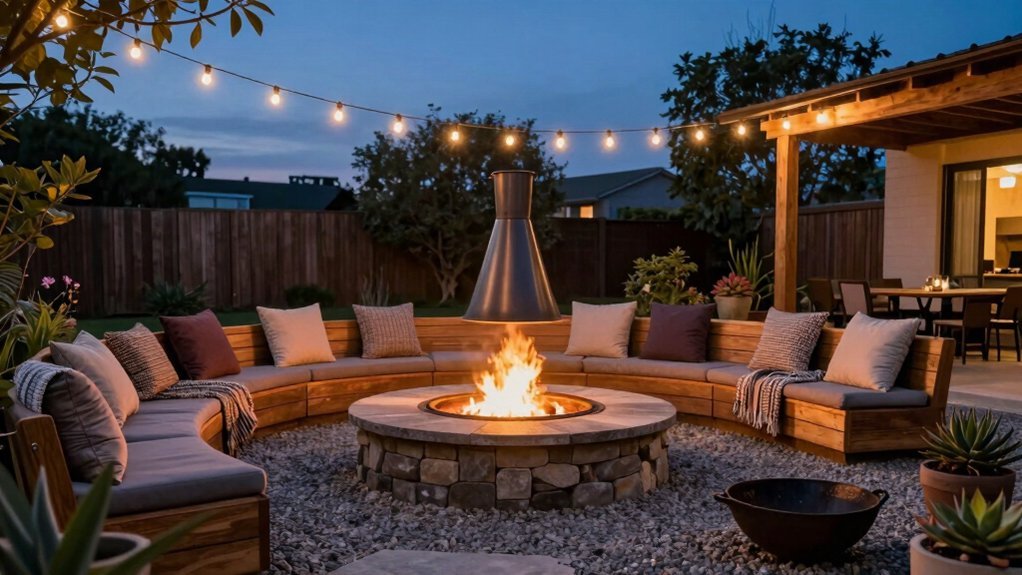
Your fire pit style sets the tone for the whole outdoor space. Modern ideas favor a rectangular form crafted from white-painted brick with cement capstones, delivering a clean, minimalist focal point that pairs with neutral patio furniture and pared-down landscaping. Concrete pits stand out for durability and weather resistance, serving as both a functional feature and a visual anchor in diverse outdoor styles. Built-in options integrate with hardscape and seating, creating an airy, cohesive gathering area. Smokeless double-wall designs vent hot air to cut smoke, enhancing evening comfort. You’ll find approaches ranging from enclosed lounges with backrests to long gas-fed troughs that preserve sightlines while maximizing seating. Consider how material choices echo the environment, balancing texture and scale to guide conversations after dark gently.
Integrating Built-In Benches and Seating
Built-in benches surrounding the fire pit turn the area into a relaxed poolside lounge, tucking seating into the hardscape for a cohesive look. You create a poolside relaxation zone by integrating a modern stone fire pit tucked into the bench nook, which keeps the flow clean and intimate. A built-in fire pit becomes a focal space in the hardscape with minimalist design, letting guests circulate freely and conversations stay centered around the flames. Use walls or a low retaining structure as backrests, and consider subtle recessed lighting to extend the glow beyond dusk.
Pair the benches with coordinated tile patterns, cushions, and a mirrored backdrop above seating to enhance light reflection and ambiance. This setup supports easy maintenance, comfort, and evening usability for gatherings.
Selecting Fuel Type and Technology
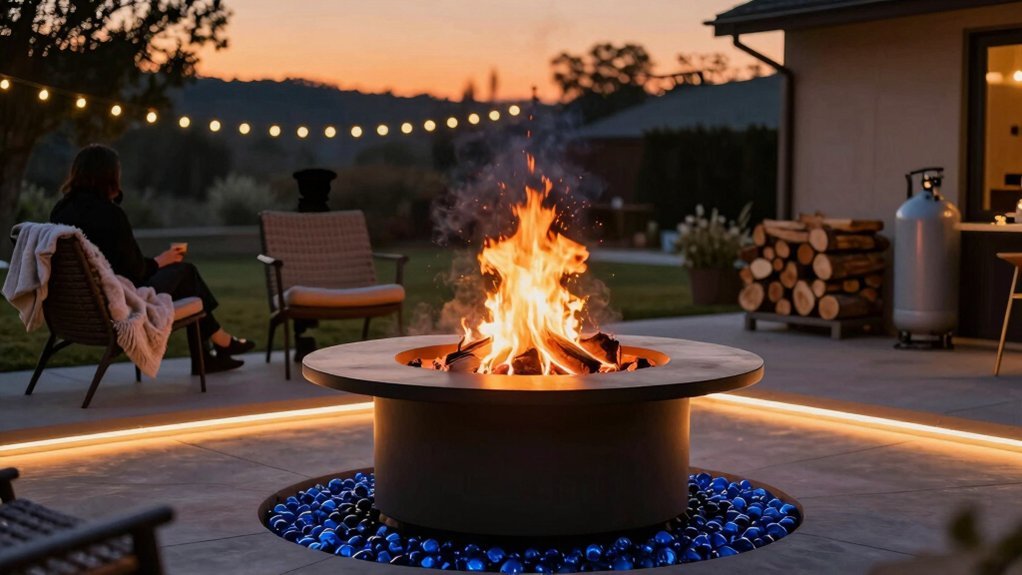
Choosing a fuel type shapes safety, maintenance, and ambiance from the start. Propane-powered pits surrounded by gray stone create a relaxing daytime and nighttime spot, offering convenient, controllable warmth. They provide quick adjustments and reliable ignition. Natural gas offers a safe alternative with a fixed flame supply and lower maintenance. Smokeless designs vent hot air to cut smoke, improving comfort without batteries or fans. Dual-use configurations let your fire pit double as a room divider.
Wood-burning pits offer a traditional campfire feel for roasting marshmallows and s’mores. If you mix fuel types, ensure the design separates zones to manage smoke and heat. A thoughtful choice pairs technology with your space, giving warmth when you want it and a clean look when you don’t tonight.
Creating Focal Points With Concrete and Stone
Imagine a circular concrete fire bowl serving as your focal point on the deck, its clean lines drawing the eye without overpowering the space. Concrete fire pits offer durability and style, blending with stone patios for a cohesive look. Start by choosing a circular focal point that fits your area and complements surrounding materials, then you’ll pair smokeless or recessed designs to keep evening gatherings comfortable.
Concrete Fire Pit Focal
How can a circular concrete fire bowl become the bold focal point of your pool deck? It anchors open-air entertaining spaces, pairing with Bluestone patios and surrounding stone to create a cohesive outdoor room. Concrete is durable, weather-resistant, and fireproof, so you can rely on safety while enjoying a striking centerpiece. A DIY Modern Concrete Fire Pit shows how a concrete form, gravel, and a metal fire bowl combine for a customized centerpiece that fits your design language. Use it to frame seating and lighting, maximizing visibility and social interaction. Consider these steps:
- Choose a form and finish that echo your stonework.
- Position the bowl for sightlines from seating.
- Integrate durable, heat-resistant surround materials. This keeps the space inviting and memorable.
Circular Concrete Focal Point
Why not make a circular concrete fire bowl the bold focal point of your Sonoma pool deck, drawing the eye and anchoring the space? Its smooth, rounded form draws attention while staying durable, weather-resistant, and fireproof, so it can serve as a reliable centerpiece through seasons. Use it to anchor surrounding seating and hardscape, creating a modern centerpiece that blends with stone or bluestone patio elements for a cohesive focal area. In open-layout setups, this circular feature integrates with lighting and landscaping, defining the entertainment zone without crowding it. Pair the bowl with a clean edge and deliberate sightlines.
| Idea | Material Pairing | Benefit |
|---|---|---|
| Stone accents | Bluestone or natural stone | Cohesive look |
| Seating layout | Rings around fire | Social flow |
| Lighting cues | Warm LEDs | Extended ambiance |
Designing for Views and Sightlines
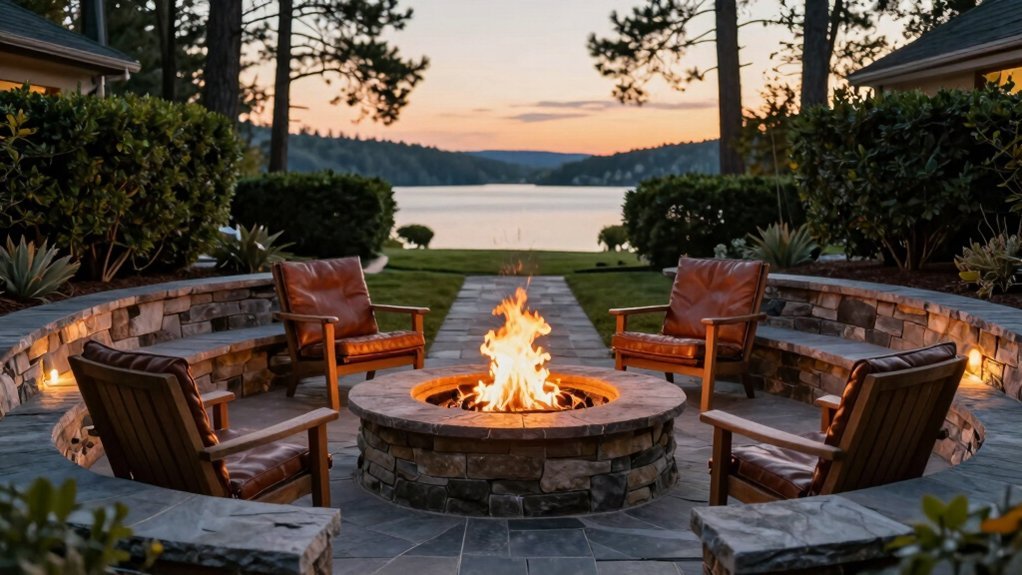
Designing for views and sightlines means choosing forms and placements that act as focal points without interrupting the landscape you want to enjoy.
1) Circular fire pits on decks or along open sightlines maximize unobstructed views while giving you a gathering focal point.
2) Long, low gas-fed fire troughs avoid blocking sightlines, emphasizing width to enhance surrounding vistas.
3) Built-in benches and corner layouts optimize seating around the fire pit without compromising the landscape or pool views.
Recessed or recessed-like pits blend with Bluestone or stone pavers, preserving clean sightlines from indoor living spaces.
Stone bowls, concrete fire bowls, and metal fire pits can serve as focal points that complement rather than obstruct vistas like lakes, pools, or exotic patios.
Choose materials and forms that honor views.
Layouts That Maximize Social Flow
Position the fire pit as a central hub and use built-in benches to define zones that invite conversation. Keep sightlines open so guests can face the fire pit from multiple angles while moving freely through the space. Let the layout guide circulation with seating that preserves flow and clearly defines social areas.
Built-In Benches for Flow
How do built-in benches around a fire pit boost social flow and keep conversations centered on the flames? Built-in seating integrates with the fire feature, creating a poolside relaxation zone that invites lingering, casual chats, and eye contact with the glow. A bench with patterned tile and decorative pillows pairs a modern stone fire pit tucked into the bench nook for a cohesive look. This setup supports intimate gatherings by maintaining sightlines from multiple angles and reducing the need for extra chairs.
Here’s how to maximize flow:
- Sit benches to face each other, ensuring conversations drift toward the flames.
- Align seating with the pit’s focal point, keeping sightlines unobstructed.
- Use minimalism near walls to optimize circulation under pergolas.
Keeps flow clear.
Defined Zones, Open Sightlines
Ever notice how clear sightlines invite conversation around the fire? You design with open views from seating to the pit, avoiding walls or barriers that block sight. Use a long, low fire trough or circular fire pit with built-in seating to encourage around-the-fire chat and provide even sightlines for every guest. Place the pit inside a clearly defined outdoor room, and let surrounding surfaces—pavers, gravel, or stacked stone—subtly delineate zones without locking them off.
Position built-in benches or seating curves to maintain a 360-degree, inclusive circle, so viewing angles stay comfortable for all. Add lighting and pathways that guide guests toward the fire while preserving visibility and safety across transitions between dining, lounging, and entertainment. This approach keeps the gathering open, intimate, and fluid.
Lighting and Ambience for Evening Gatherings
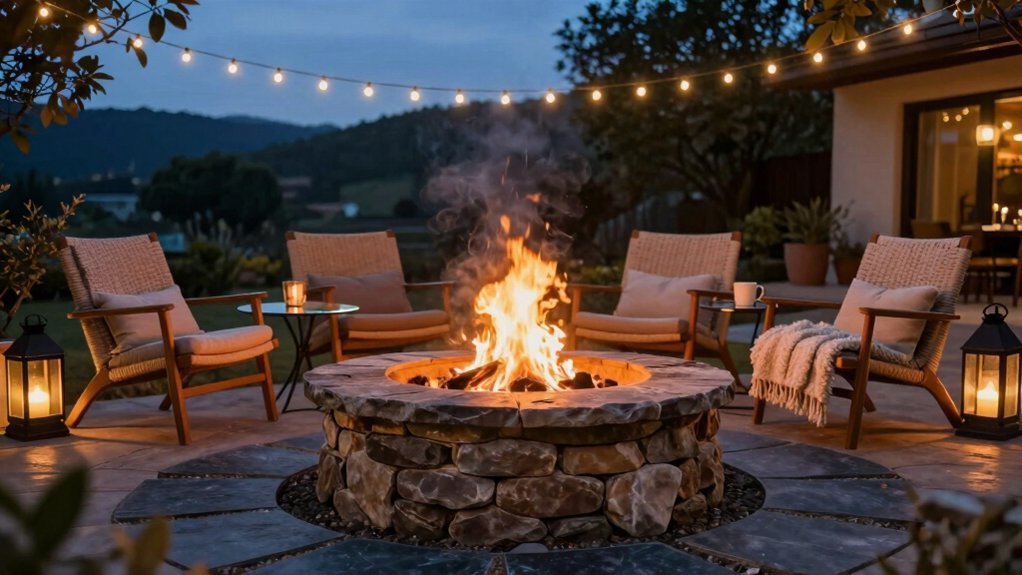
Why settle for ordinary lighting when you can create a magical night around the fire pit with twinkle outdoor lights and a white-dominant palette? You’ll set the mood with a luminous, crisp backdrop and easy-to-see paths. Pair deep navy cushions with a metal fire pit and teak seating to invite lingering chats and versatile evenings. Install recessed or fire-pit zone lighting to highlight the flames while clear path lighting keeps safety at hand after sunset. Add ambient sound elements, like an old-world fountain, to soften crackling fire and broaden the outdoor soundscape. Arrange seating in circular or built-in benches to foster inclusive conversation with unobstructed views of the fire.
- Layer light levels
- Prioritize safety lighting
- Design for conversation and lasting evenings.
Ventilation and Smoke Reduction Considerations
Would you rather your fire pit centralizes heat without overwhelming smoke?
Choose a fire pit that concentrates heat without overwhelming smoke.
A smokeless design vents hot air to reduce smoke, improving comfort during evening use.
For best results, choose a double-wall, smokeless configuration that minimizes smoke while circulating air around the burning area.
Defining the burn zone with a metal ring helps focus airflow and supports ventilation strategies around the pit.
Plan ventilation with adequate clearance, and avoid obstructing sightlines or nearby seating while letting smoke dissipate.
Look for pits with built-in ventilation or features that channel smoke away from guests to enhance the open-air entertainment experience.
This approach keeps guests comfortable without sacrificing ambiance.
Position the pit to maximize airflow through surrounding openings, and test during different winds to validate effectiveness in practice.
Using Water, Stone, and Vegetation as Backdrops
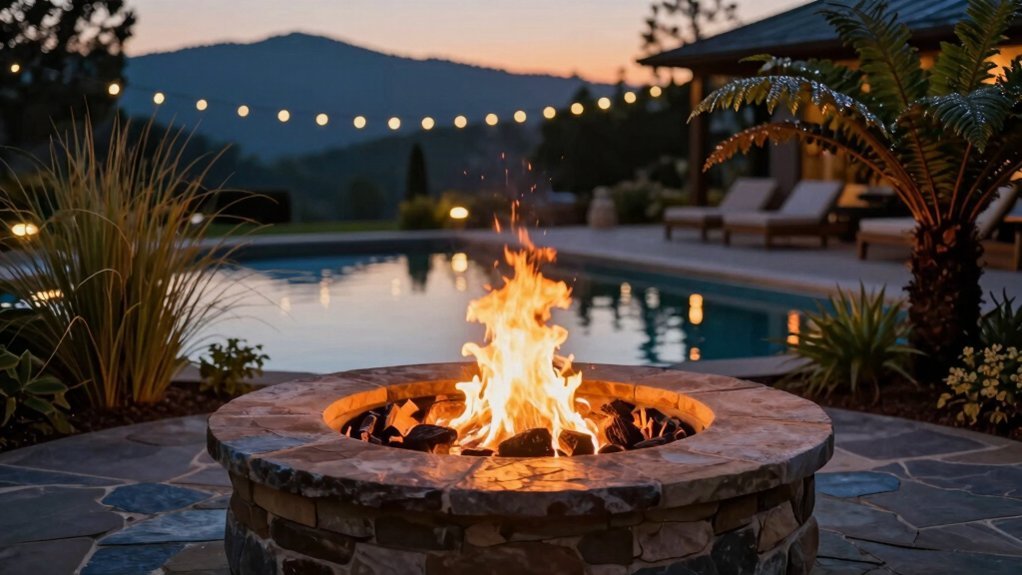
Water features reflect the glow of the flames, enhancing the evening calm around your fire pit. They mirror ambiance, inviting guests to linger as night settles. Consider how water surfaces exaggerate flickers and set a tranquil rhythm that guides conversations without shouting over the flames.
Stone backdrops anchor seating with warm textures. Bluestone patios and sedimentary stones frame edges, creating a cohesive outdoor room feel.
- Stone walls or stacked barriers double as windbreaks and formal seating.
- Native vegetation and tall grasses offer privacy and soft framing.
- A balanced mix of stone, water, and plant buffers tunes sightlines and acoustics for evening entertaining.
These backdrops align mood with function, guiding guests to linger without overpowering the flames. They offer balance and clarity.
Safety, Clearances, and Maintenance
First, you follow safety clearances and local codes to set the fire pit with proper setbacks from structures, vegetation, and flammables. Then, you maintain it by inspecting for damage, ensuring the fuel source and ignition systems work, and keeping extinguishing tools nearby. Finally, you plan long-term care with seasonal checks, weather considerations, and a clear routine to prevent buildup or risky conditions.
Safety Clearances and Codes
How you set safety clearances and follow codes matters for a safe, enjoyable fire pit area. You maintain a clear three-foot radius free of flammables around the pit, keep a water source or fire extinguisher nearby, and never leave the fire unattended. Before you light up, check and comply with local rules or ordinances about open flames. Use non-combustible surfaces for the pit—brick, concrete, stone, or pea gravel—and avoid placing directly on wooden decking. Ensure a safe distance from structures and provide proper setup to manage wind, debris, and ignition risks.
- Maintain a three-foot, flammable-free clearance around the pit.
- Always have water or a extinguisher handy and never leave the fire unattended.
- Check local codes and use non-combustible surroundings, away from structures for safety.
Maintenance and Long-Term Care
Maintaining safety isn’t a one-time step; it’s an ongoing practice that keeps your fire pit area enjoyable year after year. Maintain a clear three-foot radius around the pit free of flammables, and check open-flame rules to stay compliant. Never leave the fire unattended and always have water or a fire extinguisher nearby for response. Use dry, seasoned wood and avoid loose clothing to minimize flare-ups and accidents. Ensure proper pit setup with a sturdy screen or spark guard, and keep flames at a safe distance from structures and vegetation. After each use, plan for safe storage and disposal of ashes.
| Aspect | Action |
|---|---|
| Clearance | Keep three-foot radius free of flammables |
| Response | Always have water or extinguisher nearby |
| Setup & Storage | Screen/guard in place; store ashes safely |
Dual-Function Fire Pits as Room Dividers
Why use dual-function fire pits as room dividers?
A long fire trough creates open sightlines while built-in seating adds privacy.
You create warmth and define spaces with one feature. A long, low gas-fed fire trough provides expansive views without blocking sightlines between zones. Built-in benches around the pit boost privacy and establish an intimate edge within a layout. Recessed or inset fire pits, paired with retaining walls or privacy walls, frame the space while delivering fire-centric ambiance. The design strategy relies on the fire to physically and visually separate living areas from yard zones, yet lets people move freely and socialize across boundaries. Use this approach to guide traffic, frame gathering spots, and keep sightlines open for conversation and engagement.
- Long trough for open sightlines.
- Built-in seating for privacy.
- Walls framing spaces clearly.
Built-In Retaining Walls and Fire Pit Combinations
Pairing a built-in fire pit with a retaining wall creates a cohesive seating area that circles the pit and backs it with comfortable backrests. A common configuration places the fire pit at knee level for seated viewing, with a low retaining wall that both frames your pit and enhances safety.
Retaining walls around your built-in fire pit help define an outdoor room, using materials like stone or brick to complement the surrounding hardscape. Your design typically leverages built-in seating adjacent to the pit, maximizing space and encouraging close, comfortable gatherings.
Lighting and landscape elements are frequently incorporated around the built-in pit and retaining wall to improve night visibility and ambiance. You’ll find lighting and landscape elements incorporated around the built-in pit and retaining wall to improve night visibility and ambiance. Choose durable finishes and consider sightlines for safety at every seating point in evenings.
Patio Materials: Bluestone, Flagstone, and Concrete
Bluestone, flagstone, and concrete offer distinct looks and practical benefits for fire pit areas. Bluestone patio slabs provide a modern, clean look when surrounding a fire pit, often paired with large pale sectional seating and wooden-framed chairs. Recessed and recessed-like fire pits can be integrated with Bluestone or stone paver patios to create a seamless outdoor room. Concrete fire pits are described as durable, weather-resistant and fireproof, making them a versatile focal point that complements various outdoor aesthetics.
- Choose bluestone for a contemporary vibe with pale seating.
- Use a circular concrete bowl to mark a focal point on a deck.
- Integrate recessed pits with Bluestone or flagstone for a cohesive outdoor room.
These materials anchor fire pit while keeping maintenance simple.
Accessorizing With Tables, Cushions, and Textiles
Pair your built-in fire pit with a coordinating table and textiles to create a cohesive lounge around the flame.
Choose cushions and textiles that complement the pit—deep navy with teak, or natural-woven wicker—so comfort and color stay balanced.
Add string lighting and practical surfaces, like matching tables, to boost mood and usability around the fire.
Cushions and Textiles Pairing
Cushions and textiles shape the mood around the fire pit by tying seating, tables, and décor into one inviting vignette. Teak seating paired with a metal fire pit and deep navy cushions create a versatile, cozy ambiance for evening gatherings. Built-in benches with patterned tile and coordinating cushions establish a defined, comfortable seating zone around the fire pit. Plush outdoor cushions and wide floor pillows enhance relaxation, especially when arranged to face the fire and surrounding scenery. Woven wicker furnishings with thick cushions in natural tones contribute to a warm, inviting mood around the fire feature. Two matching mirrors above a built-in bench reflect light and views, enhancing space and comfort in the seating area.
- Teak navy unity
- Cushions define zones
- Natural tones warm
Tables for Firepit
A built-in stone fire pit can tuck into a nook of a built-in bench, creating a cohesive seating area around the pit. Tables keep conversations flowing and hands free for drinks. A coffee or side table placed within easy reach lets guests rest plates without crowding the pit. Choose heat-resistant surfaces and trim clutter to maintain safe access to the flame. Teak or wicker seating pairs well with metal or stone pits, and a small table anchors the arrangement. When you want unified mood, use textiles and cushions in neutral tones or coastal palettes to echo nearby lighting and landscaping.
| Column 1 | Column 2 | Column 3 |
|---|---|---|
| Point A | Point B | Point C |
| Point D | Point E | Point F |
| Point G | Point H | Point I |
Lighting and Comfort
How can you create a welcoming glow and comfortable hangout around your fire pit? Position a built-in or nearby table for drinks and snacks, keeping a three-foot safety radius so you can move and chat without crowding the flames. Use navy cushions and neutral woven chairs to complement the fire glow while withstanding heat and weather. Integrate string lights, twinkle LEDs, or recessed lighting to boost visibility without overpowering the flame. Layer cushions, throw blankets, and floor pillows to invite relaxed, lounge-style seating around the pit. Choose heat-resistant, weatherproof textiles and furniture fabrics like weathered brick, stone, and teak to sustain evenings.
- Place drinks on the table within reach.
- Add cushions to define seating zones.
- Install lighting to complement the flame, for lasting comfort.
Frequently Asked Questions
What Is the Approximate Cost Range for a Built-In Fire Pit Area?
Expect built-in fire pit areas to cost roughly $3,000 to $8,000, depending on materials and features; you’ll pay more for custom sizes, drainage, and premium stone, while simple pavers stay toward the lower end overall.
Do Fire Pits Affect Home Insurance Premiums?
Yes, fire pits can affect your home insurance premiums. Your risk profile, installation quality, fuel type, and safety features matter, along with local codes. You might face higher or lower rates, and may need disclosures.
Can Fire Pits Be Used Year-Round in Cold Climates?
Yes, you can use a fire pit year-round in cold climates, but prep matters: choose a sheltered spot, use spark screen, maintain clearance, and adapt fuel; you’ll monitor wind, moisture, and frost risks for evenings.
How Long Does It Take to Install a Typical Pit Area?
Typically, it takes a few days to install a typical pit area, depending on permits, site prep, and crew size. You’ll plan excavation, base, pit, seating, and lighting, then finish work and inspections finalize project.
What Maintenance Schedule Is Best After Winter?
You should start a maintenance routine: inspect for damage, clean debris, verify gas lines or burners, check seals, reseal brick or stone, power wash, treat concrete, test ignition, and schedule service if it looks off.



Leave a Reply