
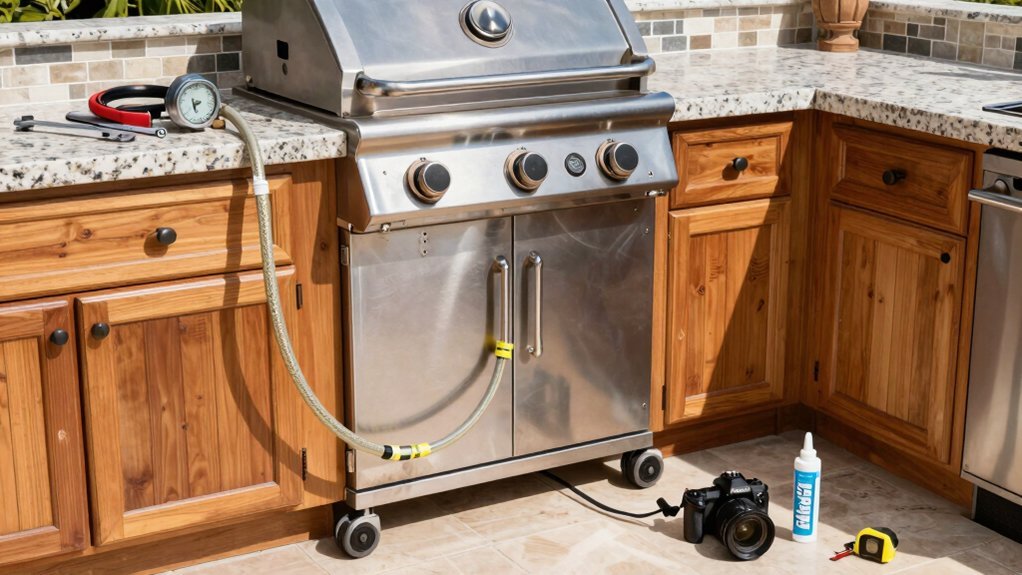
You’ll need to plan your gas line route, calculate BTU loads, and assess your meter’s capacity before starting construction. Choose between underground installation for concealment or above-ground for easier maintenance. Secure permits early and hire licensed professionals for leak testing and inspections. Weatherproof exterior piping with rust-resistant coatings and sealed joints to prevent damage. Regular maintenance and seasonal inspections keep your system safe and functional long-term. Understanding each step ensures you’ll avoid costly mistakes and safety hazards.
Plan Your Gas Line Route Before Construction Begins
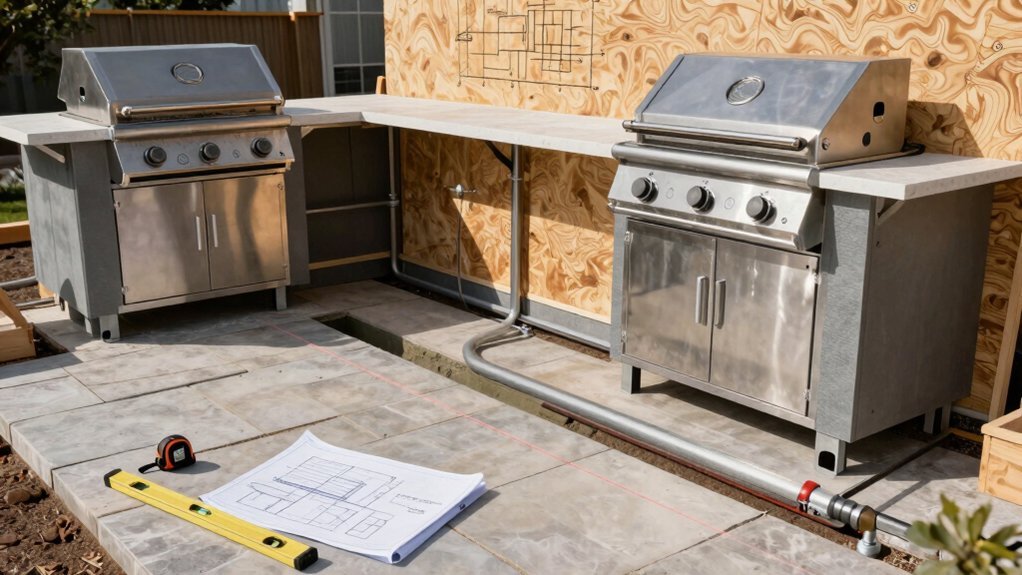
Before you break ground on your outdoor kitchen, have you calculated the total BTU load of all your gas-powered appliances? This crucial step determines your gas line’s required capacity and prevents costly undersizing or oversizing issues.
Next, sketch a detailed layout showing where you’ll place your grill, burner, heater, and other gas-powered equipment. Measure distances from your existing gas line to identify the shortest, safest routing path. Map potential obstacles like trees, structures, and utilities that might affect installation.
Schedule a consultation with a licensed gas professional early in your planning phase. They’ll verify capacity, confirm the best tie-in point, and clarify permit requirements specific to your area. Coordinating these details upfront saves time, money, and prevents installation delays later.
Assess Your Home’s Natural Gas Capacity and Meter Location
Where’s your gas meter located? You’ll find it on your home’s exterior where the main supply enters. Check the meter capacity—typically labeled as 5-light, 10-light, or 15-light—to understand your available headroom for additional gas loads.
| Meter Type | CFH Capacity | Typical Use |
|---|---|---|
| 5-Light | Up to 100 | Single appliance |
| 10-Light | 100-300 | Multiple appliances |
| 15-Light | 300+ | High-demand homes |
| Residential Standard | Varies | Standard homes |
| Commercial Grade | 500+ | Heavy-duty applications |
Read your meter number and compare its CFH capacity against your total BTU demand from existing appliances: furnace, water heater, and stove. Calculate whether adding an outdoor kitchen exceeds capacity. Finally, locate and confirm the accessible shutoff valve at the meter, ensuring safe working distance before planning any tie-ins.
Choose Between Underground and Above-Ground Installation Options
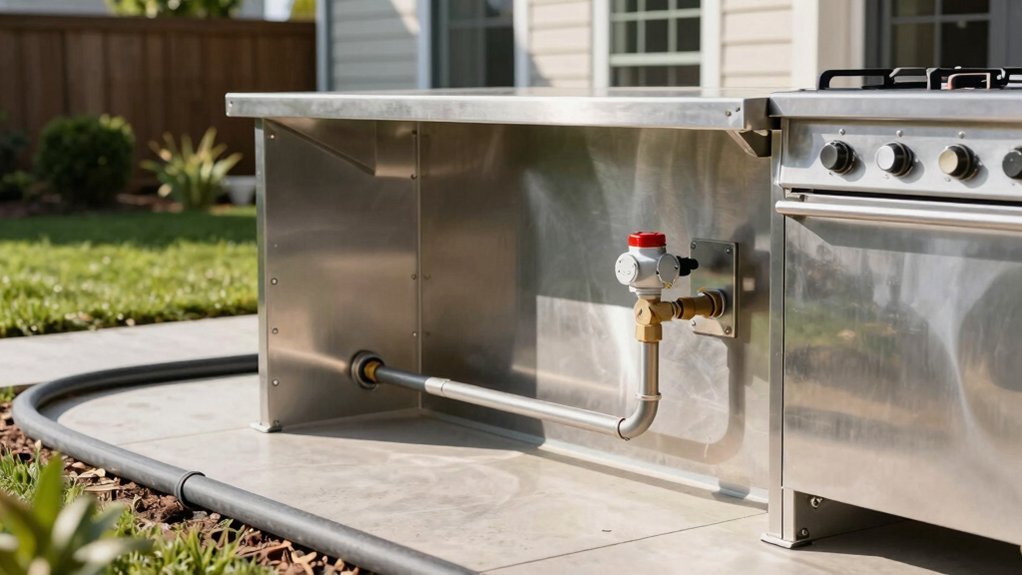
How you route your gas line—underground or above-ground—will shape your entire installation process.
Underground routing requires sleeved risers with weather-sealed joints and proper venting, but it hides unsightly pipes and protects them from damage. However, you’ll face trenching costs and potential utility conflicts.
Above-ground installations offer easier maintenance access and simpler re-routing if needed, though you must install protective casings against weather and physical damage.
Evaluate your specific situation: consider installation length, BTU demand, soil conditions, and frost risk.
Either way, you’ll need a licensed gas fitter, proper permits, and pressure testing before operation.
Choose the method that balances accessibility, budget, and long-term maintenance needs for your outdoor kitchen.
Prioritize Permits, Codes, and Professional Inspection Throughout the Process
Once you’ve decided on your routing method, you can’t skip the permitting and inspection process—it’s what separates a safe, insurable installation from a liability risk. Local building permits ensure code compliance and protect your warranty coverage. Skipping approvals voids insurance and creates serious fire hazards.
| Phase | Key Action |
|---|---|
| Planning | Obtain permit documentation early |
| Installation | Licensed professionals conduct leak testing |
| Inspection | Pressure checks verify safety |
| Final | Document all compliance records |
Licensed gas professionals conduct mandatory leak testing and pressure checks during installation. You’ll want shut-off valves and pressure regulators installed per code, with verification testing documented. Plan permits early to align with utility tie-ins, contractor schedules, and inspections before final surfaces are installed. Clear documentation of required permits, inspections, and responsible parties keeps everything traceable and prevents delays.
Weatherproof and Maintain Your Gas Line for Long-Term Performance
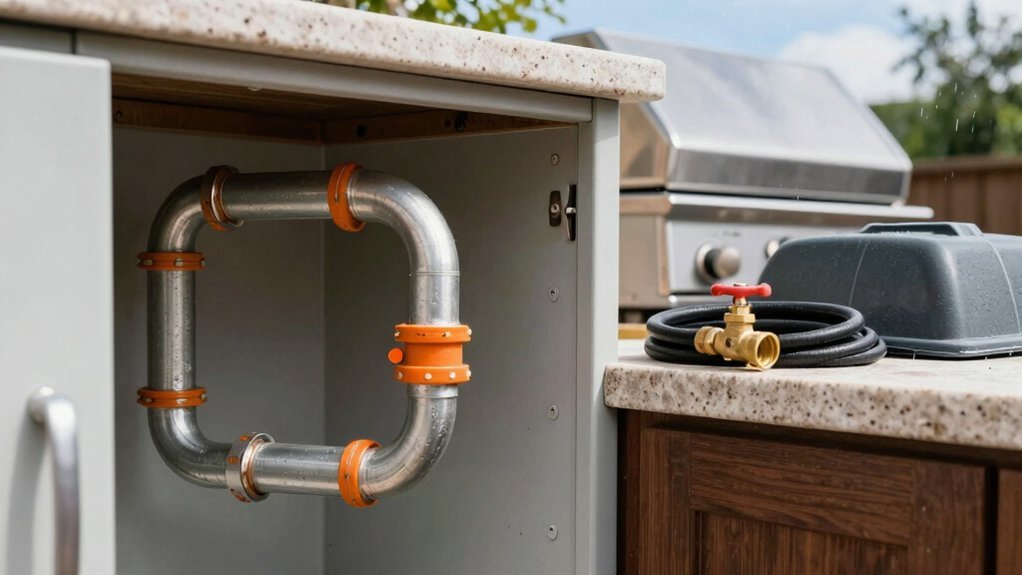
Your outdoor kitchen gas line faces constant exposure to the elements, so weatherproofing and maintenance aren’t optional—they’re essential to preventing corrosion, leaks, and safety failures.
Start by applying weatherproof coatings and rust-resistant paint to all exterior piping, then seal wall penetrations to block water intrusion.
Use outdoor-rated fittings, CSST, or black iron pipe with protective casings designed for sun, rain, and ground movement.
Install a drip leg at exterior connections to catch moisture before it enters your system.
Route lines away from heat sources and keep venting paths clear for safe operation.
Schedule regular visual inspections and professional leak testing after seasonal changes or severe weather to catch corrosion or wear early.
Frequently Asked Questions
Can You Run a Natural Gas Line Outside?
Yes, you can run a natural gas line outside. You’ll need to hire a licensed gas fitter, obtain permits, and ensure compliance with local codes. You must use corrosion-resistant materials, weatherproof everything properly, and install shutoff valves for safety.
Do You Need a Plumber to Install a Natural Gas Barbecue?
Yes, you’ll need a licensed plumber or gas fitter to install your natural gas barbecue. They’ll ensure code compliance, proper sizing, leak testing, and correct shutoff valve placement to keep your installation safe and functional.
How to Seal Around Gas Pipe Outside?
You’ll seal around your gas pipe outside by applying weatherproof sealant around the penetration, installing a wall sleeve with a vented cap, and cinching it with a weatherproof grommet. Then you’ll test for leaks and re-seal any gaps you find.
Can I Install a Gas Line Myself?
You shouldn’t install a gas line yourself. You’ll need a licensed gas fitter to ensure safety, meet local codes, pass inspections, and avoid dangerous leaks. You risk voiding warranties and creating serious hazards without professional expertise.


Leave a Reply