

Ground level trampoline installation costs typically range from $1,500 to $6,000, depending on your location, terrain, and chosen features. You’ll pay more in metropolitan areas or if you have rocky soil that complicates excavation. The full project includes site preparation, retaining walls ($2,000), drainage systems, and labor—with in-ground installations generally falling between $3,000-$6,000. DIY approaches can reduce expenses, but professional installation ensures proper safety and durability.
Understanding Inground vs. Above-Ground Trampoline Price Points

Why do inground trampolines cost considerably more than their above-ground counterparts? The answer lies in the extensive preparation and materials required. While you might spend just $100-$4,500 for an above-ground model, inground options typically range from $1,500-$5,000 before installation costs.
The true price gap emerges when you factor in the complete setup. Inground installations often exceed $3,000 once you include excavation ($400-$1,500), retaining walls (approximately $2,000), and drainage systems. By comparison, even high-end above-ground kits rarely surpass $2,000.
Both options can be customized with accessories like LED lights, covers, and safety enclosures, adding $2-$400+ to your total investment. Remember that the 3-foot excavation depth needed for standard 14-foot trampolines drives much of the cost difference.
The Complete Breakdown of Inground Trampoline Kit Costs
Let’s examine exactly what you’re paying for with inground trampoline installations.
Understanding the cost breakdown of in-ground trampolines helps you budget smarter for this backyard investment.
The typical cost range spans from $1,500 to $5,000, with several factors affecting the final price.
Your kit’s size and quality form the foundation of pricing, while accessories like LED lighting, safety nets, and protective covers will increase costs. The excavation process for a standard 14-foot trampoline requires a 3-foot depth, adding $400-$1,500 to your budget.
Don’t overlook essential additions like retaining walls (around $2,000) and drainage systems (from a few hundred to several thousand dollars). If you opt for professional installation, your total investment will likely fall between $3,000 and $6,000, depending on your property’s conditions and your chosen customizations.
Excavation and Site Preparation Expenses to Consider
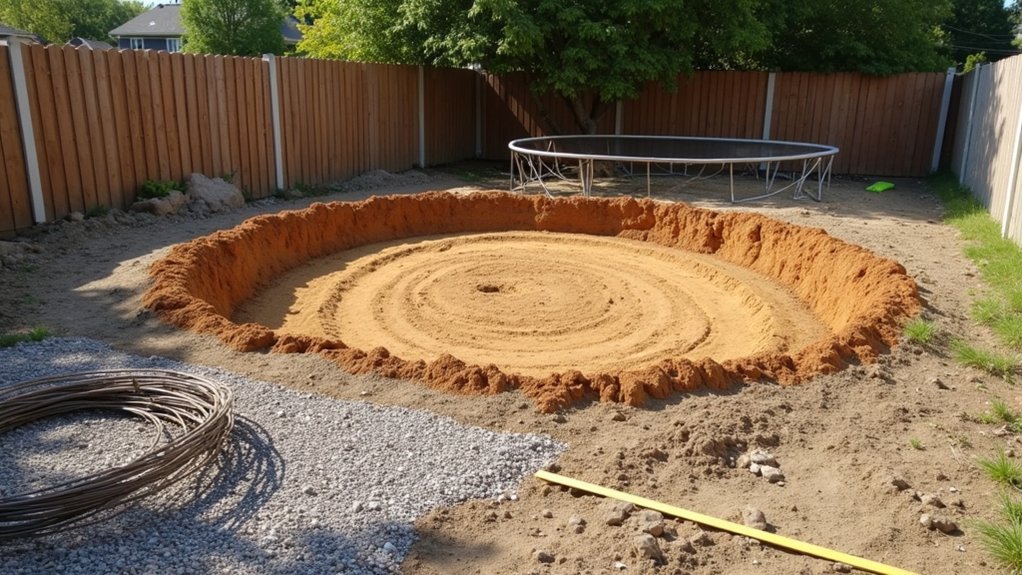
When planning your ground level trampoline, excavation and site preparation often represent the most significant hidden costs. Expect to dig approximately 3 feet deep for standard 11-14 foot models, with excavation alone costing $400-$1,500 depending on your soil type and local labor rates.
You’ll need to budget for essential components beyond just digging. A retaining wall, typically adding around $2,000, prevents soil collapse around your trampoline. Don’t overlook proper drainage systems, which range from a few hundred to several thousand dollars based on complexity.
The complete site preparation process also includes backfilling with gravel and soil, further increasing your investment. These combined excavation expenses can add several thousand dollars to your project, making it crucial to hire experienced professionals who understand proper installation techniques.
Drainage Solutions and Their Impact on Your Budget
How effectively your inground trampoline handles water directly impacts both immediate costs and long-term durability.
Drainage systems vary significantly in price, from basic gravel channels at a few hundred dollars to comprehensive sump pump setups costing several thousand.
Without proper drainage, water accumulation can destabilize soil and damage your trampoline installation, leading to expensive repairs.
The $400-$1,500 you’ll spend on excavation work can quickly multiply if drainage issues develop later.
Consider how drainage works with other elements like retaining walls (approximately $2,000) to prevent soil movement and water pooling.
When planning your installation, specify your drainage needs during the initial site assessment to find the right balance between upfront costs and long-term protection for your investment.
Retaining Wall Systems: Materials and Installation Pricing
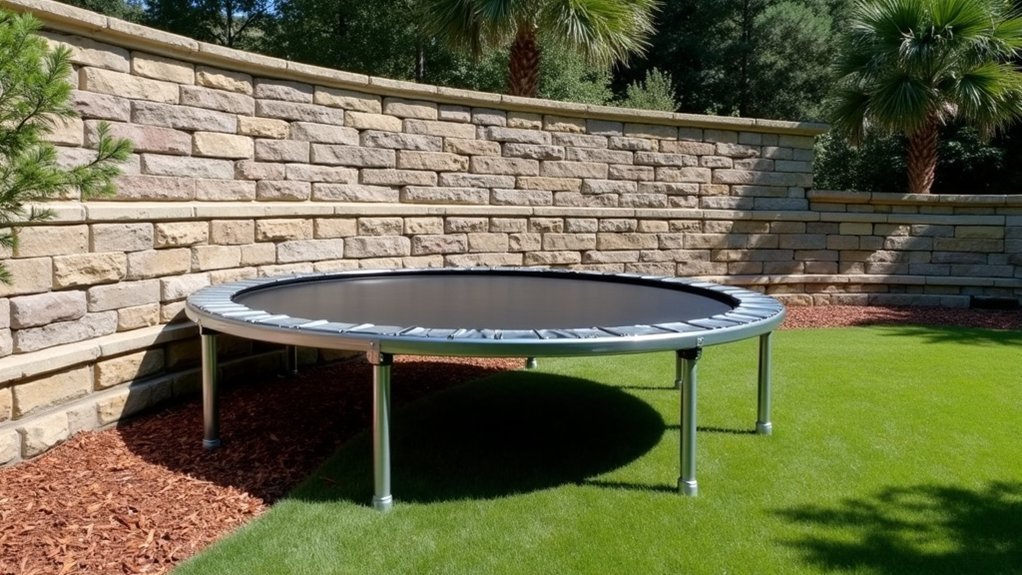
Why do retaining walls constitute such a crucial component of inground trampoline installations? They provide essential structural support, preventing soil collapse while creating a clean, finished look for your backyard investment. At approximately $2,000, this expense represents a significant portion of your overall budget.
Your material choices impact both cost and longevity:
- Wood retaining walls – most budget-friendly option but require more frequent maintenance
- Concrete systems – higher initial investment with superior durability and stability
- Reinforced options – ideal for challenging soil conditions but command premium pricing
- Drainage-integrated walls – prevent water accumulation beneath your trampoline
The 3-foot excavation depth and your trampoline’s dimensions will determine wall specifications. While DIY is tempting, professional installation ensures proper trenching, compaction, and anchoring—crucial factors for long-term safety and performance.
Professional Installation vs. DIY: Cost Comparison
Should you tackle your inground trampoline installation yourself or hire professionals? The decision considerably impacts your budget and final results. Professional installation typically runs $3,000-$6,000 total, covering the kit, excavation ($400-$1,500), retaining wall (around $2,000), drainage systems, and labor costs.
Going DIY eliminates labor expenses but still requires $400-$1,500 for excavation and materials. You’ll also need to consider soil conditions—rocky terrain increases digging costs regardless of approach. Both options may include accessory bundles adding $2-$400+ to your project.
While DIY saves money upfront, it demands more time and carries risks of improper installation that could lead to costly repairs. Professional installation offers convenience, speed, and typically includes warranties, though at a higher initial investment.
Essential Safety Features Worth the Investment
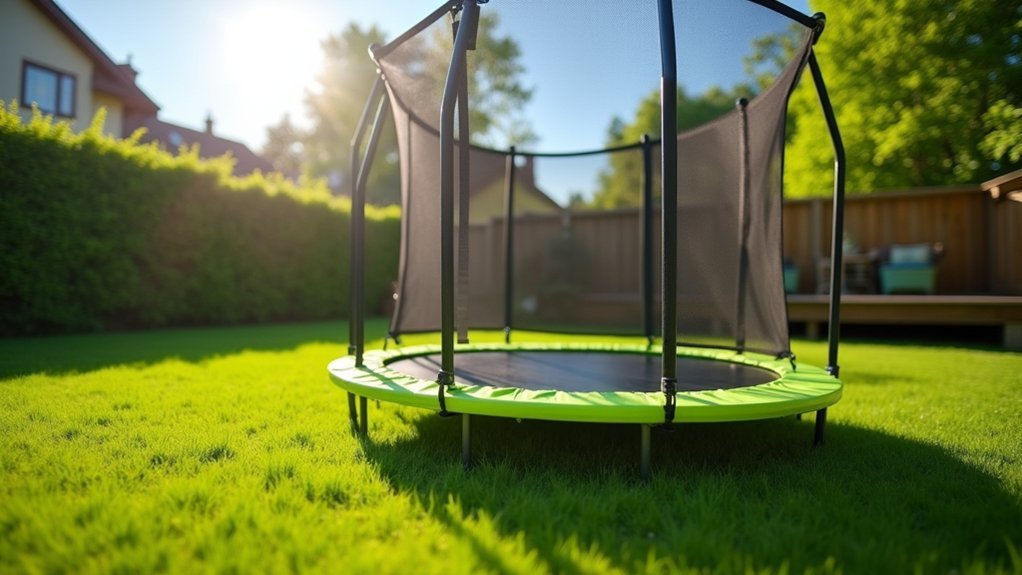
When investing in a ground-level trampoline, safety features aren’t just add-ons—they’re necessities that protect your family while maximizing your investment’s longevity. Beyond the $3,000-$6,000 installation cost, these critical safety elements deliver long-term value:
- Proper drainage systems – While basic gravel channels might save money initially, investing in a quality drainage solution prevents water accumulation that could damage your trampoline frame and undermine surrounding soil.
- Professional-grade retaining walls – The $2,000 average cost pays for itself by preventing soil erosion and collapse around your trampoline pit.
- Safety nets and padding – These affordable additions significantly reduce injury risk during use.
- Professional installation – Expert installers ensure proper depth (typically 3 feet), stable foundations, and correct safety feature integration.
Optional Accessories That Enhance Your Trampoline Experience
Beyond the fundamental safety features, a range of optional accessories can transform your ground-level trampoline from a basic jumping surface into a complete recreational hub. While standard kits typically include the trampoline, pads, retaining wall, and installation instructions, numerous add-ons are available to customize your experience.
LED lighting systems ($50-$150) not only enhance safety by illuminating the jumping area at night but also create an appealing aesthetic. Basketball hoops can turn your trampoline into a multi-sport zone, while premium covers protect your investment during off-seasons.
When budgeting, remember that accessories add $2 to $400+ to your total investment. Some may require professional installation, increasing labor costs. Consider bundled packages that include popular add-ons like lighting and covers for potential savings.
Regional Price Variations for Ground Level Installation
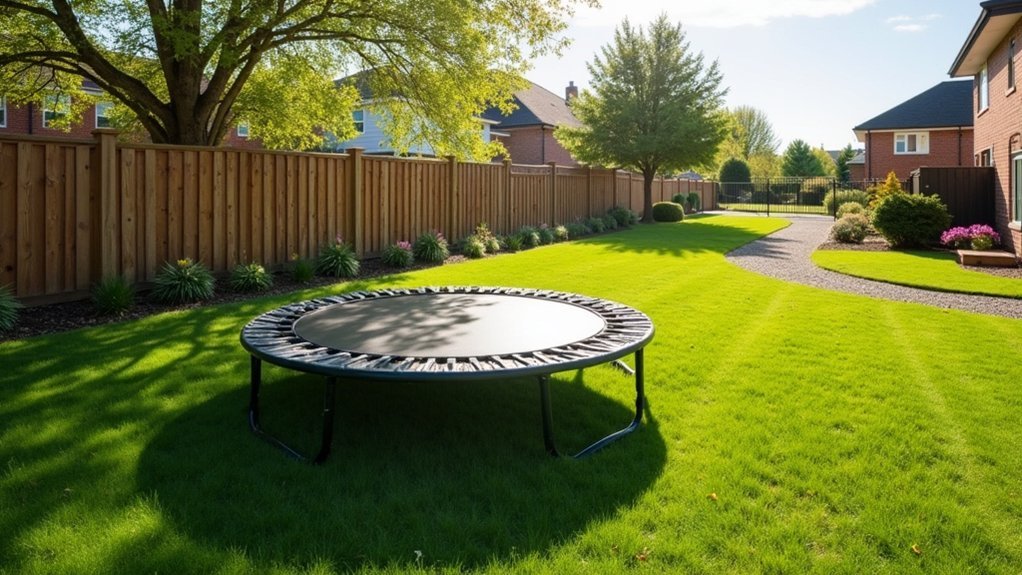
Why do homeowners in California often pay nearly double what those in the Midwest might spend for the same ground-level trampoline installation? Your location significantly impacts your final cost, with urban areas typically reaching $5,000-$6,000 while rural installations might cost just $1,500-$3,000.
Four key regional factors affecting your price:
- Labor rates – Higher wages in metropolitan areas directly increase installation costs
- Soil conditions – Rocky terrain or clay soil can add $400-$1,500 to excavation expenses
- Climate considerations – Areas with heavy rainfall require more sophisticated drainage systems
- Local regulations – Some regions have stricter permitting processes and inspections that add to your bottom line
Shipping policies and installer availability in your area will further influence both cost and project timeline.
Long-Term Value: Maintenance Costs Over Time
While your initial investment in a ground-level trampoline installation matters, you’ll find the long-term maintenance costs considerably impact your overall value. You’ll need to budget for regular safety inspections, drainage system upkeep, and occasional replacement of worn components like jump mats and springs every few years.
Extending your trampoline’s lifespan requires consistent cleaning, seasonal covers, and weather protection—efforts that typically prove more manageable with inground models compared to their above-ground counterparts.
Maintenance Cost Factors
How much you’ll spend on maintenance over time substantially impacts the true value of your inground trampoline investment. Unlike above-ground models that face wind damage, in-ground trampolines generally require less costly ongoing repairs but still need regular attention.
Key maintenance expenses to anticipate include:
- Safety inspections – Regular checks of springs, frame integrity, and safety features prevent costly repairs and ensure family protection
- Drainage system upkeep – Maintaining proper water diversion through gravel channels, pipes, or sump pumps prevents expensive water damage
- Replacement parts – Periodic replacement of nets, pads, and springs extends usability and maintains safety standards
- Rust prevention – Annual checks for corrosion on galvanized steel frames, especially in wet climates, help avoid structural failures
Strong warranties (5-10 years) significantly reduce your expected out-of-pocket costs.
Extending Trampoline Lifespan
When properly maintained, your in-ground trampoline can deliver exceptional value over many years, transforming what seems like a substantial initial investment into a cost-effective recreational feature. Perform monthly safety inspections of springs and frame connections to prevent premature wear and expensive repairs.
Ensure proper drainage around your installation to avoid water damage that leads to rust and early part replacements. You’ll maximize longevity by initially investing in quality components like galvanized steel frames and premium jump mats.
Don’t overlook seasonal protection—weather-resistant covers and regular cleaning significantly reduce material degradation. While installation costs range from $1,500-$6,000, your maintenance approach directly impacts long-term expenses. By implementing these preventative measures, you’ll extend your trampoline’s usable life and enhance its safety profile for years to come.
Financing Options for Your Inground Trampoline Project
Why tackle the substantial cost of an inground trampoline all at once? With total installation prices ranging from $3,000 to $6,000, spreading payments over time makes this backyard upgrade more accessible for many families.
Making your inground trampoline dream affordable with budget-friendly payment options instead of one massive upfront investment.
Most retailers offer financing plans that can transform a hefty one-time expense into manageable monthly payments:
- Zero-interest promotional financing – Available during special sales periods like Black Friday, allowing you to pay over time without additional cost
- Extended payment plans – Terms typically ranging from 6-36 months with varying interest rates
- Bundle discounts – Combining installation services with premium kit purchases often yields savings
- Seasonal promotions – Taking advantage of off-peak installation times can secure better financing terms or reduced total costs
Frequently Asked Questions
How Much Does It Cost to Install a Ground Trampoline?
You’ll spend $3,000-$6,000 for an inground trampoline installation. This includes $400-$1,500 for excavation, about $2,000 for retaining walls, and additional costs for drainage systems and higher-quality components if desired.
How Much Should I Pay Someone to Put Together a Trampoline?
For standard above-ground trampoline assembly only, you’ll pay $150-$300. If you’re installing an in-ground model with excavation, expect $3,000-$6,000 total including labor, materials, drainage, and site preparation.
Do You Need a Permit to Put a Trampoline in the Ground?
You’ll likely need a permit for in-ground trampolines in many areas. Check with your local building department as requirements vary regarding excavation depth, drainage, and retaining walls. Don’t skip this important step before digging.
Why Are In-Ground Trampolines so Expensive?
In-ground trampolines are expensive because you’re paying for excavation, drainage systems, retaining walls, and quality materials—not just the trampoline itself. These necessary structural elements ensure safety and longevity for your underground setup.


Leave a Reply