

Clean your hammock according to its material—gentle detergent for fabric, scrubbing for rope, specialized wash for DWR-coated. Always air-dry completely before storing in a breathable bag with hardware removed. Protect outdoor hammocks with covers and UV spray. Inspect regularly for fraying or tears and make repairs promptly. Proper maintenance transforms your seasonal relaxation spot into a durable investment that’ll cradle you comfortably for years to come.
Essential Hammock Cleaning Techniques for Different Materials

How you clean your hammock largely depends on what it’s made from. Fabric hammocks need gentle care—use warm water with mild detergent, scrub softly with a brush, rinse thoroughly, and air-dry away from direct heat.
Treat your fabric hammock with care—gentle scrubbing, mild soap, and air-drying away from heat will keep your relaxation spot pristine.
For rope hammocks, lay them flat first. Soak and scrub with warm water and mild detergent, rinse completely, then dry in sunlight or a breezy spot to prevent mildew.
Camping hammocks require special attention. Either machine wash on a gentle cold cycle after removing all hardware or hand wash with cold water and non-detergent soap. Never use fabric softeners or tumble dry.
If your hammock has DWR coating, hand washing is best. Use specialized products like Grangers Down Wash + Repel to maintain water resistance.
Proper Storage Practices to Extend Your Hammock’s Lifespan
When properly stored, your hammock can last for many years beyond its expected lifespan. Always choose a dry location away from direct sunlight, as UV rays can weaken fibers and cause fabric to become brittle over time.
Before storing, ensure your hammock is completely dry to prevent mold, mildew, and rope deterioration. Keep it elevated off the ground to minimize exposure to moisture and debris. Consider using a breathable storage bag that protects from dust while allowing air circulation around the material.
Remove all carabiners and hardware before packing away your hammock to prevent them from causing snags or wear on the fabric. These simple storage habits take just minutes to implement but can add seasons to your hammock’s useful life.
Weather Protection Strategies for Year-Round Hammock Durability
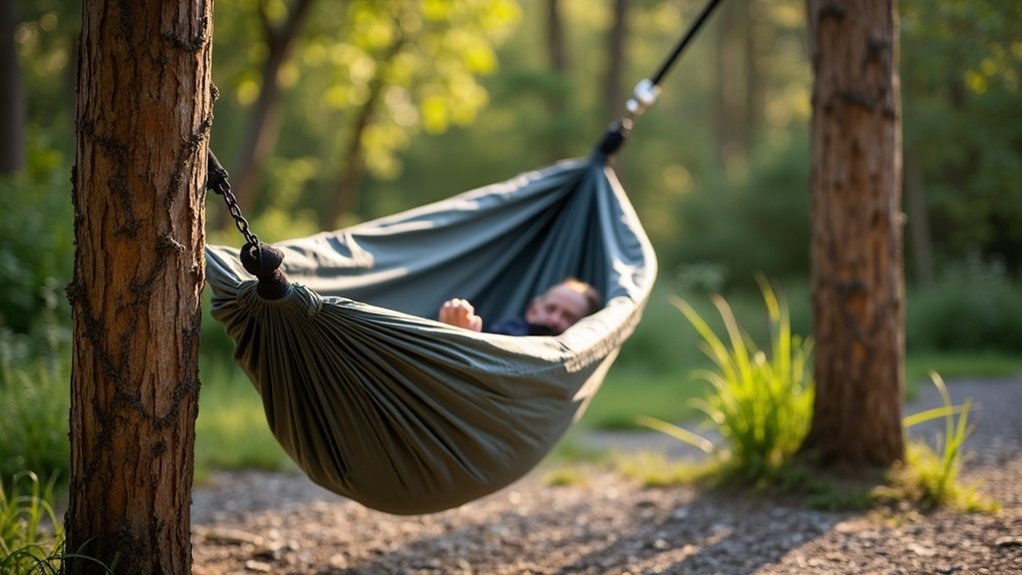
Weather poses the greatest challenge to your hammock’s longevity, regardless of its quality or material. Invest in a protective cover that blocks rain, snow, and falling leaves while keeping fabric and ropes dry between uses. Choose breathable options that allow airflow to prevent moisture buildup underneath.
Apply UV protectant spray regularly to shield your hammock from sun fading and material degradation, especially during summer months. For everyday weather awareness, always use a tarp or rain fly when setting up outdoors, and take your hammock down during heavy rain or high winds.
In humid environments, focus on moisture control by ensuring your hammock dries completely before storage to prevent mould and mildew growth on both fabric and supporting ropes. These simple precautions will significantly extend your hammock’s usable life.
Common Hammock Repairs You Can Tackle at Home
Even the most weather-protected hammocks will need occasional repairs, and many common issues can be fixed right at home with minimal tools. For minor fabric tears, apply adhesive repair kits or stitch with heavy-duty thread before damage spreads. Reinforce frayed ropes with additional knots or replace them entirely.
Limit your DIY efforts on weight-bearing areas to tenacious tape applications only. For significant damage in these crucial sections, seek professional assistance. Develop a habit of inspecting your hammock regularly—look for frayed ropes, loose stitching, and strained zippers.
When cleaning, stick to non-detergent soaps and mild cleaners. Skip fabric softeners entirely and ensure complete air-drying before storage or use. If you’re uncertain about a repair’s safety, contact manufacturer support or send it to a repair service.
Routine Maintenance Checklist for Optimal Hammock Performance
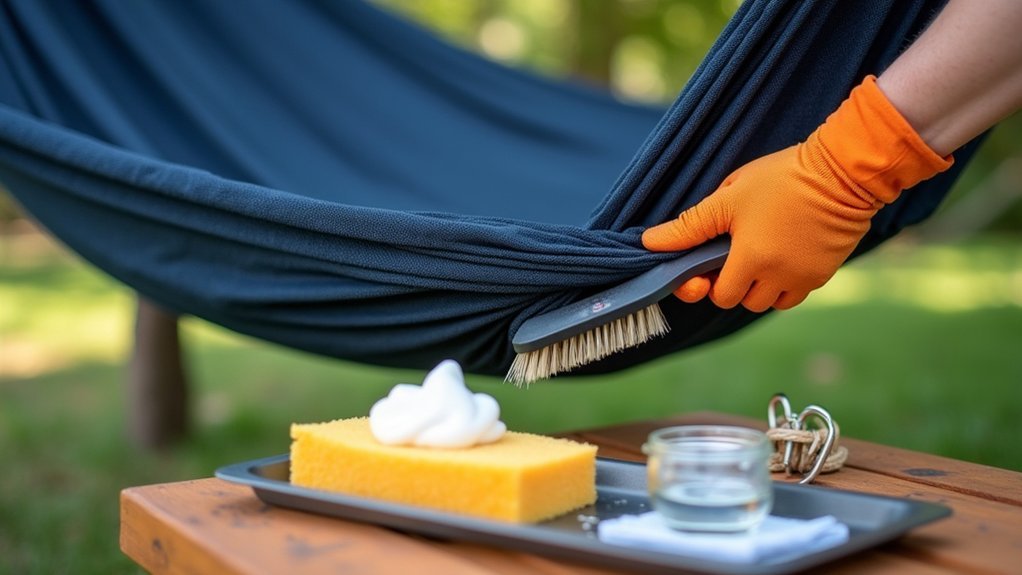
A consistent maintenance routine extends your hammock’s lifespan considerably beyond casual care. Establish a regular schedule based on your usage frequency—light cleaning every few weeks for daily use, or seasonal cleaning for occasional lounging.
- Inspect thoroughly – Check for frayed ropes, loose stitching, and fabric wear during each cleaning session, addressing minor issues before they become major failures
- Clean appropriately – Use cold water and mild detergent for fabric hammocks; scrub rope hammocks gently with a soft brush
- Dry completely – Air-dry your hammock spread open in a sunny, breezy location before storage to prevent mildew growth
- Store properly – Use breathable covers and keep your hammock elevated in a dry location with good airflow when not in use
Frequently Asked Questions
How to Maintain a Hammock?
Clean your hammock regularly, inspect for wear, and store in dry, shaded areas. Always dry completely before storage, use mild detergents when washing, and maintain proper suspension angles for safety.
How to Deep Clean a Hammock?
For a deep clean, remove your hammock, shake debris, rinse with a hose, then wash using warm water and mild detergent. Scrub gently with a soft brush and rinse thoroughly.
Can I Put My Hammock in the Washing Machine?
You shouldn’t machine wash most hammocks. If you must, remove hardware first, use a machine without center agitator, select gentle cycle with cold water, and avoid fabric softeners and bleach.
How Often Should You Wash Your Hammock?
You should wash your hammock every few weeks with heavy use, or once or twice per season for light use. After camping trips, wash immediately. Don’t neglect cleaning as it weakens fibers.




Leave a Reply