
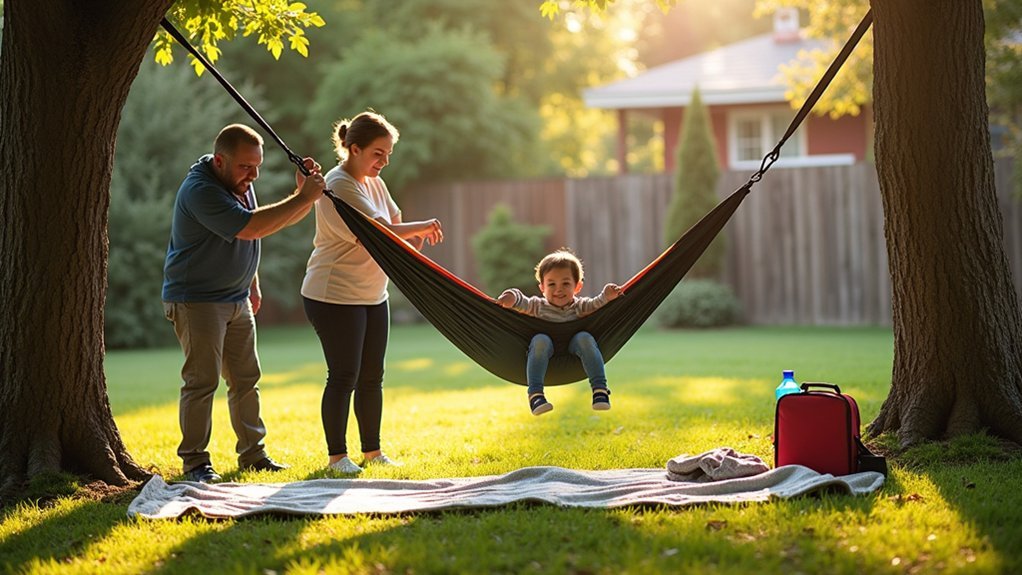
For family hammock safety, choose a model with an appropriate weight rating and inspect it regularly for wear. Hang your hammock no higher than 18 inches off the ground with proper tension and clear any hazards below. Always supervise children, establish clear rules against jumping or overcrowding, and teach proper entry and exit techniques. Avoid use during bad weather and ensure your support points are sturdy. These precautions will transform your hammock time into worry-free family fun.
Selecting the Right Family-Sized Hammock
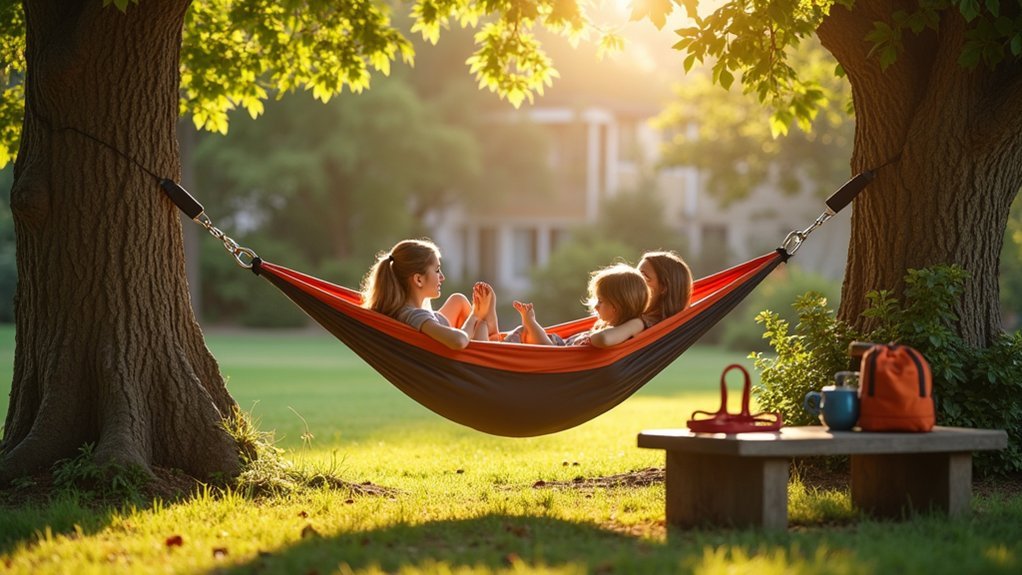
When shopping for a family hammock, what should be your top priority? Safety always comes first, particularly when children will be using it. Choose a hammock specifically designed for families with a weight capacity that easily accommodates both adults and children together.
Look for models that feature durable materials and triple-stitched seams to prevent tears or unexpected failures. The weight rating should be clearly printed on the packaging—don’t guess or assume.
Before your first use, verify that all hardware components like straps, carabiners, and attachment points are included and in good condition. These elements are crucial for proper installation and will ensure your hammock provides a secure, comfortable space for family relaxation without compromising anyone’s safety.
Proper Setup and Installation for Safety
When setting up your family hammock, always select trees or posts at least 8 inches in diameter to ensure they’ll support everyone’s weight safely. Hang your hammock no higher than 18 inches off the ground with proper tension that creates a gentle curve rather than a tight line or deep sag. Before anyone climbs in, thoroughly check all attachment points, ropes, and hardware for signs of wear or damage that could compromise safety.
Choose Sturdy Support Points
How often have you inspected the trees you’re using to hang your family hammock? Your anchors must be reliable for everyone’s safety. Select trees with at least 8-inch diameter trunks, avoiding any that show signs of disease or damage. Never use saplings, weak branches, or dead trees that could snap under weight.
If you’re using posts instead of trees, ensure they’re solidly installed and can withstand the pulling force. Position your anchor points at the proper distance to create an appropriate hammock sag—not too tight or too loose.
Before anyone climbs in, verify that all straps, knots, and fastenings are secure. Replace any frayed components immediately. Clear the ground beneath of rocks, roots, and sharp objects, and never hang hammocks near water or other hazards.
Correct Height and Tension
Finding the perfect height and tension for your family hammock is essential for preventing accidents. Never hang your hammock higher than 3 feet off the ground, which minimizes fall risks and makes getting in and out safer for everyone, especially children.
Proper tension is equally important—aim for a sag that creates approximately a 30-degree angle from horizontal. This balance provides optimal comfort while reducing the chances of tipping over. Always follow your specific hammock model’s manufacturer guidelines, as setup requirements vary significantly between designs.
Before each use, inspect your suspension system thoroughly. Check that all knots, carabiners, and attachments are secure and properly fastened. Also, ensure adequate ground clearance beneath your hammock, removing any rocks, roots, or sharp objects that could cause injury if someone slips.
Inspect Before Each Use
Regular inspection of your hammock represents one of the most essential safety practices for family use. Before anyone climbs in, thoroughly check the fabric for fraying, tears, or weak spots that could lead to sudden failure. Examine all ropes and straps for integrity, replacing any damaged components only with manufacturer-approved parts.
Don’t overlook the support structures. Ensure trees or posts are healthy, sturdy, and show no signs of disease or instability. Verify that your hammock is properly hung according to specific guidelines, with secure knots and appropriate anchor spacing.
Once setup is complete, perform a light weight test to confirm stability. Clear the area beneath and around your hammock of any sharp objects, rocks, or protruding roots that could cause injury during use or in case of an unexpected fall.
Teaching Children Safe Hammock Entry and Exit
When introducing your little ones to hammock fun, teaching them proper entry and exit techniques should be your top priority. Show them how to approach from the side, sitting down first while firmly gripping both edges for stability. Encourage them to shift their weight gradually rather than jumping in, which can cause dangerous tipping.
For exits, teach your children to place both hands on the sides for support as they slowly lower themselves to the ground. Practice these movements several times before actual use, reinforcing proper habits through repetition.
Establish clear rules about calm behavior—no rough play or excessive swinging that could destabilize the hammock. Always maintain direct supervision and immediately stop usage if you notice any wear or insecure attachment points. Your consistent guidance ensures their hammock experience remains both fun and safe.
Establishing Clear Hammock Usage Rules
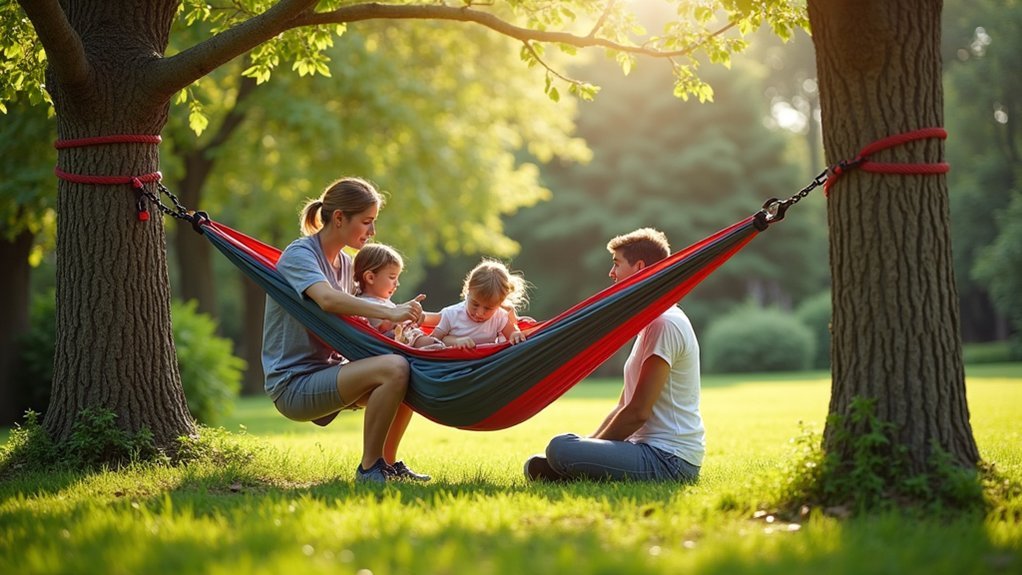
Establish firm behavior expectations by clearly explaining that hammocks aren’t trampolines or swings to prevent dangerous horseplay. Set appropriate weight limits and time restrictions based on your child’s age, ensuring they understand when and how they’re allowed to use the hammock. Practice proper entry and exit techniques together, demonstrating how to sit before lying down and how to rise carefully without tipping the hammock sideways.
Set Clear Behavior Expectations
Creating a safe hammock experience begins with clear, consistent rules that everyone in your family understands and follows. Model proper hammock use first, showing children how to enter from the side with controlled movements rather than diving in.
Establish non-negotiable guidelines: no rough housing, jumping, or swinging in the hammock. Enforce a strict “no stacking” policy to prevent dangerous overloading. Require that users keep both feet on the ground during entry and exit, using hands for stability.
Involve children in regular safety checks of attachment points, suspension systems, and fabric integrity. Clear the surrounding area of hazards and practice proper entry and exit techniques regularly. These boundaries aren’t just precautions—they’re essential habits that prevent accidents while still allowing everyone to enjoy relaxing hammock time.
Teach Age-Appropriate Limits
Children of different ages require distinct boundaries when it comes to hammock safety. For younger children, limit hammock height to under 3 feet from the ground and enforce a strict “sitting only” rule. Older children might handle gentle swinging but should still follow movement restrictions to prevent accidents.
Before any hammock session, rehearse proper entry and exit techniques with your child. Make sure they understand they should never jump into or out of the hammock. Create clear expectations about what constitutes safe behavior—no standing, bouncing, or rough play while in the hammock.
Develop a pre-hammock routine where you check the setup together, pointing out weight limits and explaining why continuous adult supervision is necessary. This teaches responsibility while reinforcing that hammocking is a privilege that requires following established safety protocols.
Practice Entry-Exit Techniques
After teaching age-appropriate boundaries, the next step involves mastering safe movement in and out of hammocks. Guide your child to enter from the side rather than jumping in. Show them how to hold both sides while sitting down and gradually shifting their weight into the hammock.
For exiting, teach your child to use their hands for support and move with deliberate, controlled motions. Avoid sudden movements that could cause tipping or instability.
Rehearse these techniques several times with your child to build muscle memory and confidence. Make it a routine to practice proper entry and exit methods before each use.
Establish clear rules prohibiting rough play, excessive swinging, or standing in the hammock. Remember that calm, predictable movements are key, and adult supervision should guide every transfer until your child demonstrates consistent safety awareness.
Regular Inspection and Maintenance
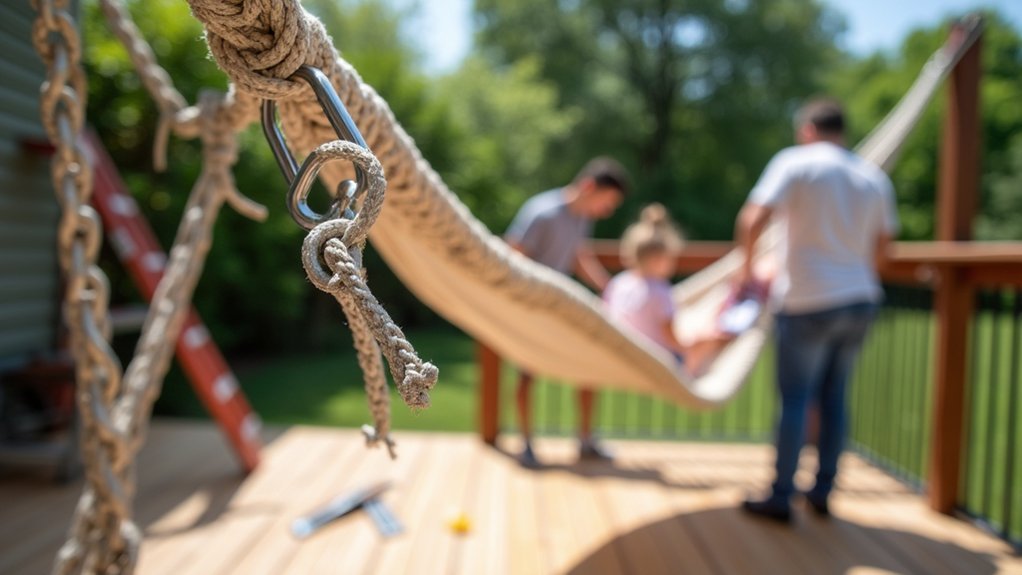
When was the last time you thoroughly checked your family hammock? Before each use, inspect the fabric for frays, examine the suspension system for wear, and verify all attachment points are secure.
Look carefully for mold or damage on all components, replacing any that show signs of compromise. Always follow manufacturer guidelines when installing replacement parts.
Ensure your straps and ropes remain intact without weakening or fraying. It’s wise to keep manufacturer-approved replacements on hand for unexpected issues.
Don’t forget to check the surrounding area, clearing away sharp objects, rocks, and protruding roots. Confirm that trees or posts used for support are healthy and strong enough.
Complete a quick pre-use safety check, including a weight test and hardware inspection, before letting children enjoy the hammock.
Weather Considerations for Hammock Use
While regular inspections keep your hammock in top condition, the weather plays an equally important role in hammock safety. Always check forecasts before setting up, and avoid using your hammock during strong winds, thunderstorms, or heavy rain.
Position your hammock to minimize wind exposure and swinging, ensuring stable anchor points that can withstand current conditions. Remember that even mild breezes can create a wind chill effect, potentially leading to hypothermia in cooler weather without proper insulation like underquilts or blankets.
After rain or damp conditions, thoroughly inspect your hammock for mold and moisture damage. Make sure the suspension system is completely dry before allowing family members to use it again. Clear the ground beneath of any sharp objects that could cause injury if an unexpected weather change forces a quick exit.
Supervision Guidelines for Different Age Groups

Supervising children in hammocks requires different approaches depending on their age and maturity level. For toddlers and preschoolers, maintain constant hands-on supervision and demonstrate proper entry and sitting techniques. Stay within arm’s reach at all times.
Safety first! Young children need constant supervision in hammocks with hands-on guidance and close proximity.
Elementary-aged children need clear boundaries—enforce rules against standing, jumping, or overcrowding hammocks. Limit height to no more than 3 feet off the ground for all ages, and explain the “two-person maximum” rule.
Tweens and teens may use hammocks with periodic check-ins, but first establish expectations about proper use. Teach them to inspect equipment before each use, looking for frays or damage in straps and fabric.
Regardless of age, ensure children understand the importance of avoiding rough play and respecting weight limits for safety.
Frequently Asked Questions
What Are Five Safety Tips?
Inspect your hammock before use. Hang it at a safe height. Choose sturdy trees or posts. Supervise children and discourage rough play. Follow weight limits and setup instructions carefully.
How Common Are Hammock Accidents?
While exact statistics aren’t widely tracked, you’ll find hammock accidents aren’t rare. They’re commonly caused by anchor failures, falls from heights, or improper setup. Don’t underestimate these preventable risks.
How to Safely Get in a Hammock?
Approach from the side, sit while holding both edges, then gradually lower yourself. Don’t jump in. Keep your weight centered as you settle. Use your hands for support when exiting.
What Safety Precautions Should We Take When We Travel With Family?
When traveling with family, always inspect hammocks before use, hang them properly at safe heights, supervise children continuously, avoid risky locations, and bring repair supplies for any unexpected damage.




Leave a Reply